
Review · BUDAPEST
Budapest Cooking Class & Market Tour with Local Guide & Wines
Budapest’s Central Market Hall is the starting point for a very hands-on taste of Hungary. You’ll shop for ingredients, sample pickles and cured meats, hear how paprika and family cooking shaped Hungarian food, then prepare dinner in a Budapest-style kitchen with a guide such as Kinga, Mesi, Ben, or Birdie.
I like the market-to-table format, since you see the ingredients before learning how they work in a Hungarian dish. I also like the social meal at the end, with local wines, shared food, and plenty of time to talk. The main caution is that the class may feel less intimate than expected, and the exact menu can vary.
Key points to know before booking
- Central Market Hall comes first: Plan on about 30 minutes of walking and tasting inside this grand indoor market.
- Family-style cooking follows: You’ll walk a short distance to a Budapest apartment-style venue and cook together.
- The menu can change: Sausage lecsó, chicken paprikash, dumplings, pickles, salami, cheese, and pudding are all part of the advertised or reported food lineup.
- Wine and pálinka are included: Non-drinkers can request nonalcoholic options, but the social tone includes plenty of tasting and toasting.
- Dietary choices are available: Vegetarian, vegan, and gluten-free options can be arranged, but a shared kitchen means cross-contamination is possible.
- Group size matters: The stated maximum is 12 people, though some sessions may feel larger or less intimate.
Starting with paprika, pickles, and the Central Market Hall
The class begins at Central Market Hall, Budapest’s famous indoor food market near the Danube. This is more than a place to collect ingredients. It gives you a quick introduction to the raw materials of Hungarian cooking, from paprika and cured meats to pickled vegetables, cheeses, and seasonal produce.
Your guide leads you through the market, explains what you are seeing, and chooses ingredients for the meal. Depending on the day and menu, you may taste several kinds of Hungarian pickles, salami, cheese, and other local specialties. A small pálinka tasting is also included, along with wine from local wineries.
I like this opening because it gives the food some context. Instead of chopping an onion in a classroom and hearing a short speech about Hungary, you first see the products in their natural setting. You can ask what a particular sausage is used for, why paprika matters, or how Hungarian households serve dumplings with a stew.
The market itself is not equally active every day. Sunday can be a quieter time, with many stalls closed. If the market atmosphere is your main reason for booking, a weekday or Saturday morning may offer more to see. Even on a slower day, the building, tastings, and food stories still form a useful introduction, but the shopping portion may be shorter.
Allow for about 30 minutes of walking through the market. That matters if someone in your group has limited mobility. One participant reported that an elevator was out of order during a visit, while the escalator worked. The route also includes a walk of roughly 5 to 15 minutes from the market to the cooking venue, depending on the exact route and pace.
More Cooking Classes with a Market Tour in the world:
- Hanoi Cooking Class: Culture, Local Market & Meaning CSR Impact
★ 5.0 · 5,147 reviews - 5 Traditional Dishes Hanoi Cooking Class with Market Trip
★ 5.0 · 4,890 reviews - Cooking Class and Lunch at a Tuscan Farmhouse with Local Market Tour from Florence
★ 5.0 · 4,831 reviews
Walking to a Budapest-style kitchen
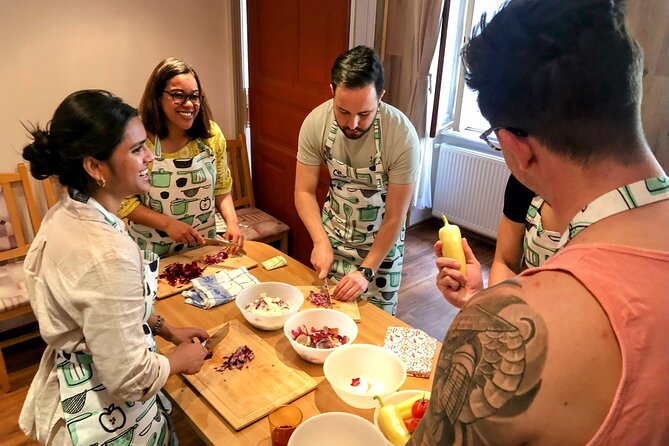
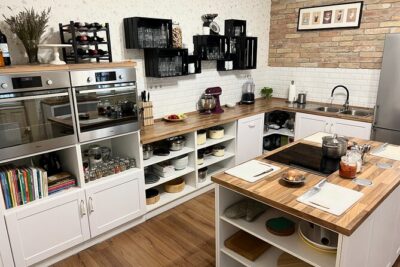
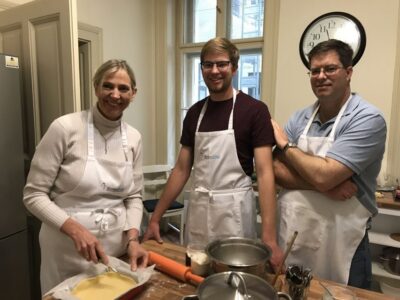
After the market visit, the group walks to a nearby apartment-style venue. The setting is intended to feel like a real Hungarian kitchen rather than a formal culinary school. That choice shapes the whole afternoon.
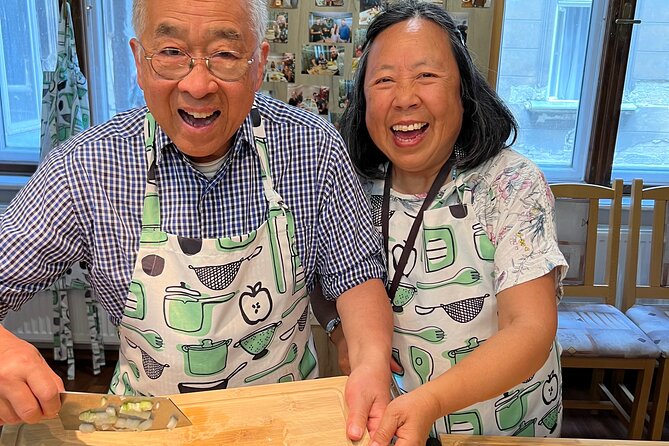
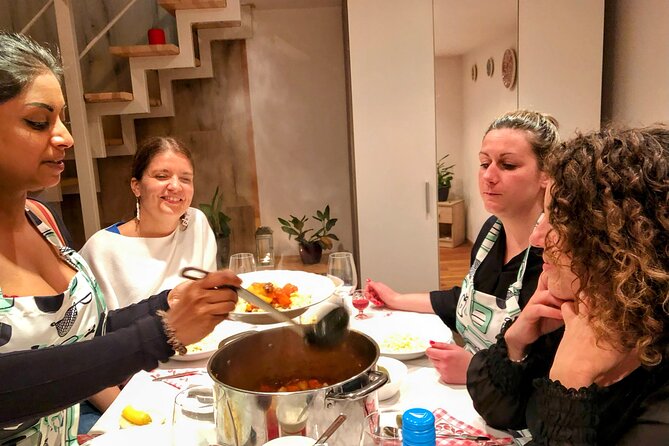
You sit, talk, taste, and work around the food with the guide. The atmosphere is relaxed and social, and the final meal is eaten together. Several guides have received especially warm praise for making mixed groups comfortable. Kinga is described as patient and friendly, Mesi as funny and attentive, and Ben as welcoming and good at bringing everyone into the process.
The venue may not always feel spacious. Most sessions appear to work well with smaller groups, but a full class can feel crowded. The stated maximum is 12 participants, and one account describes a group of 14, though the provider said that may have involved a different food tour. If you want a very small class of four to six people, check the group size before paying.
This is also a useful point for setting expectations. You are not signing up for several hours of advanced knife work or a professional kitchen session. Much of the value comes from the combination of food, stories, tasting, and conversation. Some participants have found the amount of hands-on cooking modest, especially when the group is full.
What you may cook and eat
The advertised main course is Hungarian sausage lecsó with Hungarian-style flour dumplings. Lecsó is a paprika-seasoned stew built around peppers, tomatoes, onions, and sausage. It is the sort of home cooking that explains Hungarian food better than an elaborate restaurant plate.
Potatoes can replace flour dumplings for a gluten-free version. Other sessions have focused on chicken paprikash with homemade nokedli, the small Hungarian dumplings often served with saucy dishes. The exact menu is not fixed in every account, so you should treat the dish as seasonal or session-dependent rather than guaranteed.
The class may also include:
- Hungarian cured salamis and cheeses
- Pickled vegetables
- Local wine served with the meal
- A small tasting of pálinka
- Traditional Hungarian pudding
The dessert deserves a note. It appears in the stated sample menu, but one participant reported that no dessert was prepared. Another felt that leaving dessert out allowed more time for the market and main dish. If a complete three-course cooking lesson is essential to you, ask about the menu for your chosen date.
The food itself is designed to be reproducible at home. Guides explain the process step by step, and recipes are provided in at least some sessions. That makes the class more useful than a meal that you simply watch someone prepare. You can take home a practical dish such as chicken paprikash, dumplings, or lecsó, then try it again in your own kitchen.
Wine, pálinka, and the social side of the class
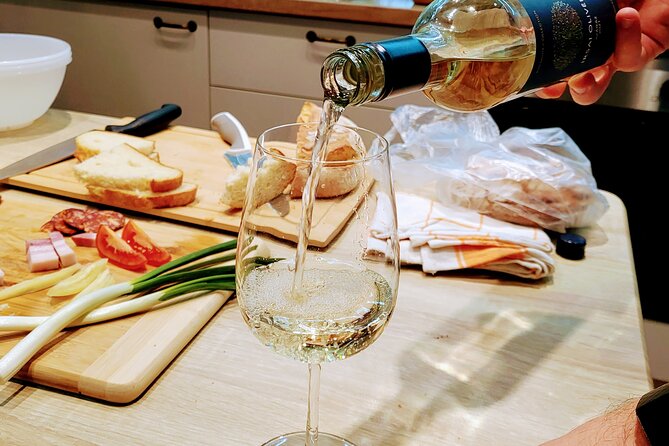
Wine is not just an optional add-on here. Local wines are served with the food, and a pálinka tasting is part of the experience. For many people, this adds to the sense of a Hungarian family meal. The drinks also help strangers relax and start talking.
The balance may not suit everyone. One negative account felt that the afternoon focused too much on drinking, especially because non-drinkers were offered limited alternatives. The provider said nonalcoholic choices are available, but I would still mention your preference clearly at the start.
You do not need to drink alcohol to take part. The food, market visit, and cooking lesson remain the main activities. Still, if you want a quiet, highly technical class with little social drinking, this may not be the best match.
The shared table is one of the strongest parts of the experience. Groups often include couples, families, solo participants, and people with different levels of cooking ability. The guide’s job is not only to explain the recipe but also to keep the group involved. Children have taken part successfully, including an 11-year-old, and people with little cooking experience can still follow the instructions.
More Cooking Classes with Wine Tasting in the world:
- Florence: Pasta Cooking Class with Unlimited Wine
★ 4.9 · 10,285 reviews - Florence: Pasta & Tiramisu Cooking Class with Unlimited Wine
★ 4.9 · 6,708 reviews - Florence: Pasta Cooking Class with Unlimited Wine
★ 5.0 · 6,413 reviews - Rome: Pasta Making Class with Wine, Limoncello, and Dessert
★ 4.9 · 3,177 reviews
How much cooking will you actually do?
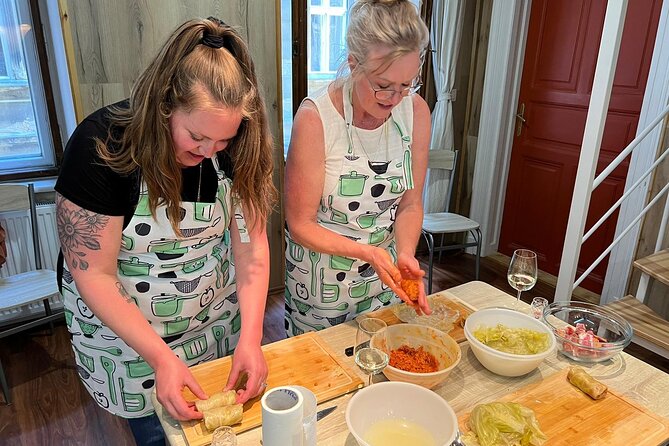
You will help prepare the meal, but your personal tasks depend on the group size and the guide’s setup. In a small group, you may get more direct time with each ingredient. In a full session, expect to share workstations and wait while parts of the dish cook.
That is the main difference between this experience and a private cooking lesson. It is built as a shared activity. You may chop, stir, shape dumplings, season, or help with preparation, but you will not necessarily prepare every element from start to finish on your own.
I see that as a fair trade if you want culture and company along with cooking. The market walk, tastings, stories, meal, and wine give you a fuller afternoon than a basic recipe class. If your goal is to master several complex techniques, the class may feel light.
The strongest sessions appear to depend heavily on the guide. Kinga, Mesi, Ben, Birdie, and other hosts are credited with keeping people involved, explaining Hungarian customs, and making the meal feel relaxed. A good guide can turn waiting time into a food lesson. A crowded room or less active host could make the same format feel slower.
The value of $99 for four hours
At $99 per person, this is not the cheapest meal in Budapest. It is also not simply a restaurant dinner. Your price covers about four hours of activity, a guided Central Market Hall visit, tastings, ingredients, instruction, a shared meal, wine, and a local cultural introduction.
I think the value is strongest if you want several experiences in one booking. You get a market orientation, food sampling, a cooking session, and a social dinner. The recipe and practical tips add something you can use after the trip.
The value is weaker if you mainly want a large market tour or a long, technical cooking lesson. The market portion is fairly short, especially on Sunday, and the cooking can feel limited in a full group. You are paying for the whole afternoon, not just the amount of food placed on your plate.
The class is also a good choice early in a Budapest visit. The guide may explain Hungarian food customs, geography, and local habits, and some guides offer ideas for other places to eat or visit. That makes the afternoon useful beyond the meal itself.
Dietary needs and practical limitations
Vegetarian and vegan options are available, and gluten-free alternatives can include potatoes instead of flour dumplings. You should provide your dietary needs when booking and repeat them to the guide before cooking begins.
The important caution is shared-kitchen cross-contamination. The provider states that this is possible, so the class may not be suitable for someone with severe celiac disease or a serious allergy unless the risks are acceptable to that person. The listed gluten-free option does not mean a fully separate kitchen.
The activity is offered in English and uses a mobile ticket. It starts and ends at Central Market Hall. Public transportation is nearby, and service animals are allowed.
Wear comfortable shoes. You will walk through the market and then continue to the cooking venue. The market may involve escalators, and the apartment-style setting may include access limitations. If a wheelchair or serious mobility concern affects your group, contact the provider before booking rather than relying on the day’s conditions.
Free cancellation is available up to 24 hours before the start time for a full refund. Changes made inside that window are not accepted, and poor weather or failure to reach the minimum group size can lead to a rescheduled date or full refund.
Who will enjoy this Budapest food experience?
I would choose this class if you want to meet people, eat a substantial local meal, and learn a few Hungarian recipes without spending a full day in a formal cooking school. It suits couples, families with older children, solo visitors, and anyone who likes food with a story attached.
It is particularly good for people who want a gentle introduction to Hungarian cuisine. You do not need advanced cooking skills. You need only enough interest to taste unfamiliar pickles, work with a group, and follow instructions.
I would hesitate if you need a private class, strict control over every ingredient, or a highly technical lesson. I would also check the day carefully if the Central Market Hall is a major priority, since Sunday can be quiet. Finally, confirm the menu if you have your heart set on goulash, paprikash, lecsó, or dessert.
Should you book the class?
Yes, if you see it as a cultural afternoon built around food rather than a chef-training session. The best parts are the market tastings, the family-style recipes, the local wine, and the chance to share a meal with people you met only a few hours earlier.
Book with realistic expectations. The group may be larger than an intimate apartment lesson, the market visit may be brief, and the menu can change. For most visitors who want a friendly, practical taste of Budapest, the $99 price is reasonable because it combines four separate pleasures: market shopping, food history, cooking, and dinner.
FAQ
Where does the Budapest cooking class begin?
It begins at Central Market Hall in Budapest, Hungary.
Where does the activity end?
The activity ends back at the meeting point at Central Market Hall.
How long does the experience last?
The cooking class and market tour last approximately four hours.
Is the class offered in English?
Yes. The activity is offered in English.
What food might be prepared?
The sample menu includes Hungarian sausage lecsó with dumplings. Some sessions have prepared chicken paprikash with Hungarian dumplings, so the exact main dish can vary.
Are vegetarian, vegan, and gluten-free options available?
Yes. Vegetarian, vegan, and gluten-free options are available. Potatoes may replace flour dumplings for a gluten-free meal.
Is alcohol included?
Yes. The experience includes a tasting of Hungarian pálinka and wine from local wineries. Nonalcoholic alternatives are available.
How many people can join?
The stated maximum is 12 participants.
Are service animals allowed?
Yes. Service animals are allowed.
Can I cancel for a full refund?
Yes. You can cancel at least 24 hours before the start time for a full refund. Cancellations made less than 24 hours before the start time are not refunded.
What happens if bad weather cancels the experience?
You will be offered a different date or a full refund if poor weather causes cancellation.
New cooking classes around the world
- Shinjuku Tokyo: Authentic Japanese Home-Style Culinary Class★ 4.9 · 125 reviews
- Shibuya Tokyo: Onigiri & Tamagoyaki Cooking Class★ 5.0 · 4 reviews
- M.O.M COOKING CLASS★ 4.8 · 6 reviews
- Seville: Paella-Cooking Experience with Sangria & Full Meal★ 4.9 · 42 reviews
- Shanghai: Authentic Chinese Cooking Class with Master Chef★ 5.0 · 2 reviews
- Sestri Levante: Pesto & Cooking Classes, Wine Tasting★ 4.9 · 56 reviews
- Seville: Paella Cooking Class & 30-Min Local Expert Q&A★ 4.8 · 37 reviews
- Seoul: Korean Kimchi Cooking Class in the Heart of the City★ 5.0 · 3 reviews
Budapest Cooking Classes, side by side.
Premium Hungarian Home Cooking Experience with Chef Marti
Read our review →
Budapest: Small-Group Cooking Class & Market Tour with Local
Read our review →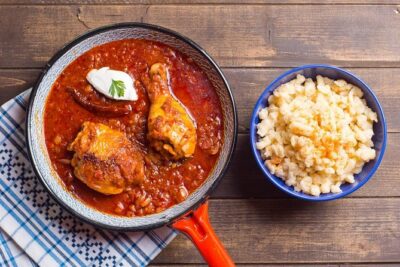
Hungarian Cooking and optional Local Market Tour
Read our review →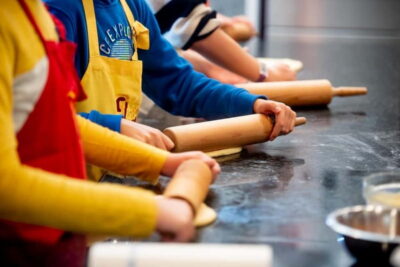
Hungarian Premium Cooking Class with 4-course meal
Read our review →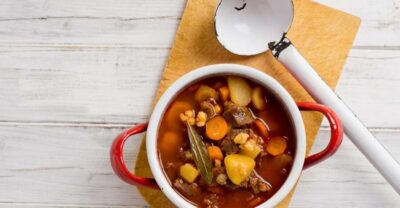
Budapest: Cooking School – Hungarian Menu & Local Market
Read our review →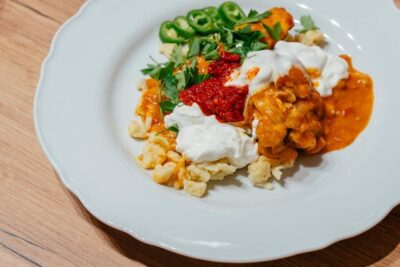
Budapest: Hungarian Cooking Class – Foodapest™ 2025
Read our review →This kitchen also appears in