
Review · BUDAPEST
Budapest: Small-Group Cooking Class & Market Tour with Local
Budapest’s Central Market Hall is the starting point, but the real treat comes afterward, when fresh ingredients head to a local apartment for a family-style cooking session. You’ll taste cold cuts, cheese, pickles, wine, and pálinka before preparing a Hungarian main course and dessert with an English-speaking host.
I like the mix of market culture and hands-on cooking, and I like that hosts such as Kinga, George, Mesi, Ben, and Marcell bring family recipes and everyday Hungarian food to the table. The main caution is that the class is social and communal, not a quiet, chef-led lesson, and one meal may feel mild if you expect heavy seasoning.
Key details before you book
- Taste before you cook: The Central Market Hall visit includes local cold cuts, cheeses, pickles, produce, and Hungarian drinks.
- Choose your main dish: You can request chicken paprikash, goulash, or stuffed cabbage rolls in advance.
- Cook in an apartment: The class takes place in a cozy Budapest-style home rather than a formal culinary school.
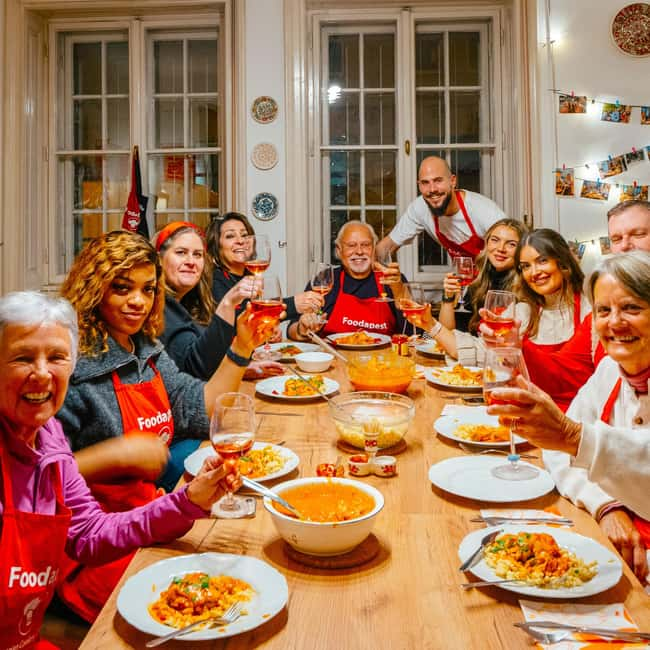
- Expect a social table: You cook, eat, talk, and share wine with a small group.
- Dietary needs are welcome: Vegetarian, vegan, and gluten-free options are available when arranged ahead of time.
- Take home useful souvenirs: You receive a recipe booklet and a handwritten vintage postcard from a Hungarian citizen.
From Central Market Hall to a Hungarian kitchen
This four-hour experience works because it gives the food a setting. Instead of dropping you straight into a cooking station, the host first shows you where Hungarians shop and what local ingredients look like in everyday use.
The tour begins at Budapest’s Central Market Hall, an impressive indoor market near the Danube. It is more than a place to buy paprika and embroidered tablecloths. The market gives you a quick introduction to the ingredients that shape Hungarian cooking, from pickled vegetables to cured meats and dairy products.
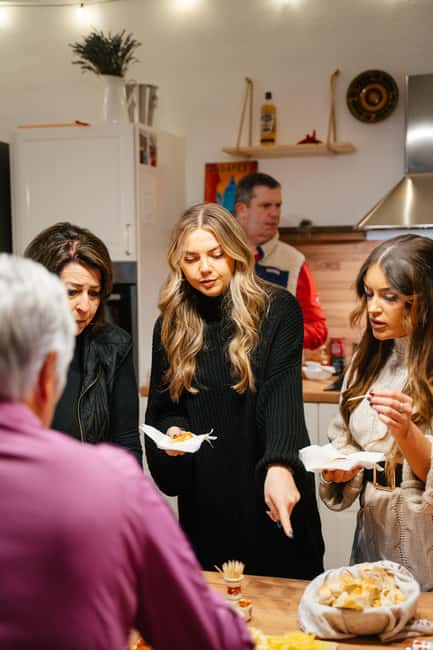
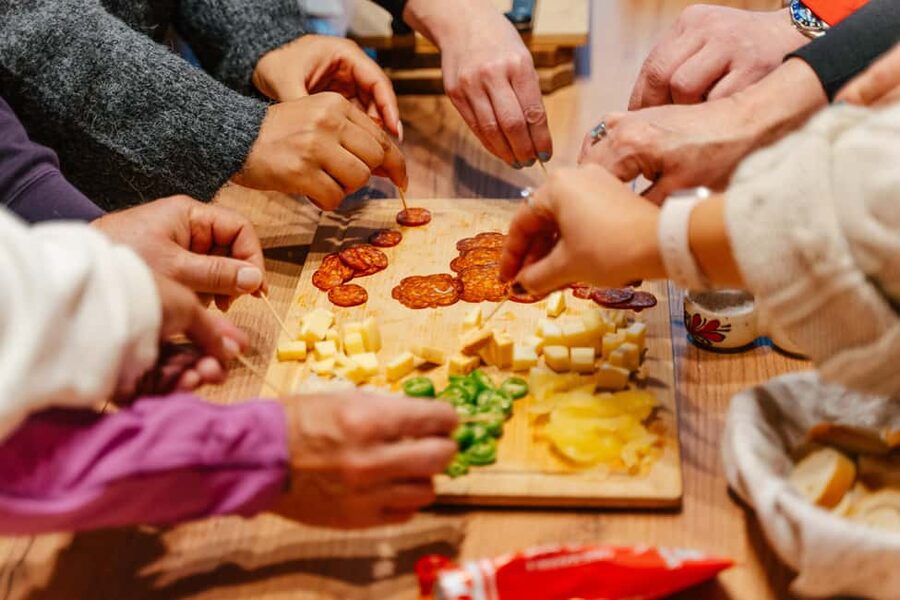
Your host leads you through the market and stops for tastings. You may try Hungarian cold cuts, cheese, pickles, and other local treats, along with wine or a small taste of pálinka, Hungary’s fruit spirit. These samples help you understand the country’s preference for sharp, salty, smoky, sour, and sweet flavors before you begin cooking.
I especially like this order. Seeing the ingredients first makes the later recipe easier to understand. Paprika is not just a red powder sprinkled on top. The market visit introduces different varieties, including sweet, smoky, and spicy styles, and shows how much the ingredient matters in Hungarian kitchens.
The market can be lively and crowded, especially at popular times, so this part is more about guided discovery than a slow shopping trip. You are not being given a long stretch of free time to browse every stall. The host keeps the group moving and adds local context along the way.
One especially useful detail is the chance to see less obvious parts of the market. George has shown visitors the downstairs area, including displays, pickled produce, and a relief map. He also offers practical tips on buying souvenirs. That kind of guidance is useful if you want to shop without guessing which items are genuinely local and which are simply made for passing tourists.
More Cooking Classes with a Market Tour in the world:
- Hanoi Cooking Class: Culture, Local Market & Meaning CSR Impact
★ 5.0 · 5,147 reviews - 5 Traditional Dishes Hanoi Cooking Class with Market Trip
★ 5.0 · 4,890 reviews - Cooking Class and Lunch at a Tuscan Farmhouse with Local Market Tour from Florence
★ 5.0 · 4,831 reviews
Cooking family recipes in a Budapest apartment
After the market, the group moves to the cooking venue, a local apartment on Kinizsi u. 22-6/B in the ninth district. For evening sessions, the meeting point is the apartment itself, listed under Foodapest Hungarian Cooking Class.
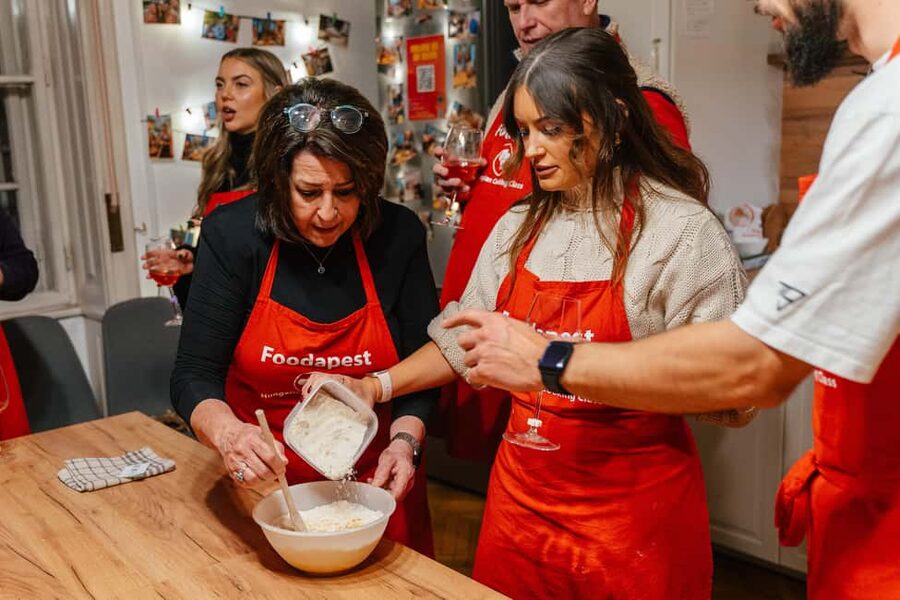
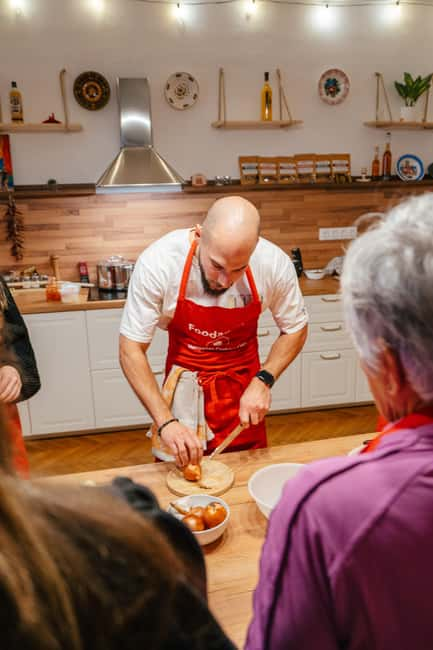
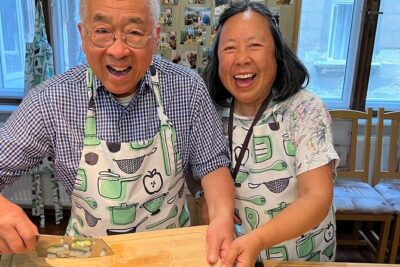
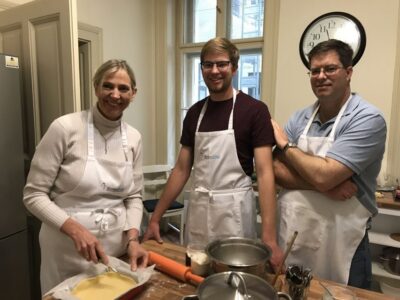
The apartment setting changes the mood. You are not standing in a polished demonstration kitchen watching a chef do everything. Instead, the class is designed around shared preparation, conversation, and the feel of cooking in someone’s home.
Hosts teach basic skills such as cutting and preparation, along with the steps needed for the chosen Hungarian dish. The recipes come from family traditions, including recipes learned from mothers and grandmothers. George has used his grandmother’s chicken paprikash recipe, which gives the meal a personal connection that a standard cooking school often lacks.
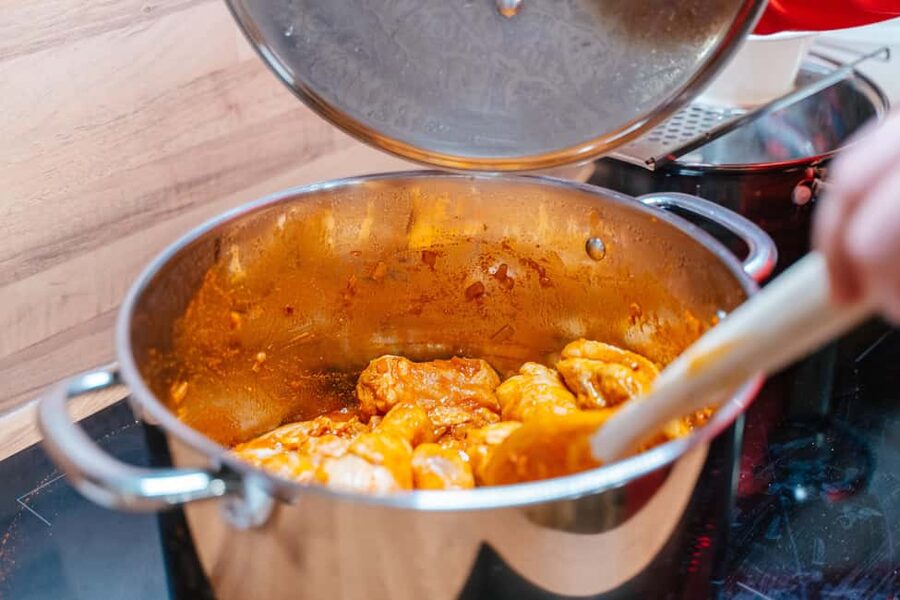
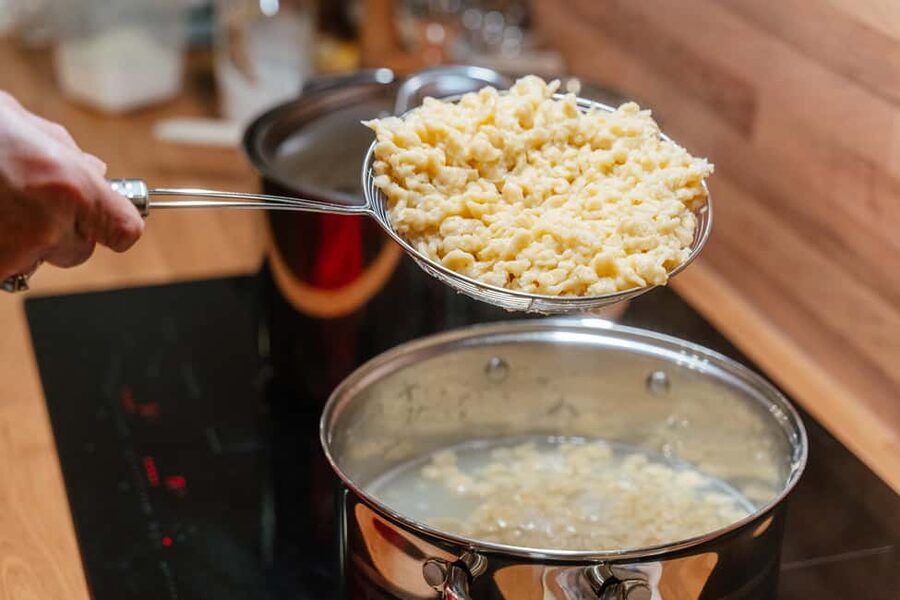
The main dish depends on your selection. Chicken paprikash is the most frequently featured option in the available sessions, and it is served with small dumplings in some classes. You may also choose goulash or stuffed cabbage rolls, but you need to state your preference before the class.
The cooking is hands-on, with everyone taking part. That does not mean each person prepares a separate dish. You work together on the meal, so the experience suits people who enjoy a shared table more than those seeking a precise, individual cooking assessment.
The program also includes dessert. Since the exact dessert can vary, ask what will be prepared during your session if that part matters to you. The listed inclusions cover a main course and dessert, along with all ingredients and equipment.
The food receives consistently strong praise, though one useful note is worth keeping in mind: a diner found the chicken paprikash less strongly seasoned than expected. Hungarian food is not automatically fiery. Paprika can bring sweetness, warmth, smokiness, or heat, and the final dish may be gentler than the color suggests.
The hosts make the difference
Foodapest uses several hosts, so the personality of your session depends on the date. Kinga is repeatedly described as organized, friendly, and good at keeping everyone involved. She also teaches useful kitchen techniques rather than simply handing out instructions.
George combines cooking with Hungarian customs, history, and food traditions. His home kitchen has been praised for feeling welcoming and personal, and his family recipes add a direct link to local life. If you want a host who can answer broader questions about Hungary as well as explain a dish, George is a strong fit.
Mesi and Emese are also associated with clear instruction and good market guidance. Mesi has been praised for careful explanations, while Emese is known for showing the best tasting stops and explaining the background of the food.
Ben brings a lighter, sociable approach, with a strong grasp of Hungarian cuisine and customs. Marcell has led both the market portion and the cooking class, helping connect the tastings to the meal.
Because the host can change, you should not book solely around one person unless the provider confirms the guide for your date. The common thread is an informal English-language class led by a local host, not a rigid lesson delivered from a script.
Wine, pálinka, and the social table
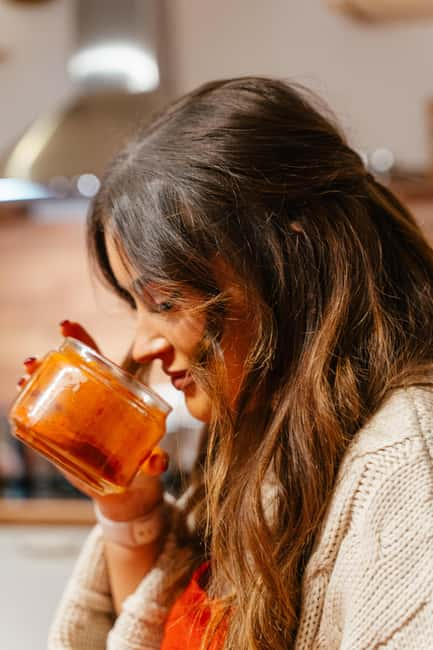
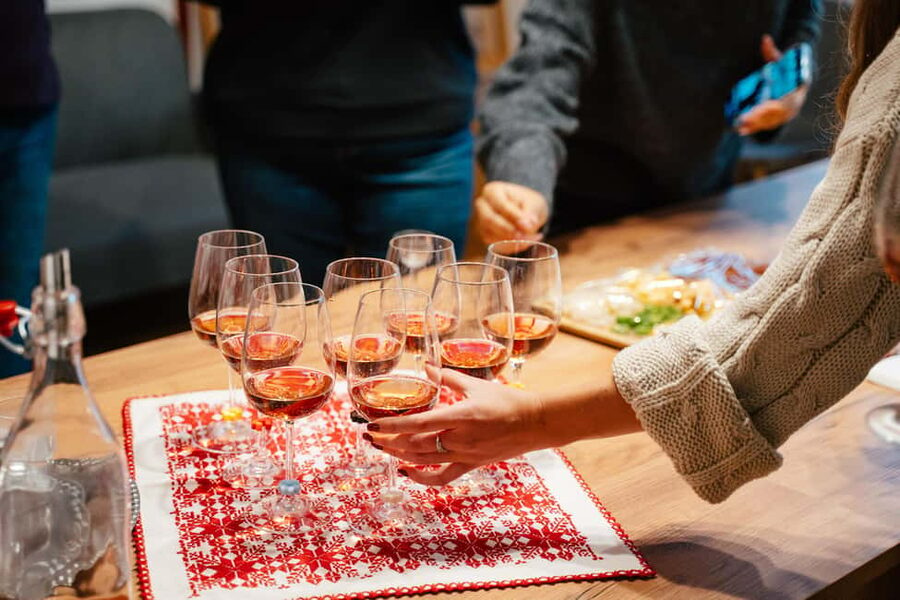
Wine is part of the experience from the market through the meal. You also receive a Hungarian spirit tasting, plus soft drinks and water. Cold cuts, cheeses, and pickles are served as welcome tastings before the main dish.
The drink service helps the class feel like a shared meal rather than a practical workshop. Several classes have been described as generous with the wine, so pace yourself if you have a full afternoon ahead. Pálinka is potent, even in a small tasting, and it is best treated as a cultural sample rather than something to rush.
The social side is one of the strongest reasons to book. You may sit with people from several countries, compare cooking habits, and share stories while preparing the food. Solo visitors can fit in well because the group has a built-in activity and conversation.
Families can also enjoy it. One class welcomed children aged 12 and 13, and the shared format gives older children a real role in preparing the meal. Very young children may find four hours of tasting, cooking, and sitting at the table less appealing, but the provided information does not set a minimum age.
If you prefer a private class or want to cook a separate dish from start to finish, this may not be the right format. The appeal lies in cooking together. You will learn, but you will also spend a good deal of time talking and eating.
More cooking classes around the world:
- Half-Day Thai Cooking Class at Organic Farm in Chiang Mai
★ 5.0 · 19,087 reviews - Florence: Pasta Cooking Class with Unlimited Wine
★ 4.9 · 10,285 reviews - 3 in 1 Cooking Class near Navona: Fettuccine, Ravioli & Tiramisu
★ 5.0 · 7,376 reviews - Florence: Pasta & Tiramisu Cooking Class with Unlimited Wine
★ 4.9 · 6,708 reviews
Dietary choices and what to tell the host
Vegetarian, vegan, and gluten-free options are available. Tell Foodapest about your needs beforehand, rather than waiting until you arrive. The same advice applies to the main dish selection.
The listed choices are chicken paprikash, goulash, and stuffed cabbage rolls. The class has handled vegetarian meals successfully, and at least one session included both a meat dish and a vegetarian dish so diners with different preferences could eat well together.
Still, dietary planning matters in a market-based class. Tastings may include meat, cheese, bread, pickles, or alcohol, so explain what you can and cannot eat before the day. If you avoid alcohol, say so clearly, since wine and pálinka are part of the standard offering but are not compulsory for participation.
Is $100 good value for four hours?
At $100 per person, this is not the cheapest way to eat in Budapest. A market visit by itself costs less, and a restaurant meal will usually be less expensive than the class fee.
The value comes from the number of parts bundled together. The price covers a guided Central Market Hall tour, tastings, a local host, a hands-on cooking lesson, all ingredients, equipment, a main course, dessert, wine, pálinka, soft drinks, a recipe booklet, and a vintage postcard.
You are also paying for access to a local home setting and for the host’s time. The recipes and food knowledge are not presented as generic Hungarian cuisine pulled from a textbook. They are tied to family cooking and local habits.
I consider the price fair for a visitor who wants one substantial cultural activity rather than another sightseeing stop. It is especially good value if you would otherwise pay separately for a market tour, a tasting, and a cooking class.
It is less compelling if your goal is only to learn advanced technique. The class teaches practical basics, such as cutting and preparing ingredients, but it is not aimed at professional cooks. The social meal and cultural background are as important as the recipe.
Timing, meeting point, and practical planning
The activity lasts four hours, so avoid scheduling it immediately before a timed attraction or airport transfer. The market tour and cooking session are separate parts, and the meal at the end gives the afternoon or evening a natural finish.
For the evening cooking class, meet directly at Foodapest’s apartment at Budapest, Kinizsi u. 22-6/B, 1092 Hungary. Search for Foodapest Hungarian Cooking Class when planning your route, and check the confirmed meeting instructions for your date.
The venue is fully air-conditioned, which is a real advantage in Budapest’s hot summer weather. You can spend the warmest part of the day cooking and eating indoors rather than standing over a stove in an overheated room.
The activity is conducted in English. If you want the market portion, make sure you select a session that includes it, since the evening arrangement may meet at the apartment directly. The description includes a separate entrance for skipping the line, though you should still allow enough time to reach the meeting point.
Free cancellation is available up to 24 hours before the activity for a full refund. You can also reserve and pay later, which helps if your Budapest schedule is still moving around.
What you take home
The practical souvenir is the recipe booklet. Unlike a key ring, it can actually earn its place in your luggage. You can use it to recreate the meal after returning home, provided you note the exact paprika and ingredient choices used during class.
The handwritten historic postcard is more unusual. It comes from real Hungarian citizens and gives you a small piece of personal history rather than a mass-produced image. It will not replace a museum visit, but it is a thoughtful reminder of the people behind the food.
The strongest takeaway may be confidence. You learn that Hungarian cooking is not only about paprika-heavy stews. It also involves preparation, dumplings, pickling, family habits, and the balance of wine, sour flavors, dairy, and spice.
Who should book this Budapest cooking class?
I would book this for solo visitors, couples, families with older children, and anyone who likes meeting people over food. It is also a smart choice for a first visit to Budapest because the market tour gives you a quick introduction to local ingredients and customs.
Food lovers will get the most from it, but you do not need serious cooking experience. Basic cutting and preparation skills are taught, and the group shares the work.
I would hesitate if you dislike communal dining, avoid all alcohol without arranging alternatives, or want a highly technical cooking course. The class is relaxed, social, and family-style. Its success depends partly on enjoying the people around you.
At $100, it is a worthwhile splurge for a four-hour introduction to Hungarian food, especially if you choose a dietary option in advance and arrive ready to participate. For a taste of Budapest that goes beyond monuments and restaurant menus, this is a practical and personal choice.
FAQ
How long does the Foodapest cooking class last?
The experience lasts four hours, including the Central Market Hall tour, tastings, cooking class, and meal.
Where does the evening class meet?
The evening cooking class meets directly at the Foodapest apartment at Budapest, Kinizsi u. 22-6/B, 1092 Hungary. You can search for Foodapest Hungarian Cooking Class to find it.
Which Hungarian dishes can I choose?
You can request chicken paprikash, goulash, or stuffed cabbage rolls. Tell the provider your preference in advance.
Are vegetarian, vegan, and gluten-free meals available?
Yes. Vegetarian, vegan, and gluten-free options are available, but you should provide your dietary requirements before the class.
What is included in the price?
The price includes the market tour, cooking class, English-speaking host, ingredients, equipment, cold cuts, cheeses, pickles, the prepared main course and dessert, wine, a Hungarian spirit tasting, soft drinks, water, a recipe booklet, and a vintage postcard.
Can I cancel the booking?
You can cancel up to 24 hours in advance for a full refund. Reserve-now, pay-later booking is also available.
New cooking classes around the world
- Shinjuku Tokyo: Authentic Japanese Home-Style Culinary Class★ 4.9 · 125 reviews
- Shibuya Tokyo: Onigiri & Tamagoyaki Cooking Class★ 5.0 · 4 reviews
- M.O.M COOKING CLASS★ 4.8 · 6 reviews
- Seville: Paella-Cooking Experience with Sangria & Full Meal★ 4.9 · 42 reviews
- Shanghai: Authentic Chinese Cooking Class with Master Chef★ 5.0 · 2 reviews
- Sestri Levante: Pesto & Cooking Classes, Wine Tasting★ 4.9 · 56 reviews
- Seville: Paella Cooking Class & 30-Min Local Expert Q&A★ 4.8 · 37 reviews
- Seoul: Korean Kimchi Cooking Class in the Heart of the City★ 5.0 · 3 reviews
Budapest Cooking Classes, side by side.
Budapest Cooking Class & Market Tour with Local Guide & Wines
Read our review →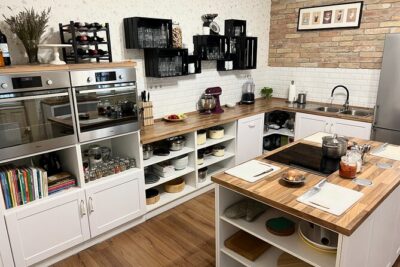
Premium Hungarian Home Cooking Experience with Chef Marti
Read our review →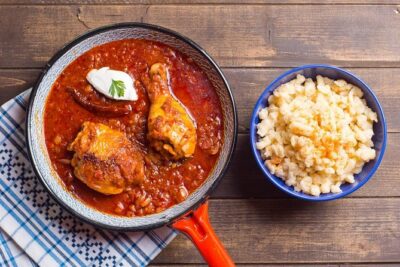
Hungarian Cooking and optional Local Market Tour
Read our review →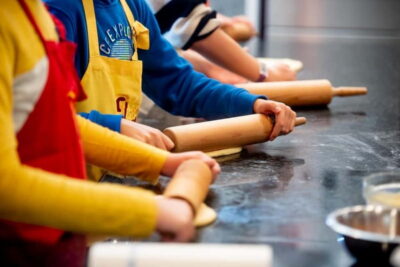
Hungarian Premium Cooking Class with 4-course meal
Read our review →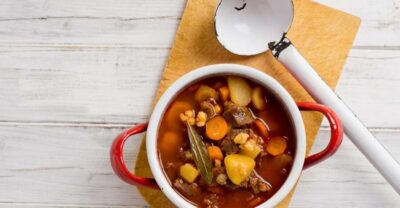
Budapest: Cooking School – Hungarian Menu & Local Market
Read our review →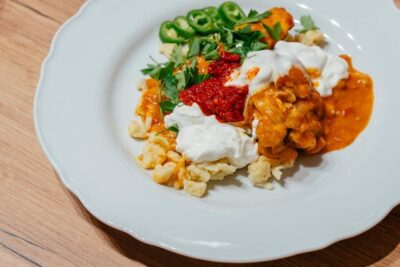
Budapest: Hungarian Cooking Class – Foodapest™ 2025
Read our review →This kitchen also appears in