
Review · OSAKA
Osaka: Cooking Class & Sake Tasting with Local Market Visit
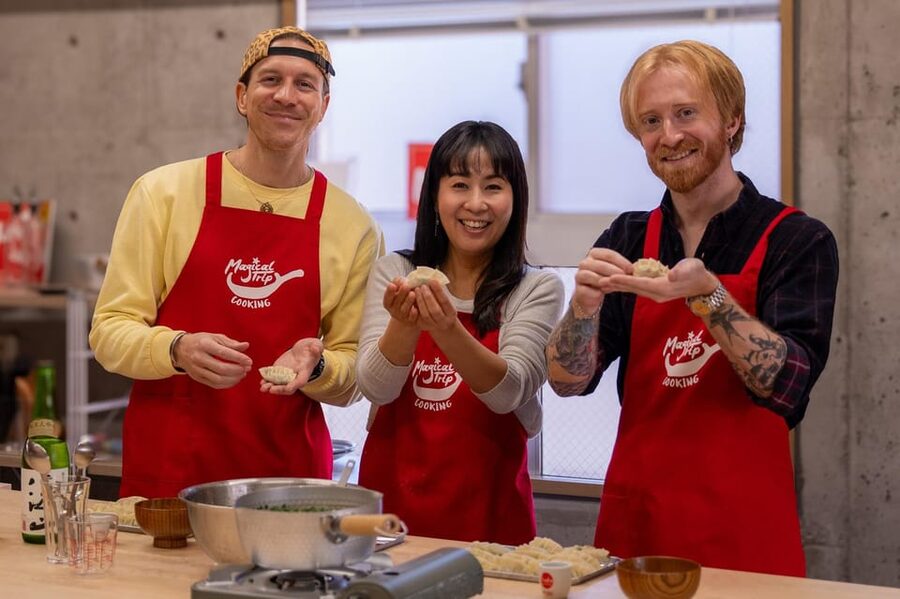
Osaka’s best food lesson may begin with a supermarket trolley. This four-hour class takes you from a local shop to the kitchen, where you prepare niku-sui beef soup, okonomiyaki, and gyoza with a guide who explains both the cooking and the culture behind it.
I like the practical recipes, which use simple ingredients you can find again at home. I also like the small group, capped at seven, and the relaxed drink-and-chat format. The main catch is that the class cannot provide gluten-free meals, and the cooking involves walking, cutting, and heat.
Key points
- Three Osaka staples: Prepare niku-sui, savory okonomiyaki, and handmade gyoza in one class.
- A real supermarket stop: Shop for the ingredients while your guide explains everyday Japanese food.
- Small, social setting: Groups are limited to seven, with time for questions, conversation, and shared drinks.
- Guides who add local color: Chie, Eri, Emi, Akko, and others bring stories about Japanese regions, products, and customs.
- Useful take-home value: Download the recipes and recreate the meal for friends or family.
- Good flexibility: Cancellation is free up to 24 hours before the class, and you can reserve now and pay later.
From Minami Morimachi Station to the supermarket
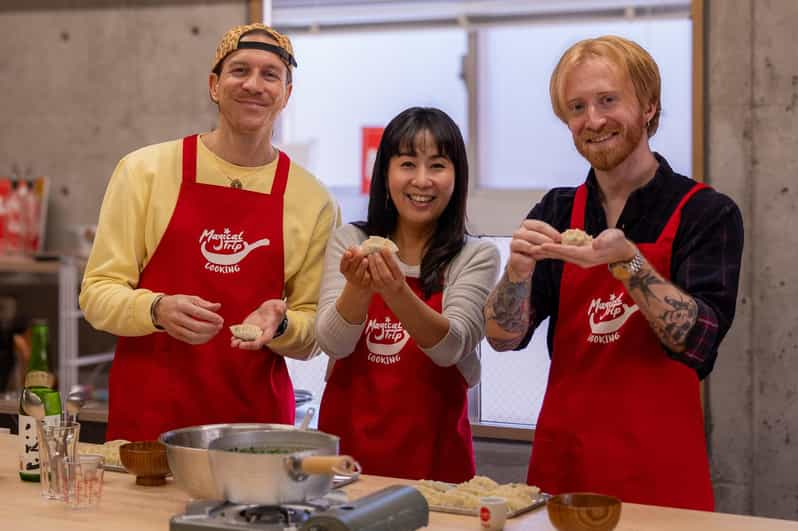
Your meeting point is in front of FamilyMart, about a minute from Exit 4B of Minami Morimachi Station. That makes the start fairly easy to find, but you still need to arrive on time. Late arrivals cannot join, reschedule, or receive a refund.
The first stop is a local supermarket. This is more than a quick shopping errand. You get a look at the ingredients Osaka residents use at home, and your guide can point out products that might otherwise seem mysterious on a Japanese shelf.
You will help gather the food needed for the class. The stop also gives you a useful sense of scale: Japanese cooking does not always depend on rare or expensive ingredients. Much of the meal comes together from ordinary supermarket items, careful preparation, and good technique.
Guides such as Eri have used this time to explain how the food is purchased and prepared at home. Emi also answered general questions about Osaka while shopping with her group. That combination works well because you begin learning before you reach the cooking studio.
The supermarket visit is not a sightseeing stop with a long formal talk. It is a practical introduction to daily life. If you enjoy food markets and local shopping, you will probably value this part. If you want a class that starts cooking immediately, remember that the shopping takes up part of the four hours.
More Cooking Classes with a Market Tour in Osaka:
- Hanoi Cooking Class: Culture, Local Market & Meaning CSR Impact
★ 5.0 · 5,147 reviews - 5 Traditional Dishes Hanoi Cooking Class with Market Trip
★ 5.0 · 4,890 reviews - Cooking Class and Lunch at a Tuscan Farmhouse with Local Market Tour from Florence
★ 5.0 · 4,831 reviews
Three dishes that explain Osaka at the table
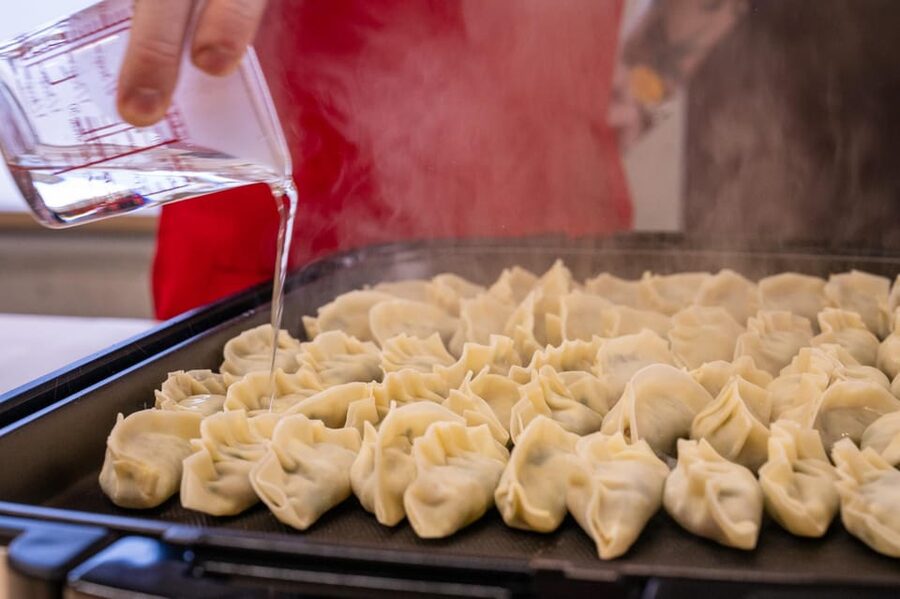
Back at the MagicalTrip Original Cooking Studio, your guide leads you through three dishes. The menu gives you a useful cross-section of Osaka food, from comforting soup to the city’s famous savory pancake and a hands-on dumpling project.
Niku-sui, Osaka’s beef soup
Niku-sui is a beef soup with a simple, comforting character. It is less internationally famous than okonomiyaki, which is part of its appeal. You get to try a local favorite that many visitors might miss if they only follow the standard food checklist.
The dish also makes a good lesson in how Japanese home cooking can be both modest and full of flavor. Your guide explains the steps, then helps you prepare the ingredients and cook the soup. The result is part of the included lunch, so you are not simply watching a demonstration.
Because the recipes are designed for home cooking, you should leave with a method you can repeat rather than a one-off restaurant trick. Niku-sui may be especially useful for a winter dinner or a simple meal when you want something warm without a long list of ingredients.
Okonomiyaki, Osaka’s famous pancake
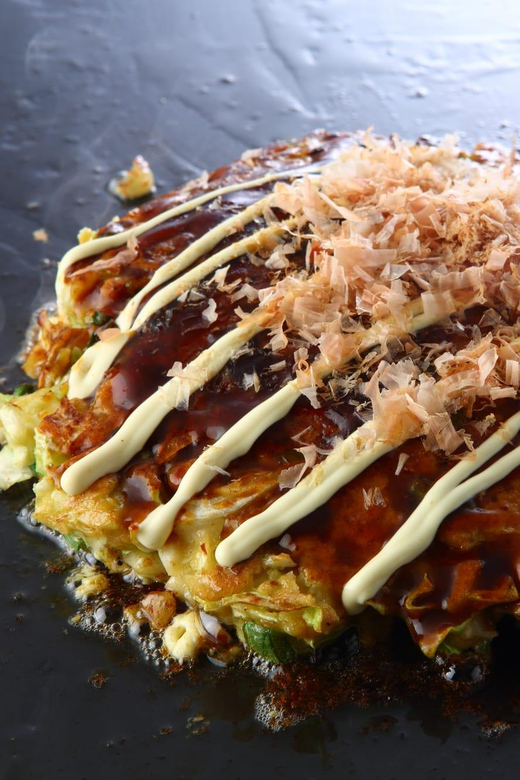
Okonomiyaki is the dish most closely tied to Osaka’s food identity here. The name allows for personal variations, and the class gives you a chance to understand how the ingredients come together instead of only eating the finished pancake.
This is a good choice for a group because the dish invites conversation and comparison. You can see how a few changes in preparation affect the final result, while the guide keeps the process clear for beginners.
Do not expect a highly technical chef’s course. The value is in learning a familiar Osaka dish in a friendly kitchen, with enough explanation to try it again later. It is also a satisfying centerpiece for lunch, especially after the supermarket walk.
More sake tastings around Osaka:
- Osaka Sake Tasting with Takoyaki Cooking
★ 5.0 · 156 reviews - Ramen and Sushi Cooking Class with Sake Pairing Set in Tokyo
★ 5.0 · 291 reviews
Gyoza, the most playful part
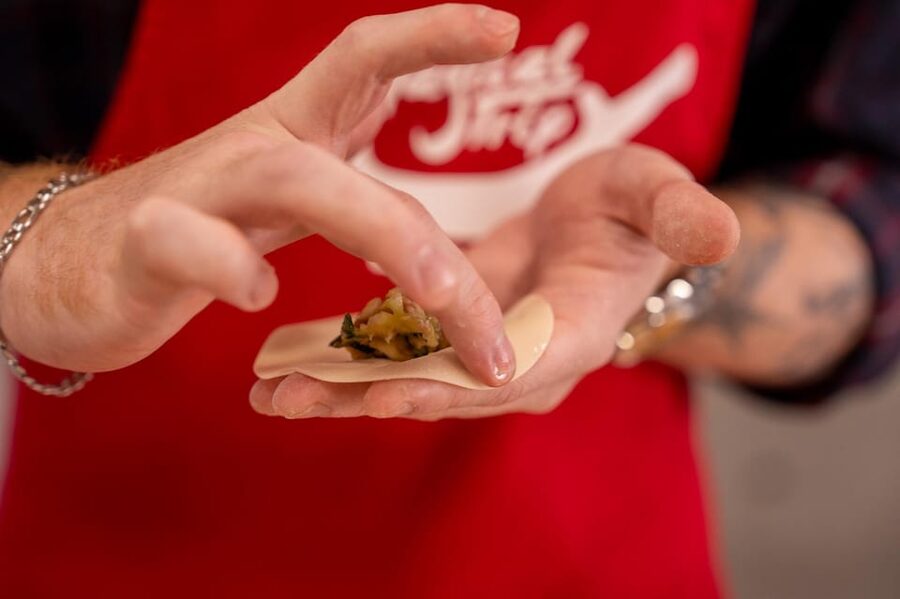
Folding gyoza brings the most hands-on activity to the class. You work with the wrappers and filling, then learn how to prepare the dumplings for cooking. The folding is simple enough for first-time cooks, but it still gives everyone something to do.
This is where the small group matters. With no more than seven participants, the guide can watch your technique, answer questions, and keep the pace comfortable. You can also compare folds with the people at your table, which adds a little friendly silliness to the meal.
Gyoza is a useful dish to take home as a skill. Once you understand the basic folding and cooking process, you can adjust fillings and make the activity part of a dinner with friends. The class does not promise restaurant-level perfection, and it does not need to. You are learning a practical version that is meant to be repeated.
A class led by the person in the room
The guide shapes much of this experience. The class is conducted in English, and the teaching style is conversational rather than formal. You follow each recipe step by step, with time to ask about ingredients, Osaka, and Japanese customs.
Chie has led several particularly strong sessions, combining cooking instruction with stories about Japanese regions and products. She has also been praised for making the food easy to prepare and for creating a comfortable mood for groups of friends.
Eri brings a similar mix of cooking help and cultural conversation. One useful detail from her sessions is the option to choose background music, which gives the studio a relaxed, personal feel. Akko has also hosted the class with an easygoing manner, helping people learn while they cook and eat.
Emi has taken extra time with the supermarket portion and answered broader questions about the city. Linda has even added seasonal touches, decorating the room for Christmas and helping a participant buy more sake afterward.
Guide assignments can change, so you should not book on the assumption that one particular person will lead your date. Still, the repeated pattern is clear: the guide is not just there to demonstrate recipes. You get a local host who can make the room feel social and help connect the food to everyday life.
Three canned drinks, tea, and a proper lunch
The price of $90 per person includes the cooking experience, lunch, all ingredients, tea, and three canned drinks. The drinks can be alcoholic or non-alcoholic, so you can choose sake, beer, or soft drinks according to your preference.
This is best understood as a food class with casual tasting, not a specialist sake seminar. You will have drinks while cooking and talking, but the main subject is the meal. If you want detailed instruction about sake production, regional breweries, or tasting technique, this may feel too light.
For most people, the drink arrangement is a useful part of the social setting. It gives you something to share while the food comes together, and it means you do not need to buy beverages separately during the class. Tea is also served, which helps keep the meal balanced.
The lunch is substantial. You prepare three dishes, and the food is all eaten as part of the experience. Come hungry, but do not expect to leave with a box of leftovers. The point is to cook and eat the meal in the studio.
What $90 buys you
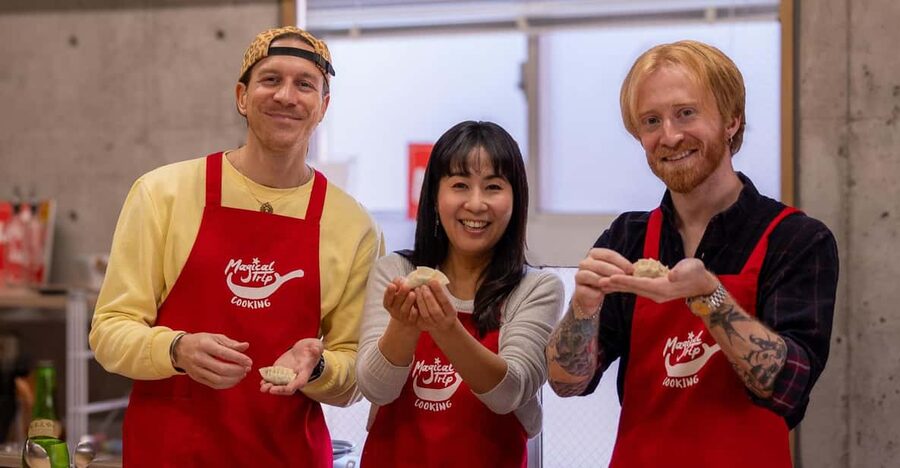
At $90, this is not the cheapest way to eat okonomiyaki in Osaka. A restaurant meal will cost less, and a supermarket visit on your own costs very little. The price makes more sense when you count the guide, ingredients, kitchen time, lunch, drinks, recipes, and photos.
You are also paying for access to a small group rather than a large demonstration. A group limit of seven lets you ask questions without waiting through a long line of participants. It also makes the gyoza folding and cooking tasks more enjoyable because everyone can take part.
The recipes add lasting value. You can download them after the class and try the dishes at home, which turns a four-hour activity into something you can use again. That matters if you enjoy bringing food memories back into your own kitchen.
I would consider it good value for a first visit to Osaka, especially if you want one activity that combines food, local shopping, conversation, and a full lunch. It is less compelling for someone who only wants a quick tasting or already knows these recipes well.
A good fit for couples, families, and solo visitors
The format works for couples and adult family groups because the tasks are shared without requiring advanced cooking skills. One person can fold gyoza while another helps with the soup or pancake, then everyone eats together.
It also suits solo participants. The group is small enough to make conversation natural, and the cooking gives you an easy reason to interact rather than sit quietly beside strangers. The friendly atmosphere is part of the experience, but you still need to be comfortable working in a shared kitchen.
Anyone over 12 can join. The age limit is sensible because the class includes knives, hot cooking surfaces, and other kitchen work. Parents should be ready for a hands-on lesson rather than a passive food demonstration.
Vegetarians and vegans are welcome, but you must share dietary needs or allergies at least one day ahead. Gluten-free options are not available. The kitchen cannot guarantee an allergy-free meal because food is prepared in external kitchens, and substitutions may not always be possible.
This is not a good choice if you have serious mobility limits. The activity can include places that are difficult for wheelchairs or strollers, and the supermarket visit means walking is part of the plan. A private tour is suggested for people with walking difficulties.
Timing, weather, and what to wear
The class lasts four hours, with the starting time set by availability. Because the supermarket visit comes before cooking, allow enough energy for a half-day activity rather than treating it as a quick lunch appointment.
Osaka can be very hot in summer, with listed highs reaching 40 degrees Celsius, and cold in winter, with lows near minus 5 degrees Celsius. Dress for the season, especially since you will spend some time outside walking between the station, supermarket, and studio.
You do not need cooking experience. The guide explains each step, and the recipes are meant to be clear enough for home use. Enthusiasm matters more than knife skills, though you should be ready to follow kitchen instructions carefully.
The class can be cancelled for a full refund up to 24 hours before the start. You can also reserve now and pay later, which helps if your Osaka schedule is still changing.
What you take home
The most useful souvenir is not a novelty item. It is the set of recipes and the confidence to make them again. Niku-sui, okonomiyaki, and gyoza are practical choices because they can fit into a casual dinner rather than requiring a special celebration.
You also receive photos taken by your guide during the class and sent by email afterward. That gives you a record of the supermarket visit, cooking process, and shared meal without asking you to photograph every step yourself.
The cultural value is quieter than a major attraction. You see what ingredients look like in a neighborhood shop, learn how a local might approach familiar dishes, and spend time talking with an English-speaking resident. For me, that everyday contact is more useful than a polished food show.
Should you book this Osaka cooking class?
Book it if you want to do more than eat Osaka food. The strongest reasons are the small group, practical recipes, local supermarket visit, and warm guide-led format. The class gives you a full meal and a skill you can use after Japan.
Think twice if you need gluten-free food, have difficulty walking, or want a serious sake education. The drinks are part of the social cooking session, not a formal tasting, and the menu is not designed for gluten-free diets.
For everyone else, $90 is a fair price for four hours of instruction, food, drinks, and cultural conversation. Chie, Eri, Emi, Akko, and the other guides bring much of the personality, while the three dishes give the activity a clear Osaka focus. Bring an appetite, arrive early, and plan to leave with recipes you will actually want to make.
FAQ
Where does the Osaka cooking class meet?
Meet in front of FamilyMart, about a one-minute walk from Exit 4B of Minami Morimachi Station.
How long does the experience last?
The cooking experience lasts four hours, including the supermarket visit, cooking, and lunch.
What dishes will I prepare?
You will prepare niku-sui beef soup, okonomiyaki, and gyoza.
Are drinks included?
Yes. The experience includes three canned drinks, which can be alcoholic or non-alcoholic, plus tea served during the class.
Can vegetarians and vegans join?
Yes, vegetarians and vegans are welcome. You must share dietary needs or allergies at least one day before the experience. Gluten-free options are not available.
Is cooking experience required?
No. The guide explains every recipe step by step, and the dishes are designed to be simple enough to recreate at home.
Can children join the class?
Anyone over 12 can join because the activity includes cutting and heating. The class may include locations that are not suitable for wheelchairs or strollers, and it is not recommended for people with mobility issues.
New cooking classes around Osaka
- Okonomiyaki&Takoyaki for Families:Osaka Street Food Festival★ 5.0 · 4 reviews
- Osaka Sake Tasting with Takoyaki Cooking★ 5.0 · 156 reviews
- Osaka: Sashiko Japanese Craftsmanship Workshop★ 5.0 · 31 reviews
- Osaka: Japanese Cooking Class with Matcha Experience★ 5.0 · 4 reviews
- Osaka Okonomiyaki Cooking Experience for Families & Groups★ 4.9 · 8 reviews
- Osaka: Okonomiyaki Cooking Class with Beer or Soft Drink★ 4.9 · 9 reviews
- Osaka: Cooking Class Ramen & Gyoza Course in Nanba★ 4.9 · 86 reviews
- Osaka: Gluten-Free Ramen and Gyoza Cooking Class★ 5.0 · 42 reviews
Osaka Cooking Classes, side by side.
Sushi Making Osaka! Popular Sushi Class in Japan!
Read our review →
Osaka: Ramen and Gyoza Cooking Class in Dotonbori
Read our review →
Osaka Cooking Class: Okonomiyaki &Japanese cuisines experience
Read our review →
Osaka: Roll and Authentic Sushi Making Class in Dotonbori
Read our review →
Osaka: Cooking Class Ramen & Gyoza Course in Nanba
Read our review →
Osaka: Gluten-Free Ramen and Gyoza Cooking Class
Read our review →
This kitchen also appears in