
Review · OSAKA
Osaka : Exclusive Tea Ceremony & Wagashi Cooking
A three-generation family welcomes you into the world of Japanese tea and sweets in Izumisano, a short trip from the usual Osaka sightseeing circuit. You make wagashi, the delicate confection served with tea, then learn how to prepare green tea in the formal style. The family business has been operating for more than a century, which gives the visit a personal connection to local tradition.
I like the hands-on format: you are not simply watching a tea ritual, you are making the sweet and tea you will enjoy. I also like the small group limit of six, plus the chance to see kimono and woven textiles connected with Kyoto’s Nishijin district. The main consideration is timing. Two hours is enough for an introduction, but not a full study of tea ceremony practice.
Key points
- Make your own wagashi: Prepare a Japanese confectionery before the tea ceremony and eat it with the tea you make.
- Learn the meaning behind the ritual: The guide explains the history and spirit of Japanese tea ceremony customs.
- Meet a century-old family business: A three-generation family hosts the activity in a traditional local setting.
- See more than tea utensils: The visit includes examples of kimono and Nishijin woven textiles, along with a small collection of artifacts.
- Small and accessible: Groups are limited to six, the activity is wheelchair accessible, and English interpretation is available.
- Add a kimono: You can arrange kimono wear during booking for photographs at the end.
A hands-on introduction to Japanese tea culture
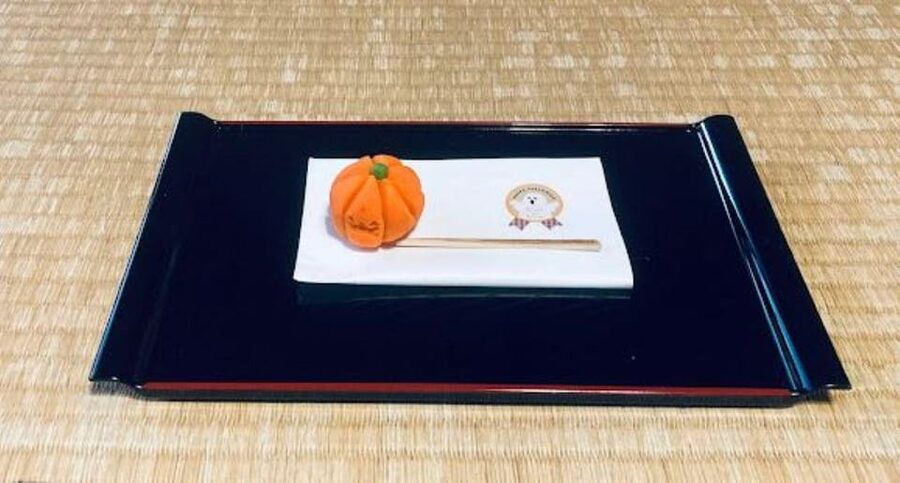
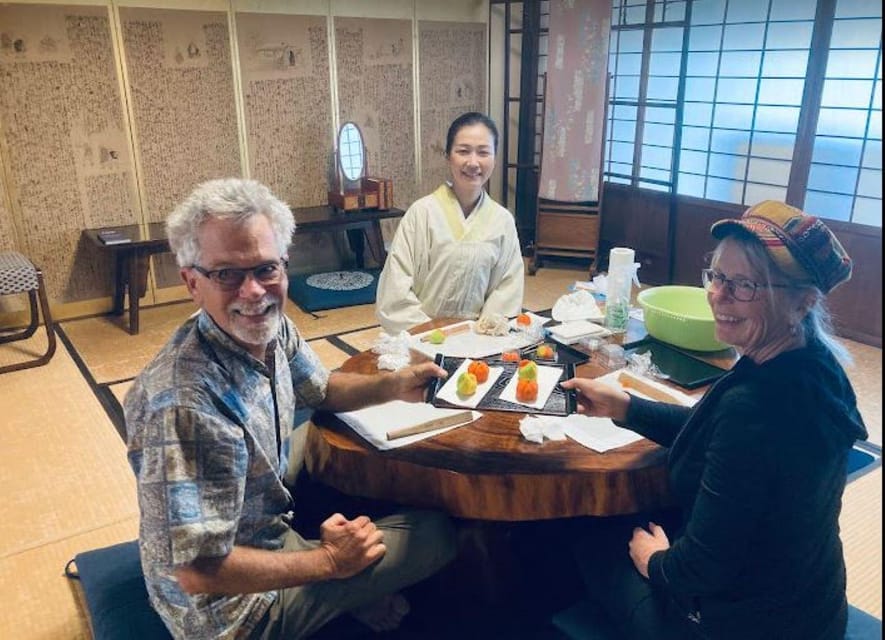
This activity works because it joins two traditions that belong together. Wagashi is not just a sweet snack. Its color, shape, and seasonal design are meant to prepare your palate and your mind for tea. By making one yourself, you get a better sense of the care behind something that can look almost too pretty to eat.
The tea ceremony then gives the confectionery a purpose. You prepare green tea according to the rules of the ceremony and enjoy it with the wagashi you have made. That simple sequence helps the customs make sense. You are not memorizing manners in isolation. You are learning how each part fits into the visit.
Your English-speaking guide explains the history and the spirit of tea ceremony practice as you go. The supplied information does not name the guide, but it does specify English-language guidance and, when selected, an English interpreter accompanying you. If clear instruction matters to you, confirm the interpreter option when booking.
This is a good choice if you want more than a quick photo in a rented kimono. It is also a better fit for curious beginners than for someone seeking advanced training in tea ceremony. The two-hour session introduces the form and meaning without asking you to commit half a day.
More cooking classes around Osaka:
- Sushi Making Osaka! Popular Sushi Class in Japan!
★ 5.0 · 500 reviews - Osaka: Ramen and Gyoza Cooking Class in Dotonbori
★ 5.0 · 378 reviews - Osaka Cooking Class: Okonomiyaki &Japanese cuisines experience
★ 5.0 · 261 reviews
Starting at Izumisano’s old Machiya house
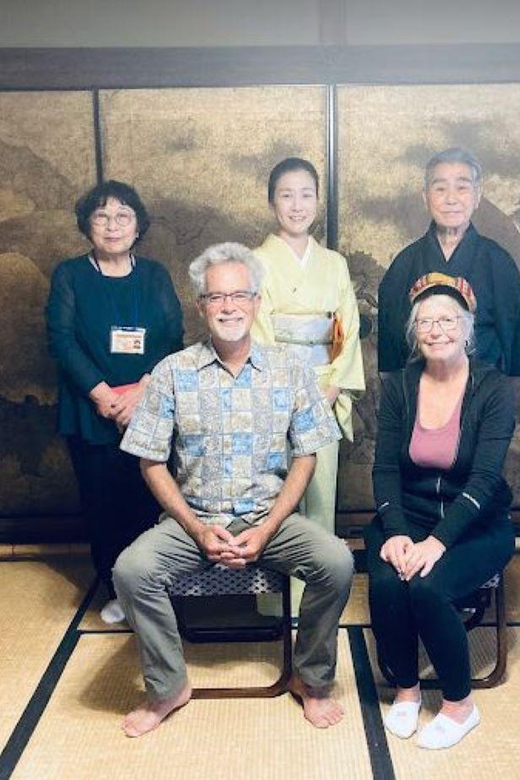
The meeting point is Izumisano Furusato Machiya-Kan, also known as the former Shinkawa family residence. You reach it from the east side of Nankai Izumisano Station. After leaving the station, walk right toward Tsubasadouri shopping district, turn left at Uniform Noguchi, then turn right at the next corner.
The directions are specific, but allow yourself time to find the house. You are looking for a traditional residence rather than a large modern attraction, so the final turn may not feel obvious if you are rushing. The host will pick you up at the Machiya-Kan meeting point.
A machiya is a traditional Japanese townhouse, and this setting suits the subject better than a hotel conference room would. The activity also has a local feel because Izumisano is in the Kansai Region, rather than in central Kyoto’s most visited lanes. You still get an introduction to customs associated with Kyoto, including Nishijin textiles, but the setting is tied to Osaka Prefecture.
The session includes a walk and a class, with the total activity lasting two hours. The information provided does not give a detailed minute-by-minute schedule, so expect the order to be guided by the host. The important sequence is clear: learn about tea ceremony, make wagashi, prepare tea, and enjoy the two together.
Making wagashi before the tea ceremony
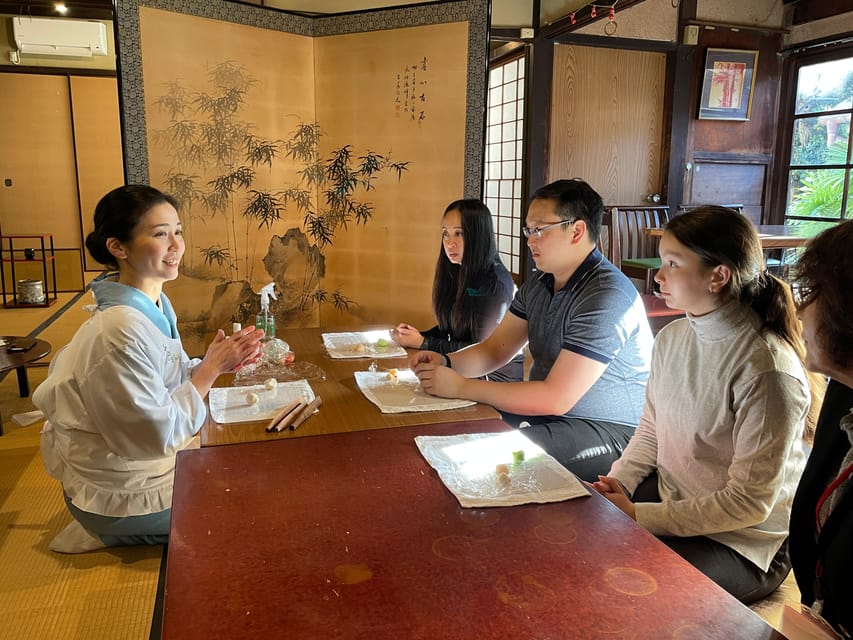
The wagashi class is likely to be the most practical part of the visit. You work with the ingredients and seasonings supplied by the host, learning how to shape a Japanese confectionery rather than simply receiving one. The finished piece becomes part of the tea ceremony that follows.
Japanese sweets often look simple from a distance. Their neat forms require care, and the small size encourages you to pay attention to texture and presentation. The class gives you a chance to see that process at close range. Since you make the sweet yourself, you also have a clear souvenir of the skill involved, even after it has been eaten.
The supplied details do not identify the specific wagashi design or ingredients used on the day. That can change with the season or the class plan. You should not expect a full cooking lesson with a long list of dishes. This is a focused introduction to one confectionery and its role alongside tea.
Vegetarians are welcome, and the activity is described as vegan friendly. Still, tell the host about dietary restrictions in advance. That is especially sensible for a food class, since ingredients and preparation choices may need to be checked before you arrive.
Learning the rules of the tea ceremony
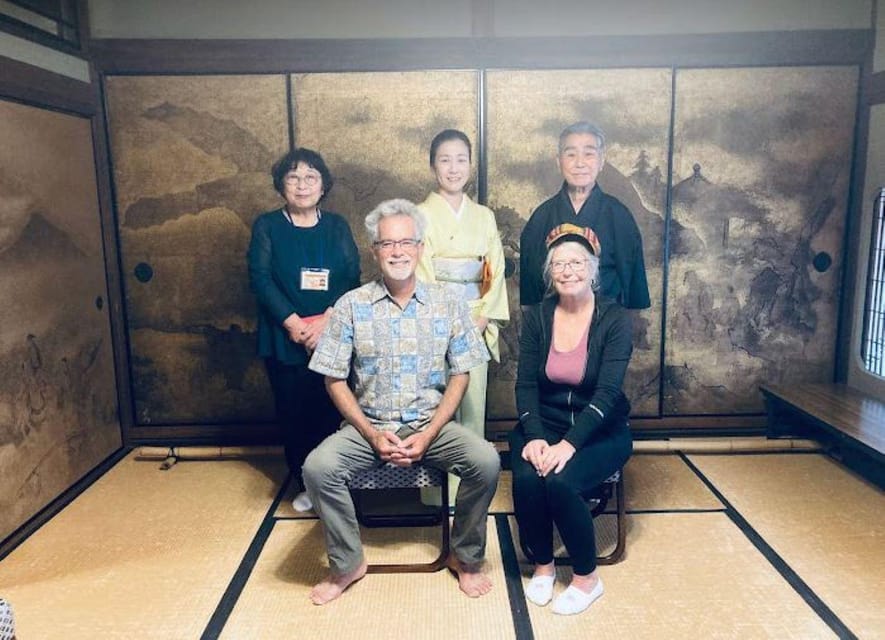
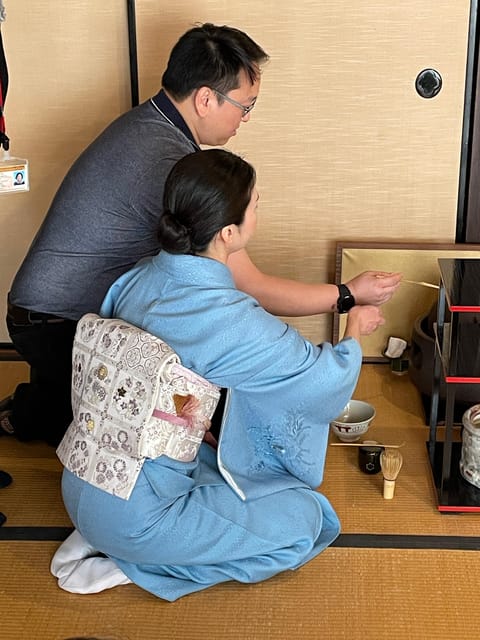
After making the wagashi, you learn how to prepare green tea according to tea ceremony rules. The lesson covers more than stirring powdered tea. You hear about the history and spirit of the ceremony, then put some of that instruction into practice.
Japanese tea ceremony is built around attention. The way you handle the bowl, prepare the tea, and receive the sweet all contribute to the occasion. You do not need prior experience, and the activity is designed for people who have never taken part in an authentic ceremony. That makes it a useful first step if formal Japanese customs seem unfamiliar.
I like the pairing of explanation and action here. A lecture about tea can remain abstract, while a ceremony without context can feel like a series of mysterious gestures. This activity gives you both: the reason behind the custom and a chance to try it yourself.
Keep your expectations sensible. Two hours cannot cover every school, utensil, rule, or historical change in Japanese tea culture. You will receive a practical introduction rather than a specialist course. For most visitors, that is the right balance, especially when the rest of an Osaka or Kansai itinerary is already full.
Same kitchen, a different dish:
- Osaka: Roll and Authentic Sushi Making Class in Dotonbori
★ 4.9 · 239 reviews - Osaka Sake Tasting with Takoyaki Cooking
★ 5.0 · 156 reviews - Osaka: Cooking Class Ramen & Gyoza Course in Nanba
★ 4.9 · 86 reviews - Osaka: Gluten-Free Ramen and Gyoza Cooking Class
★ 5.0 · 42 reviews
A three-generation family setting
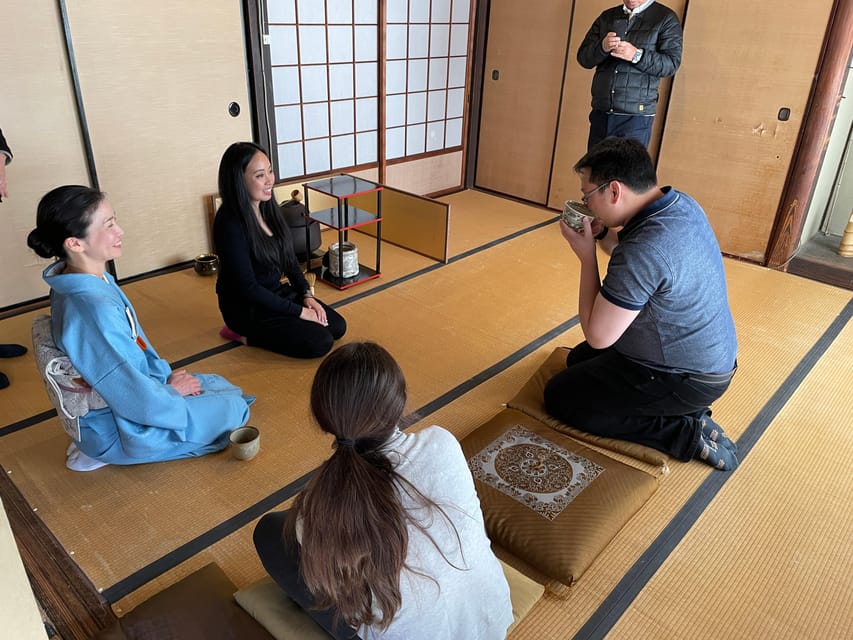
The family connection is one of the strongest reasons to choose this activity. The hosts are described as a three-generation family, and the business has operated for more than a century. That does not make the ceremony automatically perfect, but it does give the encounter a human scale that a large commercial demonstration may lack.
You also have a chance to see a small museum collection with different artifacts around the shop at no additional cost. The details do not list each object, so think of this as a modest display rather than a major museum visit. Its value is in adding context to the family business and the material culture around tea, clothing, and local life.
The family-run format may suit you if you enjoy asking questions and seeing how a tradition is passed along. It may be less appealing if you prefer a tightly scripted attraction with a large presentation and lots of visual explanation in several languages. The group limit of six should help keep the session personal, but the exact atmosphere will depend on who else books your time.
Kimono, Nishijin textiles, and the final photographs
When the ceremony ends, you can take photographs and look at examples of kimono and beautifully woven textiles from Kyoto’s Nishijin district. Nishijin is known for fine textile production, so this part adds a useful link between tea, clothing, and craft.
You can select kimono wear as an add-on during booking. If you choose it, the outfit gives you a more formal look for photographs and connects visually with the ceremony. The supplied information does not state how long dressing takes, what styles are available, or whether assistance is included, so check the booking details before assuming it will be a full dressing session.
The photo opportunity comes after the ceremony, which is sensible. You can first focus on learning the process, then take pictures without interrupting the tea ritual. If you are more interested in the customs than in dressing up, the kimono option is not essential. The tea and wagashi activities make up the main event.
The final stop is listed as くらふとや, and the activity ends back at the meeting point. The information does not explain whether this name refers to the shop or the family’s craft space, so follow the host’s directions during the walk rather than trying to plan a separate visit around it.
What the $98 price covers
At $98 per person, this is not a bargain-priced food demonstration. You are paying for a small-group cultural class, the guide, all cooking ingredients and seasonings, and taxes and fees. The group limit of six matters here. A private-feeling lesson costs more than a crowded public tea performance, but you have a better chance to follow the instructions and ask questions.
The price also includes more than a cup of tea. You make wagashi, prepare green tea, learn about ceremony customs, see the family’s displays, and have time for photographs. For someone already planning a visit near Izumisano, that combination gives the fee a reasonable purpose.
I would compare the cost with your priorities. If you mainly want to taste matcha or take one kimono photograph, $98 may feel high. If you want a guided introduction with hands-on cooking and a family connection, the price is easier to justify.
Insurance is not included. You should arrange your own coverage if that matters to your trip. Free cancellation is available up to 24 hours before the activity for a full refund, and you can reserve now and pay later, which is useful when your Kansai schedule is still shifting.
Who will get the most from this visit
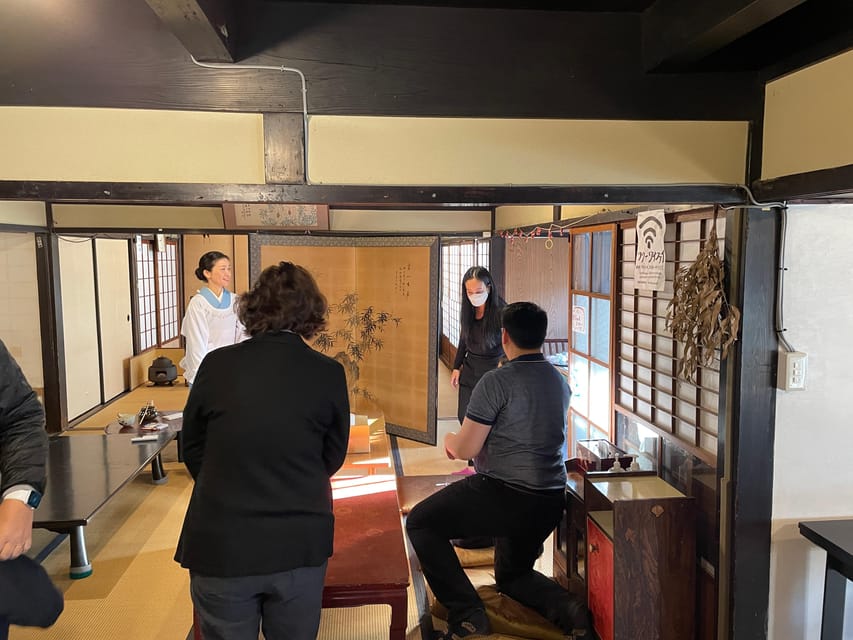
This activity suits first-time visitors who want a clear introduction to Japanese tea customs without spending an entire day in a formal school. Couples, families, and small groups can all take part, and the limit of six keeps the class from becoming a large production.
It is also a good option for vegetarians and vegans, provided you share your dietary needs in advance. If clothing and craft interest you as much as food, the kimono and Nishijin textile section gives the visit extra appeal.
The activity is wheelchair accessible, which is important to confirm when arranging the booking and meeting details. The information says it is not suitable for people with altitude sickness, although this is an unusual restriction for a local two-hour class. If that condition applies to you, ask the provider for clarification before reserving.
You should avoid alcohol and drugs during the activity. The ceremony calls for attention and respectful participation, and those restrictions are straightforward.
Should you book the Izumisano tea ceremony?
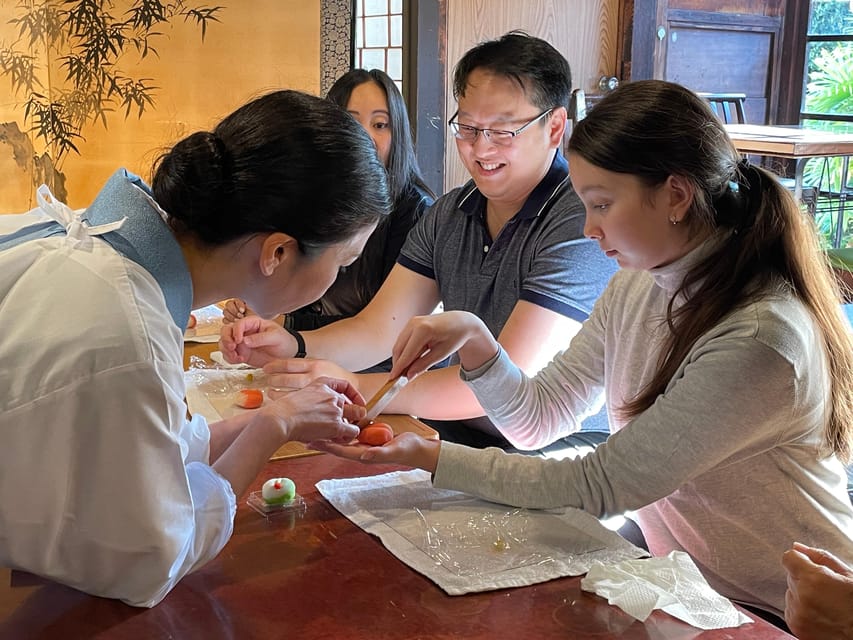
Book it if you want to make something, not just watch something. The strongest features are the wagashi preparation, the chance to make green tea yourself, and the three-generation family setting with more than a century of business behind it.
Skip it if your schedule is so tight that getting to Izumisano will create stress, or if you want a long, advanced study of tea ceremony. Two hours gives you a meaningful introduction, not mastery.
For most visitors who value personal instruction and local craft, this is a well-focused Kansai activity. Choose the English interpreter option if you want extra language support, tell the host about food restrictions ahead of time, and add the kimono only if photographs are a real priority.
FAQ
How long does the tea ceremony and wagashi activity last?
The activity lasts two hours. Starting times vary, so check availability for the date you want.
Where does the activity begin?
It begins at Izumisano Furusato Machiya-Kan, the former Shinkawa family residence, near Nankai Izumisano Station.
How do I reach the meeting point from Izumisano Station?
Exit Nankai Izumisano Station and walk right toward Tsubasadouri shopping district. Turn left at Uniform Noguchi, then right at the next corner. Furusato Machiya-Kan is there, and the host will pick you up.
Is an English-speaking guide available?
Yes. The activity includes a live English-speaking guide. You can also book an English interpreter to accompany you.
What will I make during the class?
You will make wagashi, a Japanese confectionery, and prepare green tea according to tea ceremony rules.
Is the activity suitable for vegetarians and vegans?
Vegetarians are welcome, and the activity is described as vegan friendly. Tell the host about dietary restrictions in advance.
Can I wear a kimono?
Yes. Kimono wear is available as an add-on during booking, and you can take photographs after the ceremony.
Is the activity wheelchair accessible?
Yes, the activity is listed as wheelchair accessible.
What is the cancellation policy?
You can cancel up to 24 hours in advance for a full refund. You can also reserve now and pay later.
New cooking classes around Osaka
- Okonomiyaki&Takoyaki for Families:Osaka Street Food Festival★ 5.0 · 4 reviews
- Osaka Sake Tasting with Takoyaki Cooking★ 5.0 · 156 reviews
- Osaka: Sashiko Japanese Craftsmanship Workshop★ 5.0 · 31 reviews
- Osaka: Japanese Cooking Class with Matcha Experience★ 5.0 · 4 reviews
- Osaka Okonomiyaki Cooking Experience for Families & Groups★ 4.9 · 8 reviews
- Osaka: Okonomiyaki Cooking Class with Beer or Soft Drink★ 4.9 · 9 reviews
- Osaka: Cooking Class Ramen & Gyoza Course in Nanba★ 4.9 · 86 reviews
- Osaka: Gluten-Free Ramen and Gyoza Cooking Class★ 5.0 · 42 reviews
Osaka Cooking Classes, side by side.

Sushi Making Osaka! Popular Sushi Class in Japan!
Read our review →
Osaka: Ramen and Gyoza Cooking Class in Dotonbori
Read our review →
Osaka Cooking Class: Okonomiyaki &Japanese cuisines experience
Read our review →
Osaka: Roll and Authentic Sushi Making Class in Dotonbori
Read our review →
Osaka: Cooking Class Ramen & Gyoza Course in Nanba
Read our review →
Osaka: Gluten-Free Ramen and Gyoza Cooking Class
Read our review →
Osaka: Cooking Class & Sake Tasting with Local Market Visit
Read our review →This kitchen also appears in