
Review · COOKING CLASSES WORLDWIDE
Samarkand: Uzbek Cooking Class in a Village Home
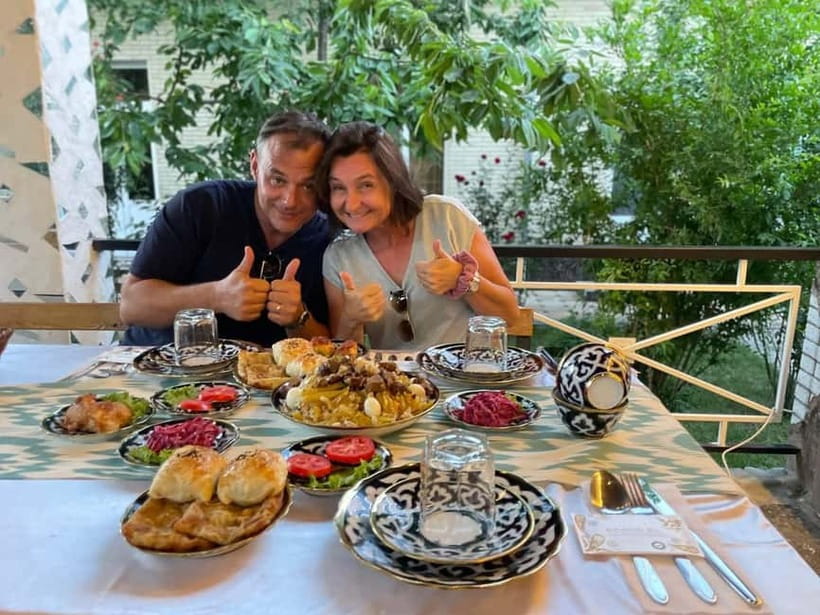
The best part of this Samarkand cooking class happens outside the city, in a family home where plov cooks over an open fire and lunch becomes a shared family event. You will work with Bekjon, his mother, and possibly other family members as you prepare Uzbekistan’s famous rice dish and, depending on the arrangement, handcraft mantu dumplings.
I like two things right away: the trip gives you a real look at village life, and the food is made from the ground up rather than demonstrated from a distance. You can visit the garden, feed cows, sheep, chickens, or donkeys, and sit with green tea under a grapevine while the plov slowly cooks.
The main caution is the meat-centered menu and the one-hour drive each way. Vegetarian alternatives are mentioned for mantu, but the activity is not recommended for vegetarians or vegans, and the long cooking session may not suit people with back problems or recent surgery.
Key points to know before booking
- Plov cooked over a wood fire: Help prepare rice, onions, carrots, meat, and spices in a large qozon, the traditional cast-iron cooking pot.
- Mantu made by hand: Roll dough, add the filling, shape the dumplings, and steam them in a multi-layered mantuvarka.
- A family home, not a restaurant kitchen: Bekjon, his mother, and other relatives host you in a traditional village setting.
- A proper countryside outing: The village is about one hour from Samarkand, with transport included from a hotel, train station, or airport.
- Time between cooking steps: Explore the garden, meet the farm animals, try traditional clothes if arranged, and drink tea with local snacks.
- Good value at $52: The price covers transport, ingredients, the class, village visit, and tea for a five-and-a-half-hour experience.
Leaving Samarkand for village life
This is a half-day trip with a clear change of pace. You leave Samarkand behind and travel about one hour into the Samarqand Region, where the setting shifts to gardens, fields, fruit trees, and clay-brick homes.
The drive matters. If you only stay in Samarkand, you see Uzbekistan through its monuments, markets, and city streets. This outing adds another side of the country: household cooking, animals kept close to home, outdoor stoves, and the easy rhythm of a family day.
Pickup is included from a hotel, train station, or airport. Bekjon has been praised for prompt transport and for contacting people before the activity to ask about expectations and food restrictions. Send your exact pickup address when booking. That small step prevents the usual morning scramble.
The total activity lasts about five and a half hours. The class itself is listed at roughly three hours and forty minutes, with the rest allowing for the drive and time at the home. It is not a quick cooking demonstration. You need enough time to work, wait for the fire and steam, eat, and talk.
More cooking classes around the world:
- Half-Day Thai Cooking Class at Organic Farm in Chiang Mai
★ 5.0 · 19,087 reviews - Florence: Pasta Cooking Class with Unlimited Wine
★ 4.9 · 10,285 reviews - 3 in 1 Cooking Class near Navona: Fettuccine, Ravioli & Tiramisu
★ 5.0 · 7,376 reviews
Arriving at a traditional family home
The cooking takes place at Bekjon’s family home in a village. The home is described as a clay-brick house among fruit trees and vegetable patches, with cows, sheep, chickens, and donkeys nearby.
That setting is the heart of the experience. You are not simply learning a recipe. You are seeing where food fits into daily life, and you may find that the most memorable moments happen between the planned activities: tea beneath a grapevine, a walk through the garden, or a conversation about village customs.
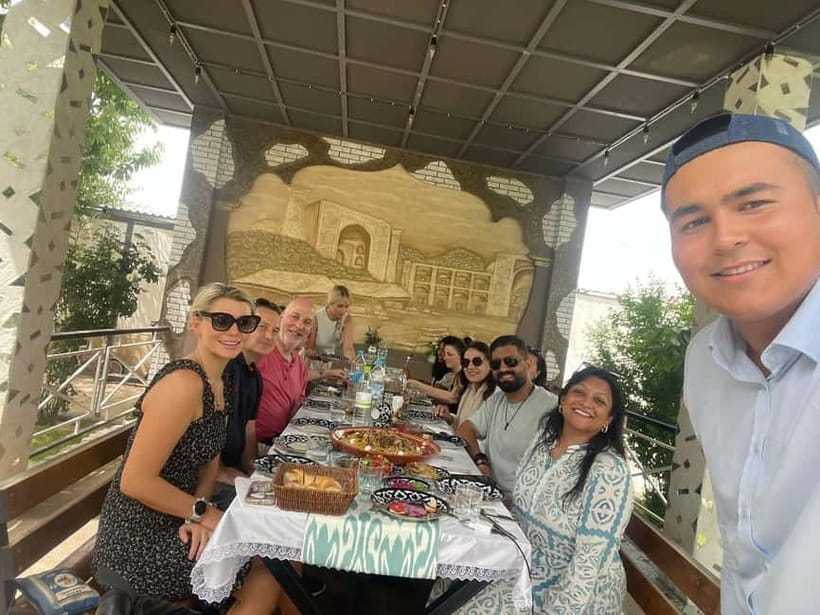
The atmosphere is friendly and personal. Bekjon’s mother helps with the cooking, and his sister-in-law or friend Zulfiya may also take part, particularly during the mantu preparation. Translation apps may be useful at times, although Bekjon speaks English and has discussed Uzbek history, culture, and ordinary village life with visitors.
Do not expect a polished cooking school with matching workstations. The appeal is the opposite. You work in a home, with family members who prepare these dishes as part of normal life. That means the pace may be informal, and the exact order of activities can vary.
Preparing plov in the qozon
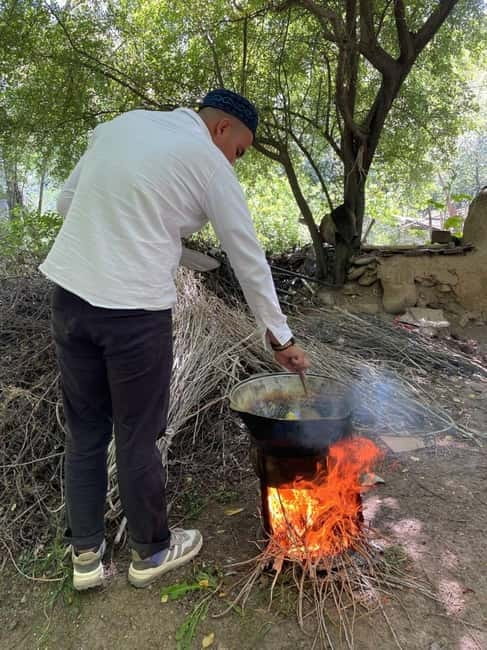
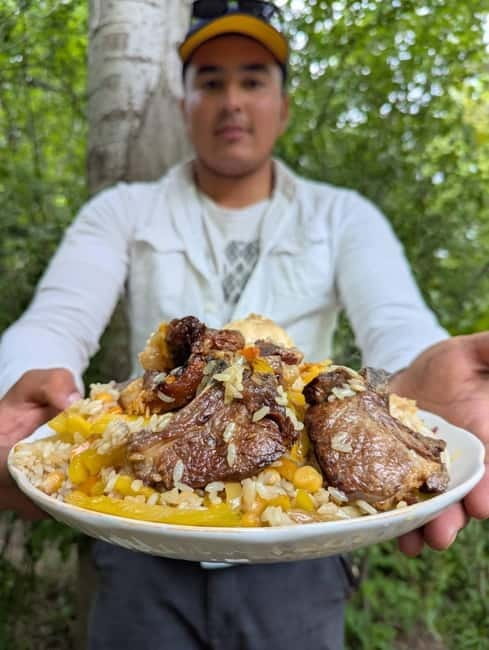
Plov, also called pilaf or pilov, is Uzbekistan’s signature dish, and this class puts it at the center. You help prepare rice, carrots, onions, lamb or beef, and spices before the ingredients go into a large qozon over a wood-fired stove.
The method is as important as the recipe. You learn how ingredients are selected, how flavors are built in layers, and how the rice is handled as the dish cooks. The host guides you through the process, but you are expected to stir, taste, and help rather than simply watch.
Cooking over an open fire gives the lesson a strong sense of place. You see the heat, smoke, timing, and patience involved. Plov is not a dish that rushes. As it simmers, the aroma spreads through the yard, and you get a natural break to explore the home and garden.
Portions can be generous. One person described sharing a plate with Bekjon’s mother because the serving was large, which also captures the communal style of the meal. In Uzbek homes, food is meant to be shared, so expect the eating portion to feel more like family lunch than a plated restaurant course.
The recipe also has cultural weight. Plov appears at family gatherings, celebrations, and weddings, and its preparation is tied to hospitality. Learning it in a household gives you a better feel for that role than simply ordering a plate in a city restaurant.
Shaping mantu dumplings by hand
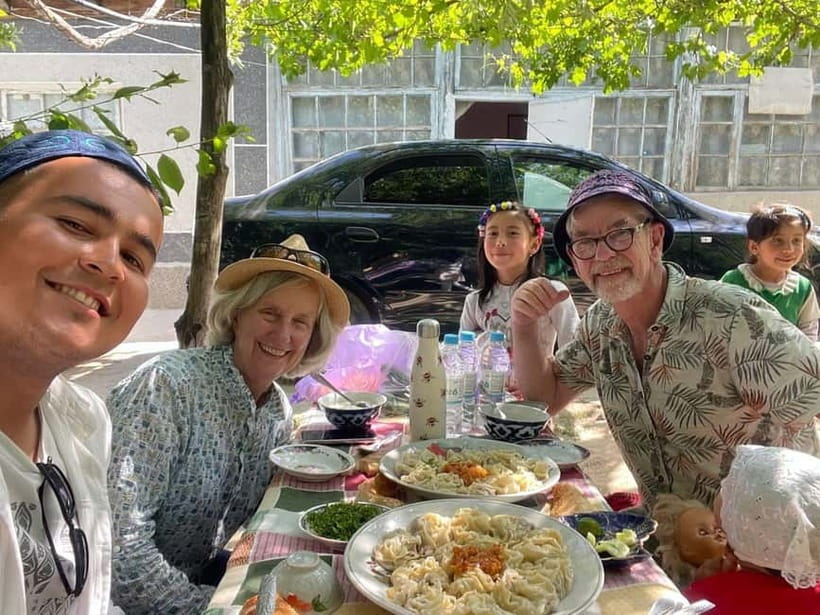
The second cooking skill is mantu, steamed dumplings filled with minced meat and onions. You roll thin dough, add the filling, fold the dumplings, and place them in a mantuvarka, a tiered steamer designed for cooking several layers at once.
This is a slower, more tactile part of the class. The dough must be thin, the filling balanced, and the shape secure enough to survive steaming. You may not produce perfect dumplings on your first attempt, but that is part of the fun. The family guides you through the technique and shows how the work is often shared during holidays and family gatherings.
Mantu received especially warm praise from one participant who enjoyed the dumplings even more than the plov. If you like hands-on food preparation, this part may be the most satisfying because you can see the result of every fold.
The information for this activity also mentions pumpkin or potato mantu for vegetarian visitors. However, the experience is clearly built around meat, and the booking information says it may not suit vegetarians or vegans. If you do not eat meat, ask ahead about the exact menu rather than assuming a substitute will be available.
Food allergies also need advance discussion. The activity is not considered suitable for people with food allergies, so this is not the place to take a chance with an unclear ingredient list.
Same kitchen, a different dish:
- Florence: Pasta & Tiramisu Cooking Class with Unlimited Wine
★ 4.9 · 6,708 reviews - Florence: Pasta Cooking Class with Unlimited Wine
★ 5.0 · 6,413 reviews - Hanoi Cooking Class: Culture, Local Market & Meaning CSR Impact
★ 5.0 · 5,147 reviews - 5 Traditional Dishes Hanoi Cooking Class with Market Trip
★ 5.0 · 4,890 reviews
Tea, animals, and the spaces between recipes
The gaps in the cooking schedule are not wasted time. While the plov cooks, you can walk around the garden, feed animals, or sit under a grapevine with green tea and local snacks.
This slower interval helps the class feel like a visit rather than a production line. You have room to ask about village life, family customs, and Uzbek food. Some sessions have also included trying on traditional wedding clothes and learning about local traditions, though that should be treated as an extra possibility rather than a guaranteed part of every booking.
The animals add a simple but genuine connection to rural life. Cows, sheep, chickens, and donkeys are part of the household environment, not a staged farm attraction. If you have animal allergies, note that the activity is not recommended for you.
Bring a camera if you enjoy documenting food preparation and village details. Wear comfortable clothes, since you will be working around cooking equipment and may spend time outdoors. Sunscreen is sensible, especially while sitting near the fire or in the garden.
What the guide adds to the day
Bekjon is more than a driver. He handles pickup, explains the countryside during the journey, introduces you to the family, and answers questions about Uzbek culture and history.
His strongest role is as a bridge between visitor and household. He helps the day move along while leaving room for his mother and other family members to show their own skills. His mother’s live demonstration of plov has been singled out for her practical tips and patience, and that family involvement gives the food lesson its personal character.
Communication is in English. Bekjon’s English has been described as solid, though some conversations at the home may rely on translation apps. That is not necessarily a problem. Cooking often communicates clearly through gestures, demonstration, tasting, and repetition.
The experience can also include more than food. One outing included a local market stop to buy ingredients, while another combined the village meal with discussion of Amir Temur and traditional paper making. These extras are not listed as guaranteed parts of every session, so ask Bekjon what your particular day will include.
Is $52 a fair price?
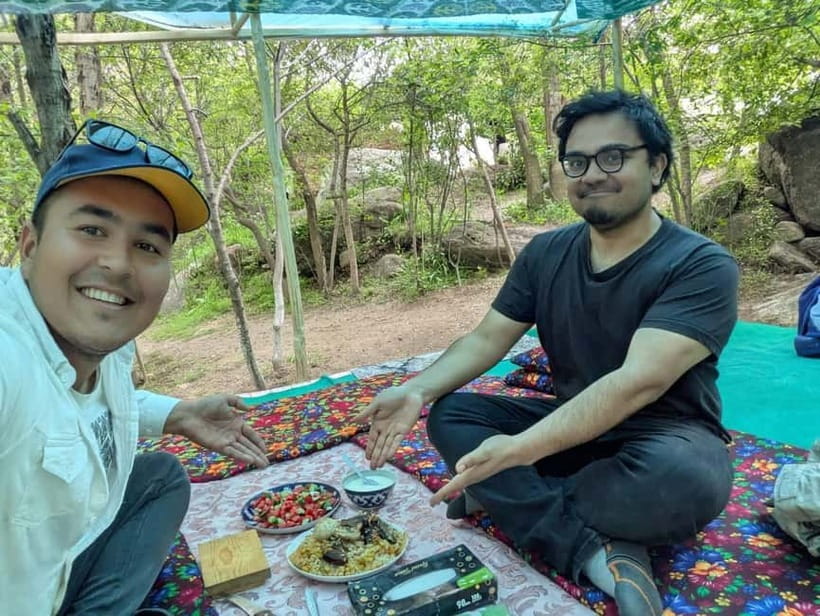
At $52 per person, this is good value if you want a full cultural outing rather than a short recipe lesson. The price includes pickup and return transport, the cooking class, ingredients, a village tour, tea, and time with the family.
Transport alone matters here. The village is about an hour from Samarkand, and arranging a private car for the round trip would add cost and planning. You also receive a meal and an activity, not just a transfer to a rural area.
The value is strongest for couples, small groups, and curious solo visitors who want direct contact with local life. It is less compelling if your only goal is to learn a quick plov recipe. A city class would likely use less of your day and avoid the drive.
The class also offers something a restaurant cannot: you see the fire, the ingredients, the household, and the work behind the dish. For many people, that makes the price easier to justify.
Who will enjoy this cooking class most?
You are a good match if you enjoy cooking with your hands, asking questions, and spending time in an ordinary home rather than moving from sight to sight. The class suits food lovers, solo visitors, couples, and anyone who wants a break from Samarkand’s major monuments.
It is particularly useful early in a Uzbekistan trip. You learn how plov and mantu are prepared, then recognize those dishes more clearly when they appear elsewhere. You also get a practical introduction to Uzbek hospitality and rural customs.
It may not suit you if you dislike meat, have serious food allergies, or want a tightly timed culinary workshop. The activity is not recommended for vegans, vegetarians, people with diabetes, people with animal allergies, people with back problems, people recovering from recent surgery, babies under one year, or people over 95.
The cooking can involve standing, bending, working near heat, and spending time outdoors. Comfortable clothes are a sensible choice, and anyone with mobility concerns should ask for details before booking.
Small practical details that matter
Free cancellation is available up to 24 hours before the activity for a full refund, and you can reserve now and pay later. Starting times depend on availability, so confirm the departure time when you book.
The listed language is English. Pickup is included, but you must provide the correct address, whether that is your hotel, train station, or airport.
Avoid bringing fireworks, which are not allowed. Bring sunscreen and a camera, and plan for a five-and-a-half-hour outing rather than a brief lesson.
The activity has a perfect five-star score from 22 ratings, with repeated praise for punctual transport, warm family hosting, clear coordination, tasty plov, and Bekjon’s cultural explanations. The most consistent strength is the feeling of being welcomed into a household, not merely taken to a cooking venue.
Should you book it?
Book this class if you want home cooking, countryside time, and personal contact in one outing. The combination of an open-fire qozon, handmade mantu, village animals, tea beneath a grapevine, and family conversation gives you a side of Uzbekistan that city sightseeing cannot provide.
Think twice if you are vegetarian, vegan, managing food allergies, or uncomfortable with a long drive and an informal home setting. For everyone else, $52 is a sensible price for transport, instruction, food, and a genuine look at rural life near Samarkand. Send your pickup details and food needs in advance, then arrive ready to stir, fold, taste, and share.
FAQ
How long does the Samarkand village cooking class last?
The full experience lasts about five and a half hours. The cooking portion is listed at approximately three hours and forty minutes, with the remaining time used for transport and time at the family home.
How far is the village from Samarkand?
The village is about one hour from Samarkand.
Is hotel pickup included?
Yes. Pickup and return transfer are included from a hotel, train station, or airport. You need to provide the correct pickup address.
What dishes will I learn to make?
The class focuses on Uzbek plov and may also include mantu, steamed dumplings filled with meat and onions. Pumpkin or potato mantu may be available as alternatives.
Is the cooking class taught in English?
Yes. English is the listed language, and Bekjon leads the activity. Translation apps may also be useful during conversations with family members.
Is the food suitable for vegetarians or vegans?
The activity involves cooking with meat and is not recommended for vegetarians or vegans. Vegetarian mantu alternatives are mentioned, so ask about the exact menu before booking.
What should I bring?
Bring a camera, sunscreen, and comfortable clothes.
Can I cancel for a full refund?
Yes. You can cancel up to 24 hours in advance for a full refund.
Who should avoid this activity?
The activity is not suitable for people with back problems, diabetes, animal allergies, food allergies, recent surgeries, or for babies under one year. It is also not recommended for vegans, vegetarians, and people over 95.
New cooking classes around the world
- Shinjuku Tokyo: Authentic Japanese Home-Style Culinary Class★ 4.9 · 125 reviews
- Shibuya Tokyo: Onigiri & Tamagoyaki Cooking Class★ 5.0 · 4 reviews
- M.O.M COOKING CLASS★ 4.8 · 6 reviews
- Seville: Paella-Cooking Experience with Sangria & Full Meal★ 4.9 · 42 reviews
- Shanghai: Authentic Chinese Cooking Class with Master Chef★ 5.0 · 2 reviews
- Sestri Levante: Pesto & Cooking Classes, Wine Tasting★ 4.9 · 56 reviews
- Seville: Paella Cooking Class & 30-Min Local Expert Q&A★ 4.8 · 37 reviews
- Seoul: Premium Korean Feast Cooking Class★ 5.0 · 3 reviews