
Review · CHINESE COOKING CLASSES
Warsaw’s No 1 cooking class-Polish dumplings with liqueur tasting
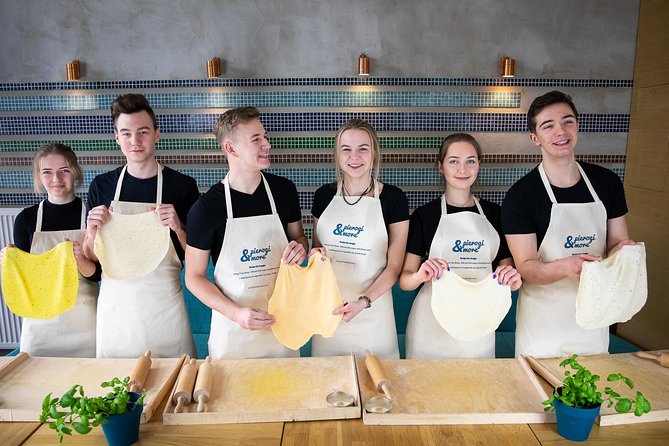
The best part of this Warsaw cooking class is that you do not simply watch someone make pierogi. You knead the dough, roll it thin, shape the dumplings, cook them, and sit down to eat the whole batch. The class turns a famous Polish dish into a useful souvenir you can make at home.
I like the small group size, capped at 10, and the clear, hands-on teaching. I also like the family-style meal and liqueur tasting, which turn a cooking lesson into a social evening. The main consideration is that you share the finished food with the group, and one past session found the room quite warm.
Key points about this Warsaw pierogi class
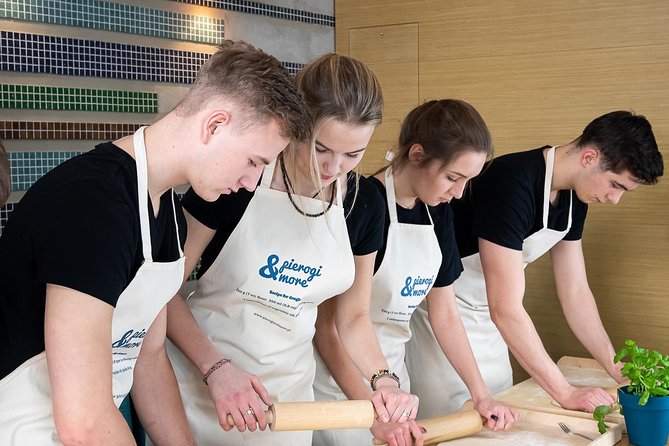
- You make the full dumpling: Learn dough, rolling, fillings, folding, and cooking rather than watching a demonstration only.
- The meal is your own work: Everyone’s pierogi are cooked and served family-style at the end.
- Small groups help: The maximum is 10 people, with instructors able to give individual help.
- Vegetarian and vegan choices are possible: Ask for these when booking.
- Polish liqueurs are included: A tasting follows the meal, with a light guessing game in some sessions.
- It is more than dinner: You also get food history, Polish traditions, recipes, and photos sent afterward in some cases.
Making pierogi at Stawki 3
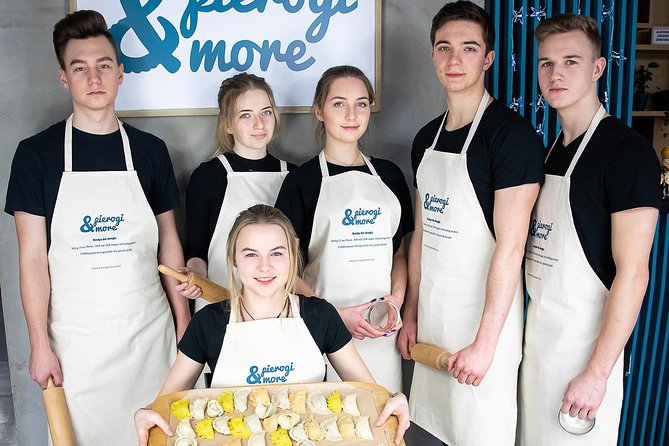
The class takes place at Pierogi & More, at Stawki 3 in Warsaw. It is northwest of the Old Town and near public transportation, with the meeting point also serving as the end point.
The experience lasts about two hours. That is enough time to learn the basic method, produce a generous meal, and enjoy the social side without turning the evening into a long culinary course. Directions are described as clear, and sessions begin promptly, so I would arrive ready to start rather than treating this as a casual drop-in activity.
The group limit is 10 people. That matters here. Pierogi making is simple once you see it, but dough thickness, filling quantity, and sealing technique all benefit from quick corrections. With fewer people at the table, the instructor can move around and help before a dumpling splits or leaks.
Some sessions use two people per work station. Solo visitors can still take part, and couples or families have room to work together. The class suits people who like a social setting, but it does not require you to arrive with a large group. You will be cooking beside other people and later eating from the same shared meal.
More Chinese Cooking Classes around the world:
- Xiao Long Bao, Beef Noodles & Boba Tea Cooking Class in Taipei
★ 5.0 · 159 reviews - Xiao Long Bao, Chicken vermicelli with mushroom and sesame oil, Tofu strips salad, Bubble milk tea. Taiwan Traditional Delicacies Experience-A (Taipei Cooking Class)
★ 5.0 · 79 reviews - Online Cooking Class Beijing Dumplings and Cuisine by Sunflowerli Renowned Chef
★ 5.0 · 65 reviews
A short story of Poland’s favorite dumpling
The class begins with an introduction to pierogi and their origins. This short explanation gives the dish a place in Polish food culture instead of treating it as a generic stuffed dumpling.
You then learn how the dough is kneaded and how to roll it out properly. This is the part many home cooks need most. Dough that is too thick can make heavy pierogi, while dough that is too thin may tear when filled. The instructor shows you how to find the workable middle ground.
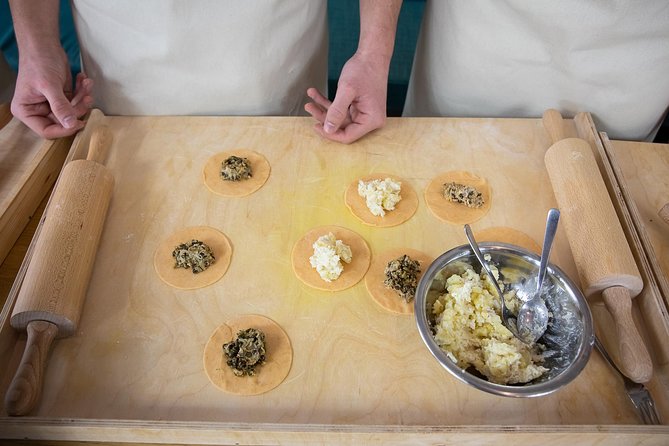
The fillings include meat and vegetarian options. You learn the different filling choices used during the class, though the lesson focuses more on dough and shaping than on preparing every filling from raw ingredients. One participant specifically wished there had been more work with the fillings, so you should book this for pierogi making rather than a full Polish cuisine course.
The instructors also share small practical tricks that make the dumplings taste better and hold together. These details are useful because pierogi are forgiving, but only up to a point. A tidy seal and a sensible amount of filling make a real difference once the dumplings hit the pot.
Folding techniques you can use at home
The shaping lesson is the heart of the activity. You practice folding the dough around the filling and learn several ways to finish the edge. The instructor demonstrates each method, then watches as you try it yourself.
You are encouraged to experiment with different folds. That keeps the class relaxed, especially if your first batch looks less polished than the instructor’s. The goal is not to produce identical restaurant dumplings. It is to understand how the dough behaves and leave with a method you can repeat in your own kitchen.
This hands-on approach is especially useful for families. Children under eight are not permitted, and anyone bringing a child must have at least one adult responsible for that child during the class. Older children can take part if they are comfortable following instructions and working around a busy cooking table.
You should also expect a little variation in the final shapes. Some dumplings may be neat, some may be more creative, and some may open slightly during cooking. That is part of the fun, and it gives you a better sense of what to change when you make them at home.
Cooking, sharing, and eating the finished dumplings
Once the pierogi are assembled, the instructor demonstrates how to cook them. Then the class eats the results together. This is not a small sample or a quick bite between demonstrations. The dumplings become the main meal, and the portions are generous enough that people have described leaving full, with occasional leftovers.
The meal is served family-style. Everyone contributes to the shared spread, so you eat dumplings made by the whole group, not only the ones made at your station. That creates a warm, communal feeling and often helps people talk with one another.
It also deserves a practical warning. If you are very concerned about sharing food with others, this arrangement may not suit you. The communal meal is a central part of the class, not an optional extra.
The meat and vegetable fillings give the meal some variety. Vegetarian and vegan options can be arranged on request, and dietary needs have been handled carefully in past sessions. In one case, vegan dumplings were cooked first to reduce the chance of contact with dairy, followed by vegetarian and other preparations. Still, tell the operator about your needs before the class rather than waiting until you arrive.
More cooking classes around the world:
- Half-Day Thai Cooking Class at Organic Farm in Chiang Mai
★ 5.0 · 19,087 reviews - Florence: Pasta Cooking Class with Unlimited Wine
★ 4.9 · 10,285 reviews - 3 in 1 Cooking Class near Navona: Fettuccine, Ravioli & Tiramisu
★ 5.0 · 7,376 reviews - Florence: Pasta & Tiramisu Cooking Class with Unlimited Wine
★ 4.9 · 6,708 reviews
Polish liqueurs after dinner
The liqueur tasting comes after the cooking and meal. It adds a distinctly Polish finish and gives the group another way to relax once the work is done.
The tasting is not described as a large drinking session. Instead, it is a small sampling, sometimes paired with a light guessing game involving two liqueurs. That format keeps the focus on tasting and conversation.
You do not need to be a drinker to understand the appeal, but the liqueur portion may be less important to you if you avoid alcohol. The class is still worthwhile for the cooking alone, though the tasting is included in the price and forms part of the planned experience.
Because the class ends at the same place where it begins, you do not need to arrange a second meeting point after dinner. That makes the evening easy to fit into a Warsaw itinerary.
The instructors and the feel of the class
Teaching quality is one of the strongest reasons to book this activity. Instructors named in past sessions include Daria, Ben, Patrycya, Nina, and Zuzia. The teaching style can vary by person, but the common pattern is clear instruction, demonstrations, and help at the table.
Daria has been praised for setting expectations early, explaining the different fillings, coaching the folding methods, and creating a family-style atmosphere. Ben has also been described as combining food traditions with practical advice about what to see in Warsaw. Nina and Zuzia have been noted for a friendly, professional approach.
The class is organized without feeling stiff. One instructor may be a little direct when the group needs to keep moving, but that can be useful in a two-hour session. There is dough to roll, dumplings to fold, and food to cook. A relaxed pace is good, but a completely unstructured class would leave you waiting.
The atmosphere also depends on the group. You might arrive as a couple or solo and leave having shared dinner with people from several countries. If you prefer a private lesson with no interaction, this is not the right format. If you like meeting people over food, the shared table is one of the class’s best features.
Is $77.97 a fair price?
At $77.97 per person, this is not the cheapest meal in Warsaw. You can eat pierogi for much less in a casual restaurant. The value comes from combining dinner with instruction, participation, cultural context, a liqueur tasting, and a recipe you can use later.
The price makes more sense if you think of it as a two-hour activity and meal rather than a restaurant booking. You are paying to learn a Polish specialty, eat a filling portion, and spend an evening in a small group. The class is also a practical choice for a short Warsaw visit because it gives you a cultural activity without taking half a day.
Some past participants received photos and Granny’s pierogi recipe with tips after the class. That follow-up is a welcome extra when provided, but I would not book solely on the assumption that every session includes the same follow-up materials.
The experience has a 4.9 rating from 576 reviews, with 97 percent recommending it. Those numbers fit the activity’s strongest points: clear teaching, plenty of food, clean facilities, and a friendly tone. They do not remove the few tradeoffs. The room can feel hot, and the communal meal is not for everyone.
Timing, location, and useful planning tips
The class is near public transportation and within walking distance of the Old Town for some visitors. Exact walking times are not provided, so check your route before booking if you have a tight dinner schedule.
You receive confirmation when you book, and a mobile ticket is available. The activity is offered in English, which makes the instructions accessible to English-speaking visitors.
Book ahead if your dates are fixed. The experience is booked an average of 35 days in advance, and the group limit is only 10 people. That is particularly important during busy periods or if you need a vegan or vegetarian arrangement.
Wear something comfortable for standing and working with dough. The class is hands-on, and you will be busy at the station before sitting down to eat. One room has been described as hot, so a light layer may be more comfortable than heavy clothing.
Free cancellation is available if you cancel at least 24 hours before the start time. Changes or cancellations inside that window are not refunded, and the activity can be canceled if the minimum number of participants is not reached. In that case, you are offered another date or experience, or a full refund.
Who should book this experience?
I would choose this class for first-time visitors who want a food activity tied closely to Polish culture. It is also a good fit for couples, families with older children, solo visitors, and anyone who likes leaving a trip with a skill instead of another souvenir.
Vegetarians and vegans should ask for their preferred option when booking. The cooking setup has handled separate preparation carefully, but clear advance notice remains the sensible move.
This is less suitable if you want an advanced cooking course, a quiet private meal, or a lesson focused on making every filling from scratch. It is also not suitable for children under eight.
Should you book the Warsaw pierogi class?
Yes, if you want a social, practical taste of Poland and you are happy to share the meal you help create. The class is well priced for a two-hour activity that includes dinner and liqueur tasting, and the small group gives you a real chance to practice instead of simply watching.
Book it early, especially for a fixed itinerary, and mention dietary needs in advance. If the thought of communal food or a warm cooking room bothers you, choose a restaurant meal instead. For most visitors, though, learning to fold pierogi, eating the results, and leaving with a recipe makes this one of Warsaw’s more useful food experiences.
FAQ
Where does the pierogi cooking class take place?
The class takes place at Pierogi & More, Stawki 3, 00-193 Warszawa, Poland. It ends back at the same meeting point.
How long does the experience last?
The class lasts approximately two hours.
What food do you make?
You make Polish pierogi with meat or vegetable fillings. The lesson covers dough, rolling, folding, cooking, and tasting.
Are vegetarian and vegan options available?
Yes. Vegetarian and vegan options are available on request. You should state your needs when booking.
Is the class offered in English?
Yes. The activity is offered in English.
How many people can join?
The maximum group size is 10 people.
Can children attend?
Children under eight cannot attend. If you bring a child, at least one adult must be responsible for that child during the class.
Is Polish liqueur tasting included?
Yes. A tasting of Polish liqueurs is included after the cooking and meal.
New cooking classes around the world
- Shinjuku Tokyo: Authentic Japanese Home-Style Culinary Class★ 4.9 · 125 reviews
- Shibuya Tokyo: Onigiri & Tamagoyaki Cooking Class★ 5.0 · 4 reviews
- M.O.M COOKING CLASS★ 4.8 · 6 reviews
- Seville: Paella-Cooking Experience with Sangria & Full Meal★ 4.9 · 42 reviews
- Shanghai: Authentic Chinese Cooking Class with Master Chef★ 5.0 · 2 reviews
- Sestri Levante: Pesto & Cooking Classes, Wine Tasting★ 4.9 · 56 reviews
- Seville: Paella Cooking Class & 30-Min Local Expert Q&A★ 4.8 · 37 reviews
- Seoul: Korean Kimchi Cooking Class in the Heart of the City★ 5.0 · 3 reviews
Chinese Cooking Classes, side by side.
Xiao Long Bao, Beef Noodles & Boba Tea Cooking Class in Taipei
Read our review →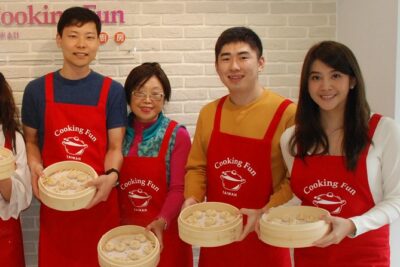

Online Cooking Class Beijing Dumplings and Cuisine by Sunflowerli Renowned Chef
Read our review →
Shanghai-Cooking Dumpling & Meal in Local Family-w/Vegan
Read our review →Private Cooking Class: Make Your Own Dim Sum In Shanghai
Read our review →
Melbourne: Chinese Dumpling Cooking Class with a Drink
Read our review →
Gyoza Cooking Class in Kyoto: Traditional Japanese Dumplings
Read our review →This kitchen also appears in