
Review · KANDY
Kandy Cooking Class with Granny
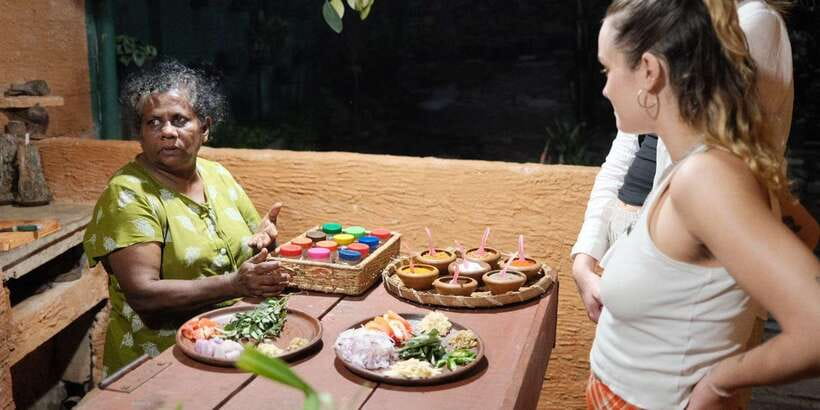
Sri Lankan food is best understood with your hands busy. Here, Granny Nandy and her family guide you through a generous spread of curries in a traditional village kitchen, not a polished city cooking studio. A market visit may come first, with her grandson helping you identify vegetables and taste local fruit before the tuk-tuk climbs toward the family home.
I like the hands-on format: you do more than watch, from preparing coconut milk to stirring several curries. I also like the quiet setting outside Kandy, where the class feels tied to ordinary family life. The main caution is transport: pickup from Kandy is included, but the return trip costs extra, and one booking found the quoted return fare much higher than a local ride-hailing price.
Key points to know before booking
- A village kitchen 6.5 kilometers from Kandy: You leave the city for a family home in a quiet residential area and hills outside town.
- A large meal in one class: Expect rice, coconut sambol, papadam, dessert, and several vegetable curries, with chicken, fish, or egg available.
- Optional market stop: Some sessions begin at a local market, where you can learn about unfamiliar vegetables and taste bananas, mango, and passionfruit.
- Three scheduled sessions: Choose a morning, midday, or evening class, each lasting about 3.5 hours.
- Vegan-friendly cooking: The standard menu can be made vegan, and other dietary needs may be discussed in advance.
- Practical but important transport detail: Pickup is offered from Kandy and within about 3 kilometers of the city, while your return costs extra.
Leaving Kandy for Granny Nandy’s village home
The class begins with pickup in Kandy or nearby, generally within about 3 kilometers of the city. The cooking house is about 6.5 kilometers away, and the ride commonly takes around 20 minutes by tuk-tuk, depending on traffic and the exact hotel location.
This short trip changes the feel of the experience. You are not sitting in a commercial kitchen in central Kandy. You are heading toward a home in a quieter area, with hills and forest around the cooking venue. The setting matters because Sri Lankan food is closely tied to home kitchens, family routines, and what is available at the market that day.
Pickup is included, but do not overlook the return arrangement. You must pay for the ride back to Kandy. The provider can arrange it, which is convenient, but you should ask for the price before accepting. One participant found the quoted fare several times higher than a PickMe ride. That does not cancel out the value of the class, but it is a useful reminder to compare prices if you want to make your own way back.
The venue is not suitable for wheelchair users. It is a village home rather than a purpose-built accessible facility, so anyone with limited mobility should ask specific questions before booking.
More cooking classes around Sri Lanka:
- Ella: Traditional Sri Lankan Cooking Class
★ 4.9 · 788 reviews - Organic cooking class sigiriya (kumara & family)
★ 5.0 · 650 reviews - Sri Lanka Cooking Class with Granny
★ 5.0 · 587 reviews
The market stop adds a useful first chapter
The market visit is not guaranteed in every description of the class, but several schedules include it, and it can add a lot to the afternoon or evening. You may go with a driver or a family member, including Granny Nandy’s grandson, to choose vegetables for the meal.
This is where the class begins to make sense as more than a cooking lesson. You can see produce that may be unfamiliar at home, hear how it is used, and select ingredients that later appear in your curries. The market portion has also included tastings of several types of bananas, mango, and passionfruit.
I like this part because it gives you context without turning the experience into a lecture. You are not simply handed a bowl of chopped vegetables. You get a better idea of how Sri Lankan cooks shop, what grows locally, and why a daily menu can change.
There is one small uncertainty here: the supplied schedule emphasizes the cooking class, while the market stop appears in several actual visits rather than as a fixed promise for every departure. Ask when booking if the market is important to you, especially if your class begins later in the day.
Three and a half hours of proper cooking
The class runs in three time slots:
- Morning: 9:00 am to 12:30 pm
- Midday: 1:00 pm to 4:30 pm
- Evening: 5:00 pm to 8:30 pm
The schedule gives you about three and a half hours, though the actual pace can vary. The provider notes that lessons may last three to four hours, depending partly on how quickly the group works.
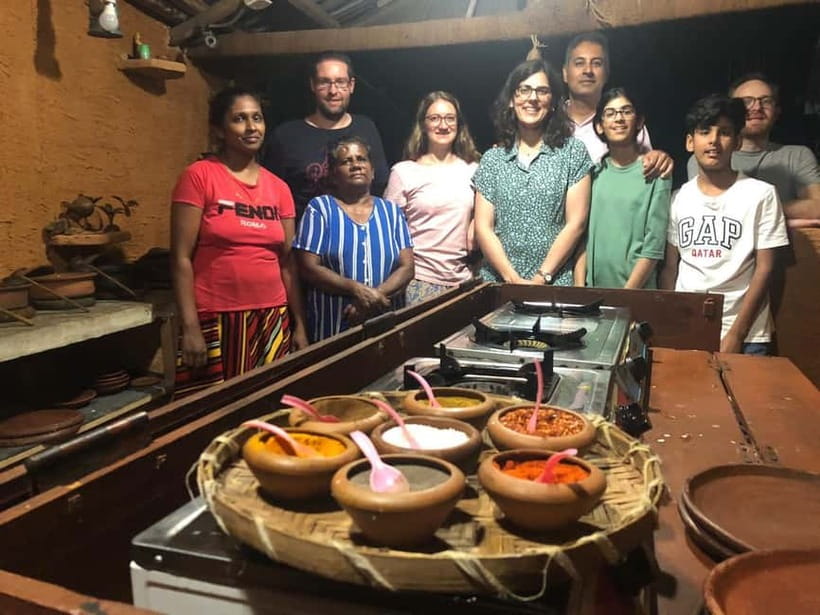
You begin with an explanation of Sri Lankan spices and basic ingredients. Coconut milk is an important part of the lesson, and you learn how it is prepared and used in curries. Granny Nandy and her assistant explain each stage, then let you take over parts of the work.
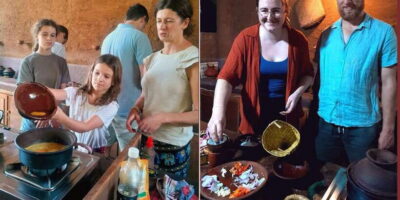
This is a good balance for inexperienced cooks. You are guided step by step, but you still have a real job to do. You can help prepare the vegetables, work with the spices, and cook the dishes rather than standing behind a demonstration table.
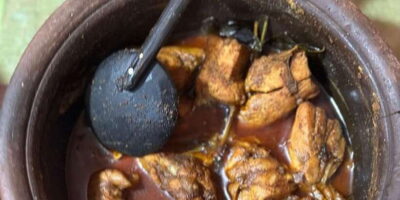
The class can produce a surprisingly large amount of food in the available time. Past menus have included rice, papadam, coconut sambol, dhal, chicken curry, egg curry, several vegetable curries, and a special curry normally prepared for large family occasions. Another evening menu included more than eight types of curry.
That sounds ambitious, and it is. The advantage is variety: you see how different vegetables respond to the same spice base and how small changes create different dishes. The downside is that a large menu can make the session feel busy. If you want a slow, highly detailed lesson on one curry, this may not be the right format. If you want to understand the shape of a Sri Lankan meal, the broad menu works very well.
What you are likely to cook
The advertised meal includes rice, seven vegetables, fish or chicken curry, one traditional Sri Lankan sweet, coconut sambol, and papadam. Exact dishes vary by day, and menus reflect different culinary traditions during the week.
The standard offering is flexible. You can request a vegan meal, or include egg, chicken, or fish. This is useful for mixed groups, since one person can eat vegan food while another chooses an animal protein. If you have an allergy, mention it before the class. One participant with a gluten allergy was accommodated, but you should still communicate your needs clearly rather than assume.
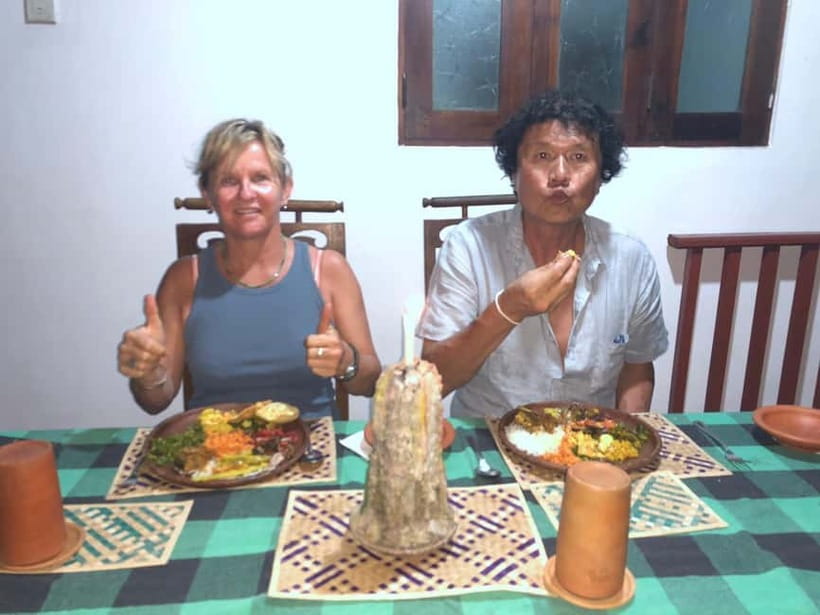
The food is not merely a final tasting added to the end. You help make it, then sit down to eat what you prepared. Portions are described as plentiful, so plan this as both a lesson and a full lunch or dinner.
The dessert is a traditional Sri Lankan sweet, though the exact item is not specified in advance. The same is true of the vegetables. That uncertainty is part of the local character, but it may bother you if you want a fixed menu before booking.
Same kitchen, a different dish:
- Kandy Village Cooking Class
★ 5.0 · 536 reviews - Sea waves sri lankan cooking class
★ 5.0 · 467 reviews - Ella: Sri Lankan Cooking Class with Neranji at Homestay
★ 5.0 · 276 reviews - Cook with Wasantha
★ 5.0 · 248 reviews
Learning spices, coconut, and the logic of curry
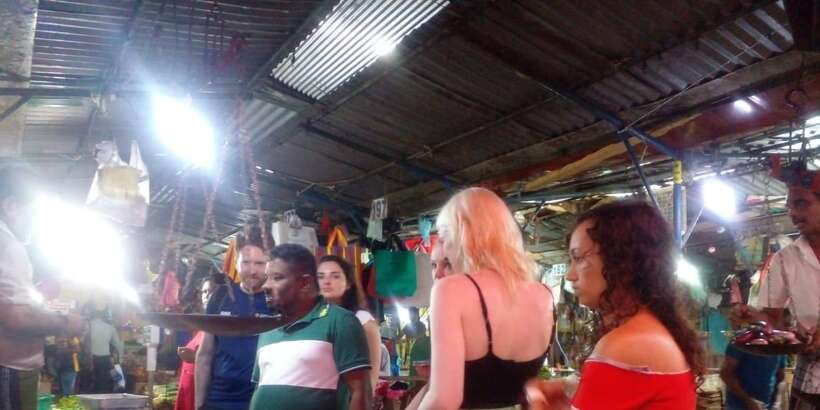
A useful cooking class should leave you with methods you can repeat at home. This one focuses on the building blocks of Sri Lankan food: spices, coconut milk, vegetables, rice, sambol, and curry preparation.
Granny Nandy explains how the spices work and how to cook the vegetables. The teaching is practical, with the family showing you what to do and then having you try it yourself. You do not need advanced cooking skills. The pace is designed for ordinary visitors, including people who do not cook often.
The most valuable lesson may be the number of ways vegetables can be treated. Several classes have included five to seven vegetable curries, each with a different texture or spice combination. That gives you more useful knowledge than a single showcase dish. You begin to see that Sri Lankan meals are built from several smaller dishes rather than one large curry.
Afterward, the family can send you photos of the recipes you prepared. That is an excellent practical touch. Take your own notes too, especially if you want to remember quantities, because photos may show the method without answering every question about measurements.
The family setting is the real attraction
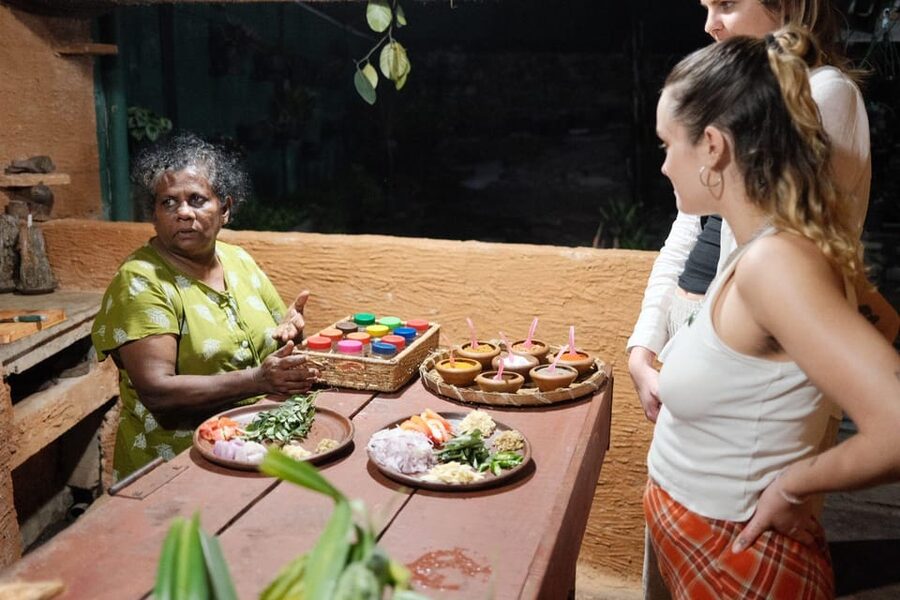
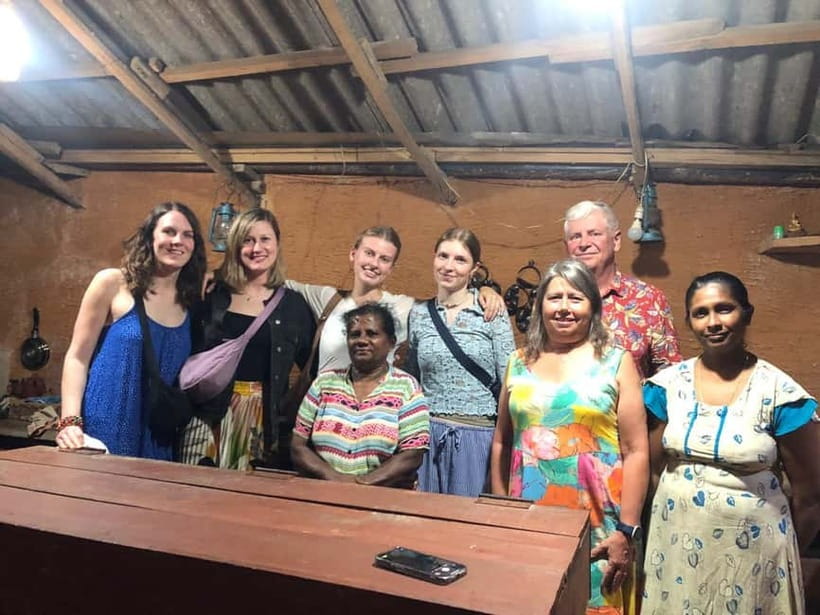
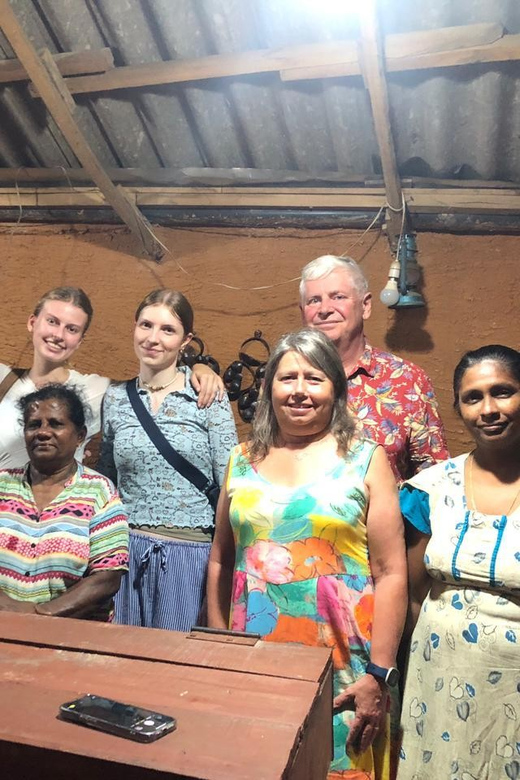
The cooking takes place at a family home, with Granny Nandy, an assistant, and sometimes other family members involved. The atmosphere is warm and informal, and the class has been described as a three-generation family experience.
That family presence gives the afternoon a personal quality. You are learning from people who cook these foods as part of daily life, not from a generic instructor reading from a script. The home setting also explains why the menu feels generous and why the pace may be relaxed rather than tightly timed.
You should still keep your expectations realistic. This is a local home, not a hotel cooking school. Facilities may be simple, and the village location means you are trading city convenience for a more genuine setting. That is the right trade for me, but not everyone wants a class that involves a tuk-tuk ride and a less formal kitchen.
Small groups make the format work best. The experience is sold as a private group, and sessions have included groups of four as well as couples who had the class to themselves. A smaller group means more chances to chop, stir, ask questions, and receive help from Granny Nandy.
Is $25 good value?
At $25 per person, this is strong value if you want both a meal and an activity. The price covers the cooking lesson, the food, and transport from Kandy to the house. You are also getting several hours of instruction, not a short demonstration followed by a tasting.
The amount of food is a major part of the value. Rice, seven vegetables, a protein curry if requested, dessert, sambol, and papadam would make a substantial restaurant meal on their own. Add the market option, family setting, tuk-tuk ride to the house, and recipe photos, and the price compares well with many organized food activities.
The extra return fare slightly weakens the bargain. Since the return is not included, budget for it separately. Ask the provider for the exact amount, then compare it with a local tuk-tuk or PickMe option if needed.
The class is especially good value for couples and small private groups who want an evening activity in Kandy. It is less suited to someone looking for a bargain meal alone, since the main benefit is the cooking time and contact with the family.
Which session should you choose?
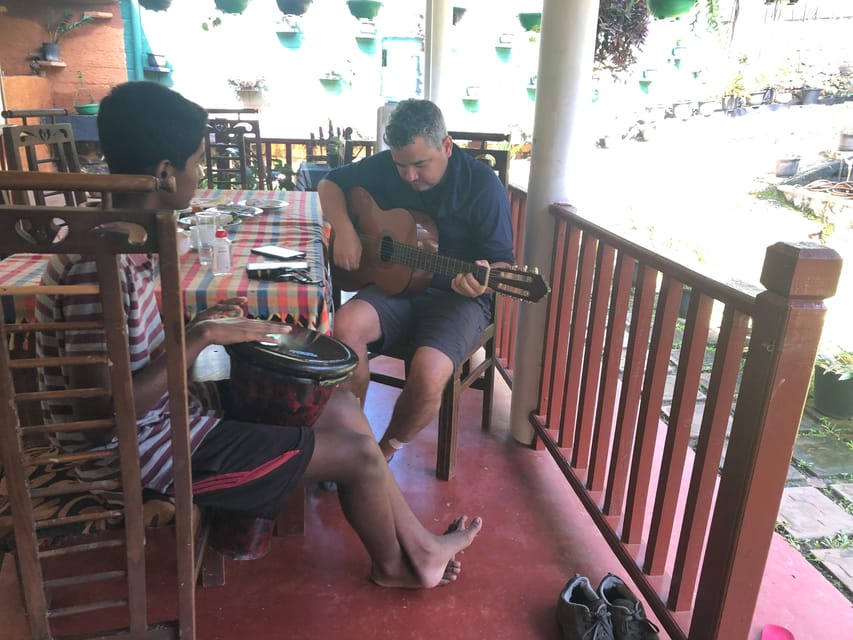
The morning class runs from 9:00 am to 12:30 pm and works well if you want a freshly cooked lunch and a free evening. The midday option, from 1:00 pm to 4:30 pm, leaves room for sightseeing before and after.
The evening class runs from 5:00 pm to 8:30 pm. This is a popular choice for people who want a relaxed dinner activity, and the ride into the hills gives the outing a change of pace after a day in Kandy.
If you are hoping for the market visit, ask which departure includes it. A market stop can make the session longer or change the rhythm of the class, particularly if you are tasting fruit and choosing vegetables before reaching the house.
Allow extra time around the scheduled hours for transport and the return journey. The cooking itself is listed as 3.5 hours, but the full outing may take longer.
Who will enjoy this class most?
I would recommend it to you if you enjoy food, small-group activities, and contact with local families. It suits curious beginners particularly well because the teaching is guided and practical rather than technical.
It is also a good choice for vegetarians and vegans. The class can focus on vegan food, while egg, chicken, or fish can be added for those who want them. People with gluten concerns should state that clearly before arriving.
Families, couples, solo visitors, and small groups can all fit the format. Solo visitors should confirm how the private group arrangement applies to their booking, but the class itself is designed around participation rather than a large audience.
You may want to skip it if you need wheelchair access, want a fixed menu, dislike tuk-tuk transport, or prefer a polished cooking studio. You should also think twice if you are not hungry. This is a food-heavy activity, and you will be eating a full spread at the end.
Should you book Kandy Cooking Class with Granny?
Yes, if your idea of a good Kandy experience includes cooking, eating, and seeing how a family kitchen works outside the city. The strongest reasons to book are Granny Nandy’s warm teaching style, the chance to prepare a wide range of curries, and the village setting reached by tuk-tuk.
I would ask three questions before paying: Is the market visit included in your chosen session? What is the exact return transport price? Can the menu meet your dietary needs? Once those points are clear, the $25 price looks fair for a private, hands-on half-day experience.
This is not a slick culinary school. It is better understood as an informal lesson in a family home, with a big meal at the end. For many visitors, that is precisely the appeal.
FAQ
How long does the cooking class last?
The class is scheduled for 3.5 hours. Morning sessions run from 9:00 am to 12:30 pm, midday sessions from 1:00 pm to 4:30 pm, and evening sessions from 5:00 pm to 8:30 pm. Lessons can vary between three and four hours.
Where does the class take place?
The class takes place in a village home about 6.5 kilometers outside Kandy, in a quiet residential area rather than in the city center.
Is pickup from Kandy included?
Pickup is included from Kandy and locations within about 3 kilometers of Kandy. Transport from Kandy to the cooking location is included, but the return journey costs extra.
Can I choose vegan food?
Yes. The class can prepare vegan food. You can also request egg, chicken, or fish.
What food is included?
The usual food includes rice, seven vegetables, fish or chicken curry, a traditional Sri Lankan sweet, coconut sambol, and papadam. The exact menu changes by day.
Is the class taught in English?
Yes. English is the listed language for the instructor and activity.
Can I cancel the booking?
You can cancel up to 24 hours in advance for a full refund. A reserve-now, pay-later option is also available.
New cooking classes around Sri Lanka
- Private Traditional Sri Lankan Cooking Class in Kandy★ 5.0 · 7 reviews
- Private cooking class – Personalized classic menu★ 5.0 · 5 reviews
- Nilaveli: Sri Lankan Cooking Class with a Local Family★ 5.0 · 16 reviews
- Mirissa: Cooking Class with Beer and Meal★ 3.3 · 4 reviews
- Kandy: Village Cooking Class 12 Dishes with Market Tour★ 5.0 · 6 reviews
- Hands-On Cooking Class in Anuradhapura: Cook Like a Local★ 5.0 · 5 reviews
- Galle: Traditional Sri Lankan Cooking Class★ 5.0 · 21 reviews
- Galle: Sri Lankan Cuisine Cooking Experience★ 5.0 · 5 reviews
Kandy Cooking Classes, side by side.
Private Traditional Sri Lankan Cooking Class in Kandy with Hotel Transfers
Read our review →
Authentic Sri Lankan Cooking Class in Kandy by Local Family
Read our review →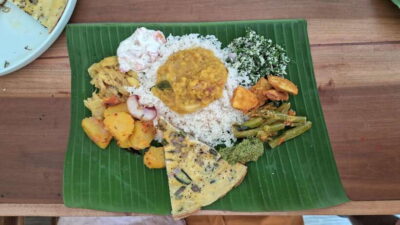
Kandy: Village Cooking Class 12 Dishes with Market Tour
Read our review →This kitchen also appears in