
Review · CAPE TOWN
Cape Town: Bo-Kapp Walking Tour and Malay Cooking Class
Bo-Kaap’s painted houses are only the opening scene. The real point of this four-hour experience is to connect the streets with the food, faith, and family traditions of the Cape Malay community. You walk with a local guide, visit a spice shop, then cook in a host’s home.
I like the local access and the hands-on work. Guides such as Faldela, Gadija, and Ilyas are closely tied to the neighborhood, and you do more than watch: you fold samosas, make roti, and prepare curry. I also like that the recipes come with you afterward. The main consideration is the small cooking area, which can limit how many people work at once.
Key points to know before booking
- Bo-Kaap comes first: Begin with a guided walk through the cobblestone streets, historic buildings, colorful homes, and local businesses.
- The spice stop is unusually useful: Learn how different spices are used, along with their traditional health benefits.
- You cook a full meal: The menu includes samosas, chicken curry, roti, salsa salad, and koesisters, with chili bites included in some sessions.
- The host makes the difference: Faldela is often the cooking teacher, while Gadija and Ilyas have also led the neighborhood walk.
- The experience is social: You sit down with your host and fellow participants to eat what you prepared.
- Plan for comfort, not speed: Wear comfortable shoes and expect a relaxed four-hour activity rather than a quick photo stop.
Why this Bo-Kaap experience is more than a photo walk
Bo-Kaap is one of Cape Town’s most photographed neighborhoods. Its rows of brightly painted houses make an easy backdrop, but a short walk on your own can leave you with little sense of how the community came to be or what daily life means here.
This experience gives the colors some context. You hear about the Cape Malay community, Islamic traditions, old buildings, local architecture, and the first and oldest mosque in South Africa. You also visit the cultural museum and local shops, including art and souvenir businesses where you may meet the people who make or sell the work.
That local connection is important. Faldela is described as a familiar figure in the neighborhood, with people stopping to greet her as she walks. Gadija and Ilyas have also guided the walking portion. The exact guide may vary, but the activity is built around local people rather than a guide who simply recites a prepared city script.
I especially like the order of the day. The walk gives you a reason to care about the food, and the cooking gives the neighborhood story a place at the table. By the time you start preparing lunch, you have already seen where the community lives and learned why its traditions matter.
More cooking classes around the world:
- Half-Day Thai Cooking Class at Organic Farm in Chiang Mai
★ 5.0 · 19,087 reviews - Florence: Pasta Cooking Class with Unlimited Wine
★ 4.9 · 10,285 reviews - 3 in 1 Cooking Class near Navona: Fettuccine, Ravioli & Tiramisu
★ 5.0 · 7,376 reviews
Walking the painted streets with a local guide
The walking portion is not a long hike. It is a cultural tour through Bo-Kaap’s cobblestone streets, with stops at old buildings, the mosque, the cultural museum, shops, and a spice store.
The houses are the obvious draw, but pay attention to the architecture and the way the neighborhood is used. You may see painted messages on house fronts connected to current political concerns, including support for Palestinians. One participant appreciated learning how the houses came to have their strong colors, as well as seeing different architectural styles from the colonial period.
The tour also takes you into local businesses. Art and souvenir shops are part of the route, and the chance to meet artists gives the visit more substance than simply browsing a row of stores. You can ask questions about the work and buy something if you wish, but the value is in seeing local enterprise as part of the neighborhood itself.
The mosque and museum add important context. The tour introduces the Islamic faith and its place in Cape Malay culture, while the museum provides a more formal look at the area. One participant felt the museum was less compelling and suggested allowing separate time if you want a fuller museum visit. The entrance fee is included, so you are not paying extra to look inside, but the museum may not be the strongest part of the afternoon for everyone.
Wear comfortable shoes. The walk is short enough for most people who can manage cobblestones, but the surface and occasional slopes make sandals with poor support a bad choice.
The spice shop is a small stop with a lot to learn
The spice shop is one of the most useful parts of the outing. You hear about the spices used in Cape Malay cooking, how they shape the flavor of a dish, and traditional ways they are used for health.
This is where Faldela’s personality and experience seem to matter most. One practical tip is to start a video when she begins explaining the spices, if recording is allowed by the group and host. The session can cover many individual spices, their uses, and the tricks that make the cooking taste more like food from a Cape Malay kitchen than a generic curry.
Do not expect a formal food-science lecture. The value is practical and personal. You are learning how a local cook thinks about seasoning, not just buying a prepacked spice blend. If you cook at home, this stop may be more useful than another quick viewpoint or photo opportunity.
Inside the home kitchen with Faldela
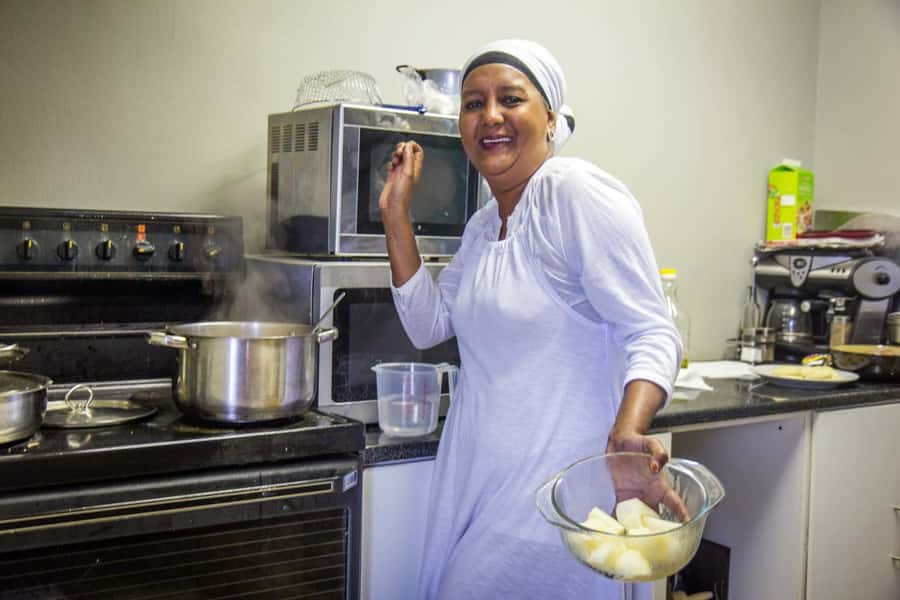
After the walk, you return to the host’s home for the cooking class. Faldela is the main host named for the cooking portion, and she is described as warm, funny, welcoming, and generous with her time. The setting is a home rather than a restaurant kitchen, which gives the class a more personal feel.
The cooking is participatory, though you should keep your expectations realistic. You will help with the preparation, but the host handles much of the work needed to keep the meal on schedule. The class is organized so that everyone can take part, and dietary needs have been handled well in past sessions.
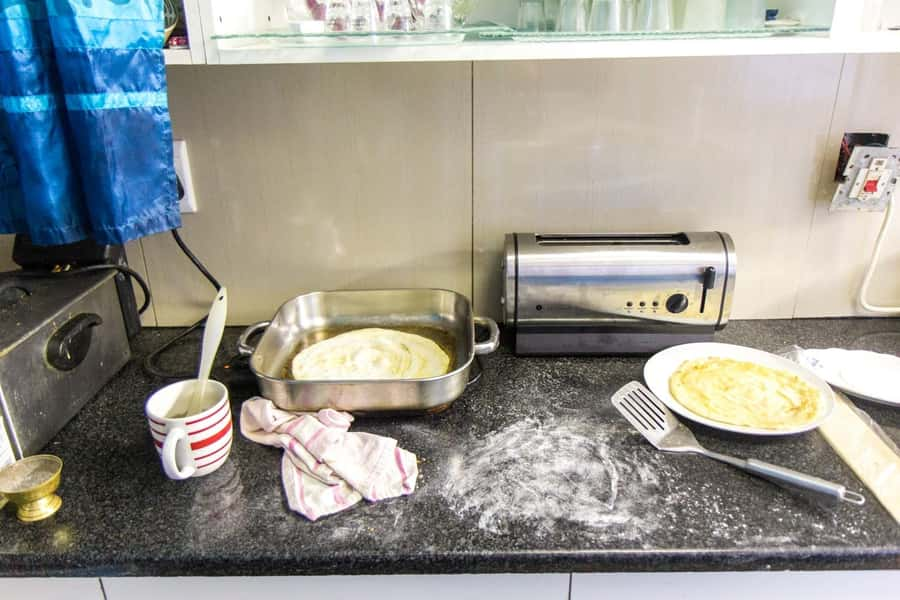
You begin with samosas, learning how to fold them. Some sessions also include chili bites. Then comes the main meal: chicken curry and roti made from scratch. Making roti is one of the most rewarding parts because the technique is easy to describe but harder to reproduce until you see the dough handled properly. The class includes the tricks for getting the flatbread flaky.
You also prepare sambal, described here as a salsa salad. It adds freshness and sharpness beside the curry and roti. Afterward comes koesisters, spicy sweet or savory donuts flavored with cardamom, served with cardamom tea.
The menu is substantial. Expect a proper meal rather than a token tasting. That makes the $68 price easier to assess, especially since the package also includes the museum entrance, water, the guided walk, and the instruction. Food and drinks are listed as not included, so check how your booking handles ingredients and any extra drinks. Alcohol is not included.
Same kitchen, a different dish:
- Florence: Pasta & Tiramisu Cooking Class with Unlimited Wine
★ 4.9 · 6,708 reviews - Florence: Pasta Cooking Class with Unlimited Wine
★ 5.0 · 6,413 reviews - Hanoi Cooking Class: Culture, Local Market & Meaning CSR Impact
★ 5.0 · 5,147 reviews - 5 Traditional Dishes Hanoi Cooking Class with Market Trip
★ 5.0 · 4,890 reviews
The meal is part of the lesson
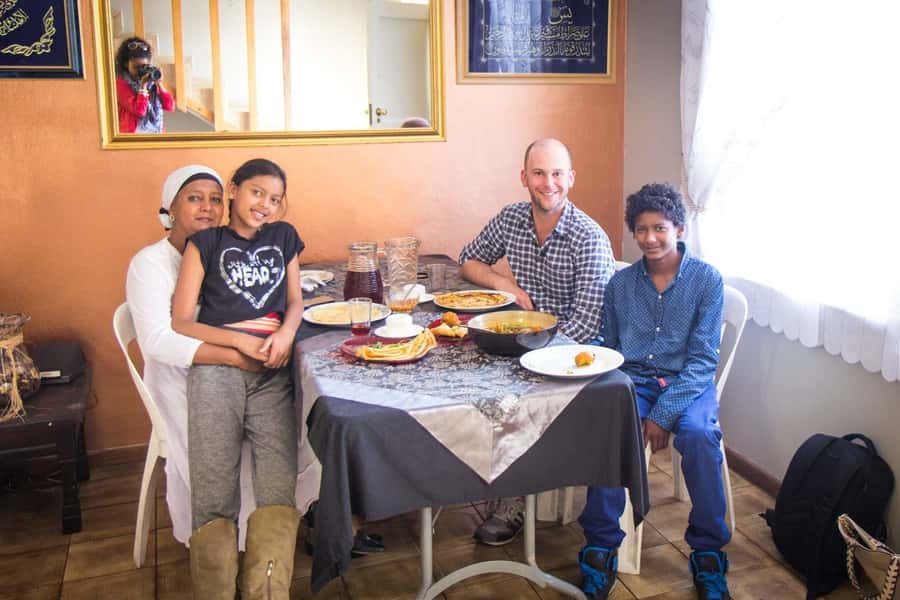
The best part of a cooking class is often the meal afterward, and this one is designed around sitting down together. You eat the food you helped prepare and share the table with the host and other people in the group.
That changes the tone. Instead of ending with a demonstration and a polite goodbye, you have time to talk about the neighborhood, the recipes, and your own experiences. Several participants valued the chance to sit and chat with locals and fellow visitors.
The meal also makes the class suitable for people who do not consider themselves cooks. You do not need to arrive with kitchen skills. The food is planned to work, the host guides the process, and the recipes are sent to you afterward. One participant who had never mastered roti left determined to try it at home, which is a good sign that the lesson teaches more than a one-time lunch.
If you have dietary needs, tell the provider before booking or as early as possible. The available feedback indicates that dietary requirements have been handled carefully, but the supplied information does not list specific substitutions.
The small kitchen is the main limitation
This is a home cooking class, not a large professional kitchen. One person specifically noted that the cooking area is tiny and that only one or two people can work comfortably at a time.
That does not ruin the experience, but it affects how you should picture the class. You will not all be chopping, stirring, and rolling at once. Some of the group may watch while others take the active turn, then switch places. If you want nonstop hands-on cooking, this may feel slower than a purpose-built culinary studio.
The upside is the home setting. You get personal conversation and a direct connection with the host. The trade-off is less counter space and a more relaxed rhythm. I would choose the home kitchen for its human side, while accepting that the class is not designed for maximum kitchen action.
The group may also feel different from one date to another. One session continued even when only one person was booked, while another included nine people. That flexibility is useful, but it means the social feel and amount of hands-on time can vary.
Who will get the most from this four-hour outing
I would recommend this to you if you want Cape Town food and culture in the same experience. It suits first-time visitors who need a meaningful introduction to Bo-Kaap, as well as returning visitors who have already taken the usual city tour and want time with local people.
It is also a strong choice for:
- People who enjoy cooking but do not need a professional kitchen
- Anyone curious about Cape Malay food and Islamic traditions
- Couples, families, and small groups who like shared meals
- Visitors who want recipes they can repeat at home
- People who prefer a local neighborhood experience to a short photo stop
You can still enjoy it if cooking is not your main interest. The walk and spice-shop visit give the afternoon value before the class begins, and you can take part at your own level. Still, if you dislike group activities or do not want to eat a meal prepared with other participants, this may not be your best fit.
The tour is in English, with a live guide. Comfortable shoes are the only stated item to bring. The meeting point is a purple house with flower pots on top, a useful detail to note carefully before setting out.
Is $68 a fair price?
At $68 per person, the price is reasonable for a four-hour experience that combines a guided neighborhood walk, museum admission, a spice-shop visit, a cooking class, a full meal, water, and recipes to take home.
You are not paying only for ingredients. You are paying for local guiding, time in a private home, instruction, and the chance to ask questions that a restaurant meal cannot answer. The value is strongest if you would otherwise book a separate Bo-Kaap walk and then pay for lunch.
The price is less compelling if you only want to see the colorful houses. You can visit the neighborhood without committing half a day to cooking, but you would miss the explanation of the community and the practical food lesson. Also remember that the listing says food and drinks are not included, even though the prepared meal is central to the activity. Clarify that point when booking so the final cost is clear.
Free cancellation is available up to 24 hours before the start time, and you can reserve now and pay later. Those policies are useful if your Cape Town schedule is still moving around.
A note on the community and the conversation
The activity presents Bo-Kaap as a living Muslim community, not a decorative row of colorful façades. That is a strength. You learn about faith, food, family traditions, architecture, and local business in one visit.
The conversation can also touch on current political issues visible in the neighborhood. One person felt that a discussion of Palestinian justice was too direct for a cooking class and would have preferred a lighter touch. That is worth knowing if you want the afternoon to stay strictly focused on food and local history.
For me, this is part of the value of a local experience, but it also calls for an open mind. You are entering a community with its own concerns, not visiting a themed attraction arranged only for sightseeing.
Should you book it?
Book this if you want to understand Bo-Kaap through both its streets and its cooking. The strongest parts are the local guides, the spice lesson, the chance to make roti and samosas, and the meal shared in the host’s home.
Skip it if you want a quick architectural walk, a large professional kitchen, or complete control over every step of the cooking. For most people who have four hours and an interest in Cape Town’s food and culture, the combination is worth the $68, especially because you leave with recipes and a better sense of the people behind the colorful houses.
FAQ
How long does the Bo-Kaap walking tour and cooking class last?
The activity lasts four hours.
How much does the experience cost?
The listed price is $68 per person.
What language is the tour conducted in?
The live tour guide speaks English.
Who may lead the experience?
The cooking host is often Faldela. The walking tour has also been led by Gadija and Ilyas.
What food will I prepare?
The planned meal includes samosas, chicken curry, roti, salsa salad, and koesisters served with cardamom tea. Some sessions also include chili bites.
Do I get to eat the food I prepare?
Yes. You sit down after the class to enjoy the meal you helped prepare.
Is museum admission included?
Yes. The museum entrance fee is included.
What should I bring?
Bring comfortable shoes. Water is included.
Can I cancel the booking?
You can cancel up to 24 hours in advance for a full refund. You can also reserve now and pay later.
New cooking classes around the world
- Shinjuku Tokyo: Authentic Japanese Home-Style Culinary Class★ 4.9 · 125 reviews
- Shibuya Tokyo: Onigiri & Tamagoyaki Cooking Class★ 5.0 · 4 reviews
- M.O.M COOKING CLASS★ 4.8 · 6 reviews
- Seville: Paella-Cooking Experience with Sangria & Full Meal★ 4.9 · 42 reviews
- Shanghai: Authentic Chinese Cooking Class with Master Chef★ 5.0 · 2 reviews
- Sestri Levante: Pesto & Cooking Classes, Wine Tasting★ 4.9 · 56 reviews
- Seville: Paella Cooking Class & 30-Min Local Expert Q&A★ 4.8 · 37 reviews
- Seoul: Korean Kimchi Cooking Class in the Heart of the City★ 5.0 · 3 reviews
Cape Town Cooking Classes, side by side.
Cape Town: Malay Cooking Class and Lunch in Bo-Kaap
Read our review →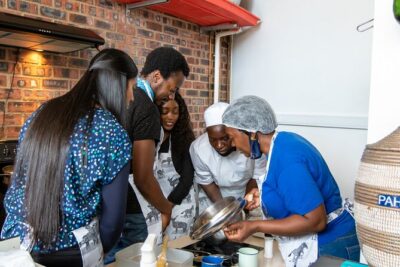
Cape Town: Authentic African Cuisine Cooking Experience
Read our review →This kitchen also appears in