
Review · TOKYO
Japanese Home Cooking Class & Walk in Todoroki Temple Tokyo
Tokyo is at its best when you step away from the big sights and spend time in an ordinary neighborhood. This experience begins with a quiet walk through Todoroki Valley and Todoroki Fudoson, then moves into Tomoko’s home for a hands-on Japanese meal. I like the small four-person limit and the chance to shape the menu around your tastes, allergies, or diet.
I also like that you leave with recipes, not just a full stomach. The main consideration is time: the schedule runs on weekdays from 11 a.m. to 2 p.m., and the cooking portion can feel substantial, so this is not a quick drop-in lesson between major Tokyo attractions.
Key points to know before booking
- Meet Tomoko at Todoroki Station: The station is small, making the meeting point easier to manage than Tokyo’s giant rail hubs.
- Walk through a rare piece of Tokyo nature: Todoroki Fudoson and Todoroki Valley provide a calm start before the meal.
- Choose your main dish ahead of time: Options have included ramen, gyoza, sushi rolls, okonomiyaki, curry rice, oyakodon, and other Japanese dishes.
- Small groups mean real instruction: The class accepts no more than four participants, with room for questions and personal adjustments.
- Dietary requests can be discussed: Past menus have been adapted for vegetarian, pescatarian, vegan, and allergy-related needs.
- Plan to eat well: The main dish comes with side dishes, drinks, and dessert, so arrive ready for a proper lunch.
A quiet start at Todoroki Station
Your meeting point is Todoroki Station in Setagaya City, on the western side of Tokyo. The station is much smaller and less confusing than places such as Shinjuku or Tokyo Station. Tomoko meets you there and walks with you toward the valley and her home.
That meeting arrangement matters. Tokyo rail stations can be stressful when you are trying to locate someone in a maze of exits, shops, and platforms. Here, the starting point is compact, and the experience begins with a person rather than a clipboard or a crowded tour assembly.
The area also gives you a different view of Tokyo. You are not being rushed toward a famous tower or shopping street. Instead, you get a short look at a residential part of the city and the local setting around Todoroki.
More Home Cooking Classes in Japan
- Private Home Cooking in Yanaka – Local Flavors in a Warm Setting
★ 5.0 · 173 reviews - Near Fushimiinari: Kyoto Home Cooking Class & Supermarket tour
★ 5.0 · 100 reviews - Private Japanese Home Cooking Class in Kyoto with Michiyo
★ 5.0 · 55 reviews
Todoroki Fudoson and the valley walk
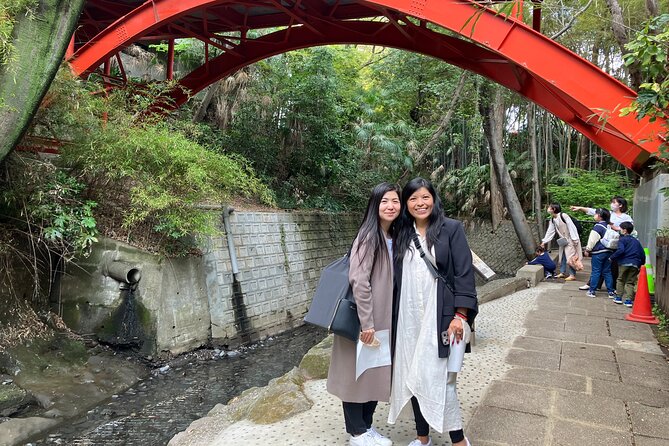
The first stop is Todoroki Fudoson, a local Buddhist temple beside the valley. The temple visit is brief, listed at about 10 minutes, but it helps set the tone. You get a small cultural stop without committing half a day to a major temple complex.
Next comes Todoroki Valley, where the listed viewing stop is about five minutes. The valley is known for its greenery and ravine setting, a surprising change from the dense streets and tall buildings associated with central Tokyo. The walk from the valley to Casa de Tomokita takes about five minutes.
Do not expect a long guided nature hike. This is a short neighborhood walk attached to a cooking class, not a full sightseeing excursion. Its value is in the contrast. You have a little fresh air, a local temple, and a calmer pace before settling into a home kitchen.
The route has also been useful for participants who want to visit a grocery store or sake shop afterward. Those additions are not presented as a fixed part of every scheduled outing, so treat them as possible extra help rather than guaranteed stops.
Cooking in Tomoko’s home
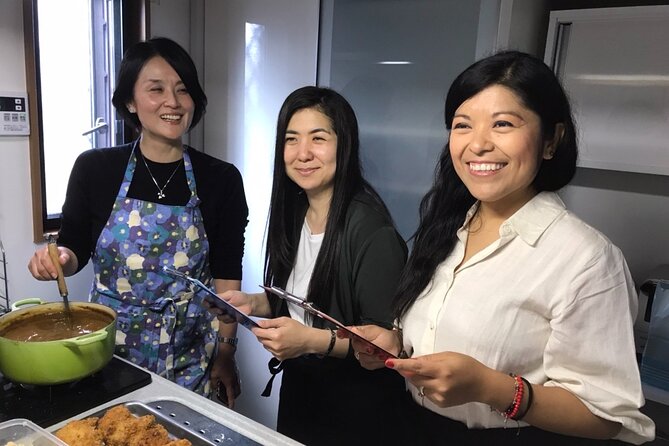
The class takes place at Tomoko’s home, known as Casa de Tomokita. That setting is the heart of the experience. You are not standing behind a glass wall watching a chef perform. You work through the food with Tomoko, ask questions, and sit down to eat what you helped prepare.
The class welcomes beginners, but experienced home cooks can still get something from it. Tomoko explains not only what to do, but why certain steps matter. That is useful when you want to recreate the food later rather than simply follow instructions once.
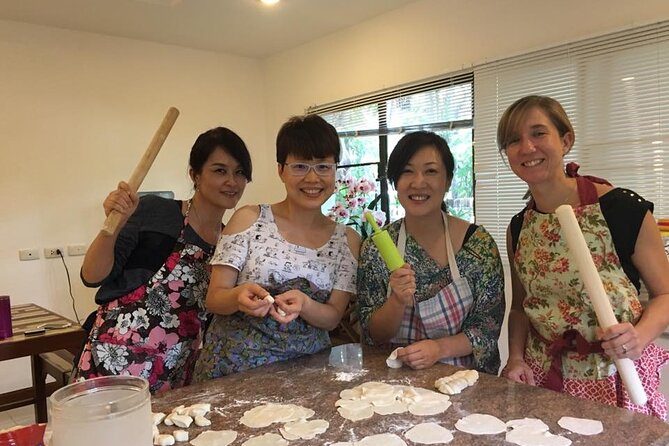
Past menus have included gyoza, ramen, okonomiyaki, sushi rolls, fried rice, yakisoba, curry rice, oyakodon, takoyaki, kakiage tempura, soy milk soup, and several side dishes. The exact menu depends on your advance choice and the arrangements made before the class.
You select the main dish ahead of time so ingredients can be prepared. That is important because the class is built around personal requests rather than one rigid menu for every date. You may be able to combine different choices within a small group, as has happened with ramen for one participant and okonomiyaki for another.
The experience is particularly useful for anyone with dietary needs. Menus have been adjusted for vegetarian, pescatarian, and vegan diets, as well as food allergies. You should discuss those needs before the class rather than waiting until you arrive. The available choices still depend on what can be prepared for that date.
What you actually cook and eat
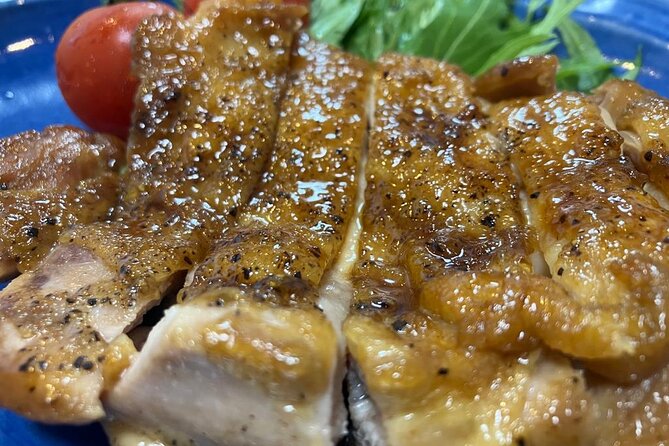
The class is not limited to a single bowl or plate. Tomoko often prepares a fuller meal around the selected main dish, with side dishes, salad, soup, or dessert. Several menus have included gyoza and ramen together, while another included okonomiyaki with yakisoba, side dishes, and a matcha dessert.
That approach gives you a better idea of how Japanese home meals work. A restaurant may focus on one famous dish. At home, the table can include several smaller items that balance the meal. You learn more by seeing those combinations and tasting the sauces, dressings, and side dishes alongside the main course.
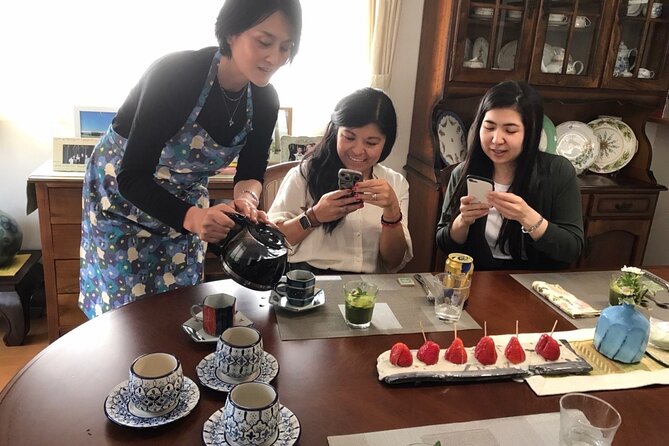
Dessert has included matcha ice cream, mochi, seasonal fruit, and other sweet finishes. Drinks are also part of the package. Bottled water and hot drinks are included, along with alcoholic beverages. Homemade plum wine has been served on some occasions, and wine has accompanied other meals.
The food is prepared and eaten together in Tomoko’s home. That shared table time is not a minor extra. It gives you space to talk about Japanese cooking, daily life, local shopping, and the practical problem of finding ingredients at home.
More Home Cooking Classes in Tokyo:
- Khmer Cooking Class at a Local’s Home in Krong Siem Reap
★ 5.0 · 2,731 reviews - Porto: Pastel de Nata Cooking Class with Grandma’s Recipe
★ 5.0 · 1,565 reviews - Siem Reap: Khmer Cooking Class at a Local’s Home
★ 5.0 · 1,108 reviews - Local Home Korean Cooking Class & Market Adventure in Seoul
★ 5.0 · 1,024 reviews
A class designed around questions
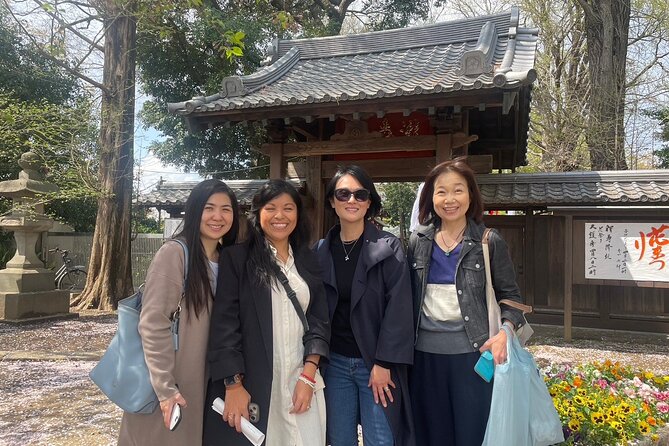
The four-person maximum is one of the strongest features. In a large cooking class, you can easily end up chopping one vegetable while an instructor races through the rest. Here, the group size gives Tomoko time to explain methods and respond to individual questions.
The tone is informal. You may be paired with another small group or join as a solo participant, depending on the booking. Solo visitors have found the setting comfortable, and families have used the class as a shared activity. One family also received an inclusive experience for an adult child with an intellectual impairment, with the day adjusted to suit the group.
Communication should be manageable for English-speaking participants. Tomoko has taught the class in English, and she also speaks Spanish. Clear printed recipes have been provided, which helps when you want to remember the process after returning home.
The class is not a formal culinary school. Tomoko may do some preparation herself to keep the meal moving, especially when conversation is flowing. If your main goal is to perform every single step, make that clear at the beginning. If you want a relaxed lesson with plenty of eating and conversation, the format should suit you well.
What makes the home setting worthwhile
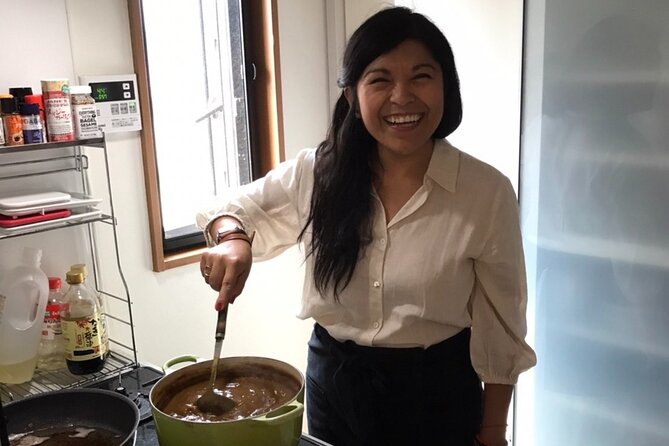
A home kitchen gives you details that a restaurant demonstration usually skips. You can ask which ingredients are common in Japanese households, how a sauce is balanced, or what can be replaced at a supermarket outside Japan.
Several dishes use ingredients that may be unfamiliar or difficult to find abroad. Tomoko has helped participants identify Japanese pantry staples, and in some cases has assisted with buying ingredients at a grocery store after class. That practical help can be more valuable than a beautifully printed recipe that depends on products you cannot locate.
The setting also creates a personal connection without turning the class into a staged cultural show. You see a peaceful residential part of Tokyo, walk through a local valley, and share lunch in a private home. The experience feels closer to being welcomed into someone’s routine than attending a standard sightseeing stop.
Still, you should be comfortable with a home-based activity. If you prefer a polished commercial kitchen, restaurant setting, or highly structured demonstration, this may feel casual. That casual quality is the main appeal for many people, but it will not suit every cooking style.
Price and what you receive for $110.99
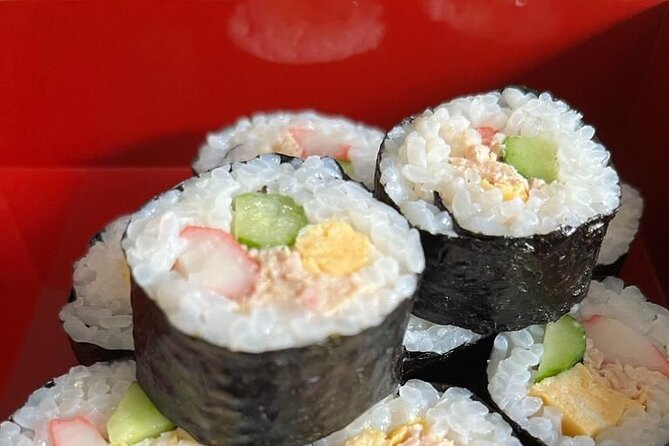
At $110.99 per person, this is not a budget meal or a basic one-hour lesson. The price makes more sense when you count the full package: the Todoroki walk, small-group instruction, ingredients, a multi-dish meal, dessert, bottled water, hot drinks, alcoholic beverages, and recipes.
You are also paying for access to a host who adjusts the menu. A standard class may offer a fixed recipe and a fixed timetable. Here, advance requests can shape the main dish, and dietary concerns can be discussed before the date.
The value is strongest if you want to learn dishes you will actually make at home. Ramen, gyoza, okonomiyaki, curry rice, and fried rice are practical choices for a home cook. If you only want to sample Japanese food, a restaurant meal will cost less and take less time.
The booking pattern also suggests planning ahead. The experience is booked an average of 44 days in advance, and the small capacity means only a few places are available on each weekday. If your Tokyo dates are fixed, reserve early rather than hoping to find a last-minute opening.
Timing, transport, and the day’s rhythm
The advertised experience lasts about two and a half hours, with weekday hours listed from 11 a.m. to 2 p.m. The itinerary describes roughly 10 minutes at the temple, five minutes at the valley viewpoint, and about two hours for the cooking portion. The cooking description elsewhere refers to a three-hour class, so allow room for a generous midday activity rather than planning an exact departure immediately afterward.
The experience starts and ends at Todoroki Station. That makes it easy to connect with the rest of your Tokyo plans, but you should not schedule a major attraction across town right afterward. The meal and conversation may run at a relaxed pace, and the walk adds time before and after cooking.
Mobile tickets are provided, and confirmation is received at booking. Free cancellation is available until 24 hours before the start time. Within 24 hours, refunds and changes are not accepted, with cut-off times based on local Tokyo time.
Who will enjoy this most
I would recommend this for solo visitors, couples, families, and small groups who want more than a standard sightseeing route. It is especially well suited to people who like to ask questions, eat a substantial lunch, and learn recipes they can use later.
Beginners should feel comfortable. The food choices may sound complicated, but Tomoko breaks the process into manageable steps. Experienced cooks can request specific dishes or use the time to learn how Japanese ingredients and home methods differ from those they already know.
It is also a strong choice for anyone seeking a quieter side of Tokyo. The temple and valley are not the main event, but they provide a pleasant pause from crowded districts. If your schedule already includes several large attractions, this offers a welcome change of pace.
You may want to skip it if you have only a short layover, dislike eating a large midday meal, or want a class in a professional teaching kitchen. You should also tell Tomoko about allergies and dietary restrictions before booking, since the menu needs advance planning.
My verdict on Casa de Tomokita
You should book this experience if you want Japanese food, local conversation, and a small slice of everyday Tokyo in one outing. The best parts are the four-person limit, Tomoko’s flexible menus, the recipes you can take home, and the gentle walk through Todoroki before lunch.
The price is fair for a full meal and personalized instruction, though it is more than you would pay for a casual restaurant lunch. Book early, choose a dish you genuinely want to make again, and keep the rest of your day open. For a hands-on introduction to Japanese home cooking, this is a warm and practical choice.
FAQ
Where does the cooking class begin?
The activity begins at Todoroki Station, at 3 Chome-1 Todoroki, Setagaya City, Tokyo. It ends back at the meeting point.
How long does the experience last?
The experience is listed as approximately two and a half hours. The schedule runs from 11 a.m. to 2 p.m., and the cooking portion is described as about two hours in the itinerary.
How many people can join?
The activity has a maximum of four participants.
What dishes can I choose?
Possible main dishes include okonomiyaki, ramen, sushi rolls, gyoza, curry rice, oyakodon, takoyaki, fried rice, and other Japanese dishes. You choose your main in advance.
Are food, drinks, and recipes included?
Food, bottled water, hot drinks, and alcoholic beverages are included. Recipes have also been provided for the dishes prepared during the class.
Can the menu accommodate dietary needs?
The menu can be adjusted for requests such as vegetarian, pescatarian, vegan, and food allergies. Contact the provider before the class so the ingredients can be arranged.
New cooking classes around Tokyo
- Shinjuku Tokyo: Authentic Japanese Home-Style Culinary Class★ 4.9 · 125 reviews
- Shibuya Tokyo: Onigiri & Tamagoyaki Cooking Class★ 5.0 · 4 reviews
- Ramen Making from Scratch +Akihabara Tour –Cooking Class★ 5.0 · 25 reviews
- Japanese Knife Skills & Tuna Don/Sushi Workshop in Tokyo★ 5.0 · 3 reviews
- AKEMI’s SUSHiKiTCHEN: A fun sushi cooking lesson in Tokyo★ 5.0 · 5 reviews
- Tokyo: Private Japanese Cooking Class with a Local Chef★ 5.0 · 81 reviews
- Unique Private Cooking Class with a Tokyo Local Emi★ 5.0 · 131 reviews
- Private Home Cooking in Yanaka – Local Flavors in a Warm Setting★ 5.0 · 173 reviews
Tokyo Cooking Classes, side by side.
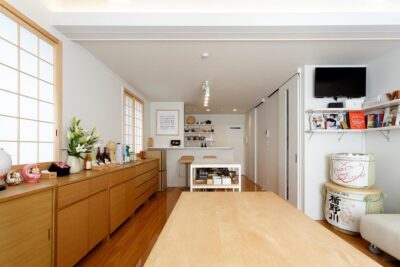
Ramen & Gyoza Cooking Class in Tokyo with Local Supermarket Visit
Read our review →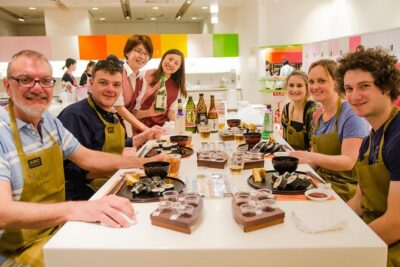
Tokyo Tsukiji Fish Market Tour and Sushi Making Lesson
Read our review →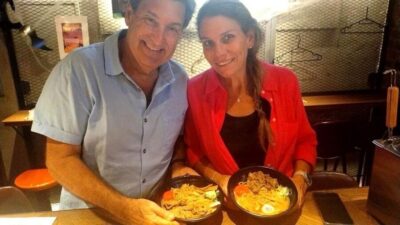
Tokyo: Easy Ramen Cooking Experience in Kabukicho, Shinjuku
Read our review →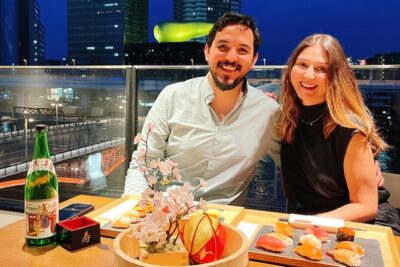
Ramen and Sushi Cooking Class with Sake Pairing Set in Tokyo
Read our review →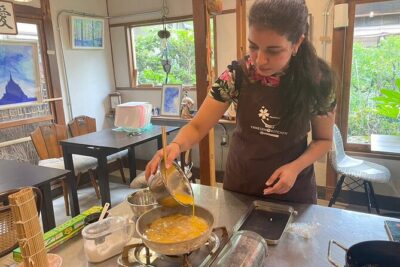
Private Home Cooking in Yanaka – Local Flavors in a Warm Setting
Read our review →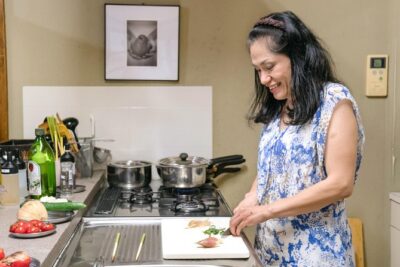
Unique Private Cooking Class with a Tokyo Local Emi
Read our review →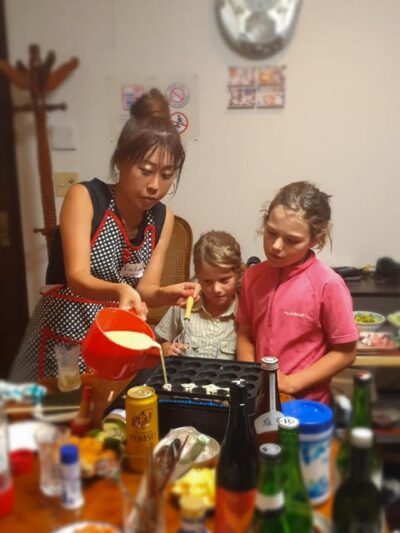
Shinjuku Tokyo: Authentic Japanese Home-Style Culinary Class
Read our review →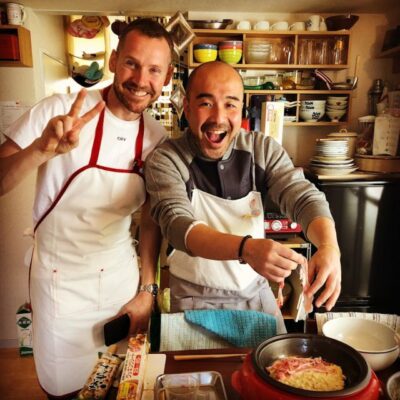
Tokyo: Private Japanese Cooking Class with a Local Chef
Read our review →This kitchen also appears in