
Review · LUANG PRABANG
Luang Prabang: Cooking Class at the Former Royal Palace
Luang Prabang’s morning market is at its best when someone can explain what you are seeing. This experience pairs that market visit with a hands-on Lao cooking class at Alame Restaurant, in the peaceful heritage setting of Victoria Xiengthong Palace. You will shop for ingredients, cook several dishes, and eat lunch beside the Mekong.
I like the market walk with a local chef, especially because the guide may offer small fruits or other foods to taste. I also like the small group size, limited to 10 people, which gives you room to ask questions and work at a comfortable pace. The main drawback is the gap between the market visit and cooking: the chef may need about two hours to prepare ingredients, so you could have time to fill with coffee, temples, or nearby shops.
Key points at a glance
- Market insight: Walk through Luang Prabang’s morning market with a chef who explains local herbs, vegetables, spices, and unfamiliar foods.
- Mekong setting: Cook and eat on a terrace at Alame Restaurant, with views toward the river.
- Several Lao dishes: Classes have included sticky rice, appetizers, sour soup, laab, and a coconut dessert.
- English-speaking guides: Chefs such as Noi, Noy, Nov, and Vannasone lead the class.
- Small group format: The group is limited to 10, making the cooking more relaxed than a large demonstration.
- Useful takeaway: You receive recipes and practical skills for making Lao food at home.
The morning market is the real beginning
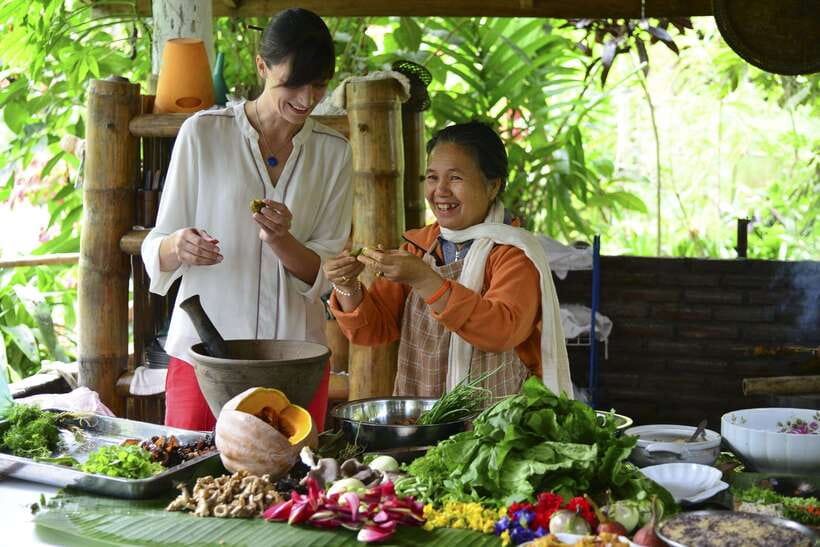
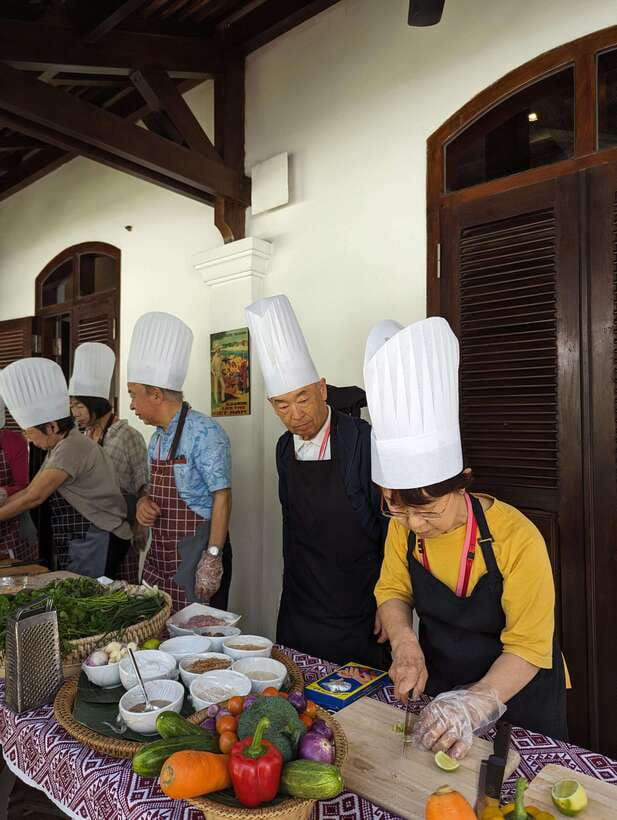
Meet at Victoria Xiengthong Palace on Kounxoau Road, near Wat Xiengthong Temple. From there, the group travels to the local morning market by bicycle or tuk tuk. The exact transport matters less than the timing. Morning is when the market is most active, and the ingredients for the class are being selected while they are still fresh.
The market visit lasts about an hour. You will see herbs, vegetables, fruit, spices, and other foods used in everyday Lao cooking. A local chef gives the scene some order, explaining what ingredients are called, how they are used, and which flavors they add. That guidance is useful because Lao markets can be confusing if you only recognize the standard tourist foods.
The guides have different personalities, but the strongest feedback centers on their calm, friendly teaching. Noi is described as patient, funny, and clear. Noy is praised for explaining the ingredients and cooking steps well. Nov has led groups through the market and class, while Vannasone has guided visitors who already had plenty of cooking experience but still learned something new.
You may also get to taste small market items along the way. One guide bought a few things for the group to sample, while another helped a visitor choose fruit and juice. These little tastings add value because they turn the market from a place you look at into a place you can understand through taste.
The market is not staged for the class. It is a working local market, so expect a sensory stop rather than a polished food museum. You should be comfortable with crowds, uneven walking areas, and the smells of fresh produce and meat. Bring a hat, particularly if the morning is hot.
More cooking classes around the world:
- Half-Day Thai Cooking Class at Organic Farm in Chiang Mai
★ 5.0 · 19,087 reviews - Florence: Pasta Cooking Class with Unlimited Wine
★ 4.9 · 10,285 reviews - 3 in 1 Cooking Class near Navona: Fettuccine, Ravioli & Tiramisu
★ 5.0 · 7,376 reviews
The waiting period needs a little planning
After the market, you may not go straight into the cooking. The chef often needs around two hours to prepare ingredients before the class begins. This is the one part of the schedule that could disappoint you if you expect four continuous hours of activity.
The break is not necessarily wasted time. The restaurant is near Wat Xiengthong, temples, cafes, and shops, and several people used the pause to have coffee or explore nearby. Still, the activity description presents the morning as a compact experience, so you should allow up to four hours overall rather than assuming every minute will be structured.
There is also a practical reason for the pause. Many ingredients must be washed, chopped, measured, or arranged before the group begins cooking. That preparation keeps the class moving once you return, but it also means you may do less knife work than expected. If you want to prepare every ingredient from start to finish, ask how the class will be divided before booking.
This is a good fit for you if you care more about understanding Lao flavors and eating a complete meal than mastering every stage of professional kitchen work. It is less ideal if you want a long, technical workshop focused on individual knife skills.
Cooking beside the Mekong
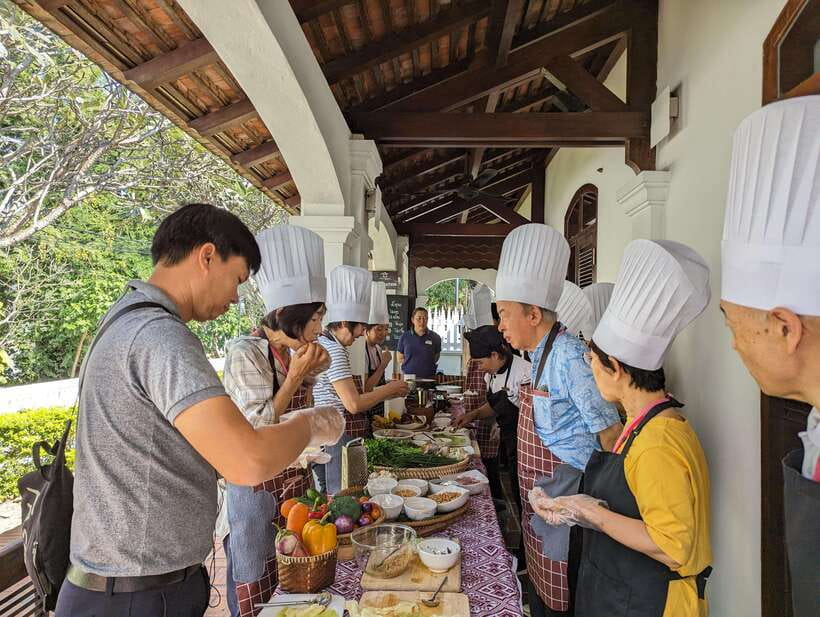
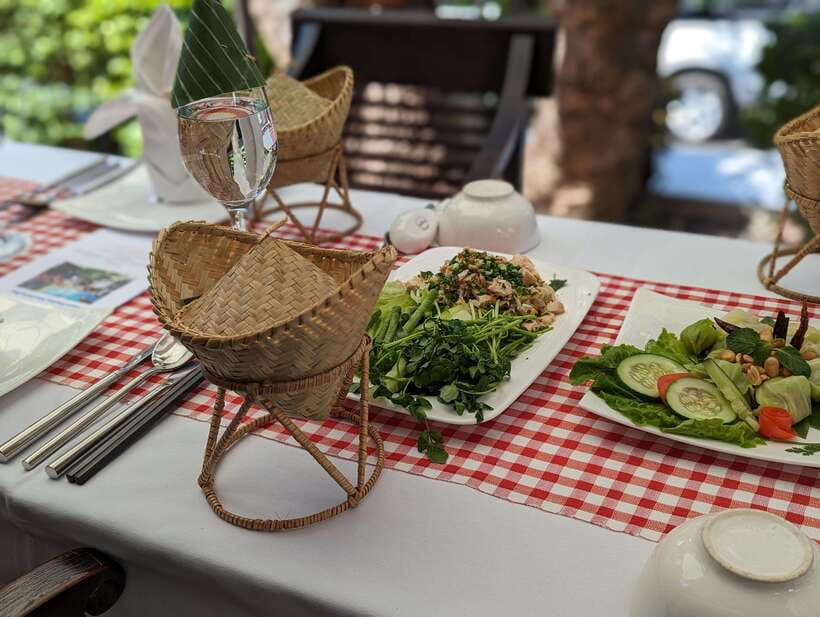
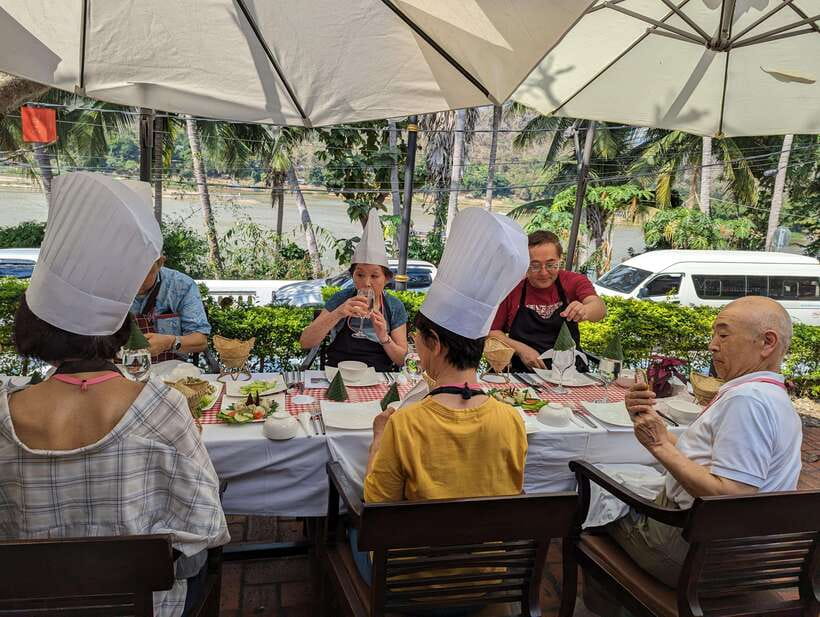
The cooking class takes place at Alame Restaurant, a riverside restaurant connected with Victoria Xiengthong Palace. The setting is one of the experience’s strongest features. Instead of cooking in a plain indoor classroom, you work on a terrace with the Mekong nearby and the quiet character of the heritage property around you.
The class lasts about two hours. It is hands-on, but the exact division of work can vary. Everyone contributes to the group dishes, rather than each person cooking every dish alone from beginning to end. That approach works well when the group is friendly and willing to share, but it is worth knowing in advance.
The dishes described in the classes have included a fresh appetizer, sour soup with pork and mushrooms, chicken laab, sticky rice, and rice balls in coconut milk. Another class prepared soup, laab salad, and a coconut dessert. The menu can therefore include several courses, but you should not assume a fixed list every day.
Lao cooking often depends on balance: herbs, sour notes, heat, fresh vegetables, and fragrant ingredients working together. The chef explains the steps in English and shows you how the components come together. The recipes are useful because they give you a way to repeat the meal at home, even if some local ingredients are harder to find outside Laos.
The teaching style seems more relaxed than formal. The best guides give clear instructions, then allow you to work at your own pace. You can expect help with chopping, mixing, seasoning, and cooking, but not a rigid culinary-school lesson. That is a strength for beginners and casual cooks. Experienced cooks may wish for more individual preparation time.
Vegetarian food is available if you request it in advance. Do not wait until the class begins, since the menu and ingredient preparation need to be adjusted beforehand.
Lunch makes the class feel complete
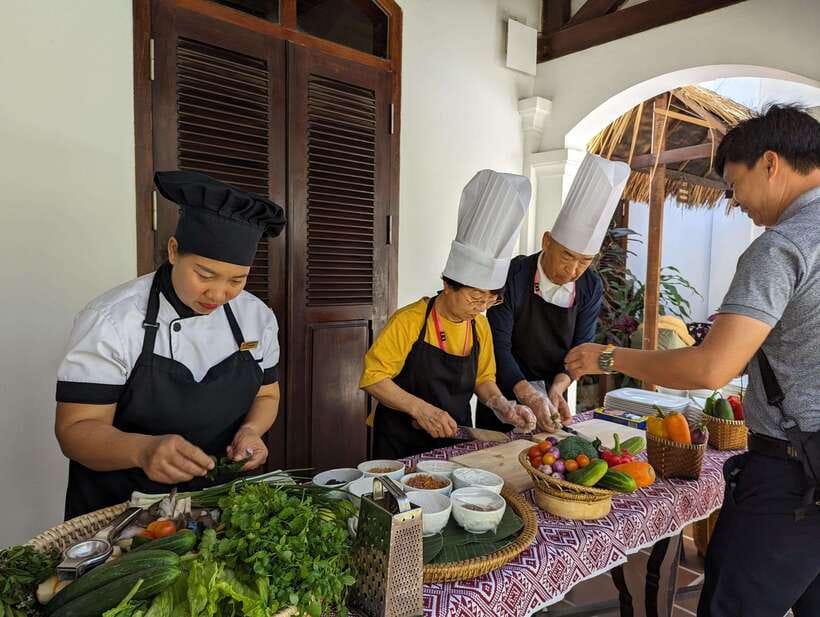
After cooking, you eat the dishes you helped prepare. Lunch is served in the same peaceful riverside setting, with the Mekong as part of the view. This is not just a tasting of one dish. The meal can include a starter, soup, main dish, sticky rice, and dessert, depending on the menu that day.
I like this format because you can taste the result while the instructions are still fresh in your mind. If a laab needs more herbs, or a soup has a sharper sour flavor than you expected, you can ask about it immediately. The meal also gives the group a natural way to relax after standing and cooking.
The setting adds something that a standard restaurant meal cannot. You are not simply ordering Lao food from a menu. You are eating a meal connected to the market visit and the work you just did. The terrace, river view, and nearby temple atmosphere make lunch feel unhurried.
Drinks are not included, so bring money if you want something beyond the meal. Alcohol is not allowed as part of the activity, and drinks are not permitted in the vehicle.
Same kitchen, a different dish:
- Florence: Pasta & Tiramisu Cooking Class with Unlimited Wine
★ 4.9 · 6,708 reviews - Florence: Pasta Cooking Class with Unlimited Wine
★ 5.0 · 6,413 reviews - Hanoi Cooking Class: Culture, Local Market & Meaning CSR Impact
★ 5.0 · 5,147 reviews - 5 Traditional Dishes Hanoi Cooking Class with Market Trip
★ 5.0 · 4,890 reviews
What the $45 price gets you
At $45 per person, the price is reasonable if you would otherwise pay separately for a market tour, a cooking lesson, and lunch. The package includes the morning market visit by bicycle or tuk tuk, the cooking class, and the meal. It also includes instruction in English and recipes to take home.
The value depends on what you want from a cooking class. If you mainly want a private lesson where you prepare each dish alone, the price may feel less attractive because the group shares tasks and the chef may do much of the early preparation. If you want a cultural food outing with a meal, transport, instruction, and a pleasant setting, the price makes more sense.
The group limit of 10 is important. A small group gives you a better chance to hear the chef and take part without waiting behind a crowd. Some people have had a private class when they were the only participant, while other groups included seven people. The experience should feel personal, though the amount of individual cooking time will depend on the group.
The overall rating is 4.9 out of 5 from 51 reviews, with repeated praise for the chefs, market visit, clear instructions, food, and river setting. The consistent weakness is not poor service. It is the waiting period and the fact that group members share the preparation.
Who should book this experience
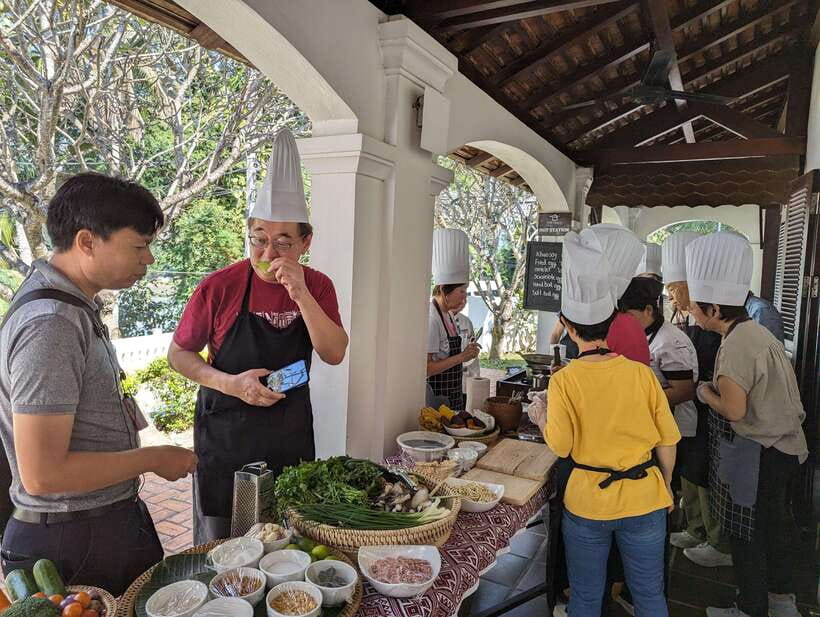
I would recommend this class to first-time visitors who want a practical introduction to Lao food. It suits couples, small groups, and solo visitors who enjoy meeting people over a shared meal. Beginners should feel comfortable, since the chef guides each step and the tone is relaxed.
It is also a good choice for food lovers who want to see ingredients before they appear on the plate. The market portion gives you useful context that a cooking lesson alone cannot provide. You learn not just how to cook the dish, but where the ingredients come from and how they fit into daily life in Luang Prabang.
Families with older children may enjoy it, but the class requires standing for extended periods. It is not suitable for wheelchair users, babies under one year, or people over 95. Baby carriages are not allowed.
You can cancel up to 24 hours before the activity for a full refund, and you can reserve now and pay later. Those policies help if your Luang Prabang schedule is still changing, but the more important decision is whether you are happy with the cooking format.
Practical tips before you go
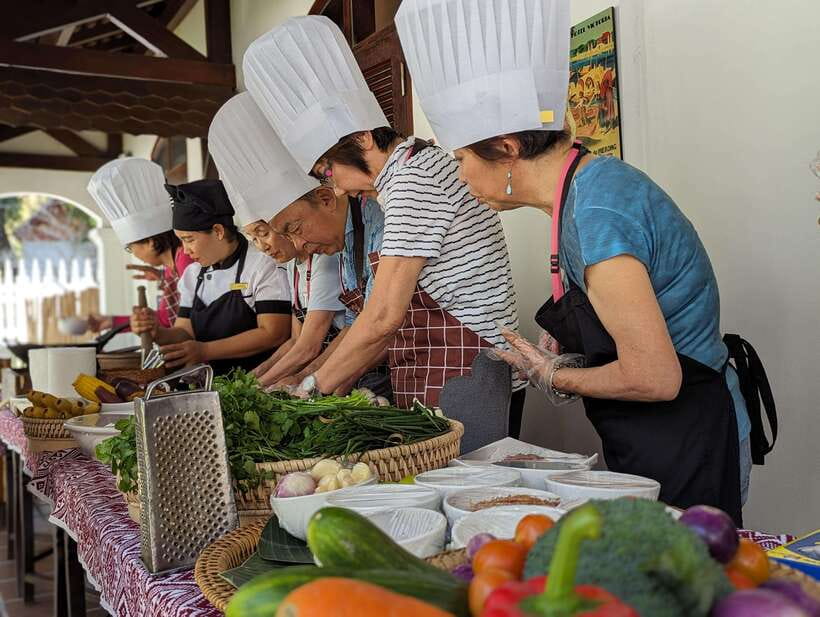
Wear comfortable clothing and shoes suitable for walking and standing. Bring a hat for the market, and remember that the activity does not include drinks.
Allow four hours even though parts of the description refer to roughly three hours. The market takes about one hour, cooking takes about two hours, and lunch takes about one hour. A preparation break may fall between the market and class.
If you want vegetarian food, notify the provider ahead of time. Ask about the day’s menu and how tasks will be shared if you want more hands-on preparation.
The meeting point is Victoria Xiengthong Palace, Kounxoau Road, Ban Phonehueng, near Wat Xiengthong Temple. The activity returns to the same area after lunch.
Should you book it?
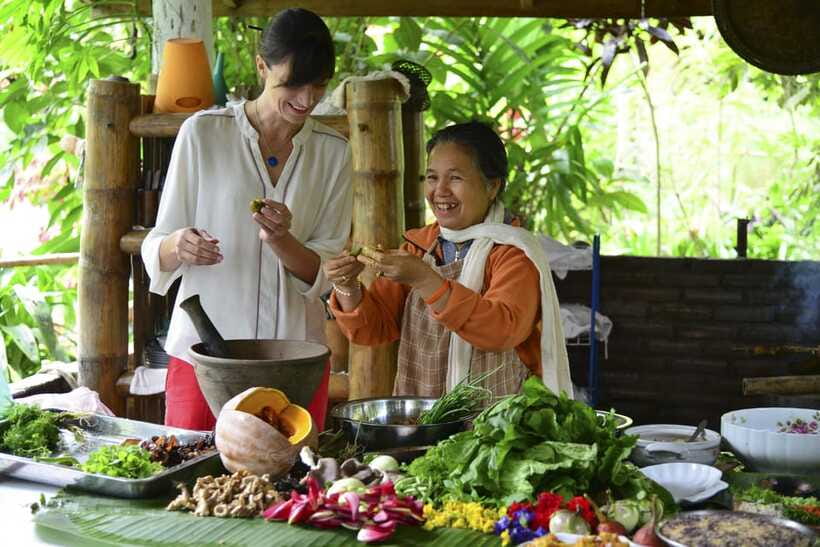
Book this experience if you want a gentle, well-rounded introduction to Lao cuisine, with a market visit, a scenic class, and a full lunch. The chefs receive especially strong praise for being kind, patient, funny, and clear, and the Mekong terrace gives the day a memorable setting.
Think twice if you want constant activity or an intensive course where you prepare every dish alone. The two-hour preparation break can feel long, and shared cooking means your role may vary from dish to dish.
For most visitors, the combination of market insight, local instruction, recipes, and riverside dining makes the $45 worthwhile. It is less about becoming an expert cook in one morning and more about leaving Luang Prabang able to recognize its ingredients, understand its flavors, and recreate part of the meal at home.
FAQ
Where does the cooking class meet?
Meet at Victoria Xiengthong Palace on Kounxoau Road in Ban Phonehueng, near Wat Xiengthong Temple.
How long does the experience last?
Allow about four hours overall. The schedule includes roughly one hour at the market, two hours of cooking, and one hour for lunch.
How do I get to the morning market?
Transport to the market is included by bicycle or tuk tuk.
Is lunch included?
Yes. Lunch includes the Lao dishes prepared during the class.
Are drinks included?
No. Drinks are not included in the price.
Is the class taught in English?
Yes. English instruction is provided.
Can I request vegetarian food?
Yes. Vegetarian options are available, but you should notify the provider in advance.
How many people are in the group?
The class is limited to 10 participants. A private class may occur if only one person books.
What should I bring?
Bring a hat and wear clothing suitable for walking and standing. You should also be prepared for a possible break while the chef prepares the ingredients.
New cooking classes around the world
- Shinjuku Tokyo: Authentic Japanese Home-Style Culinary Class★ 4.9 · 125 reviews
- Shibuya Tokyo: Onigiri & Tamagoyaki Cooking Class★ 5.0 · 4 reviews
- M.O.M COOKING CLASS★ 4.8 · 6 reviews
- Seville: Paella-Cooking Experience with Sangria & Full Meal★ 4.9 · 42 reviews
- Shanghai: Authentic Chinese Cooking Class with Master Chef★ 5.0 · 2 reviews
- Sestri Levante: Pesto & Cooking Classes, Wine Tasting★ 4.9 · 56 reviews
- Seville: Paella Cooking Class & 30-Min Local Expert Q&A★ 4.8 · 37 reviews
- Seoul: Korean Kimchi Cooking Class in the Heart of the City★ 5.0 · 3 reviews
Luang Prabang Cooking Classes, side by side.
Luang Prabang: Evening Cooking Class & Local Baci Ceremony
Read our review →
Luang Prabang: Bamboo Weaving Workshop & Cooking Class
Read our review →
Day-time Bamboo weaving & Cooking Classes join-in
Read our review →
Luang Prabang: Bamboo Forest Cooking-class & Farm Visit
Read our review →
Luang Prabang: Mekong River Cooking Class with Hotel Pickup
Read our review →This kitchen also appears in