
Review · LUANG PRABANG
Day-time Bamboo weaving & Cooking Classes join-in
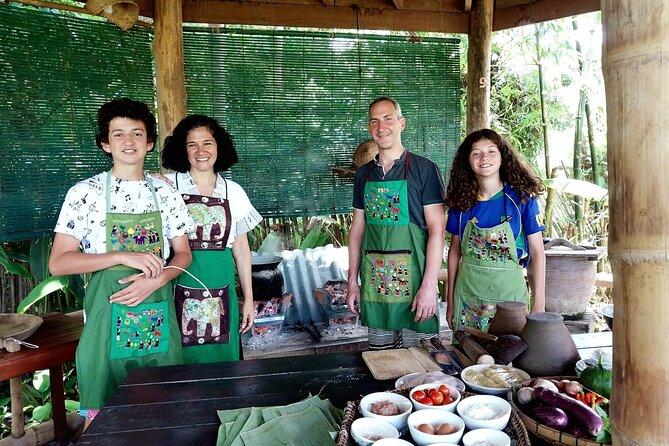
The most memorable part of this Luang Prabang outing is that bamboo is not a token craft demonstration. It is the subject of the whole morning, from rural household tools to the mat you weave and the bamboo shoots you cook. At a traditional-style pavilion beside rice fields, you get a close look at a material that is practical, edible, and central to daily life in Laos.
I like the hands-on weaving lesson, which gives you a small souvenir and a better sense of how much skill goes into a simple bamboo coaster. I also like the cooking class, where you help prepare several dishes and then sit down to eat the meal. Hotel pickup and drop-off make the $25 price especially appealing.
The main consideration is time. The class lasts about four hours, and the cooking segment shares the morning with the craft demonstrations and weaving. If you want a long, chef-led cooking course, you may find the food preparation a little brief. This works better as a broad introduction to Lao craft and food culture.
Five things to know before you book
- Bamboo is the main subject: You learn how it is used in rural Lao homes, not just how to weave one souvenir.
- The setting is part of the experience: A rustic pavilion beside rice fields gives you a quiet break from central Luang Prabang.
- You make your own lunch: Bamboo shoot soup, bamboo steamed in banana leaf, bamboo dip, rice, and other dishes form the cooking session.
- The group is small: The maximum is eight people, which matters when you need help with a tricky weave.
- You leave with something useful: The woven coaster or small mat is a simple reminder of the morning.
- Transfers are included: Round-trip hotel transport removes the need to arrange your own ride.
A quiet morning beside Luang Prabang’s rice fields
The Bamboo Experience begins at 8:30 a.m., with pickup offered from your hotel. The exact route and pickup timing depend on your location, but the included round transfer makes this easier than arranging a separate taxi for a half-day activity.
The setting is a rustic pavilion modeled on a traditional Lao house. It sits in a peaceful, semi-rural area near rice fields, with mountain views from the terrace. This is not a polished city cooking studio. The open, wooden buildings and leafy surroundings give the session a strong sense of place.
I like this change of scene. Luang Prabang’s old town is compact and easy to explore, but it can also feel busy during the main sightseeing hours. Here, you get room to slow down, watch the countryside, and focus on the people leading the class.
The experience includes a stop connected with the Ock Pop Tok Living Crafts Centre. The program is built around local making traditions, and the bamboo work feels tied to everyday life rather than presented as a decorative add-on.
More cooking classes around the world:
- Half-Day Thai Cooking Class at Organic Farm in Chiang Mai
★ 5.0 · 19,087 reviews - Florence: Pasta Cooking Class with Unlimited Wine
★ 4.9 · 10,285 reviews - 3 in 1 Cooking Class near Navona: Fettuccine, Ravioli & Tiramisu
★ 5.0 · 7,376 reviews
Why bamboo matters in Lao daily life
The morning starts with an introduction to bamboo and its role in Lao culture. You learn how the plant is used for a wide range of household objects in rural homes. That context gives the later activities more meaning.
Before you start weaving, you see that bamboo can serve many purposes. It can become household equipment, storage items, building material, woven goods, and food. The point is not simply that bamboo is useful. It is that people have developed ways to work with nearly every part of it.
This introduction is especially helpful if you have little knowledge of rural life in Laos. You begin to notice how local materials shape food, shelter, tools, and craft. The presentation also helps explain why bamboo shoots appear in the cooking class.
The guides are a strong part of the session. Somsay is named as one of the people who may lead the experience, and a village master weaver may join to demonstrate the craft. The weaver has limited English, but the teaching is described through demonstrations, smiles, patience, and close practical help. For a hands-on craft, that can work better than a long talk.
Weaving a coaster is harder than it looks
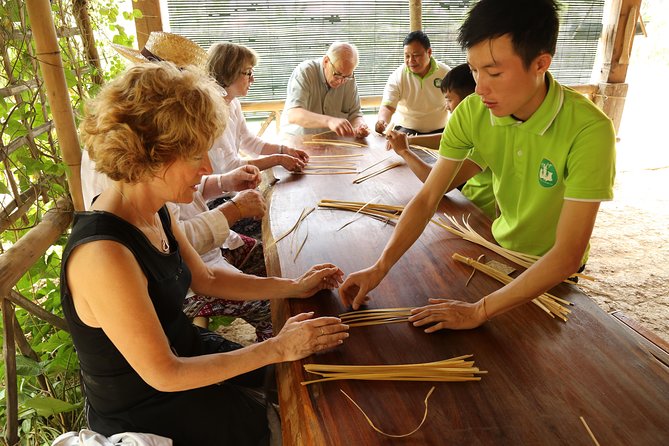
The weaving lesson is relaxed, but do not mistake relaxed for effortless. You work with strips of bamboo and follow a technique practiced for generations. The finished item may be described as a coaster or a small woven mat, depending on the session.
You get a chance to handle the material, line up the strips, and repeat the pattern. The work looks simple when an experienced weaver does it. Once you try it yourself, keeping the strips even and the pattern in place takes concentration.
That small challenge is one of the best parts of the activity. You are not merely watching a local artisan produce a finished object. You make something with your own hands, and the result may show a few uneven edges. That is part of the charm.
The class suits families because the task is visual and practical. Younger participants can see the pattern take shape, while adults often enjoy the quiet concentration. Some help is provided, but you should expect to take part rather than receive a perfectly finished souvenir.
The maximum group size is eight. That is useful here. With bamboo weaving, a large class could make it difficult to see the demonstration or ask for help. A small group gives the craft portion a more personal feel.
Cooking bamboo shoots with the group
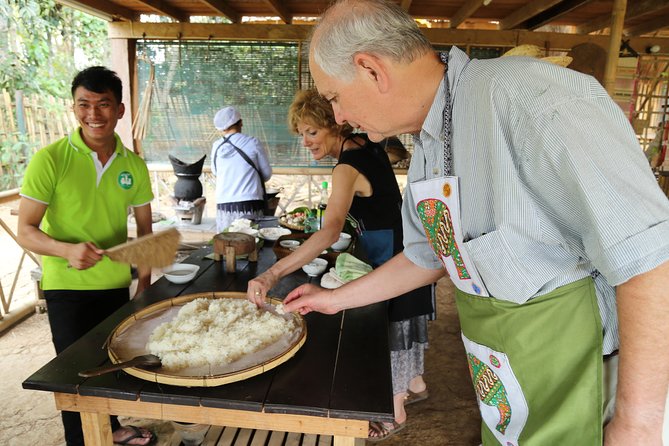
After the weaving, the focus shifts to the kitchen. Bamboo becomes the key ingredient, and you help prepare a meal rather than simply watch a cooking show.
The dishes include bamboo shoot soup, bamboo shoots steamed in banana leaf, bamboo shoot dip, and other Lao preparations. Rice is also part of the meal, and the session includes its preparation. The exact menu may vary, but the central idea stays the same: you work with a familiar local ingredient in several different forms.
This is a useful introduction to Lao cooking because bamboo shoots are not always familiar to people visiting from abroad. You see how one ingredient can provide different textures and flavors. Soup gives it a softer role, steaming in banana leaf keeps the preparation simple, and a dip offers a sharper contrast.
The class is interactive. You help prepare the food, then eat the meal you made. I find that this makes lunch more memorable than a standard restaurant stop, even if the cooking instruction is not as extensive as it would be in a full-day culinary course.
One practical point matters here: alcohol is not included. Lunch is included, but drinks beyond the meal are not part of the stated package. If you want something alcoholic, plan to pay separately if it is available.
Same kitchen, a different dish:
- Florence: Pasta & Tiramisu Cooking Class with Unlimited Wine
★ 4.9 · 6,708 reviews - Florence: Pasta Cooking Class with Unlimited Wine
★ 5.0 · 6,413 reviews - Hanoi Cooking Class: Culture, Local Market & Meaning CSR Impact
★ 5.0 · 5,147 reviews - 5 Traditional Dishes Hanoi Cooking Class with Market Trip
★ 5.0 · 4,890 reviews
Lunch tastes better when you helped make it
The meal is the payoff for the cooking portion. You sit down with the dishes prepared during the class, including the bamboo recipes and rice. This is a genuine meal, not just a tiny tasting portion described as lunch.
The food also gives you a chance to connect the craft lesson with local eating habits. Bamboo is not only something woven into a household object. It is also an ingredient that appears on the table.
I like the way the class joins these two sides of Lao life. A typical craft workshop might leave you with a handmade item, while a cooking class might teach you a few recipes. Here, the same plant links both activities.
The meal is also social. You work together, laugh at the occasional weaving mistake, and share the dishes afterward. If you prefer to spend a morning quietly observing, this may feel more participatory than expected. If you enjoy making things, it is a welcome strength.
Music, photos, and time on the terrace
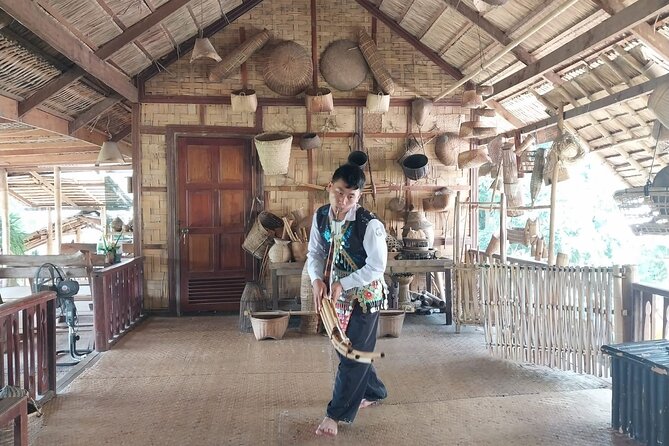
The program can include musical performances, adding another cultural element to the morning. A Hmong musical presentation has been part of the experience, giving you a short performance after the demonstrations and activities.
The exact musical content is not the main reason to book. Think of it as an extra window into local culture rather than a full concert. It helps give the session a rounded feel, with craft, food, countryside, and music all included.
The terrace provides good photo opportunities. You can photograph the traditional-style wooden buildings, rice fields, and mountain views, while also capturing the food preparation and your finished weaving. The setting is calm and scenic without requiring a long journey from Luang Prabang.
I would bring a phone or camera, but keep it out of the way during the weaving and cooking. Your hands will be busy, and the best moments come from taking part.
What the $25 price really covers
At $25, this is a strong-value half-day experience. The price covers the workshop, cooking activities, lunch, and round-trip transfers. You also receive a handmade bamboo item and a cultural introduction that would be difficult to reproduce on your own.
The value is not just in the food. A restaurant meal in Luang Prabang would cost less or more depending on the setting, but it would not give you the bamboo demonstration, weaving practice, cooking instruction, countryside visit, and transport.
The price works particularly well for families and people with limited time. You do not need to commit an entire day, and you can return to Luang Prabang with the afternoon still free.
You should keep your expectations realistic. This is a four-hour introduction, not a professional craft apprenticeship or an advanced cooking course. One person who enjoyed the cooking would have preferred more time devoted to that part. If cooking is your sole priority, look for a longer class. If you want several connected activities in one morning, the balance works well.
Tipping is not included. The listed package also excludes alcoholic beverages. Those costs are easy to plan for, but it is useful to know them before you arrive.
Who will enjoy this morning most
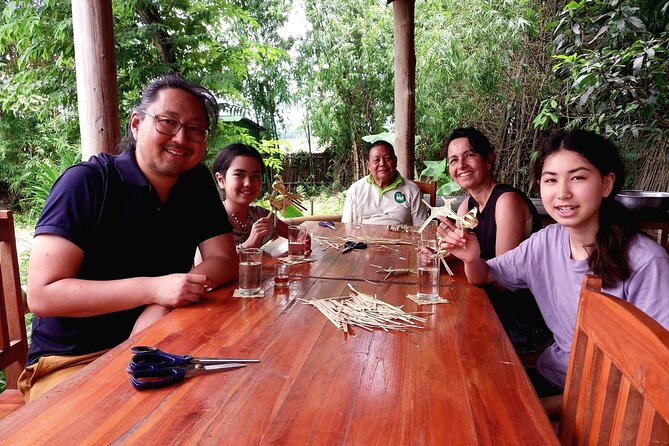
I would recommend this experience to families, couples, solo visitors who enjoy small-group activities, and anyone looking for a break from town. The practical format keeps the morning moving, and the group limit of eight should help the activities feel manageable.
It is also a good match for visitors who want more than a food tasting. You learn why bamboo matters, try a traditional weaving technique, cook with bamboo shoots, eat lunch, and spend time in a rural setting.
You may want to choose something else if you dislike group participation or prefer a highly technical class. The activity asks you to work with others, follow demonstrations, and accept that your coaster may not look as neat as the teacher’s.
The short duration is a major advantage for an itinerary packed with temples, markets, and river activities. A morning start at 8:30 a.m. leaves the rest of your day available, though you should allow time for the included pickup and return.
The experience requires good weather. If poor weather causes a cancellation, you are offered another date or a full refund. You can cancel for a full refund up to 24 hours before the local start time. Changes or cancellations made later are not accepted for a refund.
Should you book The Bamboo Experience?
Book it if you want a friendly, practical introduction to Lao culture that combines craft, food, and countryside in one manageable morning. The strongest features are the small group, included transfers, homemade lunch, and the chance to make something yourself.
I especially like it for families and first-time visitors to Luang Prabang. You get a clear look at how bamboo connects daily life, traditional craft, and local cooking. Just remember that the cooking portion is part of a wider cultural workshop, not a long chef-training class.
At $25, with lunch and round transfers included, this is an easy recommendation for anyone who values authentic, hands-on activities over passive sightseeing.
FAQ
What time does the experience start?
The stated start time is 8:30 a.m.
How long does the Bamboo Experience last?
The activity lasts approximately four hours.
Is hotel pickup included?
Yes. Pickup and drop-off are included as round transfers.
What food do you prepare?
The cooking class can include bamboo shoot soup, bamboo shoots steamed in banana leaf, bamboo shoot dip, rice, and other dishes.
Is lunch included?
Yes. Lunch is included, and it is made with your help during the cooking class.
How many people can join the group?
The maximum group size is eight travelers.
What happens if bad weather cancels the experience?
If the activity is canceled because of poor weather, you are offered a different date or a full refund.
New cooking classes around the world
- Shinjuku Tokyo: Authentic Japanese Home-Style Culinary Class★ 4.9 · 125 reviews
- Shibuya Tokyo: Onigiri & Tamagoyaki Cooking Class★ 5.0 · 4 reviews
- M.O.M COOKING CLASS★ 4.8 · 6 reviews
- Seville: Paella-Cooking Experience with Sangria & Full Meal★ 4.9 · 42 reviews
- Shanghai: Authentic Chinese Cooking Class with Master Chef★ 5.0 · 2 reviews
- Sestri Levante: Pesto & Cooking Classes, Wine Tasting★ 4.9 · 56 reviews
- Seville: Paella Cooking Class & 30-Min Local Expert Q&A★ 4.8 · 37 reviews
- Seoul: Premium Korean Feast Cooking Class★ 5.0 · 3 reviews
Luang Prabang Cooking Classes, side by side.
Luang Prabang: Evening Cooking Class & Local Baci Ceremony
Read our review →
Luang Prabang: Bamboo Weaving Workshop & Cooking Class
Read our review →
Luang Prabang: Cooking Class at the Former Royal Palace
Read our review →
Luang Prabang: Bamboo Forest Cooking-class & Farm Visit
Read our review →
Luang Prabang: Mekong River Cooking Class with Hotel Pickup
Read our review →This kitchen also appears in