
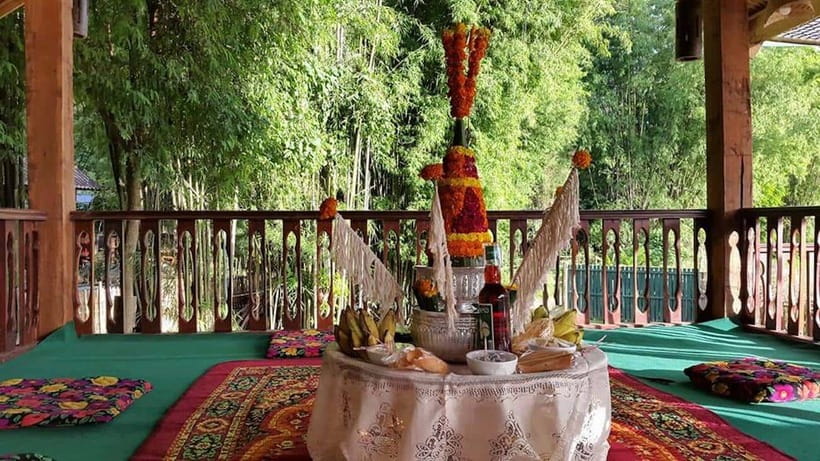
Review · LUANG PRABANG
Luang Prabang: Evening Cooking Class & Local Baci Ceremony
The heart of this four-hour experience is a Baci ceremony held with a local family, not a staged dance show put on for a passing crowd. You visit a food market, help prepare a five-dish Lao dinner, eat beside the hosts, and finish with folk music in a rustic pavilion above the rice fields.
I like the warm family setting and the chance to learn what ingredients mean in daily Lao cooking. I also like the small group limit of six, which gives you room to ask questions and take part. The one thing to consider is that the cooking instruction may feel less structured if you want a formal recipe lesson with several menu choices.
Key points
- Baci with local elders: Receive traditional blessings, tied cotton strings, snacks, and, in some cases, a small whiskey offering.
- Market-to-table cooking: Visit a local market first, then use fresh ingredients to prepare five typical Lao dishes.
- Small family setting: The group is limited to six, and the meal takes place in a traditional-style open pavilion.
- Music after dinner: Hear a Hmong musician play a traditional instrument, sometimes with a chance to try it yourself.
- Rice-field views: The cooking area looks across rice paddies and can be especially lovely near sunset.
- Good cultural value: At $51 per person, the price includes transport, a guide, the ceremony, dinner, cooking instruction, and music.
Why this Luang Prabang evening feels different
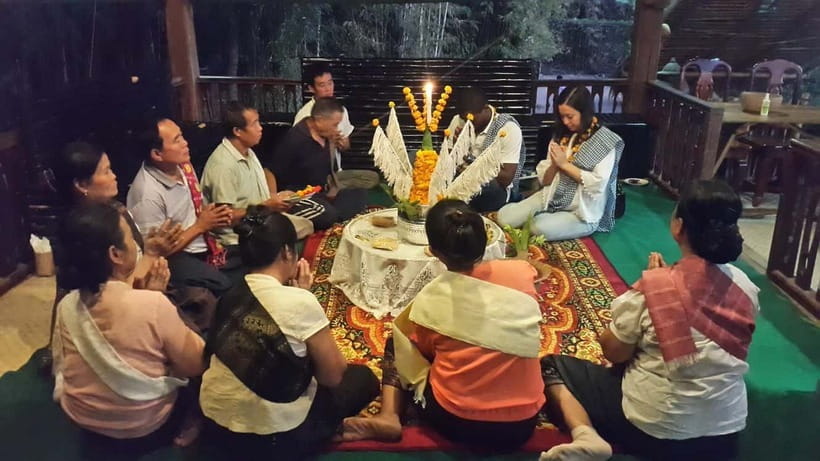
Many cooking classes give you a recipe, a chopping board, and a meal. This one adds the setting and customs that make Lao food easier to understand. You are not simply preparing dishes. You are seeing where the ingredients come from, meeting the people who cook them, and taking part in a ceremony that still has a place in everyday life.
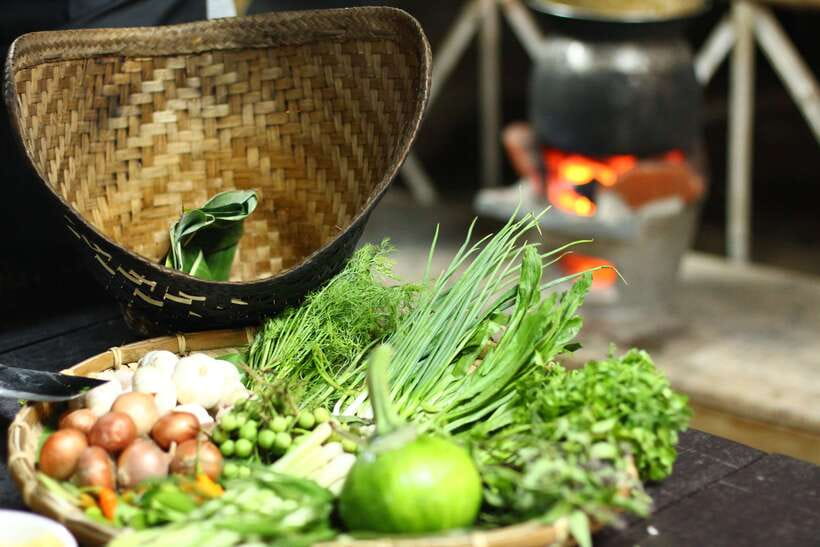
The evening begins at 4 PM with hotel pickup in Luang Prabang. From there, your English-speaking host takes you to a local food market. The market stop is useful because Lao cooking depends heavily on fresh herbs, vegetables, sticky rice, dips, fish, meat, and local seasonings. Your guide explains what you are looking at and how people use the ingredients at home.
Guides named Si and Somsay have received especially warm praise for their patience, humor, and clear explanations. The exact host may vary, but you should expect a small family operation rather than a large cooking school with a polished commercial feel.
More cooking classes around the world:
- Half-Day Thai Cooking Class at Organic Farm in Chiang Mai
★ 5.0 · 19,087 reviews - Florence: Pasta Cooking Class with Unlimited Wine
★ 4.9 · 10,285 reviews - 3 in 1 Cooking Class near Navona: Fettuccine, Ravioli & Tiramisu
★ 5.0 · 7,376 reviews
The local market comes before the cooking

The market is more than a shopping stop. It gives you a look at ordinary food buying in Luang Prabang, with produce and cooking ingredients arranged for local households rather than visitors. You can ask about unfamiliar items and see the connection between what is sold and what appears at dinner later.
This part is strongest when you ask questions. One useful request is to have your guide explain ingredients that are not used in the evening meal, too. The market visit is designed around shopping for the class, so the guide may focus mainly on foods needed for dinner. If you want a broader look at daily market life, say so early.
The pace is conversational. You are not rushed through a long list of facts, and the group size makes it easier to stop and look. For food lovers, this may be one of the most practical parts of the evening because you see raw ingredients before tasting them.
Cooking five Lao dishes over a simple outdoor kitchen
After the market, you travel to the cooking location, usually described as a family home or a small village setting outside the city. The cooking area is an open structure modeled on a traditional Lao house, with views across rice fields and toward the surrounding hills.
The kitchen is simple and hands-on. Past classes have used charcoal burners and basic outdoor equipment, which adds a sense of how food is prepared in a Lao home. You may help with several stages of the meal, including chopping, mixing, pounding, cooking, and serving.
The menu can include a soup, a meat or fish dish, sticky rice, and vegetable dips. One session included pumpkin soup, pork lard, sticky rice, and tomato and eggplant dips. Another meal included fish, meat, soup, and salad. The exact dishes can vary, so do not book this expecting a fixed restaurant menu.
You are generally involved in the cooking, but the amount of instruction can depend on the group. With one or two participants, you may handle nearly every step. With a full group of six, tasks are shared. One practical criticism is that the class may offer less choice than a formal cooking workshop, and you may not receive printed recipes afterward.
That said, the loose format suits the setting. The host family can adjust the pace and help you understand how the food is made instead of forcing everyone through a rigid schedule. If you enjoy learning by watching and doing, this works well. If you want precise measurements and a carefully timed lesson, keep your expectations modest.
Vegetarians can be accommodated, based on the experience provided, but you should confirm your needs when booking. The activity is described as family-friendly and suitable for food lovers, though it is not recommended for pregnant women, people with mobility impairments, or wheelchair users.
A Baci ceremony with meaning and ceremony
The Baci ceremony is the most distinctive part of the evening. In Lao culture, Baci is used to mark important moments such as a homecoming, marriage, birth, recovery from illness, or the return of good health. It can take place throughout the year and is traditionally favored before noon or before sunset.
Here, you sit with local elders and family members while the ceremony is explained and performed. You may hear chanting and singing, receive blessings, and have white cotton strings tied around your wrists. These strings represent good wishes and protection. Some participants have also received small snacks and a taste of local whiskey.
The ceremony is spiritual and personal, so approach it with quiet respect. You may be asked to sit in a traditional position, which can be awkward if your knees and hips are not used to folding on the floor. Guests have still found the family welcoming when they could not sit perfectly.
You need to cover your shoulders and knees. This is not just a dress-code detail. Modest clothing shows respect during a family ceremony and will make you feel more comfortable taking part.
Your guide should explain what is happening before the ceremony begins. That explanation matters. Without it, the chanting, strings, and shared food could seem mysterious. With context, you can understand the ceremony as a living custom rather than a performance arranged only for visitors.
Same kitchen, a different dish:
- Florence: Pasta & Tiramisu Cooking Class with Unlimited Wine
★ 4.9 · 6,708 reviews - Florence: Pasta Cooking Class with Unlimited Wine
★ 5.0 · 6,413 reviews - Hanoi Cooking Class: Culture, Local Market & Meaning CSR Impact
★ 5.0 · 5,147 reviews - 5 Traditional Dishes Hanoi Cooking Class with Market Trip
★ 5.0 · 4,890 reviews
Dinner tastes better when you helped make it
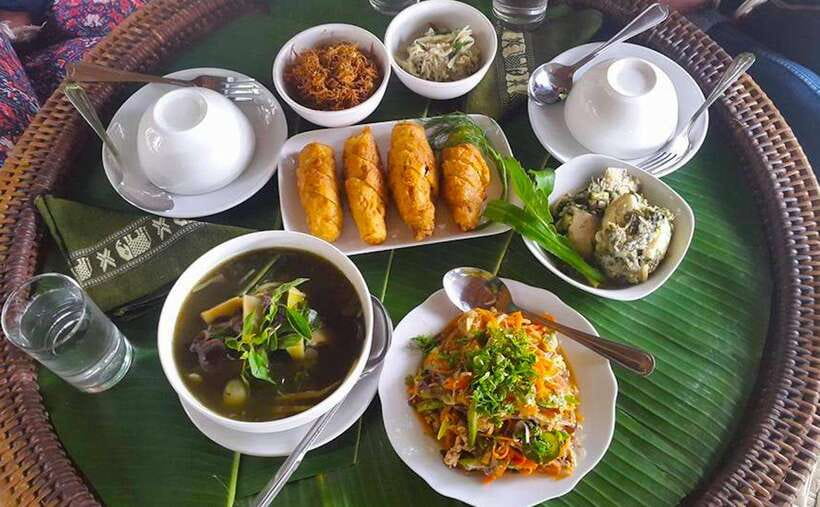
Once the food is ready, you eat together in the Lao style. The meal is home-cooked, filling, and based on the ingredients selected at the market earlier in the afternoon. You may share several dishes rather than receive one individual plate.
Sticky rice is central to the meal, and preparing it gives you a useful look at a key part of Lao food culture. Dips, soup, meat, fish, and vegetables may all appear, with the exact combination changing by season and group needs.
The food has been one of the strongest parts of the experience for me to assess because the menu gives you variety. You are not learning one famous dish and then leaving. You may prepare a full spread with different textures and flavors, including a dip, soup, salad, and main dish.
Spice levels and dietary needs should be discussed with the host. The activity can suit vegetarians, and previous menus have included options for both meat eaters and people avoiding meat. Alcoholic drinks are not included, so any drinks beyond what is part of the ceremony are your responsibility.
Hmong music beside the rice fields
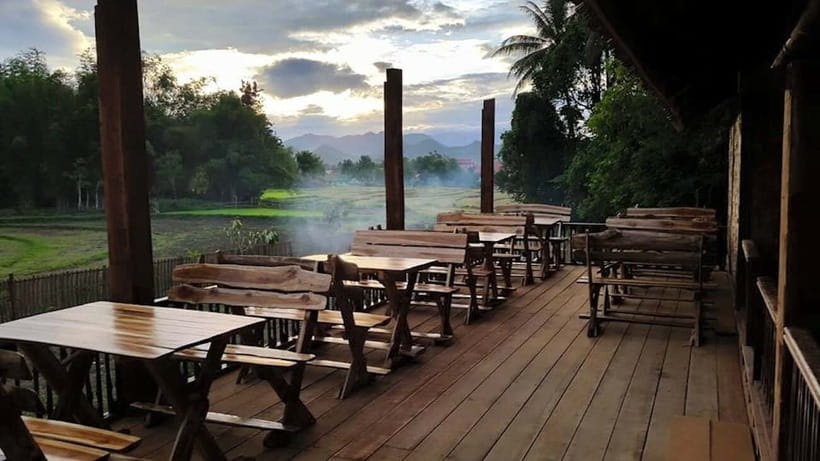
After dinner, local musicians perform traditional music. The presentation may feature a Hmong musician in traditional clothing and a traditional instrument, including the khene. In some sessions, visitors have been invited to try playing the instrument or join in a simple song.
This is not a large stage production. The appeal is the close setting and the chance to hear music from people connected to the local community. The open pavilion, rice fields, evening light, and mountain views give the performance a calm finish.
The music is also a good reminder that Luang Prabang culture is not limited to temples and old streets. The surrounding province includes many communities and traditions, and this evening brings one of those traditions into the visit.
Do not expect a long concert. The performance is one part of a varied evening, and its length may depend on the group and the host family. I see that as a strength if you want a personal cultural exchange, but less so if you are looking for a full theatrical show.
The setting and the ride matter
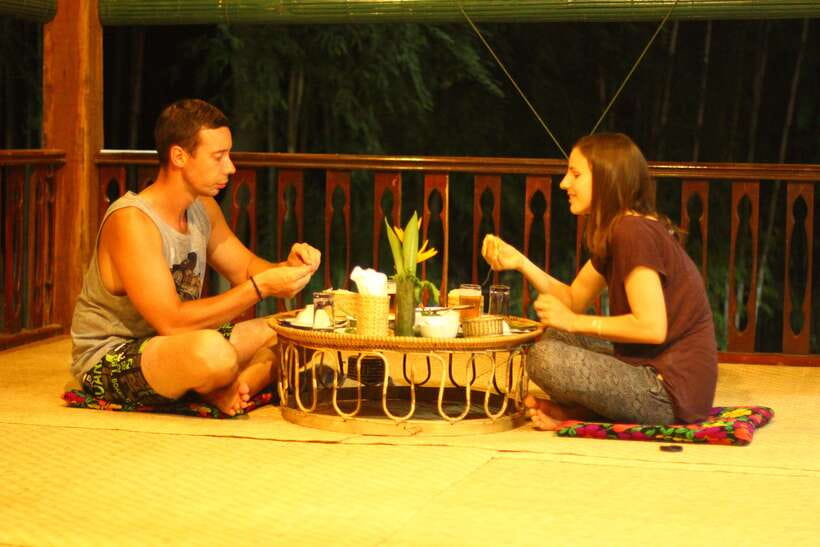
Hotel pickup and drop-off are included from hotels in Luang Prabang city. You meet the driver in your hotel lobby at 4 PM and should wait there about five minutes early. This saves you from arranging a taxi to a village location you may not know.
The cooking site is outside the central streets, in a more rural setting. The open pavilion looks over rice fields, and the views are a major part of the evening. Since the activity begins in late afternoon, you may see the fields in changing light before dinner and music.
The setting is not designed for wheelchair access, and the activity is not suitable for people with mobility impairments. Expect uneven or less formal surroundings, outdoor cooking, and possible floor seating during the Baci ceremony. Wear comfortable shoes and clothes, but keep your shoulders and knees covered.
The group limit of six is important. It helps the market walk feel personal, gives you more time with the cooking hosts, and keeps the ceremony from feeling crowded. Solo visitors can enjoy it, and couples or small family groups should find the format easy to manage.
Is $51 a fair price?
At $51 per person, this is good value if you want more than a cooking lesson. The price includes transport, an English-speaking host, the market visit, cooking class, home-cooked dinner, Baci ceremony, and music. Paying separately for a taxi, meal, cultural performance, and guided market visit could easily bring you close to the same amount.
The value is strongest because the evening combines several activities without feeling like a rushed checklist. You get food, transport, cultural explanation, and time with a family. The experience also supports a small local business, Wander Laos Tour Co., Ltd., rather than placing you in a large group operation.
The price may feel less attractive if your only goal is to learn a particular recipe. A dedicated cooking school might give you more menu control, printed recipes, and more exact instruction. Here, the ceremony and family setting are what make the cost worthwhile.
The activity has a 4.9 rating from 151 reviews, with 96 percent of participants giving transport a perfect score. Those figures suggest reliable organization, but the real value still depends on what you want from the evening. Book it for the mix of food and culture, not just for technical cooking practice.
Who should book this evening?
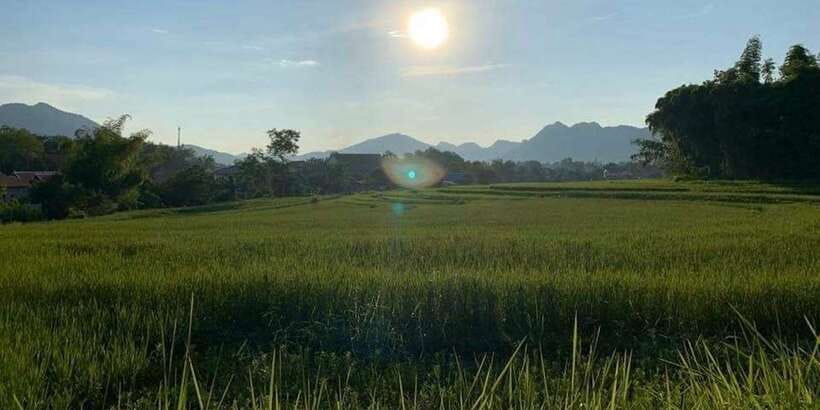
I would choose this for a first visit to Luang Prabang, especially if you want to meet local people in a small setting. It suits couples, solo visitors, families with older children, and anyone who likes food but also wants context around what they are eating.
It is a particularly good choice if you have already seen the main temples and want an evening outside the town center. The market, rice-field setting, family meal, Baci, and music offer a different view of the province.
You should think twice if you dislike shared meals, outdoor kitchens, ceremony, or flexible instruction. You should also skip it if you need wheelchair access or cannot manage the physical demands of floor seating and village-style surroundings.
My verdict on the Luang Prabang cooking and Baci evening
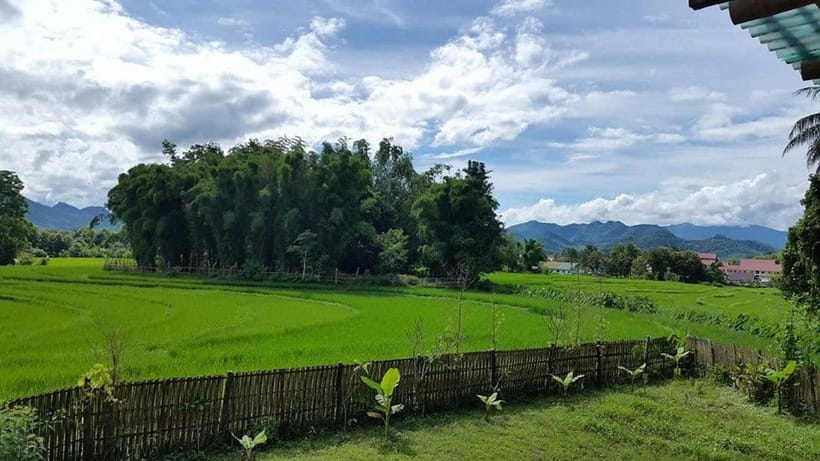
Book this experience if you want a personal introduction to Lao food and family customs in one evening. The best parts are the local market, the intimate Baci ceremony, the fresh home-cooked meal, and the rice-field setting.
Go in ready to participate rather than simply watch. Wear modest clothes, ask questions, accept that the menu can change, and do not expect a printed cookbook. For $51, you get a well-rounded four-hour outing that connects ingredients, cooking, music, and Lao hospitality in a way a standard class rarely can.
FAQ
What time does the experience begin?
Hotel pickup begins at 4 PM from hotels in Luang Prabang city. You should wait in the hotel lobby about five minutes before pickup.
How long does the activity last?
The full experience lasts four hours, including the market visit, cooking class, dinner, Baci ceremony, music, and return transfer.
How many people are in the group?
The activity is limited to six participants, making it a small-group experience.
What food will I cook?
You will cook five typical Lao dishes using ingredients from the local market. The exact menu may vary, but meals can include soup, meat or fish, sticky rice, salad, and vegetable dips.
What should I wear for the Baci ceremony?
Wear clothing that covers your shoulders and knees. Comfortable shoes and comfortable clothes are also recommended.
Are drinks included?
Alcoholic drinks are not included. Some ceremonial customs may include a small taste of local whiskey, but extra alcoholic drinks are not part of the price.
New cooking classes around the world
- Shinjuku Tokyo: Authentic Japanese Home-Style Culinary Class★ 4.9 · 125 reviews
- Shibuya Tokyo: Onigiri & Tamagoyaki Cooking Class★ 5.0 · 4 reviews
- M.O.M COOKING CLASS★ 4.8 · 6 reviews
- Seville: Paella-Cooking Experience with Sangria & Full Meal★ 4.9 · 42 reviews
- Shanghai: Authentic Chinese Cooking Class with Master Chef★ 5.0 · 2 reviews
- Sestri Levante: Pesto & Cooking Classes, Wine Tasting★ 4.9 · 56 reviews
- Seville: Paella Cooking Class & 30-Min Local Expert Q&A★ 4.8 · 37 reviews
- Seoul: Premium Korean Feast Cooking Class★ 5.0 · 3 reviews
Luang Prabang Cooking Classes, side by side.
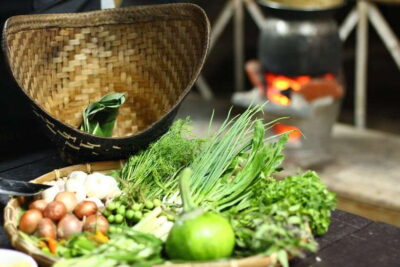
Luang Prabang: Bamboo Weaving Workshop & Cooking Class
Read our review →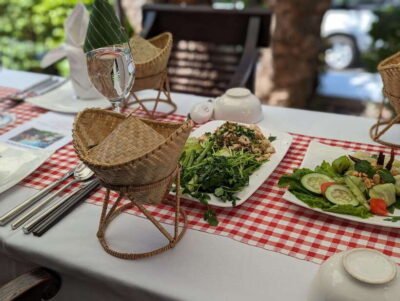
Luang Prabang: Cooking Class at the Former Royal Palace
Read our review →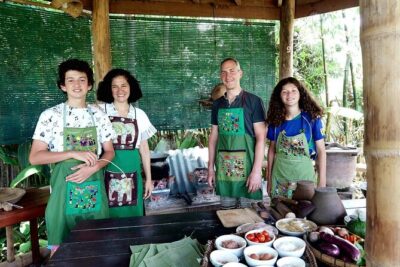
Day-time Bamboo weaving & Cooking Classes join-in
Read our review →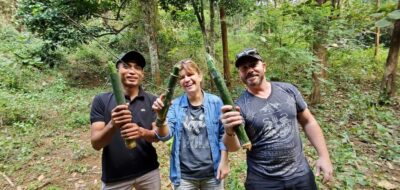
Luang Prabang: Bamboo Forest Cooking-class & Farm Visit
Read our review →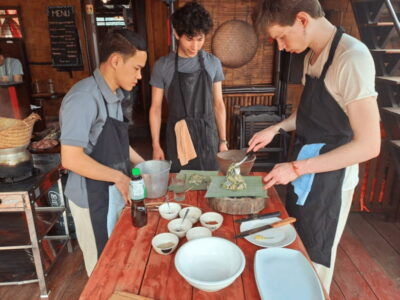
Luang Prabang: Mekong River Cooking Class with Hotel Pickup
Read our review →This kitchen also appears in