
Review · JAPAN
Kanazawa: Authentic Japanese Cooking and Sushi-Making Lesson
Kanazawa’s best food lesson is not just a sushi class. In a 56-year-old family-run school three minutes from the station, chef Seiji Nakata guides you through pressed sushi, jibuni, dashi omelet, miso soup, and seasonal side dishes. I like the strong local focus, especially jibuni, a Kanazawa dish you are unlikely to find elsewhere. I also like the live translation screen, which keeps the class moving even when Japanese and English do not quite meet.
The main consideration is access. The classroom is on the second floor with no lift, and the class is not suitable for children under 12, pregnant women, wheelchair users, or people with visual impairments. Strict vegetarians and vegans should also skip it because the traditional bonito-based dashi cannot be replaced.
Key points at a glance
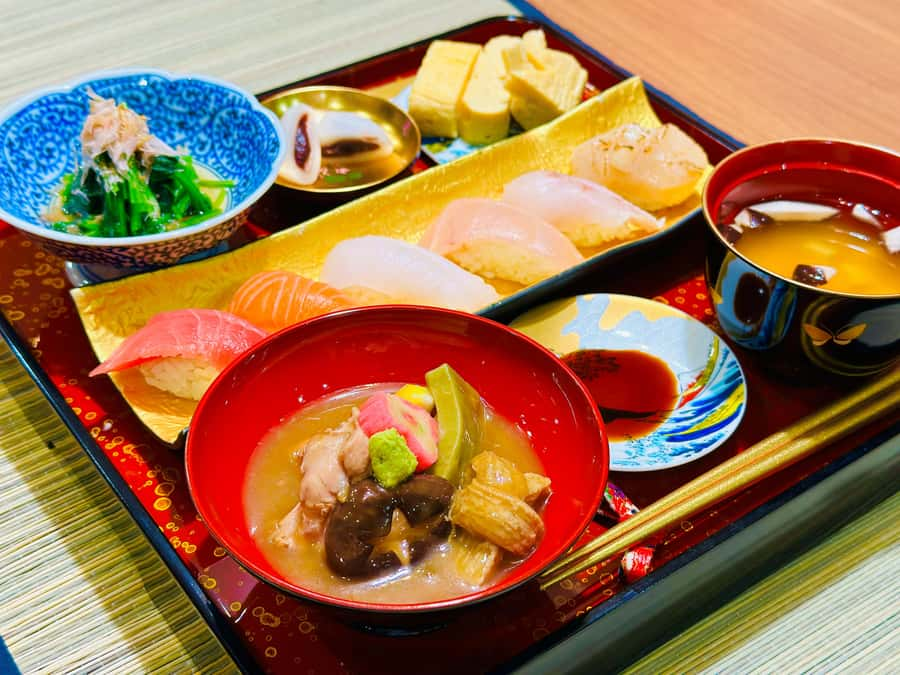
- Make Kanazawa-only jibuni: Prepare a savory stew of chicken or duck, vegetables, and fu, a soft wheat gluten cake.
- Use premium Omicho Market seafood: The pressed sushi features sashimi from a fishmonger trusted by Michelin-starred restaurants.
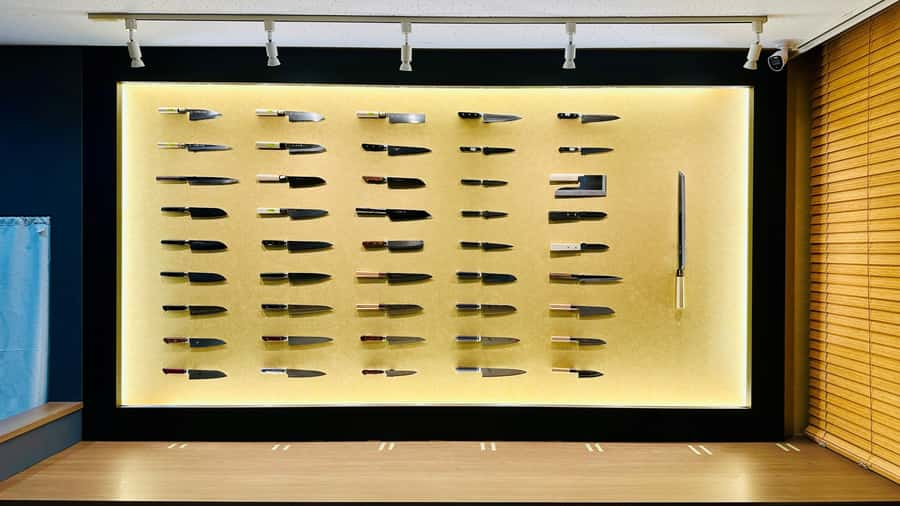
- Cook with high-end Japanese knives: You can try professional knives and receive a special purchase offer if you want one.
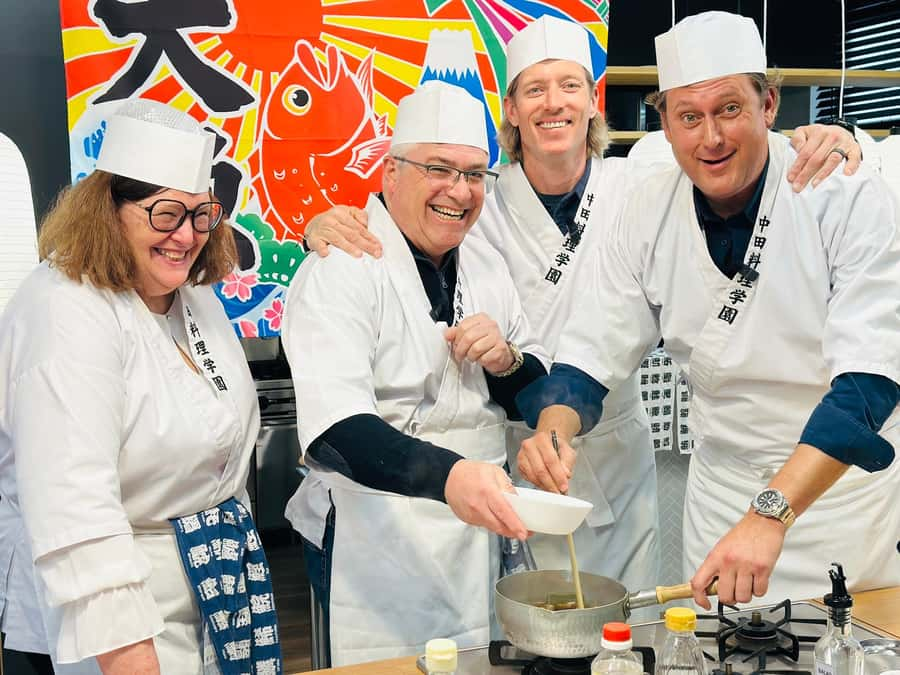
- Wear a sushi chef costume: The custom outfit makes the photo session playful without turning the class into a costume-only attraction.
- Learn through live translation: A large screen shows spoken and written translations, and smart translators are available to borrow.
- Eat what you make: The class runs about 2.5 hours and ends with a generous shared meal at the school.
A cooking class with a real Kanazawa address
The school sits only a few minutes from Kanazawa Station, which makes this an easy first-day or last-morning activity. You do not need to cross town or build your day around a long transfer. That short walk matters in Kanazawa, especially if you are carrying luggage or using the class as a bridge between the station and your hotel.
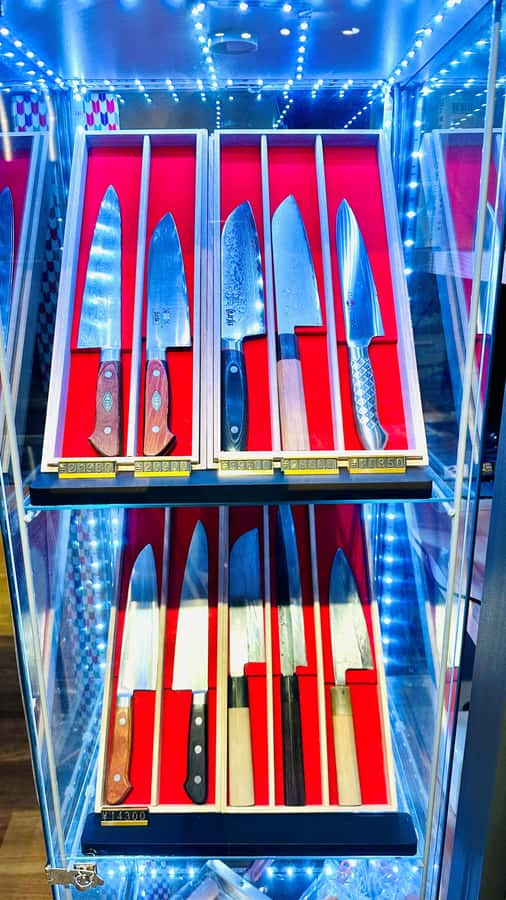
Look for a three-story building with a slightly recessed first floor used for parking. The entrance to a small hotel called Stayable Movie Theater has a blue noren curtain. Then look up at the second-floor window. The display of Japanese knives marks the cooking school.
The classroom is part of a family-run operation led by Seiji Nakata and his wife. The setting is more personal than a large tourist kitchen, and that changes the mood. You are not simply watching a chef perform at the front of a room. You are expected to chop, stir, shape, roll, and taste.
The class is designed for beginners. Seiji explains each step, demonstrates the technique, and then lets you work. You can expect some gentle correction, but the tone is friendly rather than formal. The class also has a cheerful sense of humor, helped by the chef costumes and the translation technology.
More Sushi Making Classes around Japan:
- Sushi Making Osaka! Popular Sushi Class in Japan!
★ 5.0 · 500 reviews - Tokyo Tsukiji Fish Market Tour and Sushi Making Lesson
★ 5.0 · 390 reviews - Ramen and Sushi Cooking Class with Sake Pairing Set in Tokyo
★ 5.0 · 291 reviews
The translation screen makes the lesson accessible
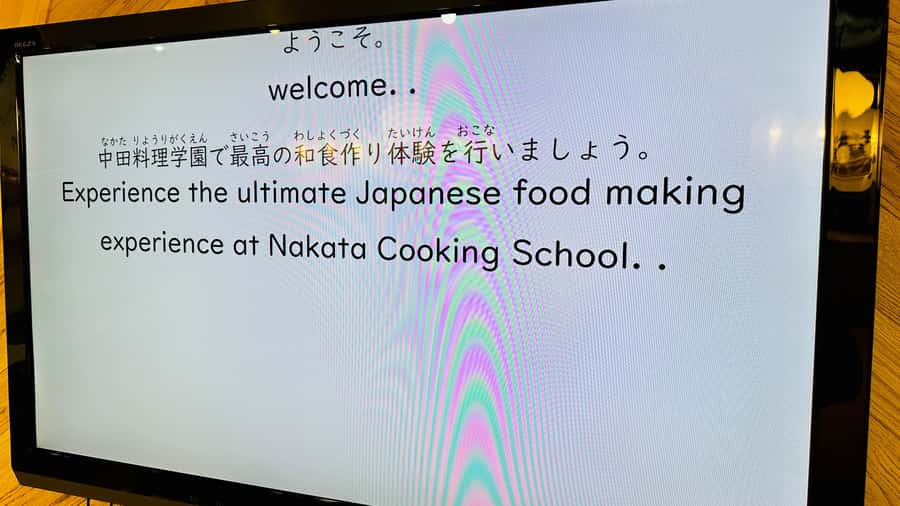
Language can make a cooking lesson hard to judge before booking. Here, the school uses a large screen that displays voice and text translation in several languages. Smart translators are also available to borrow, and English and Japanese are supported directly.
This does not mean every exchange will feel exactly like a private lesson in your own language. Translation devices can be a little mechanical, and comic moments are part of the experience. Still, the large screen gives you a useful visual backup while your hands are busy with food.
I especially like this system for technique-heavy instructions. When Seiji explains how to handle a knife, season dashi, or shape sushi, you can hear the explanation and see the translated text. Several participants have found that the technology removes the usual awkward pauses and allows real conversation.
The system also helps with cultural details. Seiji can explain not only what to do, but why a dish is prepared in a certain way. That context makes the class more useful once you return home and try the recipes again.
Pressed sushi starts the hands-on work
The sushi here is oshizushi, or pressed sushi, rather than the loose hand-formed pieces most visitors picture first. You will work with premium sashimi sourced from a leading fishmonger at Omicho Market, Kanazawa’s famous food market.
The seafood is an important part of the lesson. Kanazawa sits close to productive fishing waters, and the city has a strong seafood culture. The point is not just to place raw fish on rice. You learn how quality ingredients, seasoning, texture, and careful shaping create a finished dish.
Pressed sushi is also a sensible recipe for a home cook. It does not require the same hand movements as elaborate nigiri, and the mold gives you a clear structure to follow. You can focus on the balance between rice and topping, then see how pressure changes the final shape.
If you do not eat sashimi, the school can replace it with vegetables or egg, but you must request this when booking. Same-day changes are not available. That rule is worth taking seriously because the main ingredient preparation is planned in advance.
Jibuni gives the class its local character
Jibuni is the dish that makes this more than a standard Japanese cooking lesson. It is a Kanazawa specialty made with a gently simmered dashi-based sauce, meat, seasonal vegetables, and fu. The meat may be duck or chicken, with tofu or vegetables available as a substitute if arranged ahead of time.
The dish has roots in Kanazawa’s samurai-era cooking traditions. You get to taste a local preparation that is tied to the city rather than simply a familiar Japanese restaurant staple. The sauce is savory and delicate, and the fu adds a soft, distinctive texture.
For me, this is the strongest reason to choose this class over a basic sushi workshop. Sushi can be found in many Japanese cities. Jibuni gives you a food memory linked to Kanazawa itself.
The dish also shows how Japanese cooking uses modest ingredients with care. Dashi, timing, texture, and presentation matter as much as the main protein. That is the kind of lesson you can carry into your own kitchen, even if you never recreate the dish perfectly.
More cooking classes around Japan:
- Ramen Cooking Class at Ramen Factory in Kyoto
★ 5.0 · 1,937 reviews - Ramen & Gyoza Cooking Class in Tokyo with Local Supermarket Visit
★ 5.0 · 823 reviews - Kyoto: Ramen Cooking Class at a Ramen Factory with Souvenir
★ 4.9 · 532 reviews - Kyoto: Ramen, Gyoza, and Onigiri Cooking Class
★ 5.0 · 445 reviews
Tamagoyaki, sides, soup, and dessert fill out the meal
The class also includes a fluffy dashi omelet, often called tamagoyaki. This rolled egg dish looks simple, but the texture depends on controlled heat, repeated folding, and a well-balanced broth mixture. Seiji demonstrates the process before you take your turn.
A good tamagoyaki lesson is useful because the technique is practical. You can make it at home with an ordinary pan, though your first roll may not be as neat as the chef’s. The goal is not perfection. It is learning how the egg should feel and how to keep the layers soft.
Seasonal side dishes and miso soup complete the savory menu. These accompaniments help you understand how a Japanese meal is assembled. Instead of treating sushi as a single plate, the class shows how soup, vegetables, egg, rice, and a main dish work together.
Dessert is included as part of the food program. The supplied details do not specify the dessert, so you should treat it as a pleasant final course rather than book this class for one particular sweet.
Once the cooking is finished, you sit down and eat the food you prepared. The meal is described as plentiful, and the shared table gives the class a relaxed finish. You are not rushed straight out after the final demonstration.
Costumes and photographs add a playful side
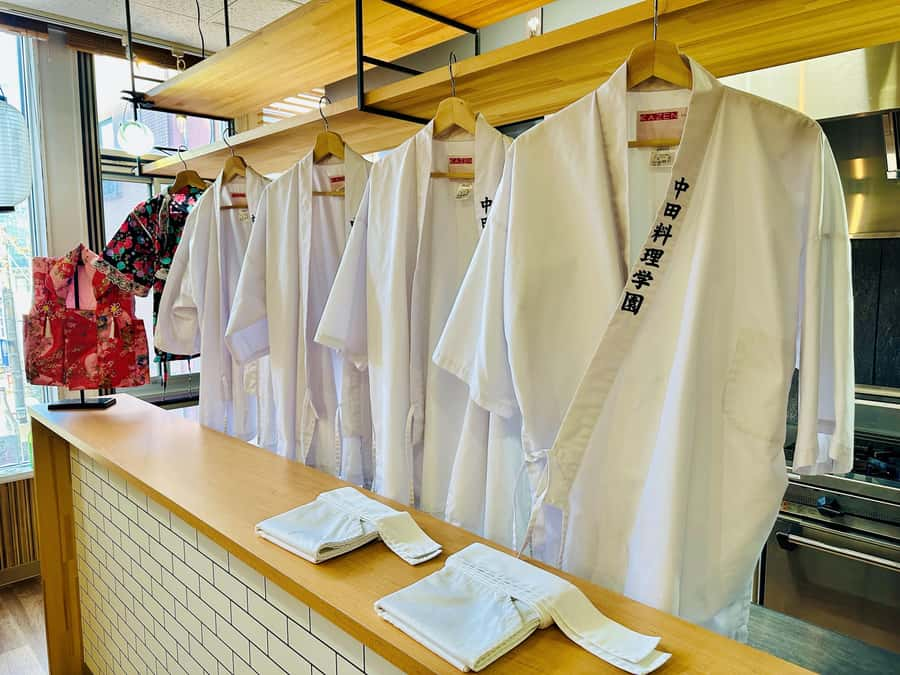
You can dress in an authentic-style sushi chef costume during the class. It is a small detail, but it changes the feel of the session. Families and couples get a natural photo opportunity, and solo participants can still take part without feeling self-conscious.
The staff also provide high-quality souvenir photos during the experience. This is more useful than relying only on quick phone snapshots while you are handling knives and ingredients. The photos capture the cooking process, not just the final meal.
I would not choose this class solely for the costume or photography. Those features are extras. But they make the experience more memorable and give you something tangible to take home besides recipes.
Japanese knives are part of the lesson

The school displays Japanese knives, and you get to try high-quality blades during the class. A special offer is available if you decide you want to buy one.
This is worth noting for cooks who already care about kitchen tools. The knife experience gives you a chance to handle Japanese steel in a guided setting rather than buying a blade without knowing how it feels. You can pay attention to balance, grip, weight, and cutting action.
The offer should not pressure you into a purchase. The cooking class remains worthwhile even if you leave with no new equipment. If you are interested, ask about care and use before buying, since Japanese knives may require different handling from the tools in your home kitchen.
What the 2.5-hour schedule feels like
Plan on about 2.5 hours for the class, followed by time to enjoy the meal. The pace is active, but beginners are not expected to know Japanese cooking techniques in advance.
A typical flow includes:
- Arrival and introduction to the school, chef, tools, and ingredients
- Costume dressing and photographs
- Demonstrations of knife handling and preparation
- Pressed sushi assembly with premium sashimi or an approved substitute
- Preparation of jibuni with chicken, duck, tofu, or vegetables
- Rolling the dashi omelet
- Cooking seasonal side dishes, miso soup, and dessert
- Sitting down to eat together
- Receiving recipes by email the day before the class
The recipes arriving the day before are useful preparation. You can review the menu, flag ingredients you cannot eat, and arrive with a clearer idea of what you will make.
The class is small, with limited seats. That matters because hands-on teaching works best when the chef can see what each person is doing. It also means you should not assume you can walk in without a reservation.
Is $94 a good value?
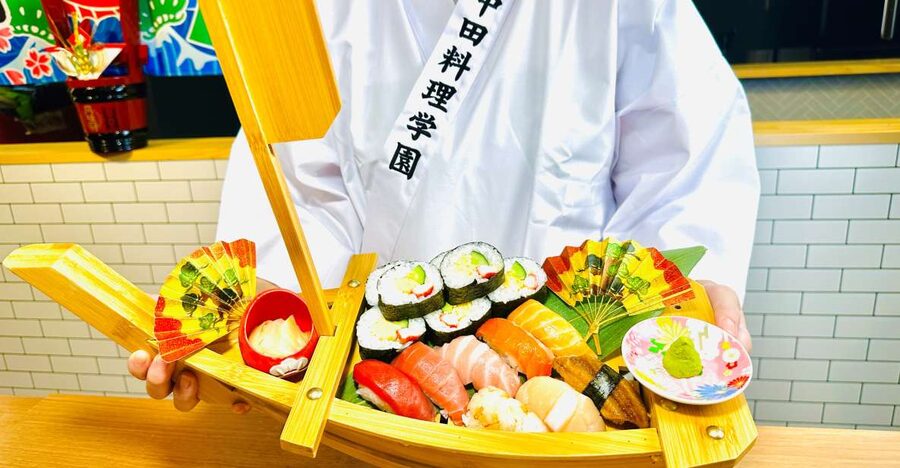
At $94 per person, this is not the cheapest way to eat lunch in Kanazawa. It is a good value if you want an activity as well as a meal.
The price includes five kinds of Japanese food and dessert, costumes, Japanese tea, use of the translation system, smart translator rental, wireless internet, souvenir photos, and recipes. You also receive instruction from a professional chef trained in Osaka and Kanazawa. The ingredients are not generic supermarket substitutes, particularly the seafood used for the sushi.
Compared with paying for a restaurant meal, the class gives you more time, direct instruction, and a chance to repeat the dishes at home. Compared with a basic tourist cooking lesson, the local jibuni and Omicho Market seafood make the menu more specific to Kanazawa.
The value is weaker if you dislike group activities, do not want to cook, or mainly want a quick sushi-making photo. You are paying for active participation, not a passive tasting. The class also requires you to stand, handle ingredients, and follow instructions for most of the session.
Dietary restrictions and practical limits
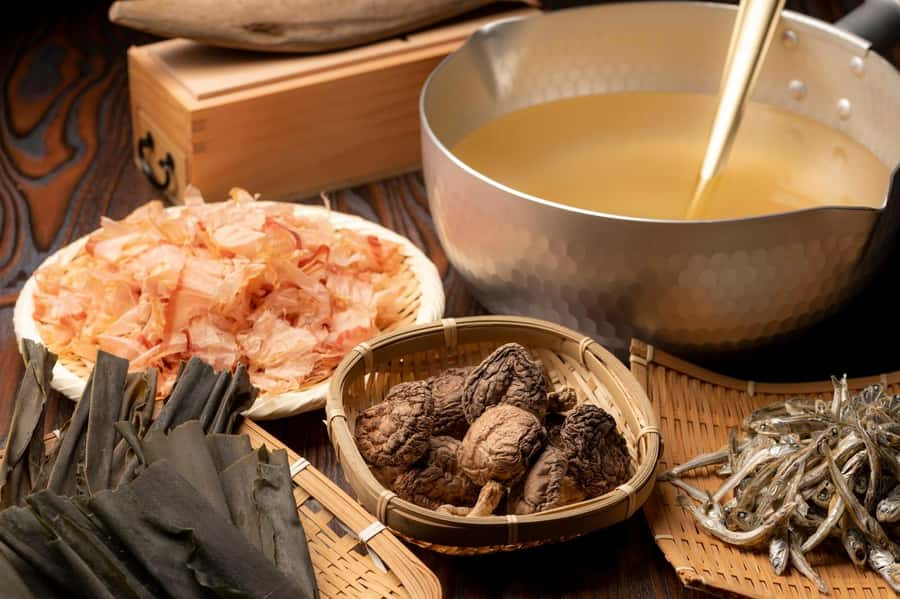
The class is not vegetarian or vegan. Sashimi can be replaced with vegetables or egg, and chicken in the jibuni can be replaced with tofu or vegetables, but the traditional dashi contains bonito fish flakes.
That means the school cannot accommodate anyone who must avoid animal-based broth. Tell the school about allergies or inedible foods when booking. Ingredient changes cannot be made on the day.
The second-floor classroom has no lift. It is not suitable for wheelchair users or people with visual impairments. The activity is also not suitable for pregnant women or children under 12.
Cancellation is flexible up to 24 hours before the class for a full refund, and you can reserve now and pay later. Hotel pickup and drop-off are not included, but the station location makes independent arrival simple.
Who should book this Kanazawa class?
I would recommend it most strongly to first-time visitors who want a direct connection with local food. It works well for couples, families with older children, and small groups who enjoy doing something together rather than sitting through a demonstration.
It is also a good choice for cooks who want recipes they can repeat at home. The pressed sushi and tamagoyaki are approachable starting points, while jibuni gives you a more unusual regional dish to work on later.
The class may not suit you if raw fish is central to your concern, if you need a fully plant-based menu, or if stairs are difficult. Ask about substitutions before paying, and do not assume the dashi can be changed.
Should you book it?
Book this experience if you want to cook, eat, and learn about Kanazawa in one compact activity. The station location, friendly instruction from Seiji Nakata and his wife, strong local menu, translation support, and included photos make the $94 price reasonable for an active half-day.
Skip it if you want a quiet restaurant meal, need complete dietary control, or cannot manage a second-floor classroom without a lift. For everyone else, this is one of the more useful food activities in Kanazawa because you leave with a full meal, local context, and recipes you can try again at home.
FAQ
Where is the cooking school located?
The school is on the second floor of a three-story building a few minutes from Kanazawa Station. The first floor has parking and a hotel called Stayable Movie Theater with a blue noren curtain. Japanese knives are displayed in the second-floor window.
How long does the cooking class last?
The cooking class lasts about 2.5 hours, plus time to sit down and enjoy the meal.
What dishes will I prepare?
You will prepare pressed sushi, Kanazawa-style jibuni, a dashi omelet, seasonal side dishes, miso soup, and dessert. The experience includes five kinds of Japanese food and desserts.
Is the class suitable for beginners?
Yes. The class is designed to be hands-on and beginner-friendly, with demonstrations and step-by-step guidance from chef Seiji Nakata.
Is English available?
Yes. Japanese and English are supported. The school also uses a large-screen AI translation system with voice and text, and smart translators are available to borrow.
Can I join if I do not eat sashimi?
Sashimi can be replaced with vegetables or egg, but you must request this when booking. Same-day substitutions are not available.
Can vegetarians or vegans join?
The class cannot accommodate strict vegetarians or vegans because the traditional dashi contains bonito fish flakes. Chicken in the jibuni can be replaced with tofu or vegetables, but the broth cannot be replaced.
Are costumes and photographs included?
Yes. Authentic-style sushi chef costumes, high-quality souvenir photos, Japanese tea, wireless internet, and the translation system are included.
Is the classroom accessible by lift?
No. The classroom is on the second floor and there is no lift. The activity is not suitable for wheelchair users or people with visual impairments.
What is the cancellation policy?
You can cancel up to 24 hours before the activity for a full refund. Reserve and pay later is available, so you do not have to pay at the time of booking.
New cooking classes around Japan
- Shinjuku Tokyo: Authentic Japanese Home-Style Culinary Class★ 4.9 · 125 reviews
- Shibuya Tokyo: Onigiri & Tamagoyaki Cooking Class★ 5.0 · 4 reviews
- Ramen Making from Scratch +Akihabara Tour –Cooking Class★ 5.0 · 25 reviews
- Okonomiyaki&Takoyaki for Families:Osaka Street Food Festival★ 5.0 · 4 reviews
- Osaka Sake Tasting with Takoyaki Cooking★ 5.0 · 156 reviews
- Osaka: Sashiko Japanese Craftsmanship Workshop★ 5.0 · 31 reviews
- Osaka: Okonomiyaki Cooking Class with Beer or Soft Drink★ 4.9 · 9 reviews
- Osaka: Japanese Cooking Class with Matcha Experience★ 5.0 · 4 reviews
Japan Cooking Classes, side by side.
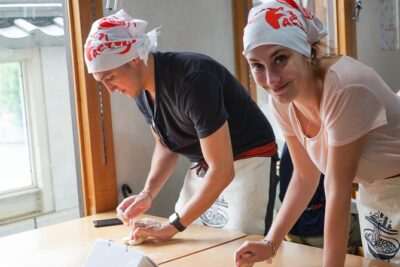
Ramen Cooking Class at Ramen Factory in Kyoto
Read our review →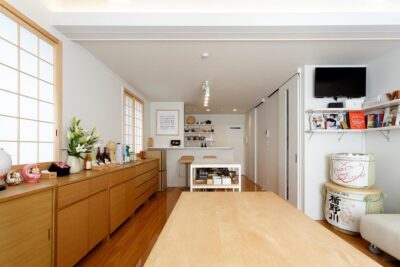
Ramen & Gyoza Cooking Class in Tokyo with Local Supermarket Visit
Read our review →
Sushi Making Osaka! Popular Sushi Class in Japan!
Read our review →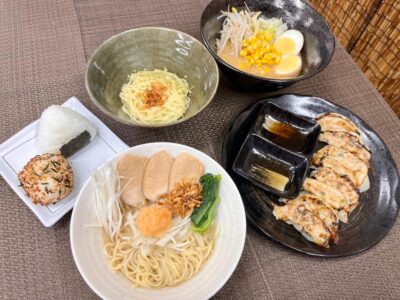
Tokyo Tsukiji Fish Market Tour and Sushi Making Lesson
Read our review →
Kyoto: Japanese Washoku Bento Small Group Cooking Class
Read our review →
Osaka: Ramen and Gyoza Cooking Class in Dotonbori
Read our review →
Tokyo: Easy Ramen Cooking Experience in Kabukicho, Shinjuku
Read our review →This kitchen also appears in