
Review · JAPAN
Kyoto: Learn Sushi at cooking studio with 20 years history
Kyoto’s sushi lesson is really a class in the building blocks of Japanese cooking. You’ll work with fresh fish, prepare sushi rice, taste dashi, and watch the hostess make dashimaki, the soft Japanese rolled omelet.
I like the small group of up to 10 people, which gives the class a more personal feel than a large demonstration. I also like the choice between nigiri sushi and chirashi sushi, since you can pick hands-on sushi shaping or the easier, more decorative bowl-style option.
The main consideration is the price: $96 for two hours is fair if you value instruction and a full meal, but it is more than a simple market lunch. Also, the exact food beyond the listed menu may vary, so ask ahead if one particular dish matters to you.
Key points
- Twenty years of teaching: The hostess has run Kyoto cooking classes for two decades and explains both technique and food culture.
- Two sushi styles: Choose nigiri sushi, the classic hand-shaped form, or chirashi sushi, sushi rice topped with assorted ingredients.
- Dashi tasting included: You’ll sample the stock that gives many Japanese dishes their savory backbone.
- A full Japanese meal: The class includes sushi, dashimaki, dashi soup, namafu dengaku, and mitarashi dumpling.
- Easy central location: The studio is about 10 minutes from Kyoto Station and 5 minutes from Shijo Subway Station.
- Rain-proof and small scale: The indoor kitchen works in any weather, with space for no more than 10 participants.
A Kyoto sushi lesson built around dashi
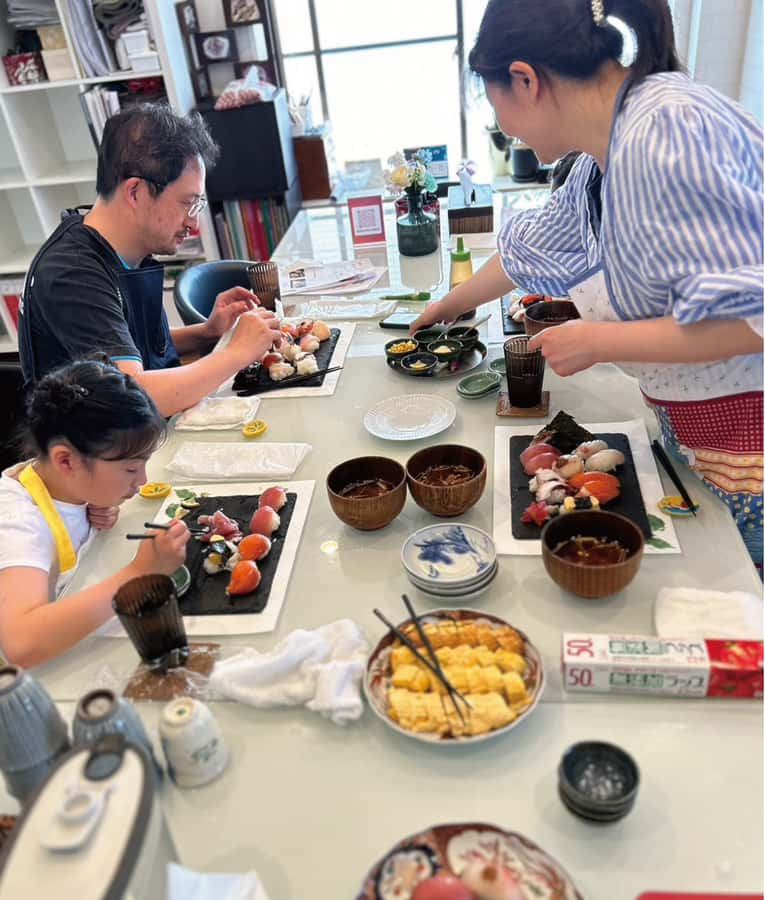
This experience gives you more than a quick lesson in rolling or shaping sushi. The hostess uses sushi as an entry point into Japanese food culture, showing how rice, stock, eggs, fish, and seasoning work together.
That focus on dashi is important. Dashi is a basic Japanese stock, often used in soups, sauces, simmered dishes, and egg dishes. Here, you get to taste it directly, which helps you understand the gentle savory flavor that can be hard to identify in a finished meal.
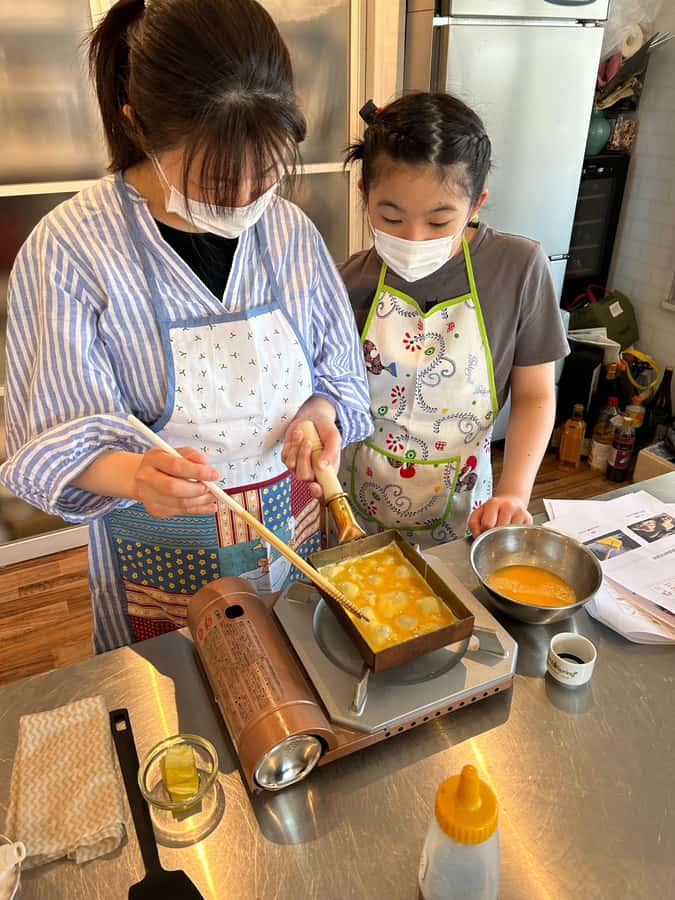
You’ll also watch a dashimaki demonstration. Dashimaki is a Japanese-style rolled omelet, often made with dashi mixed into the eggs. It is not simply a sweet omelet or a plain fried egg. The soft texture and careful rolling technique are part of what makes it a useful demonstration in a cooking class.
The hostess has been running Kyoto cooking classes for 20 years. That kind of long teaching experience matters because a good cooking lesson needs to balance explanation with action. You should get enough background to understand what you are doing, without spending the whole two hours watching someone else cook.
More Sushi Making Classes around Japan:
- Sushi Making Osaka! Popular Sushi Class in Japan!
★ 5.0 · 500 reviews - Tokyo Tsukiji Fish Market Tour and Sushi Making Lesson
★ 5.0 · 390 reviews - Ramen and Sushi Cooking Class with Sake Pairing Set in Tokyo
★ 5.0 · 291 reviews
What happens during the two-hour class
The activity takes place in a kitchen studio in central Kyoto. The studio is around 10 minutes from Kyoto Station and about 5 minutes from Shijo Subway Station, so it fits neatly into a day of sightseeing around the city center.
The meeting point is Sumaya cooking class, on the third floor of a hair salon called Salon Roll. That detail is worth keeping handy. A hair salon may not be the setting you expect for a cooking class, so use the full meeting information and allow enough time to find the entrance.
The session begins with an introduction to sushi and Japanese food. You’ll learn about the background of sushi and the role of different ingredients before moving into preparation. The class is not presented as a professional chef course. It is a practical introduction designed for visitors who want to understand the food and make it themselves.
You’ll prepare sushi rice, then work on your selected style. The cooking process gives you a better sense of why sushi depends on balance. The rice needs the right texture and seasoning, while the fish and toppings need to be handled with care.
The teacher also demonstrates dashimaki and provides a dashi tasting. These parts make the class feel broader than a simple sushi workshop. You are learning about a small group of techniques that appear across Japanese home cooking.
Choosing nigiri or chirashi sushi
Your biggest choice is between nigiri sushi and chirashi sushi.
Nigiri is the familiar style made with a piece of fish or another topping placed over a small portion of sushi rice. You’ll have a chance to practice shaping the rice and assembling the sushi. This option suits you if the hands-on act of making classic sushi is the main reason you booked.
Nigiri can look simple, but the shape and proportions take some care. You may find that the lesson helps you notice the relationship between rice and topping more clearly. It also gives you a useful skill to try again after returning home, though matching the freshness and quality of the ingredients will be your own challenge.
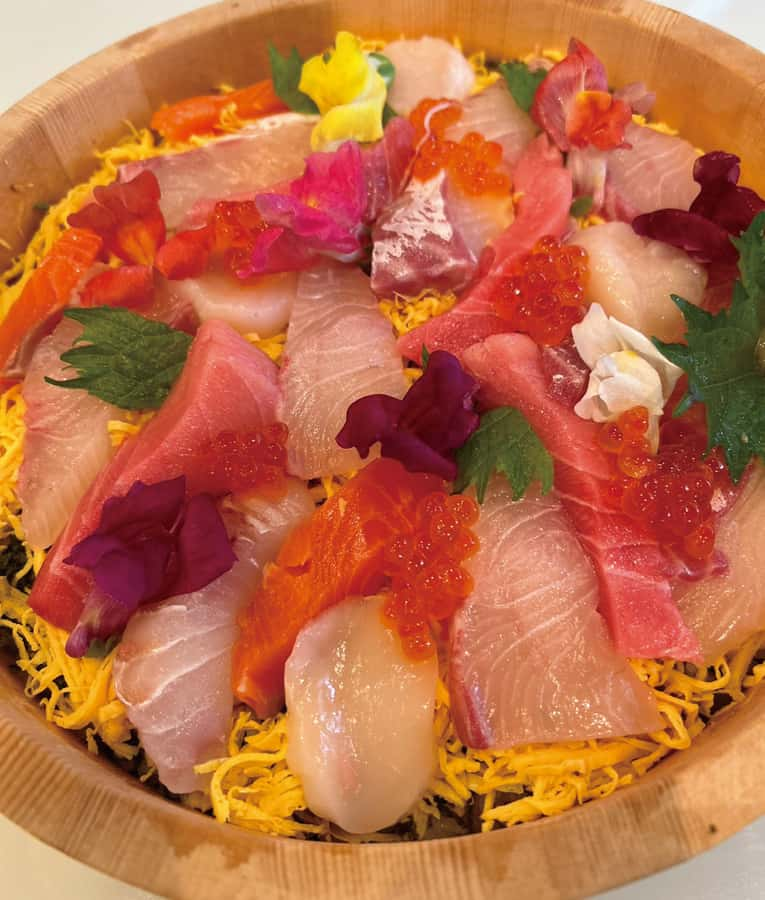
Chirashi sushi uses sushi rice topped with assorted ingredients. Seafood, egg, and vegetables may appear together in a more open arrangement. You do not need to shape each piece individually, so this is likely the easier choice if you prefer arranging ingredients to forming separate sushi pieces.
I would choose nigiri if I wanted the classic sushi lesson. I would choose chirashi if I wanted a more relaxed preparation style or liked the idea of building one colorful dish rather than several individual pieces.
The choice also makes the class friendlier for mixed groups. One person can choose nigiri while another chooses chirashi, instead of everyone having to follow the same format.
The meal goes beyond sushi
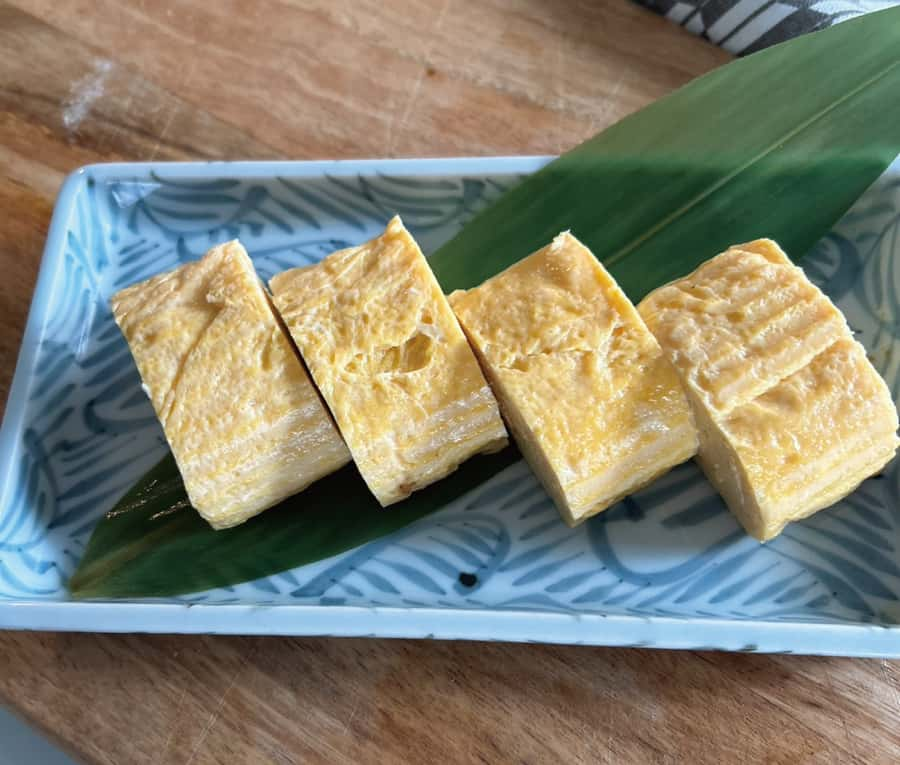
The included meal is a strong part of the value. You receive your selected sushi style along with dashimaki, dashi soup, namafu dengaku, and mitarashi dumpling for dessert.
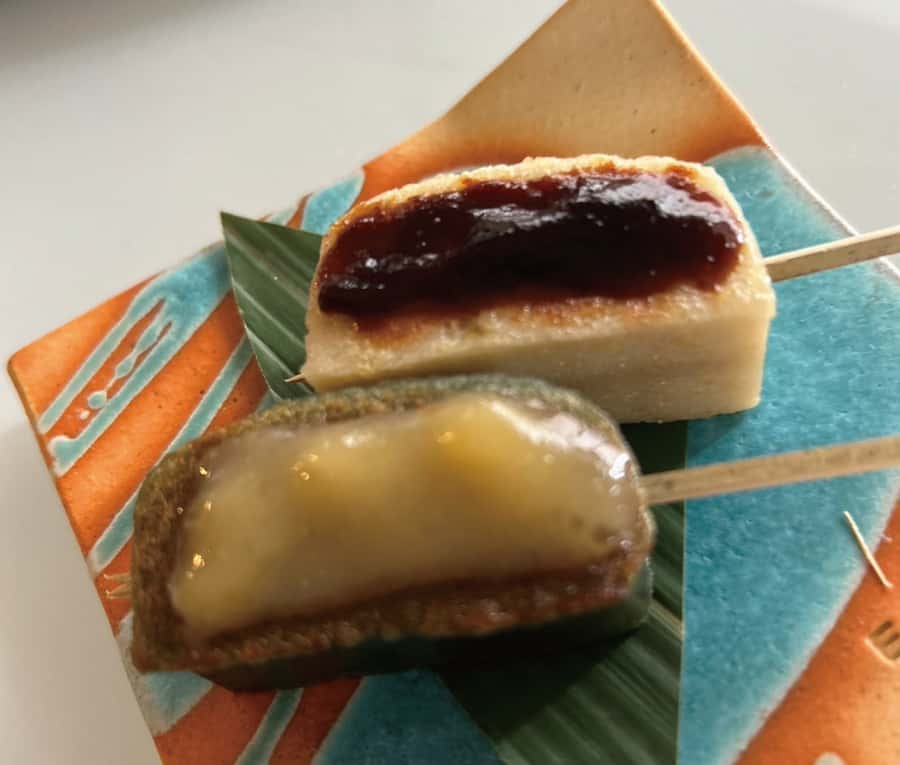
Namafu is a chewy wheat-gluten food associated with Kyoto cuisine. In namafu dengaku, it is served with a savory-sweet miso topping. This dish gives you a taste of a Kyoto specialty that you may not encounter in a standard sushi meal.
The dashi soup reinforces the lesson’s focus on Japanese stock. Tasting dashi on its own and then having it in soup helps you notice how the same base can support different dishes.
Mitarashi dumpling provides a sweet finish. These dumplings are usually served with a glossy sweet soy-based sauce, giving the class a dessert that feels distinctly Japanese rather than a generic ending.
The standard included menu does not list teriyaki chicken, but it has appeared in at least one recent class account along with sushi and dashi soup. If that dish is important to you, confirm the current menu when booking rather than assuming it is part of every session.
Alcoholic drinks are available for an additional charge. They are optional, so the $96 price should be judged on the included food and instruction, not on the expectation of a drink pairing.
More food history around Japan:
- Undiscovered Charleston: Half Day Food, Wine & History Tour with Cooking Class
★ 5.0 · 948 reviews - Taipei Cooking Class & Market Adventure in Historic Dadaocheng
★ 5.0 · 77 reviews - Cooking Class in a Historic Home in the Heart of Brindisi
★ 4.7 · 28 reviews - Atlanta: Historic Market Food Tour and Biscuit Cooking Class
★ 4.9 · 25 reviews
Why the dashi demonstration matters
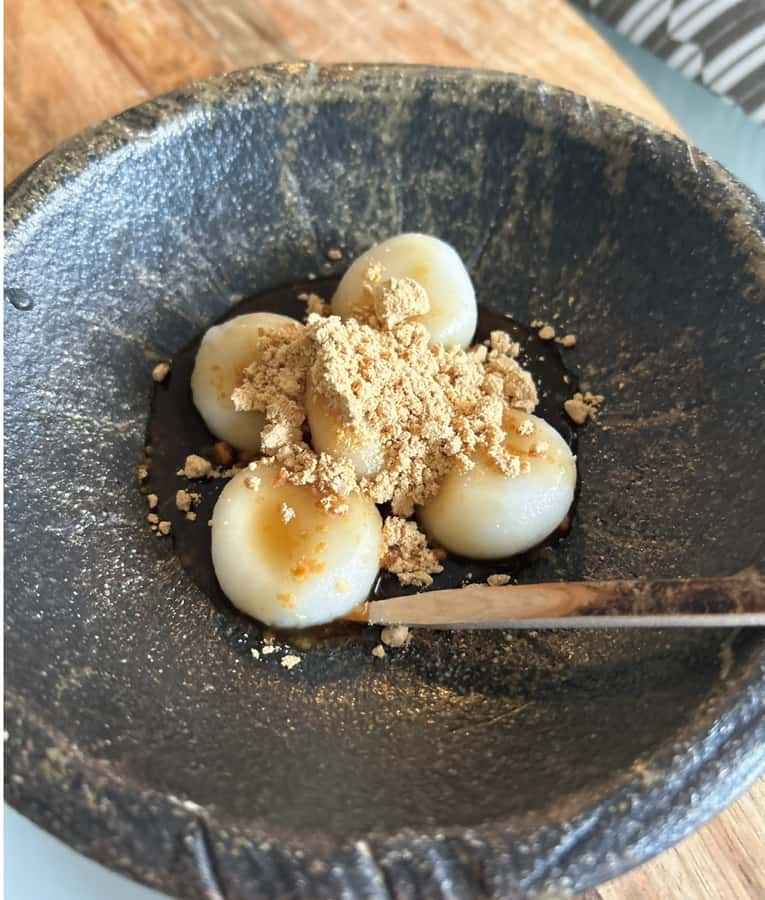
Many Japanese meals depend on subtle seasoning rather than heavy sauces. Dashi helps create that base flavor, and tasting it during the class gives you a practical reference point.
The dashimaki demonstration is useful for a similar reason. Japanese omelet looks familiar at first glance, but the addition of dashi and the rolling method change both taste and texture. Watching the hostess prepare it lets you see a technique that may be difficult to copy from a recipe alone.
You should not expect to leave with training in every part of Japanese cuisine. Two hours is enough for a focused introduction, not a full cooking school curriculum. The benefit is that the class connects several dishes through shared ideas: seasoned rice, savory stock, careful preparation, and balanced flavors.
I find that approach more useful than a class built around one flashy dish. You get a better sense of how Japanese cooking works as a meal.
How the setting affects the experience
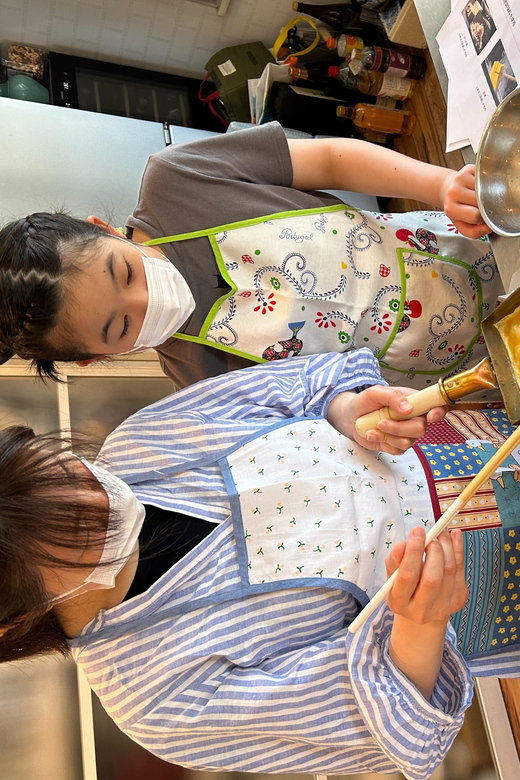
The studio is indoors, which is a practical advantage in Kyoto. Summer heat, winter cold, and rainy days can all make outdoor plans less pleasant. This class gives you a dependable two-hour activity that does not depend on the weather.
A group limit of 10 people keeps the scale fairly small. That should make it easier to follow the demonstrations and ask questions than in a large commercial kitchen. Still, 10 is not a private lesson, so your experience will depend partly on the final group size.
The location near Kyoto Station and Shijo Subway Station also makes this a useful midday or early evening plan. You can place it before sightseeing near Kyoto Station or around central Kyoto, depending on the starting time available when you reserve.
The setting is a working kitchen studio rather than a famous restaurant. That means the appeal is in the lesson and the meal, not in dining-room atmosphere or a formal chef’s counter.
Is $96 good value?
At $96 per person, this is not the cheapest way to eat sushi in Kyoto. You could buy a quick sushi meal for much less. The comparison changes when you include the instruction, dashi tasting, omelet demonstration, several dishes, and dessert.
I consider the price reasonable for someone who wants a guided food experience rather than lunch alone. You are paying for the two-hour format, the teacher’s long experience, the ingredients, and the chance to prepare the meal yourself.
The value is strongest if you are curious about Japanese cooking or want an activity that gives context to what you eat in Japan. It is weaker if you only want a large sushi meal or already have extensive sushi-making experience.
Recent feedback has been especially positive about the hostess’s friendly manner, clear explanation, and generous amount of food. One participant described the class as informative and noted that there was plenty to eat. Another class account included sushi, teriyaki chicken, and dashi soup, with all the food described as delicious. The standard menu should remain your guide, but these details suggest that the experience is not built around a tiny tasting portion.
Who should book this experience?
I would recommend this class to first-time visitors who want a manageable introduction to Japanese food. It also suits couples, small groups of friends, and families with older children who can take part in a kitchen setting.
The choice of sushi style helps. Beginners who feel nervous about shaping nigiri can select chirashi instead, while more enthusiastic cooks can try the classic form.
This is also a good rainy-day plan. Kyoto has plenty of outdoor sights, but a two-hour indoor activity gives you a break without wasting a day.
Food allergies and dietary restrictions should be stated at the time of booking. The class includes fish, eggs, wheat-based ingredients, and other common allergens, so do not wait until the lesson begins to raise the issue.
Babies under 1 year are not suitable for this activity. If you are traveling with a very young child, plan another activity or arrange separate care.
Booking and cancellation details
The class lasts two hours, and available starting times depend on the date you choose. The group is limited to 10 participants.
You can reserve now and pay later, which helps if your Kyoto schedule is still changing. Cancellation is free up to 24 hours before the activity for a full refund.
The experience provider is 株式会社のぞみ. No guide name is supplied, but the teacher is identified as the hostess who has operated Kyoto cooking classes for 20 years.
Should you book the Kyoto sushi class?
Book it if you want to understand Japanese cooking as well as make sushi. The combination of fresh fish, sushi rice, dashi tasting, dashimaki, Kyoto-style namafu dengaku, soup, and dessert gives you more range than a basic sushi-only lesson.
I would be cautious only if your main goal is the lowest-cost meal, a private class, or a fixed menu that includes a specific extra dish. For most visitors, the central location, indoor setting, small group, and full meal make the $96 worthwhile, especially on a rainy day or early in a Kyoto visit when you want a useful introduction to Japanese flavors.
FAQ
How long does the Kyoto sushi class last?
The class lasts two hours.
How much does the experience cost?
The listed price is $96 per person.
Where does the class meet?
It meets at Sumaya cooking class, on the third floor of a hair salon called Salon Roll.
How far is the studio from Kyoto Station?
The kitchen studio is about 10 minutes from Kyoto Station and about 5 minutes from Shijo Subway Station.
Can I choose which type of sushi to make?
Yes. You can choose nigiri sushi or chirashi sushi.
What food is included?
The class includes all meals, your choice of nigiri or chirashi sushi, dashimaki, dashi soup, namafu dengaku, and mitarashi dumpling. Alcoholic drinks are optional and cost extra.
New cooking classes around Japan
- Shinjuku Tokyo: Authentic Japanese Home-Style Culinary Class★ 4.9 · 125 reviews
- Shibuya Tokyo: Onigiri & Tamagoyaki Cooking Class★ 5.0 · 4 reviews
- Ramen Making from Scratch +Akihabara Tour –Cooking Class★ 5.0 · 25 reviews
- Okonomiyaki&Takoyaki for Families:Osaka Street Food Festival★ 5.0 · 4 reviews
- Osaka Sake Tasting with Takoyaki Cooking★ 5.0 · 156 reviews
- Osaka: Sashiko Japanese Craftsmanship Workshop★ 5.0 · 31 reviews
- Osaka: Japanese Cooking Class with Matcha Experience★ 5.0 · 4 reviews
- Osaka Okonomiyaki Cooking Experience for Families & Groups★ 4.9 · 8 reviews
Japan Cooking Classes, side by side.
Ramen Cooking Class at Ramen Factory in Kyoto
Read our review →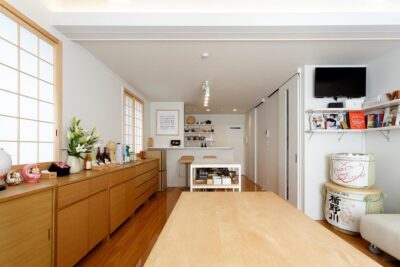
Ramen & Gyoza Cooking Class in Tokyo with Local Supermarket Visit
Read our review →
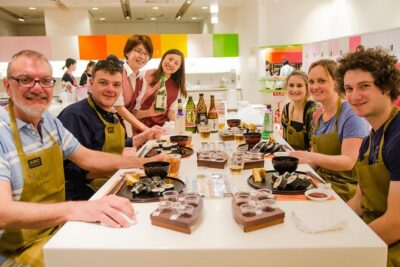
Sushi Making Osaka! Popular Sushi Class in Japan!
Read our review →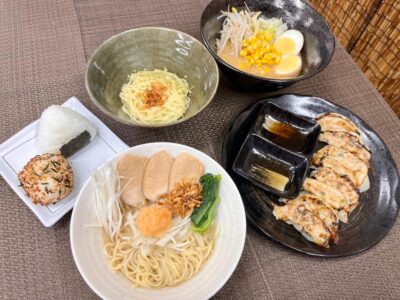
Tokyo Tsukiji Fish Market Tour and Sushi Making Lesson
Read our review →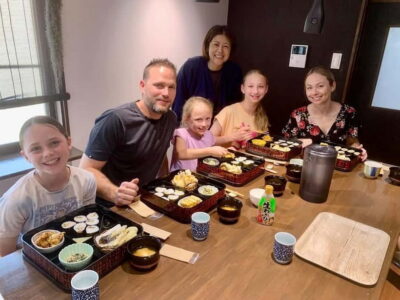
Kyoto: Japanese Washoku Bento Small Group Cooking Class
Read our review →
Osaka: Ramen and Gyoza Cooking Class in Dotonbori
Read our review →
Tokyo: Easy Ramen Cooking Experience in Kabukicho, Shinjuku
Read our review →This kitchen also appears in