
Review · KYOTO
Kyoto: Ramen, Gyoza, and Onigiri Cooking Class
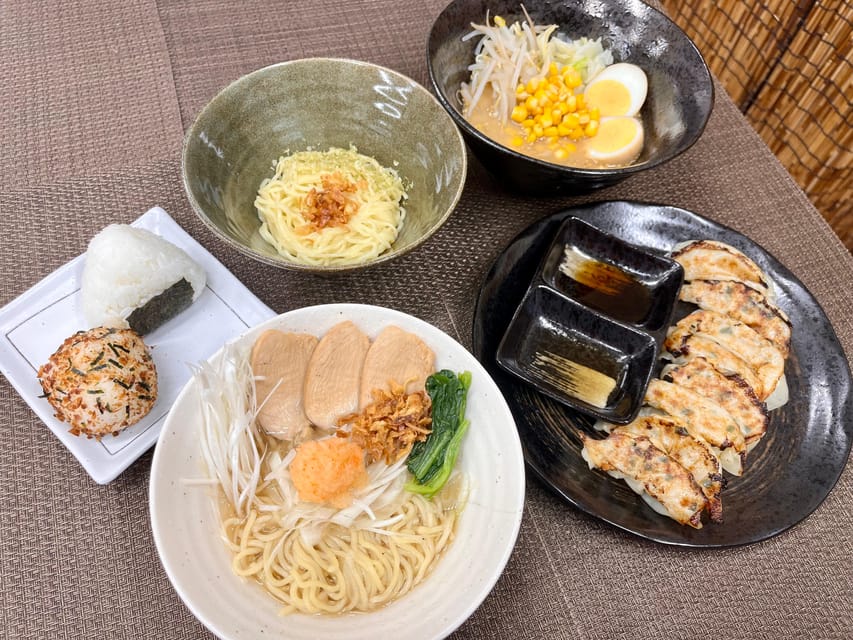
The best part of this Kyoto cooking class is its practical focus: you learn ramen broth, not noodles you are unlikely to make at home. In 90 minutes, you also wrap gyoza and shape onigiri, then sit down to eat the meal you prepared. I like the small groups, limited to eight, and the friendly English instruction from teachers such as Nori, Kairi, Aoi, and Minori. The main drawback is the strict food policy: this is not a safe choice for vegan, pescatarian, gluten-free, or other special diets.
I also like that the ingredients are simple and measured ahead of time, so you spend your time cooking instead of hunting for obscure products. You receive recipes for the ramen and gyoza, plus tea or coffee, but you do not make noodles from scratch. Bring comfortable clothes, arrive early, and expect a fast-paced class with a very filling finish.
Key points for choosing this Kyoto cooking class
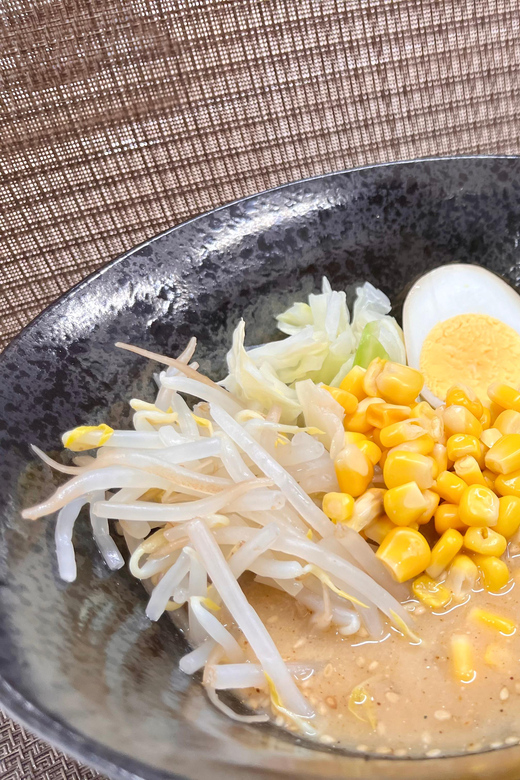
- Two ramen styles in one lesson: Prepare miso and shoyu broths with familiar seasonings, then add simple toppings.
- Useful gyoza practice: Learn the filling, folding, sealing, and pan-frying steps rather than merely watching a demonstration.
- Onigiri adds variety: Shape seasoned Japanese rice balls, a simple lunch or snack you can repeat at home.
- Small groups help: The class holds no more than eight people, and some sessions have only a few participants.
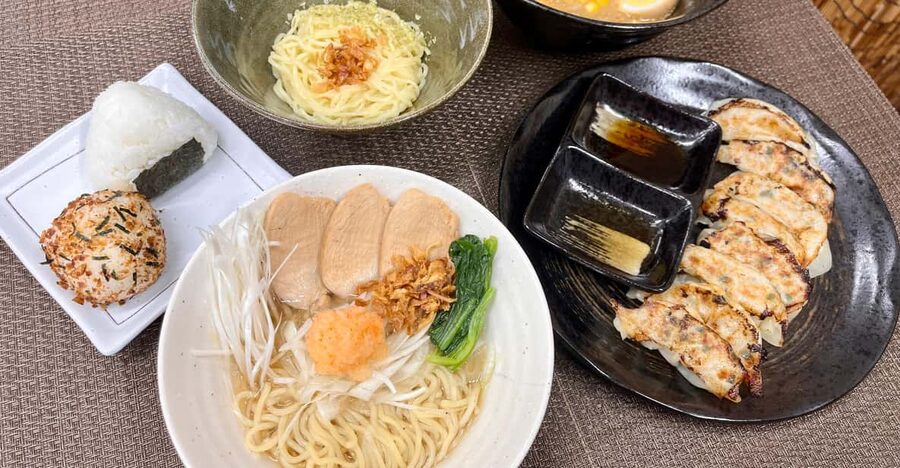
- Come hungry: You eat the ramen, gyoza, and onigiri you make, and the portions can be substantial.
- Diet rules are firm: The regular menu and a limited vegetarian menu are available, but vegan, pescatarian, gluten-free, and other special requests are not accepted.
What this 90-minute Kyoto class actually teaches
This is a compact, hands-on lesson built around three everyday Japanese foods. The cooking takes place at the Manryo cooking class in the basement of the Life Building, near Sanjo Keihan. The classroom is one street off the main road, so it is worth checking Google Maps before the day of your class.
The lesson is designed for people who can cook independently. The published minimum age is 13, and the class is not intended for children under 12, wheelchair users, people with gluten intolerance, or people recovering from recent surgery. The age information matters because the pace is brisk. You are not simply watching an instructor prepare lunch. You are measuring, mixing, shaping, cooking, and keeping up with several dishes at once.
The staff prepares the workstations and ingredients in advance. That makes the class accessible to ordinary home cooks, though it also means this is not a slow professional-chef workshop. One participant described the format as closer to assembly than starting every ingredient from scratch. I see that as a fair trade for the amount covered in 90 minutes.
English is the working language. Instructors explain the steps, give brief background on the dishes, and answer questions about ingredients and technique. Nori is often mentioned as a lively and funny teacher, while Kairi and other assistants help at the cooking stations. The exact teaching team can vary, but the class is set up for direct help rather than a large demonstration at the front of the room.
More cooking classes around Kyoto:
- Ramen Cooking Class at Ramen Factory in Kyoto
★ 5.0 · 1,937 reviews - Kyoto: Ramen Cooking Class at a Ramen Factory with Souvenir
★ 4.9 · 532 reviews - Kyoto: Japanese Washoku Bento Small Group Cooking Class
★ 5.0 · 380 reviews
Starting with ramen broth instead of homemade noodles
Ramen is the centerpiece, but you should understand exactly what you will and will not make. The class does not teach noodle making. Instead, it concentrates on broth, the part many home cooks find harder to recreate.
You prepare two styles: miso ramen and shoyu ramen. The broth uses ingredients such as chicken stock powder, soy sauce, miso, oyster sauce, sesame oil, garlic, ginger, mirin, cooking sake, fish powder, lard, and black pepper. Not every ingredient goes into every bowl, but the lesson shows how common seasonings build a fuller flavor.
This is useful because ramen noodles are often easy to buy at an Asian supermarket or grocery store. A good soup base is less obvious. The class gives you a workable method using products you can usually find outside Japan, rather than asking you to make a stock that takes all day.
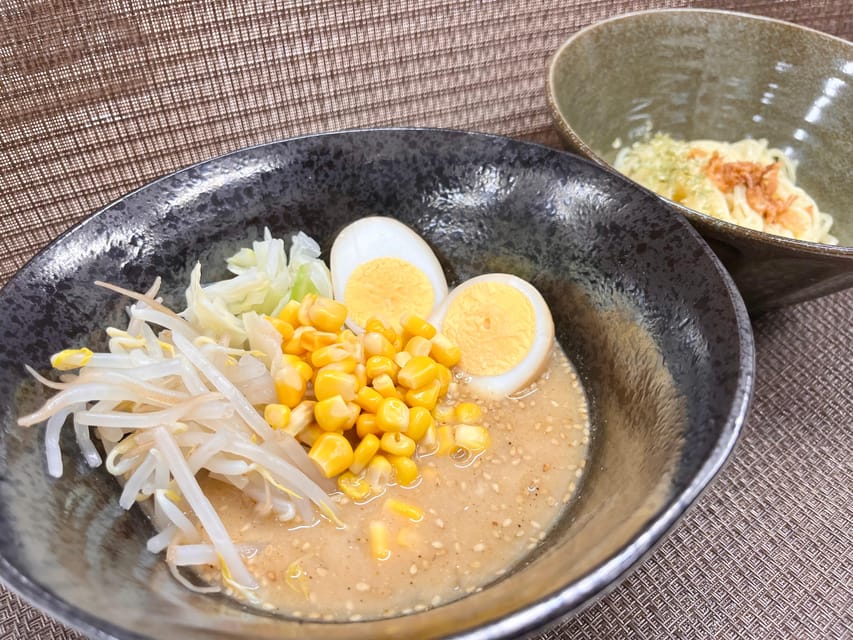
The toppings stay deliberately simple. Miso ramen comes with boiled egg, bean sprouts, green onions, and sweet corn. Shoyu ramen includes chicken, bamboo shoots, and green vegetables. The idea is that toppings should support the broth instead of overpowering it.
You will learn why that balance matters. Miso broth already has plenty of force, so sweet corn and vegetables provide contrast without taking over. Shoyu broth has a different soy-based character, with chicken and bamboo shoots adding texture and substance. This is less about memorizing a rigid restaurant recipe and more about understanding how to assemble a bowl at home.
The class also gives you a chance to compare two broths side by side. That makes the lesson more useful than learning one soup and leaving without a clear sense of what changes between ramen styles. Since the seasonings are already portioned, you can focus on taste and method instead of worrying about a long ingredient list.
The limitation is important: you are not learning every part of ramen production. If your dream is to pull fresh noodles by hand or make a many-hour pork broth, this is not that class. If you want a practical weeknight ramen method, the focus is well chosen.
Wrapping gyoza until the seal holds
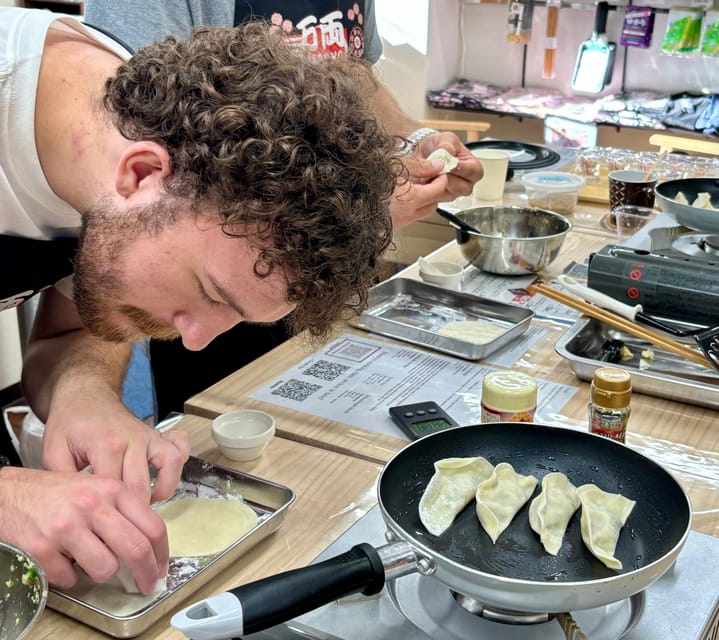
Gyoza is where the class becomes especially hands-on. You prepare a filling based on ground pork, cabbage, onion, chives, garlic, ginger, sesame oil, soy sauce, salt, pepper, and other seasonings. The goal is to balance meat, vegetables, and flavoring so the filling stays moist without becoming wet and difficult to seal.
The instructors show you how much filling to use, how to dampen the wrapper, and how to press the edge closed. You then repeat the fold until the dumplings have a clean shape. That repetition is valuable. Gyoza looks simple when someone else does it quickly, but the first few wrappers can be awkward.
The class promises full instruction in wrapping, and the small format makes that believable. With as many as eight people, an assistant can check your seal and correct your technique before the dumpling reaches the pan. The folding lesson is also easy to repeat at home because the ingredients are familiar and the steps do not depend on special equipment.
The final cooking stage gives you another useful skill: getting a browned underside while keeping the filling cooked and the wrapper tender. The food is pan-fried, and you eat the dumplings during the meal at the end.
If you choose the vegetarian option, pork is replaced with tofu. This is a narrow substitution, not a fully redesigned menu. Other ingredients remain the same, so you should not book it if you need a strictly plant-based, fish-free, gluten-free, or otherwise controlled meal.
Shaping onigiri into a useful everyday snack
Onigiri provides a welcome change from the hot dishes. These Japanese rice balls are simple, portable, and easy to adapt once you understand the basic method.
You learn how to shape the rice neatly and keep it together without crushing it. The class describes onigiri as an alternative to sandwiches for lunch, which is exactly where it fits in Japanese home cooking: practical food that works as a snack, packed lunch, or quick meal.
The technique is more important than the shape alone. Rice that is too loose falls apart, while rice pressed too tightly becomes heavy. The lesson gives you a chance to practice the pressure and form needed for a tidy rice ball.
Onigiri also helps balance the class. Ramen requires broth and toppings, and gyoza involves filling and folding. Onigiri is a shorter, more tactile exercise that most people can grasp quickly. It keeps the schedule moving while giving you one recipe you can make with pantry basics.
The published recipes cover ramen and gyoza. Even so, the onigiri method is straightforward enough to remember, especially after shaping the rice yourself. You may want to take notes if you are interested in recreating the exact seasoning or filling used in your session.
Same kitchen, a different dish:
- Kyoto: Afternoon Japanese Izakaya Cooking Class
★ 4.9 · 241 reviews - Kyoto: Morning Japanese Bento Cooking Class
★ 5.0 · 149 reviews - Kyoto: Authentic Sushi Making Cooking Lesson
★ 5.0 · 103 reviews - Near Fushimiinari: Kyoto Home Cooking Class & Supermarket tour
★ 5.0 · 100 reviews
Eating everything you make at the end
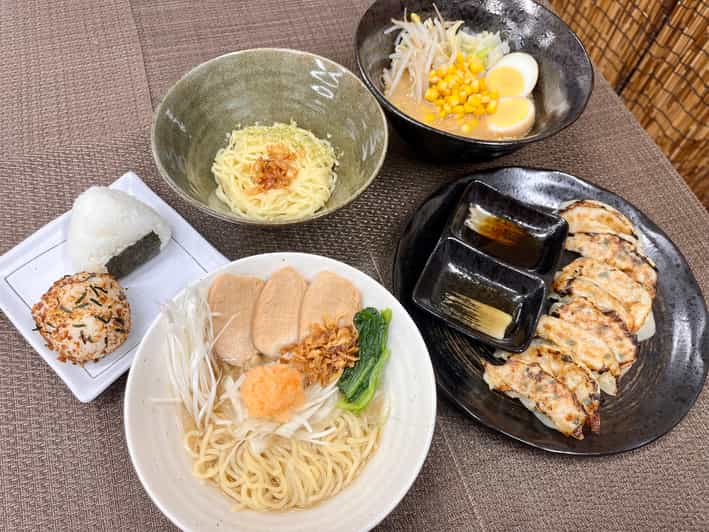
The class does not end with a tiny tasting plate. You eat the ramen, gyoza, and onigiri you prepare. Several participants found the meal surprisingly filling, and that matches the menu: two ramen broths, dumplings, rice balls, toppings, and condiments add up quickly.
Plan this as a late-morning lunch or late-afternoon dinner activity. One practical tip is to avoid a large meal beforehand. You do not need to arrive starving, but you should leave room for the food.
Coffee and tea are included. Beer may be available for purchase after the meal, but it is not included in the activity price. That can be a pleasant extra for adults, though it is not part of the cooking lesson itself.
Eating your own work changes the feel of the class. You can taste the broth before adding toppings, compare the two ramen styles, and see whether your gyoza seal held during cooking. It also gives you a direct check on the recipes. If something tastes too salty or too mild, you can ask what to adjust before leaving.
Small groups, clear English, and a quick pace
The class is limited to eight people. That is a useful size for a cooking lesson because you have enough company to make the room social, but not so many people that every step becomes a distant demonstration.
Some sessions may be smaller. A few participants have found themselves in groups of two, three, or four, with several staff members helping. At the other end, a full group of eight still allows for individual guidance because assistants work around the stations.
The teaching style is friendly and informal. Nori is described as humorous and good at giving historical background, while assistants help with measuring, folding, and timing. The staff also answers broader questions about Japanese ingredients and kitchen tools, which adds value if you are interested in cooking beyond this one meal.
The pace is the tradeoff. Preparing four items in 90 minutes requires good organization, and the class moves quickly. You should not expect long pauses for photography or leisurely conversation between every step. The advance preparation is what makes the schedule possible.
I think this works best for people who want to do things rather than sit and watch. If you prefer an unhurried class with plenty of time for improvisation, you may find it brisk. If you want several useful Japanese dishes in one short session, the pace is a strength.
Finding the basement classroom near Sanjo Keihan
The meeting point is easy to miss if you rely only on the main street. The classroom is at B1 of the Life Building, one street away from the main road. Search Google Maps for Manryo cooking class before leaving your hotel.
If you arrive by taxi, the stated landmark is the Family Mart at Sanjo Keihan. From there, the classroom is about a two-minute walk. The location instructions advise arriving early, and that is sensible. A small side street and a basement entrance can cost you several minutes, especially when you are unfamiliar with Kyoto.
Hotel pickup and drop-off are not included. You make your own way to the classroom, so allow extra time if you are coming from another part of the city. The meeting point is in Honshu, in central Kyoto, but the exact travel time depends on where you are staying.
Wear comfortable clothes and shoes. Cooking means standing, reaching, handling hot food, and moving through several tasks. You do not need special equipment, since all cooking tools and ingredients are provided.
Is the $90 price fair?
At $90 per person, this is not the cheapest meal in Kyoto. You can buy ramen or gyoza for much less. The value comes from the instruction, the hands-on practice, the small group, and the fact that you receive food substantial enough to replace a meal.
You are also paying for three different skills in one sitting. The broth lesson has clear home value, gyoza folding is a technique that improves with practice, and onigiri is simple enough to repeat without specialty tools. Recipes for ramen and gyoza make the class more useful after your trip.
The price makes the most sense if you would otherwise book a cooking class and also pay for lunch or dinner. It is less compelling if you only want to taste Japanese food or if you already cook these dishes confidently.
The strong satisfaction rating, listed as 5.0 from 445 reviews, fits the format: organized preparation, approachable food, English instruction, and a generous final meal. Still, a high rating does not remove the dietary limits or the fact that the class is short and fast.
Who should book, and who should skip it?
I would recommend this class to first-time visitors who want a practical food activity rather than a formal restaurant meal. It suits couples, families with teenagers who can cook on their own, and friends who enjoy making food together.
It is also a good choice for anyone who wants recipes that can be repeated at home. The ramen broth is the strongest reason to book. Noodles are easy to find, while a convincing soup base is harder to work out alone.
You should think twice if you dislike pork, chicken, fish-derived seasonings, oyster sauce, or lard. The regular ingredients include several animal products and seafood-related seasonings. The vegetarian menu replaces pork with tofu, but it does not remove every ingredient that may matter to you.
Do not count on special accommodations based on isolated past experiences. The stated policy says no vegan, pescatarian, gluten-free, or other special diets. If you have a serious restriction, choose another activity with a menu designed for your needs.
Practical details before you reserve
The class lasts 90 minutes and is taught in English. All cooking ingredients and equipment are included, as are the dishes you prepare, recipes for ramen and gyoza, coffee, and tea.
You can cancel up to 24 hours in advance for a full refund, and the reserve-now, pay-later option keeps payment flexible. Only one reservation should be made per group. Duplicate bookings under the same name may be canceled, and people who are not participating cannot enter simply to watch.
The official age requirement is 13, with the expectation that participants can cook without hands-on assistance. The class is not suitable for wheelchair users, people with gluten intolerance, vegans, or people with recent surgery.
Should you book this Kyoto ramen and gyoza class?
Book it if you want to leave Kyoto with more than food photos. You will learn a usable broth method, practice gyoza folding, shape onigiri, and eat a full meal in a friendly small-group setting.
Skip it if you need a carefully controlled diet, want to make noodles from scratch, or prefer a slow and highly technical culinary workshop. For most omnivorous visitors who can keep up with a brisk 90-minute lesson, the combination of useful recipes, personal instruction, and a hearty meal makes the $90 reasonable.
FAQ
How long does the Kyoto cooking class last?
The class lasts 90 minutes.
What dishes will I make?
You will make miso ramen, shoyu ramen, gyoza, and onigiri. The class focuses on ramen broth rather than homemade noodles.
Are ramen noodles made from scratch?
No. The class uses ramen noodles and teaches you how to prepare the broth and toppings.
Is the class taught in English?
Yes. English-speaking instructors lead the class.
How many people can join?
The class is limited to eight participants.
What age is required?
Participants must be 13 or older and able to cook independently. The activity is not suitable for children under 12.
Can the class accommodate vegan, pescatarian, or gluten-free diets?
No. The class cannot accommodate vegan, pescatarian, gluten-free, or other special diets. A limited vegetarian menu replaces pork with tofu, but other ingredients remain the same.
What is included in the price?
The price includes English instruction, cooking ingredients, equipment, the food you make, recipes for ramen and gyoza, coffee, and tea. Hotel transportation and special diet options are not included.
New cooking classes around Kyoto
- Nishiki Market Food Tour with Cooking Class★ 4.9 · 42 reviews
- Kyoto Udon & Tempura Cooking Class with Professional Chefs★ 3.8 · 3 reviews
- Kyoto: Morning Japanese Bento Cooking Class★ 5.0 · 149 reviews
- Kyoto: Wagashi (Japanese sweets) Cooking near Fushimiinari★ 5.0 · 40 reviews
- Kyoto Home Cooking Class &Supermarket tour near Fushimiinari★ 5.0 · 31 reviews
- Kyoto: Cooking class, learning how to make authentic sushi★ 4.2 · 9 reviews
- Kyoto: Authentic Sushi Making Cooking Lesson★ 5.0 · 103 reviews
- Kyoto: Afternoon Japanese Izakaya Cooking Class★ 4.9 · 241 reviews
Kyoto Cooking Classes, side by side.
Ramen Cooking Class at Ramen Factory in Kyoto
Read our review →
Kyoto: Japanese Washoku Bento Small Group Cooking Class
Read our review →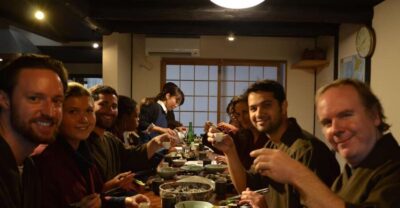
Kyoto: Afternoon Japanese Izakaya Cooking Class
Read our review →
Near Fushimiinari: Kyoto Home Cooking Class & Supermarket tour
Read our review →
Kyoto: Wagashi (Japanese sweets) Cooking near Fushimiinari
Read our review →This kitchen also appears in