
Review · KYOTO
Nishiki Market Food Tour with Cooking Class
Nishiki Market is easy to rush through in 15 minutes. With a local guide, it becomes a lesson in Kyoto food, market manners, and the stories behind old stalls. I like that you choose ingredients at the market, then cook the donburi yourself instead of simply watching a chef work. I also like the private format, which gives you room to ask questions and request small changes.
The main drawback is timing. About an hour is enough for a useful introduction, but not enough to linger at every shop or do much personal shopping. The market can also be crowded, and one dish may include an ingredient you like less than expected.
Key points at a glance
- You cook what you have just seen and selected: Choose seafood donburi, tempura donburi, or chicken and egg donburi, with ingredients included.
- The private format matters: Ask questions freely, move at your own pace, and request substitutions when possible.
- Local guides explain more than food: Chie, Momo, Mio, and other English-speaking guides have covered shop history, Kyoto specialties, sauces, brands, and market etiquette.
- Small tastings add context: Try Japanese pickles and other sample foods, with three sake tastings available as an option.
- A taxi connects the two parts: The ride from Nishiki Market to the cooking studio is included, saving you the trouble of finding the kitchen.
- Best for curious eaters and families: The class suits people who want practical cooking skills, though the market portion may feel short if shopping is your main goal.
Starting at Nishiki Market’s western entrance
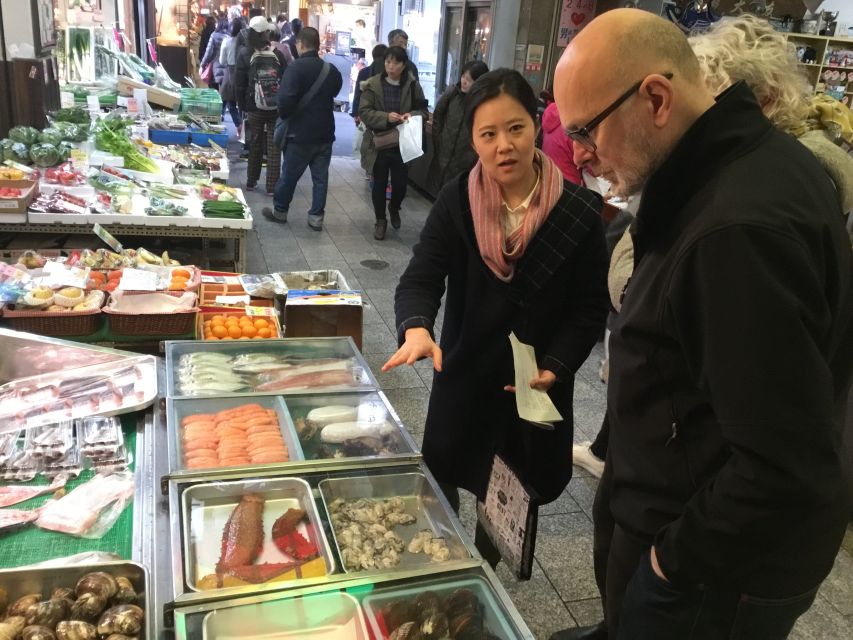
The tour begins at the western entrance of Nishiki Market, where you meet your English-speaking local guide and receive a short briefing. This is a useful starting point because Nishiki is long, narrow, and easy to treat as one large snack aisle. It is actually a working food market with old shops, specialist stalls, prepared foods, ingredients, and plenty of places aimed at visitors.
Your guide helps separate the established shops from the newer tourist-focused stalls. That distinction is valuable. You may still enjoy a colorful snack or novelty item, but you will better understand which stalls are tied to Kyoto’s food traditions and which ones are mainly set up for quick sampling.
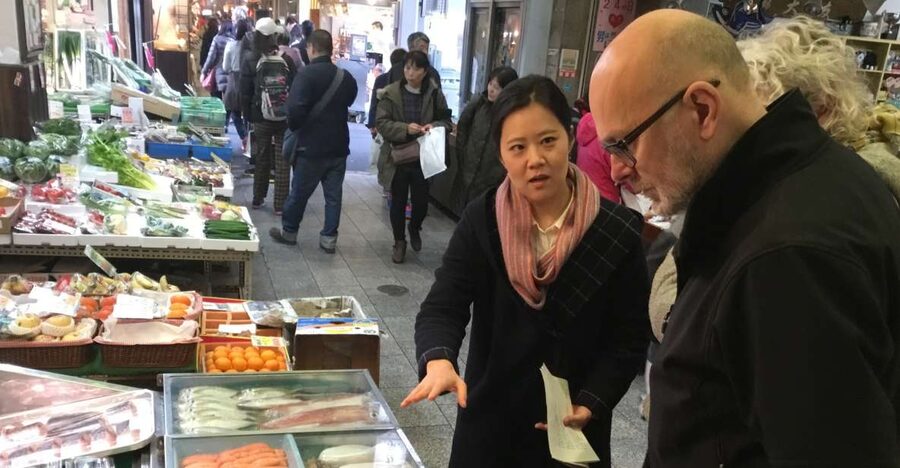
The market walk usually takes about an hour. Without explanations, you could pass through in 15 minutes and miss most of what makes Nishiki worth visiting. With a guide, you can ask about unfamiliar foods, cooking methods, sauces, spices, meat, pickles, and seafood. If a shopkeeper has something interesting to explain, your guide can help translate.
That personal translation is one of the strongest reasons to book this rather than simply wander in alone. You do not need to know the Japanese names of foods before asking about them. Point, ask, taste, and let the guide fill in the details.
More Cooking Classes with a Market Tour in Kyoto:
- Hanoi Cooking Class: Culture, Local Market & Meaning CSR Impact
★ 5.0 · 5,147 reviews - 5 Traditional Dishes Hanoi Cooking Class with Market Trip
★ 5.0 · 4,890 reviews - Cooking Class and Lunch at a Tuscan Farmhouse with Local Market Tour from Florence
★ 5.0 · 4,831 reviews
Learning Nishiki’s food rules
Nishiki Market has its own etiquette, and it is easy for a first-time visitor to get it wrong. One important rule is that you should not eat while walking through the market. Buy a sample, then eat it in the appropriate place rather than carrying food through a crowded lane.
Your guide explains these practical customs as you go. I value this kind of information because it prevents small mistakes and helps you read the market properly. The goal is not to turn a food stop into a formal lesson. It is simply to show you how to enjoy the place without treating it like an amusement park.
You can also expect free Japanese pickle tastings during the walk. Pickles are a useful introduction to Kyoto’s food habits because they are not just a side dish in a jar. Their flavors, textures, and seasonings tell you something about how Japanese meals balance rice, soup, vegetables, fish, and savory sauces.
The included samples are not meant to replace lunch. They give you small reference points before the cooking class. If you see something you want to eat on your own, budget extra time and money for it. Personal food purchases are not included, and the one-hour market schedule may not leave much room for shopping during the tour itself.
Choosing ingredients for your donburi
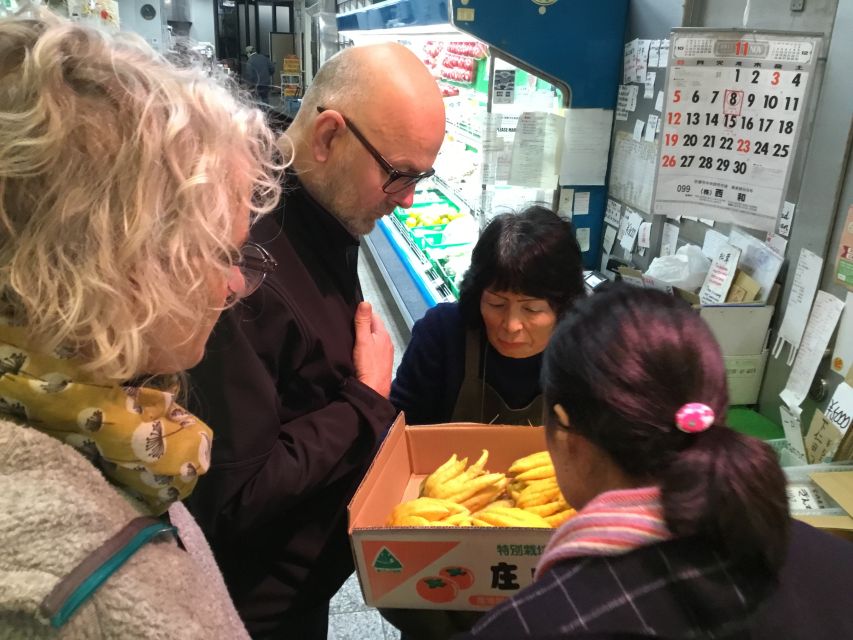
The central idea is simple: you see the ingredients first, then use them in your own bowl meal. You choose from three donburi styles:
- Kaisen-don: A seafood bowl
- Ten-don: A tempura bowl
- Oyako-don: A chicken and egg bowl
The group can choose different dishes, so one person may prepare tempura while another makes chicken and egg. This works well for couples, families, and small private groups who want to compare meals rather than order the same thing.
The ingredients cost is included in the $109 price. That makes the fee easier to judge because you are not paying for a tour and then adding a separate market bill for the cooking portion. You also receive a recipe, sample foods, and the taxi ride to the studio.
There is still some uncertainty in the exact ingredients. One dish may be less successful than another depending on the day’s seafood or the particular item selected. A fatty tuna ingredient, for example, did not impress one participant. That is worth keeping in mind if you are very particular about raw fish.
The guide may be able to accommodate a substitution request. Tofu was used in place of chicken for one person, and small additions have been made based on individual tastes. Still, you should raise dietary preferences or dislikes as early as possible. The supplied information confirms that substitutions can happen, but it does not promise every request.
Why the guide makes the market worthwhile
The English-speaking guide is not only there to lead you from one end of the arcade to the other. The best part of the role is interpretation. You can ask why a shop is famous, how an ingredient is used, which sauces match which foods, and what Kyoto is known for.
Several guides have been praised for this kind of personal teaching. Chie has been described as warm, clear, and especially good at explaining cooking details. Momo has offered useful food recommendations that were worth returning for later. Mio has been praised for strong English and a real interest in cooking. The provider is Cooking Sun, and the guide assigned to your booking may differ.
The instruction can go beyond basic steps. Expect advice on how to make food taste good and look attractive, along with explanations of sauce types and brands. If you already cook at home, this detail may be more useful than a simple recipe card. You can ask why a method is used, not just what to do next.
The private setting also changes the pace. You can stop to ask about a food you have never seen, request clarification, or spend a little longer on a subject that interests you. A large group class often moves on before you have finished your question. Here, the structure is more flexible.
More cooking classes around Kyoto:
- Ramen Cooking Class at Ramen Factory in Kyoto
★ 5.0 · 1,937 reviews - Kyoto: Ramen Cooking Class at a Ramen Factory with Souvenir
★ 4.9 · 532 reviews - Kyoto: Ramen, Gyoza, and Onigiri Cooking Class
★ 5.0 · 445 reviews - Kyoto: Japanese Washoku Bento Small Group Cooking Class
★ 5.0 · 380 reviews
Taking the included taxi to the cooking studio
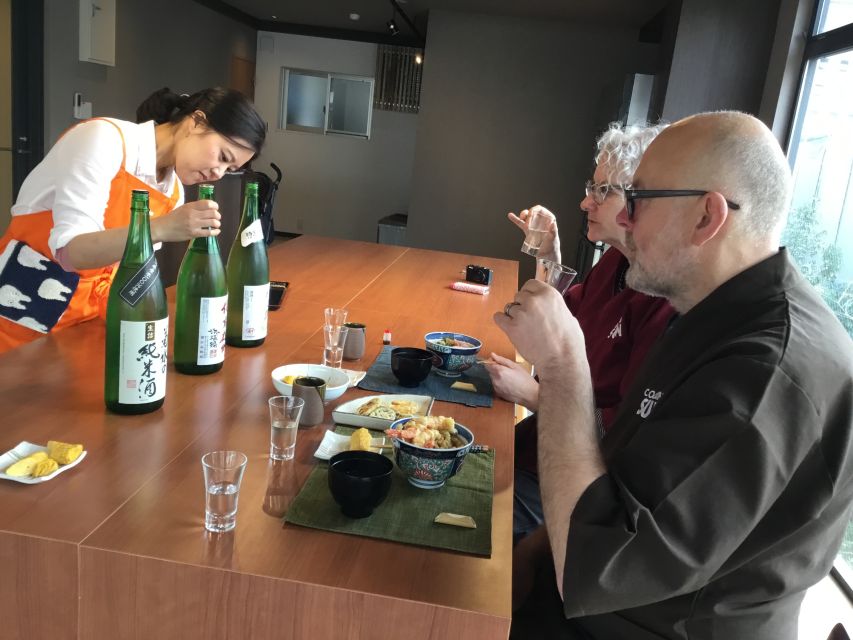
After the market visit, you take a taxi to the cooking studio, with the cost included in the tour. This transfer is a small but practical benefit. Nishiki Market and the kitchen are separate parts of the experience, so you do not have to work out the route while carrying food or trying to stay on schedule.
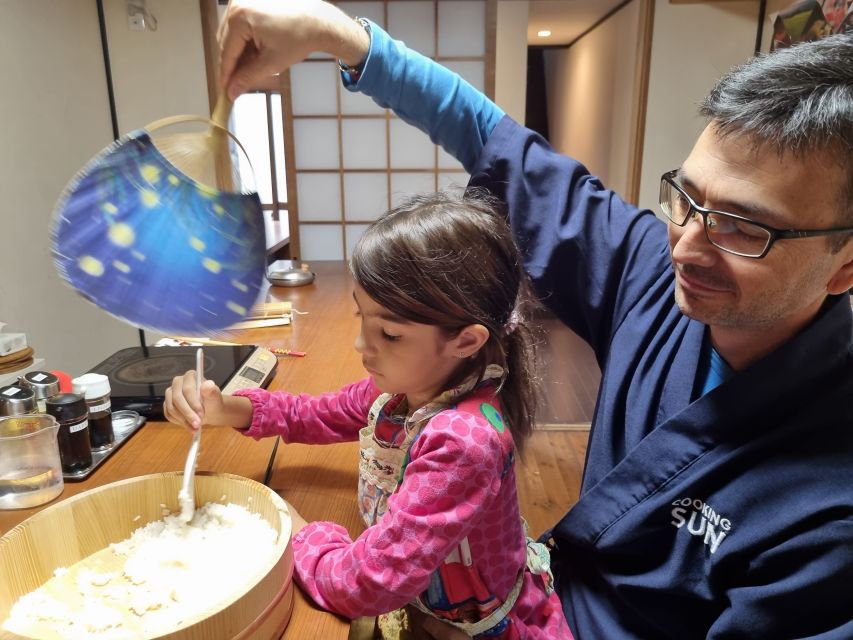
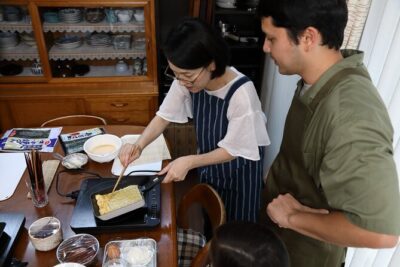
The cooking portion lasts about an hour. The kitchen has been described as clean, cozy, and well stocked, with a setup intended for cooking classes. You begin preparing the dishes soon after arrival rather than spending much of the session waiting for a demonstration to finish.
That hands-on approach is important. You prepare your own meal, follow each stage with the instructor, and then eat what you made. Children can take part, and different tasks help keep a family group involved. The class is not only a meal with a recipe attached. It gives you a method you can repeat at home.
Cooking and eating the three donburi choices
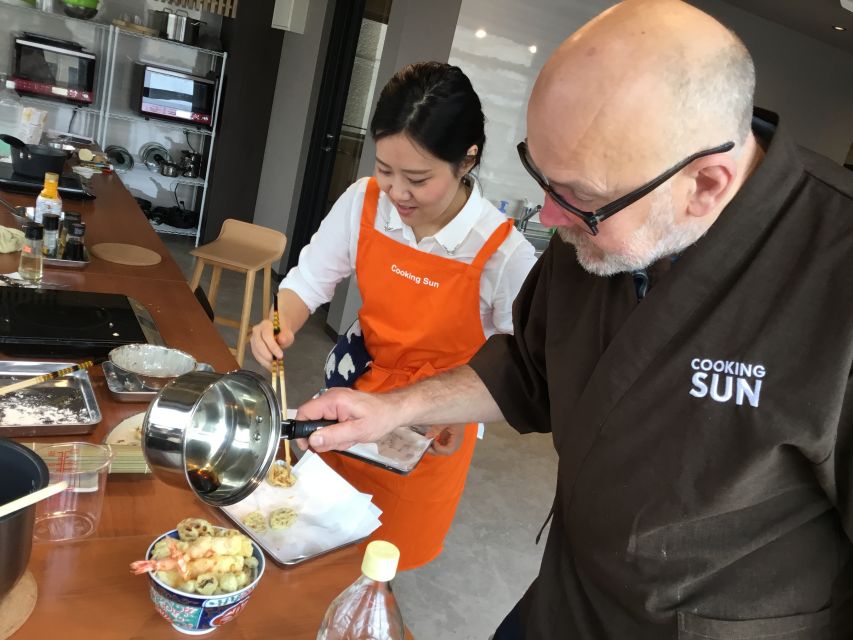
Oyako-don is the most approachable choice for many people. The chicken and egg combination is familiar, filling, and practical to recreate later. It is also a good pick if you want to learn a straightforward Japanese home-style dish rather than focus on seafood presentation.
Ten-don adds the fun of tempura. You get more direct cooking activity, and the result depends on timing and technique. This may suit you if the cooking process matters as much as the final bowl.
Kaisen-don is the choice for seafood lovers. It connects most directly with the market’s fish stalls, but it also carries the most risk if the available seafood is not to your taste. If you are unsure, ask your guide what looks best that day.
Each participant may choose a different option. That makes the meal more interesting for a mixed group, but it also means the class may feel less like a single shared recipe lesson. You will still learn together, then compare the finished bowls at the table.
The recipe is included, so the value continues after the class. You leave with something you can try at home, and the cooking steps are presented in a way that builds confidence. Several people have found the methods realistic enough to repeat, which is more useful than a recipe that depends on hard-to-find equipment.
Sake, pickles, and extra tasting opportunities
Japanese pickles are included as free tastings during the market walk. They are a small part of the tour, but they help break up the ingredient shopping and give you a quick taste of local food culture.
Three different types of sake are available as an optional tasting. Since the details of the sake selection are not specified, you should treat this as an add-on tasting rather than the main focus of the experience. It may suit adults who want a little more guidance on Japanese drinks, while those who do not drink can simply focus on the food.
Other sample foods are included as part of the tour. These tastings help you decide what to return for later, but they do not cover foods you buy independently. Bring extra spending money if you expect to leave Nishiki with snacks, pickles, spices, or other market goods.
Is $109 a fair price?
At $109 per person, this is not the cheapest way to eat at Nishiki Market. You could walk through the market for free and buy a meal for much less. That comparison misses the main point, though.
The price includes a private English-language guide, market interpretation, sample foods, donburi ingredients, the cooking lesson, a recipe, and a taxi to the studio. You are paying for access to explanations and personal attention, not just for lunch.
The value is strongest if you want to understand what you are eating and learn a dish you can repeat at home. It is weaker if you mainly want free time to browse, snack, and shop. The one-hour market walk gives you orientation, not an open-ended food crawl.
A private group also makes the price easier to justify for families or small groups. You can ask more questions and shape the pace around your interests. Solo participants may find the fee harder to compare with a simple market meal, though the cooking instruction and private attention still add something distinct.
Timing, crowds, and practical expectations
The full experience lasts 150 minutes. Plan for about one hour at Nishiki Market and about one hour cooking and eating, with the transfer between them included in the overall schedule.
Nishiki can be crowded, so stay close to your guide and expect some stops to be brief. One hour is enough to learn the basic layout and focus on selected stalls, but it is not enough to inspect every shop carefully.
Personal shopping is the main timing issue. The tour does not clearly build in a separate shopping period, and personal purchases are not included. If you want to return for something you spot, note the shop during the walk and come back later.
Cancellation is flexible up to 24 hours before the activity for a full refund, and you can reserve now and pay later. Starting times depend on availability. The meeting point is the western entrance, so confirm that location before setting out.
Who should book this Nishiki Market experience?
I would choose this tour if you like asking questions, trying unfamiliar foods, and doing something active with your meal. It is especially suitable for families, couples, and small private groups who want a shared activity in Kyoto.
It also suits home cooks. The explanations about sauces, brands, presentation, and cooking methods add useful detail beyond a basic sightseeing walk. The recipe gives you a practical reminder of the class after your trip.
You may want a different plan if your main goal is extended shopping or a long, leisurely tasting crawl. The market visit has a clear schedule, and the cooking class takes up half the experience. People with strong seafood preferences should also ask about substitutions before booking.
Should you book it?
Book this experience if you want Nishiki Market explained by a fluent English-speaking local, then want to turn market ingredients into a real meal. The private format, included taxi, recipe, and hands-on cooking make the $109 fee reasonable for people who value instruction and personal attention.
Skip it if you only want to browse the market or eat whatever catches your eye. For most curious eaters, though, this offers a useful combination: a guided look at Kyoto food traditions, a few well-chosen tastings, and a lunch you make yourself.
FAQ
Where does the Nishiki Market tour begin?
The meeting point is at the western entrance on the western side of Nishiki Market.
How long does the experience last?
The activity lasts 150 minutes. The schedule typically includes about one hour in the market and about one hour cooking and eating, plus the transfer to the studio.
Is the tour private?
Yes. It is offered as a private group experience, so you can ask questions and move at your own pace.
What languages are available?
The tour is conducted in English, and the instructor language is English.
Which donburi dishes can I choose?
You can choose kaisen-don with seafood, ten-don with tempura, or oyako-don with chicken and egg. Different people in the same group may choose different dishes.
Are the cooking ingredients included?
Yes. The cost of the donburi cooking ingredients is included in the tour price.
Is transportation to the cooking studio included?
Yes. Taxi transportation from the market to the studio is included.
Can I cancel the booking for a refund?
You can cancel up to 24 hours in advance for a full refund. The activity also offers a reserve-now, pay-later option.
New cooking classes around Kyoto
- Kyoto Udon & Tempura Cooking Class with Professional Chefs★ 3.8 · 3 reviews
- Kyoto: Morning Japanese Bento Cooking Class★ 5.0 · 149 reviews
- Kyoto: Wagashi (Japanese sweets) Cooking near Fushimiinari★ 5.0 · 40 reviews
- Kyoto Home Cooking Class &Supermarket tour near Fushimiinari★ 5.0 · 31 reviews
- Kyoto: Cooking class, learning how to make authentic sushi★ 4.2 · 9 reviews
- Kyoto: Authentic Sushi Making Cooking Lesson★ 5.0 · 103 reviews
- Kyoto: Afternoon Japanese Izakaya Cooking Class★ 4.9 · 241 reviews
- Authentic Japanese Cooking Experience at Izakaya restaurant★ 4.2 · 5 reviews
Kyoto Cooking Classes, side by side.
Ramen Cooking Class at Ramen Factory in Kyoto
Read our review →
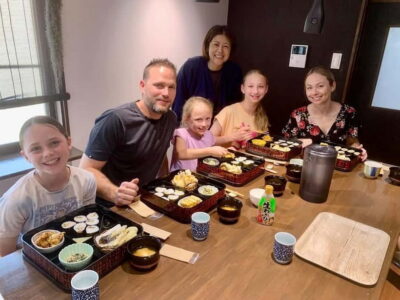
Kyoto: Japanese Washoku Bento Small Group Cooking Class
Read our review →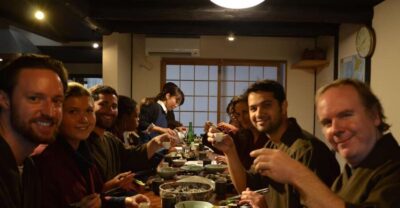
Kyoto: Afternoon Japanese Izakaya Cooking Class
Read our review →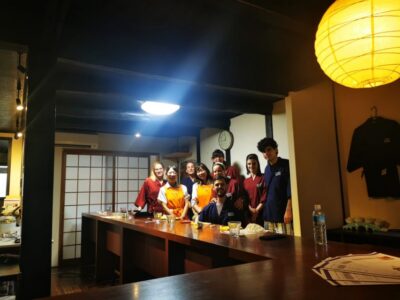
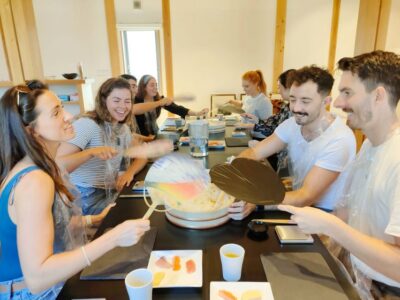
Near Fushimiinari: Kyoto Home Cooking Class & Supermarket tour
Read our review →
Kyoto: Wagashi (Japanese sweets) Cooking near Fushimiinari
Read our review →This kitchen also appears in