Review · UBUD
Balinese Cooking class with traditional morning market visit
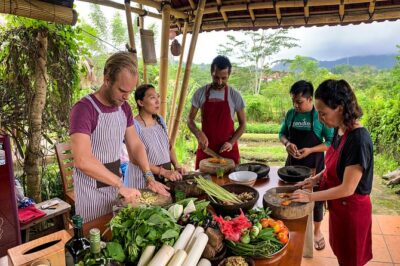
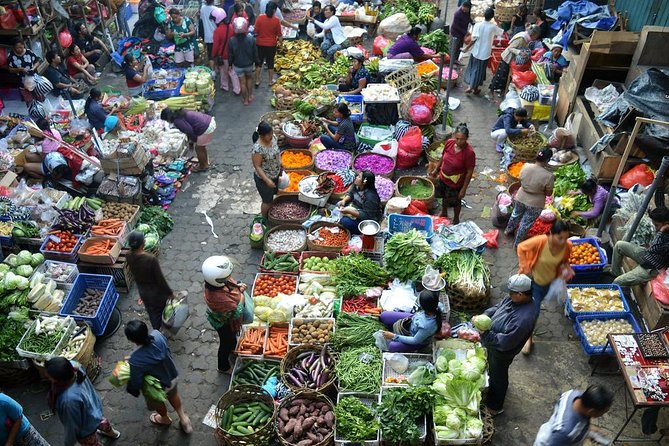
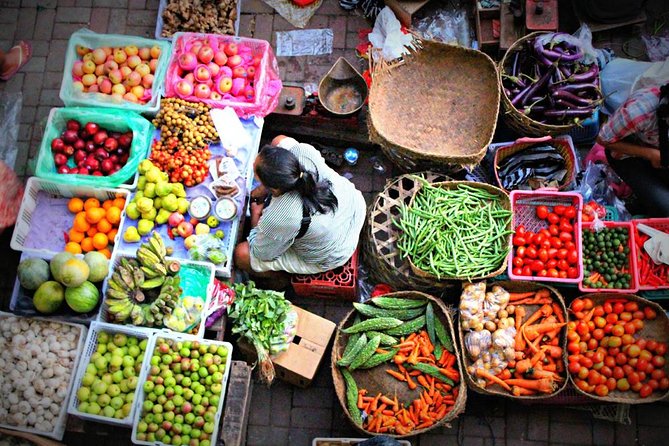
Ubud’s morning market is the real start of this experience. You do not simply arrive at a kitchen and follow a recipe. You first see the herbs, fruits, vegetables, meat, and spices that shape Balinese cooking, then carry that local context into a hands-on class in Laplapan village. I especially like the chance to make a canang offering, and the small-group format, capped at eight people, gives you room to ask questions.
I also like that the class ends with a proper sit-down meal, not a few samples. Wayan and Dewa receive especially warm praise for their humor and care, while Putu is noted for being patient with children and solo participants. The main consideration is the early start and six-hour commitment. The market visit can be brief, and the cooking may include some preparation done in advance so the menu fits into the morning.
Key points at a glance
- Begin at a real morning market: Learn what local herbs, fruit, vegetables, meat, and spices look like before cooking with them.
- Make a Balinese offering: The canang lesson adds cultural meaning that most cooking classes skip.
- Cook a full meal: Prepare starters, main courses, and dessert, with some sessions covering as many as nine dishes.
- Work with a local chef: Wayan, Dewa, Putu, and other instructors are praised for clear teaching and friendly humor.
- Ride in air-conditioned comfort: Hotel pickup and transport to the market and village workshop are included.
- Pay a modest $35: For roughly six hours, transport, instruction, equipment, and a full meal are included.
Why the market visit matters
The market gives you a useful introduction before the stove comes on. You see the ingredients in their everyday setting, rather than meeting them only as neatly measured items on a cooking bench. Your guide explains unfamiliar herbs, fruits, vegetables, and spices, and you may be invited to smell or taste some of the produce.
This is also a practical way to get a glimpse of ordinary food shopping in Bali. The tour is not built around a long market lecture, and one account describes the visit as brief. That is worth knowing if you want a detailed food tour. Here, the market is a starting point for the cooking class, not the main event.
The morning timing helps. Fresh produce is on display, and the visit leads directly into the day’s menu. You choose or examine ingredients before learning how they are prepared, which makes the recipes easier to understand later.
I would pay close attention to the small details your guide points out. The distinction between familiar ingredients and those brought in from elsewhere can tell you a great deal about Balinese food. You may also get to try local sweets or fruit along the way, depending on what is available that morning.
Hotel pickup is included, which keeps the early schedule simple. The vehicle is air-conditioned, a welcome feature in Bali, particularly if you are staying outside central Ubud. One account describes pickup from Sanur, about an hour away, so confirm your pickup area and start time before booking if you are based well beyond Ubud.
More Cooking Classes with a Market Tour in Indonesia
- Ubud: Cooking Class with Transfers and Optional Market Visit
★ 4.9 · 824 reviews - Balinese Ubud cooking school (9 Dish Cooking and Market Tour)
★ 5.0 · 540 reviews - Ubud: Balinese Cooking Class and Market Tour
★ 4.8 · 531 reviews
Laplapan village and the offering lesson
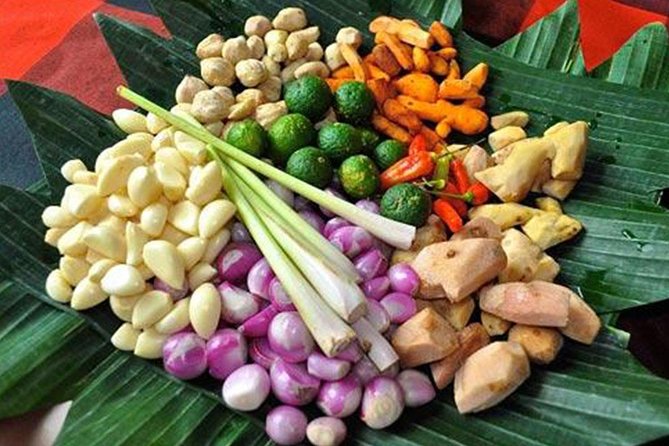
After the market, you continue to the traditional village of Laplapan. The setting shifts from food shopping to a local workshop, where the cooking class takes place in a clean, attractive environment surrounded by Ubud’s jungle scenery.
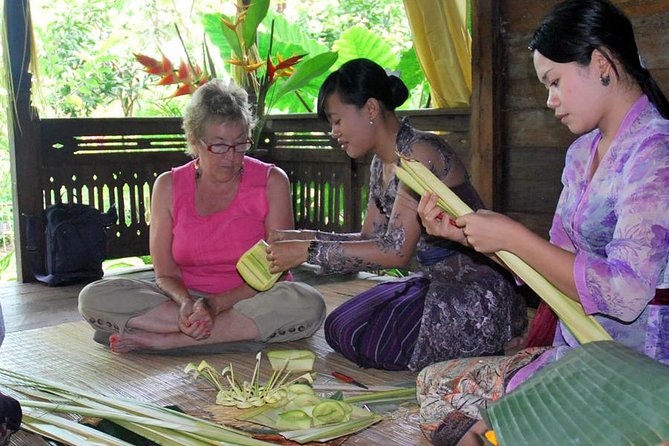
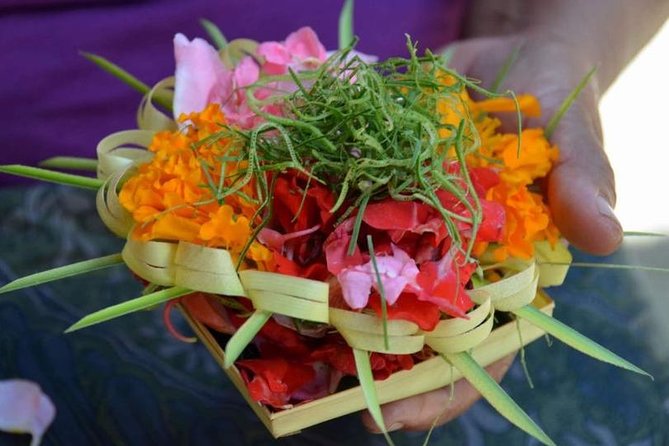
Before the cooking begins, you learn about Balinese offerings. The class includes making a canang, the small woven offering basket commonly seen at homes, temples, and roadside shrines. You work with the materials and learn how the offering is assembled, rather than simply hearing a short explanation.
This part gives the food lesson a wider cultural frame. Balinese cooking is not separate from daily life, ceremony, and family routines. Making an offering helps you understand that local traditions are practical acts, not just sights arranged for visitors.
The activity can work well for families. Putu is specifically praised for engaging children aged six, eight, and nine, and other accounts describe children taking part in the cooking. Still, young children should be ready for a long morning with market walking, hands-on food preparation, and sitting down for a meal.
Cooking with Wayan, Dewa, and the local team
The cooking class is taught by local chefs, with Wayan and Dewa receiving particularly warm praise for their welcoming style. Wayan is described as patient, funny, and careful with explanations. Putu is also praised for her friendly manner and ability to help both children and adults.
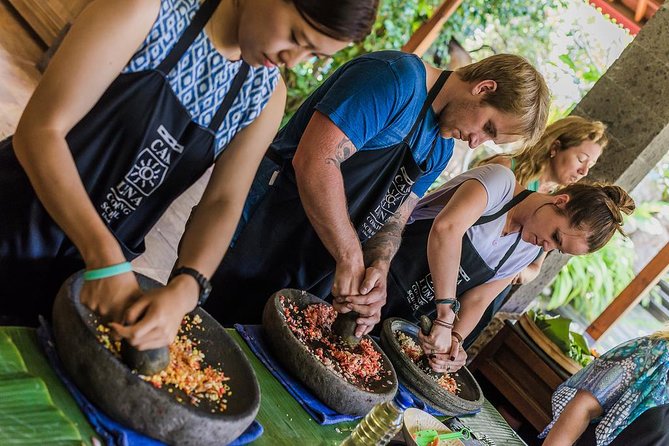
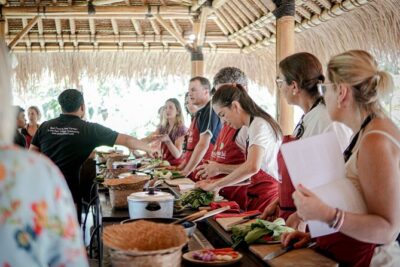
The class is not a demonstration where you watch someone else do all the work. You chop, mix, prepare, and cook with guidance from the instructor. You also work alongside the rest of the group, which makes the class social without turning it into a large crowd.
The menu includes starters, main dishes, and an authentic dessert. Several accounts describe cooking many dishes, with one session producing nine, while another describes a five-course set. The exact menu can vary, so do not book this expecting one fixed list of recipes.
Some advance preparation may be done before you arrive. That is a sensible choice. Without it, grinding spices, preparing sauces, and cooking several dishes could make the class drag on or leave you eating very late. The result is a class that keeps moving while still giving you plenty of hands-on work.
The instructors also appear willing to adjust the class for dietary needs. If you need vegetarian food or have another restriction, tell the provider in advance rather than waiting until the cooking starts. The available information confirms that vegetarian options have been provided, but it does not promise every dietary request can be met.
What you actually learn
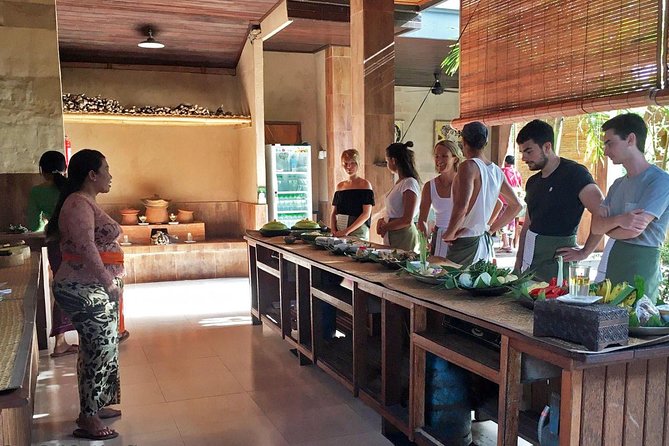
This experience is useful because it teaches methods, not just dishes. You learn how Balinese cooks combine herbs, spices, vegetables, meat, and other ingredients into a meal with several layers of flavor.
The class also gives you a chance to ask questions as you work. One instructor was praised for answering questions clearly, and another account notes that the teacher explained techniques without rushing. That matters if you want to repeat the recipes at home instead of treating the class as a one-time meal.
Your cooking ability should not be a concern. One participant described having a private lesson and preparing every dish with patient guidance. A small group also makes it easier for the chef to correct your technique or explain an unfamiliar ingredient.
At the same time, do not expect a formal professional cooking course. You are learning traditional home-style methods in a friendly cultural setting. The focus is on understanding Balinese flavors, sharing the work, and enjoying the finished meal.
The class includes cooking equipment and the cooking fee. You should leave with recipes according to the experience details and individual accounts, though the exact format of the recipe material is not specified. That makes the session more useful for home cooks who want to recreate at least some of the dishes after returning home.
More Cooking Classes with a Market Tour in Ubud
- Jambangan bali cooking class with morning market tour
★ 5.0 · 35 reviews - Balinese cooking class/Go shopping at the market, cook, eat
★ 5.0 · 12 reviews
Sitting down to eat your own work
The best payoff comes at the end, when everyone sits down to eat the dishes prepared during the class. This is more satisfying than tasting one small plate because you can see how the different recipes fit together as a Balinese meal.
The portions are described as generous, and the food receives some of the strongest praise in the available feedback. You may prepare several savory dishes and a dessert, with the final spread depending on the day’s menu and group size.
I like this format because it turns the meal into a shared result. You have watched ingredients move from market stalls to a village kitchen and then to the table. That simple chain gives the food more meaning than a restaurant meal alone.
The meal is also a useful time to compare results with the other people in your group. Solo participants can meet other cooks, while families can divide tasks and share the finished plates. The small size helps keep the experience personal without making it private.
Is $35 good value?
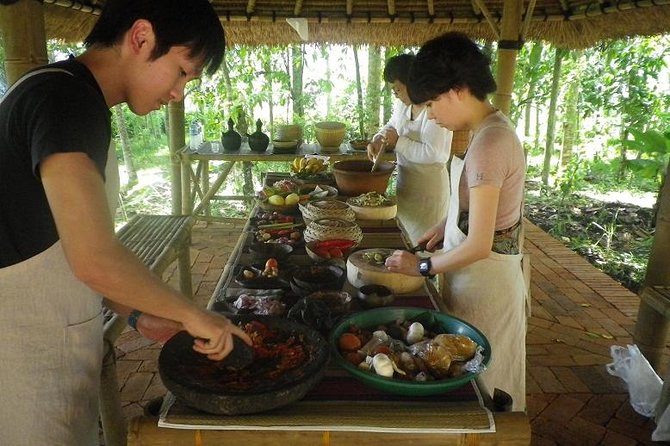
At $35 per person, this is a strong package if you want several parts of Bali in one morning. You receive hotel pickup, air-conditioned transport, a market visit, a cultural activity, cooking instruction, equipment, a full meal, and tax.
A separate market tour, cooking lesson, and meal could easily cost more, and those pieces would not necessarily connect as neatly. Here, the market explains the ingredients, the offering lesson adds cultural context, and the class shows you how to use what you have just seen.
The value is especially good for people who would otherwise spend the morning eating breakfast, browsing a market, and searching for a cooking class separately. The experience lasts about six hours, so the price is not for a short demonstration.
Group discounts are available, though the supplied information does not give the discount amount or its conditions. The advertised maximum is eight participants, which is small enough for direct contact with the chef. If you are booking as a larger family or group, check the exact capacity before paying.
This is not the cheapest possible activity in Bali, and a simple meal will cost less. You are paying for transport, teaching, cultural interpretation, equipment, and the time of a local team. For a first introduction to Balinese food, that combination makes the fee reasonable.
The practical drawbacks to weigh
The early market visit means you need to be ready for a morning start. That is good for seeing fresh produce, but less appealing if you prefer late breakfasts or slow days.
The tour lasts about six hours. Add pickup and drop-off time if you are staying outside Ubud, and it may occupy most of your morning and part of your afternoon. Plan your day around it instead of trying to squeeze it between other timed activities.
The market portion may feel short if your main goal is shopping or photography. Its purpose is to introduce the ingredients used in class, so the cooking workshop receives more time.
The menu is not fully specified in advance. That gives the chef room to work with available ingredients and dietary needs, but it also means you cannot be certain of every dish before booking.
Finally, the class is social. That is a strength for most people, but you should choose a private lesson or a smaller arrangement if you want a quiet, one-on-one cooking course. The standard experience is designed for a small group, not complete solitude.
Who should book this Ubud cooking class?
I would recommend it to food-focused visitors who want more than a restaurant meal. It suits first-time visitors to Bali, home cooks, couples, solo people looking to meet others, and families with children who enjoy practical activities.
It is also a good choice if cultural details matter to you. The canang lesson and village setting give the morning more substance than a standard recipe class. You get a look at food, ceremony, and local hospitality in one experience.
You may want to skip it if you dislike early starts, do not enjoy group activities, or want a highly technical chef-training course. It is also less suitable if you need a fixed menu for strict dietary reasons and cannot confirm the available substitutions first.
The provider offers free cancellation if you cancel at least 24 hours before the start time. Changes or cancellations inside that window are not refunded, and the cutoff follows local time, so check the timing carefully.
Should you book it?
Yes, if you want an easy, good-value introduction to Balinese food and culture. The strongest reasons are the market-to-kitchen flow, the offering lesson, the hands-on menu, and the warm teaching style associated with Wayan, Dewa, and Putu.
Book it early in your Bali stay if you can. You will learn ingredients and techniques you can use during the rest of your visit, and the included pickup removes much of the morning planning. Just allow six hours, expect a shared class, and confirm dietary needs and pickup details ahead of time.
FAQ
Where does the cooking class take place?
The class continues to the traditional village of Laplapan near Ubud, in a workshop set among jungle surroundings.
How long does the experience last?
The experience lasts approximately six hours.
Is hotel pickup included?
Yes. Pickup is offered from your hotel, and air-conditioned transport to the market and workshop is included.
How many people can join the class?
The activity has a maximum of eight travelers.
What happens at the morning market?
You visit a local fresh food market and learn about the vegetables, herbs, meat, fruit, and spices used in Balinese cooking. You may also taste some local foods.
Do you learn how to make a Balinese offering?
Yes. Before cooking, you learn about the offering process and make a canang, along with other offering equipment.
Is food and cooking equipment included?
Yes. Cooking equipment, cooking class fees, taxes, and the meal made during the class are included. Personal expenses are not included.
Can you cancel for a full refund?
Yes. You can receive a full refund if you cancel at least 24 hours before the experience starts. Cancellations or changes made less than 24 hours before the start time are not accepted for a refund.
More morning classes around Ubud
- Tingly Thai Cooking Class with Morning Market Tour
★ 5.0 · 589 reviews - Kyoto: Morning Japanese Bento Cooking Class
★ 5.0 · 149 reviews - Chiang Mai: Morning Cooking Class with Market Visit
★ 4.9 · 81 reviews - Krabi: Morning/Afternoon Thai Cooking Class at Ya’s Cookery
★ 4.9 · 30 reviews
More Balinese Cooking Classes around Ubud
- Ubud Cooking Class Bali with Balinese Chef
★ 5.0 · 1,609 reviews - PRIVATE Authentic Balinese Cooking Class in Ubud at Putu’s Home
★ 5.0 · 644 reviews - Balinese Farm Cooking Class by Pemulan Bali
★ 5.0 · 410 reviews - Balinese Vegan Cooking Class with Fresh Harvesting & Garden Tour
★ 5.0 · 86 reviews
New cooking classes around Ubud
- Ubud: Organic Farm Harvest, Bali Cooking Class by Pemulan★ 4.8 · 12 reviews
- packages cooking class and romantic dinner in a local home★ 5.0 · 4 reviews
- Jambangan bali cooking class with morning market tour★ 5.0 · 35 reviews
- Balinese cooking class/Go shopping at the market, cook, eat★ 5.0 · 12 reviews
- Bali: Cooking Class with Monkey Forest and Art Village Tour★ 5.0 · 2 reviews
- Ubud: Balinese Cooking Class with Hotel Transfers★ 4.8 · 17 reviews
- From Ubud: Authentic Bali Farm Cooking School & Organic Farm★ 5.0 · 122 reviews
- Balinese Vegan Cooking Class with Fresh Harvesting & Garden Tour★ 5.0 · 86 reviews
Ubud Cooking Classes, side by side.
Ubud: Cooking Class with Transfers and Optional Market Visit
Read our review →
PRIVATE Authentic Balinese Cooking Class in Ubud at Putu’s Home
Read our review →
Balinese Ubud cooking school (9 Dish Cooking and Market Tour)
Read our review →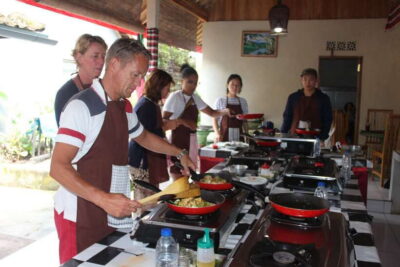
From Ubud: Authentic Bali Farm Cooking School & Organic Farm
Read our review →