
Review · KYOTO
Authentic Japanese Cooking Experience at Izakaya restaurant
The best part of this Kyoto cooking class is that you do not just watch a chef work. You grill yakitori, shape filled onigiri, and roll a dashi-maki tamago yourself, then sit down to eat the food you prepared. It gives you a useful taste of izakaya culture without requiring a full day or serious cooking skills.
I like the small group size of up to eight and the practical menu. The dishes are familiar Japanese favorites, yet each teaches a different skill: grilling, shaping, and rolling. I also like the flexible dietary choices, including vegetarian, vegan, and Muslim-friendly courses. The main consideration is the price, $139 per person, which is a serious spend for 90 minutes, even with the meal, instruction, ingredients, drink, and souvenir included.
Key points to know before booking
- Three classic dishes: Prepare yakitori, filled onigiri, and dashi-maki tamago.
- Short Kyoto activity: The class lasts 1.5 hours, making it easy to fit into a busy sightseeing day.
- Small class setting: Attendance is limited to eight people, and some bookings may be much smaller.
- Dietary choices: Vegetarian, vegan, and Muslim-friendly courses are offered, with no pork, alcohol, or non-Halal meat in the Muslim-friendly option.
- Central meeting point: Imomatsu, in Kyoto’s Nakagyo Ward, is a 5-minute walk from Keihan Sanjo Station and a 7-minute walk from Hankyu Kawaramachi Station.
- Useful take-home item: Each participant receives a bandana souvenir, while all cooking tools and ingredients are supplied.
A hands-on introduction to Kyoto izakaya food
An izakaya is a Japanese drinking and dining spot where people order small dishes to share. The food is often straightforward, but the pleasure comes from variety, quick preparation, and eating several things together. This class takes that idea and turns it into a compact cooking session.
You prepare three dishes that show different sides of Japanese home and restaurant cooking. Yakitori brings heat and grilling. Onigiri teaches you how to handle seasoned rice and fillings. Dashi-maki tamago introduces the delicate technique behind a rolled omelet.
That combination makes the class more useful than a single-recipe lesson. You get a small meal, but you also leave with methods you can try at home. The menu is approachable for beginners, so you do not need experience with Japanese cooking.
The instructor speaks English and Japanese. That matters here because rolling an omelet and shaping rice are hands-on tasks. You will want clear guidance as you work, not just a description translated from a recipe sheet.
More cooking classes around Kyoto:
- Ramen Cooking Class at Ramen Factory in Kyoto
★ 5.0 · 1,937 reviews - Kyoto: Ramen Cooking Class at a Ramen Factory with Souvenir
★ 4.9 · 532 reviews - Kyoto: Ramen, Gyoza, and Onigiri Cooking Class
★ 5.0 · 445 reviews
Arriving at Imomatsu near Sanjo
The meeting point is Imomatsu, located in the basement of the Sixth Kanko Building in Kyoto’s Nakagyo Ward. The venue is close to central Sanjo, one of the most convenient parts of the city for combining food, shopping, and sightseeing.
From Keihan Sanjo Station, the walk takes about five minutes. From Hankyu Kawaramachi Station, allow about seven minutes. The meeting point is also listed as 234 meters from Sanjo Station, so it should be easy to reach by train, though you will still want to confirm the exact entrance before setting out.
Transportation is not included. That is normal for a city cooking class, but it matters when you calculate the full cost. You must make your own way to the venue and return afterward. The activity ends at the same place where it begins.
Since the class is in a central Kyoto neighborhood, you can pair it with other plans. Still, do not assume the cooking session will fill half a day. The listed duration is only 1.5 hours, so think of it as a focused food activity rather than a long cultural tour.
Starting with yakitori and the heat of the grill
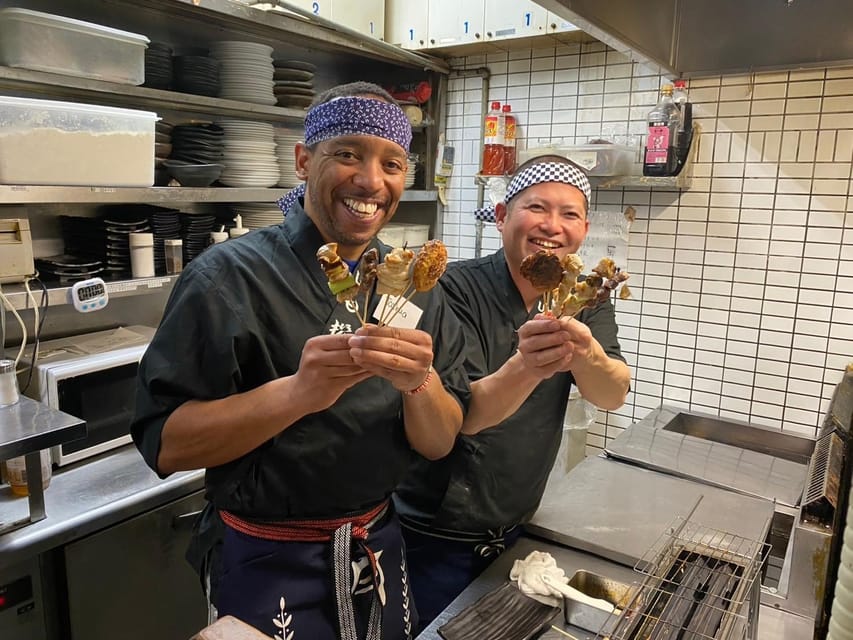
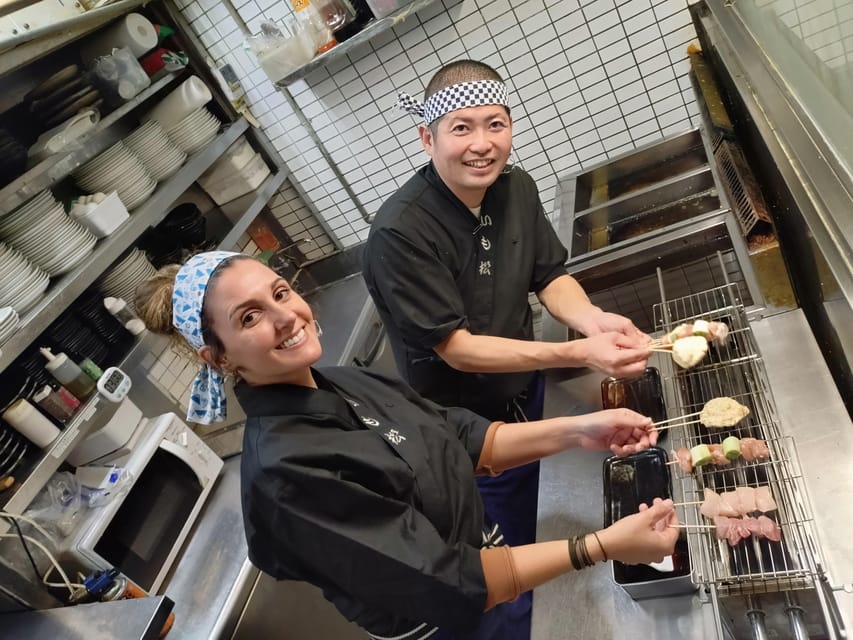
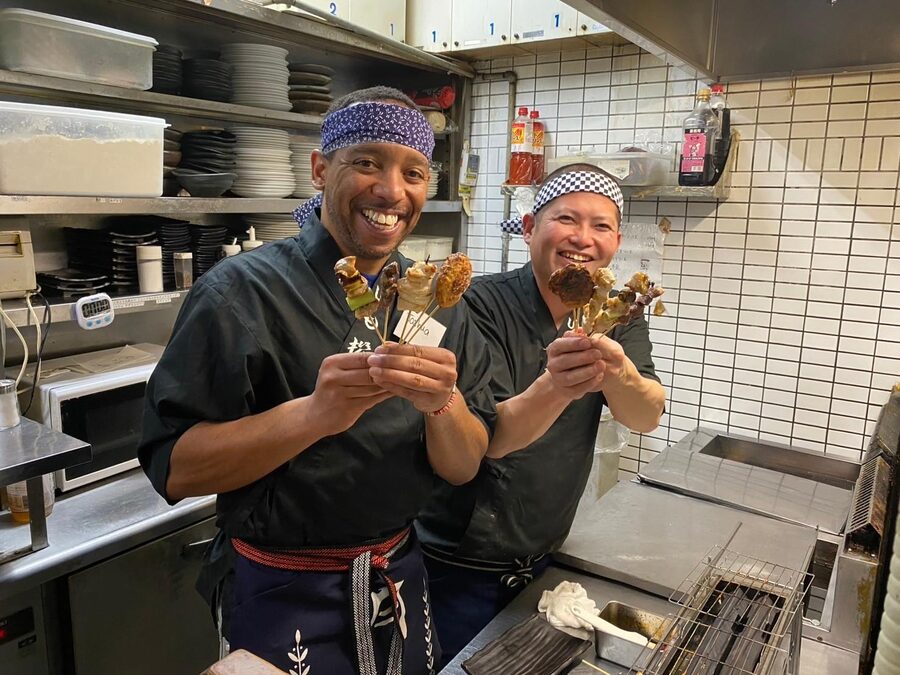
Yakitori is chicken cooked on skewers, usually over a grill. In an izakaya, it is the kind of food that arrives in small portions and is easy to share. Here, you take part in the preparation and grilling instead of simply receiving a finished plate.
This is the most active part of the class. You work with skewers and heat, then watch the food change as it cooks. The task is simple enough for a first-time cook, but it gives you a real sense of timing and attention.
I like yakitori as the opening dish because it gets you working right away. It also connects clearly with the izakaya setting. You are not making an abstract restaurant dish. You are preparing one of the foods people commonly associate with a Japanese evening meal.
The available information does not specify the exact chicken cuts, seasoning, or grill setup. You should expect instruction and ingredients to be provided, but do not book this expecting a detailed lesson in every regional style of yakitori. The focus is on making and eating a classic dish in a social restaurant setting.
Shaping onigiri with different fillings
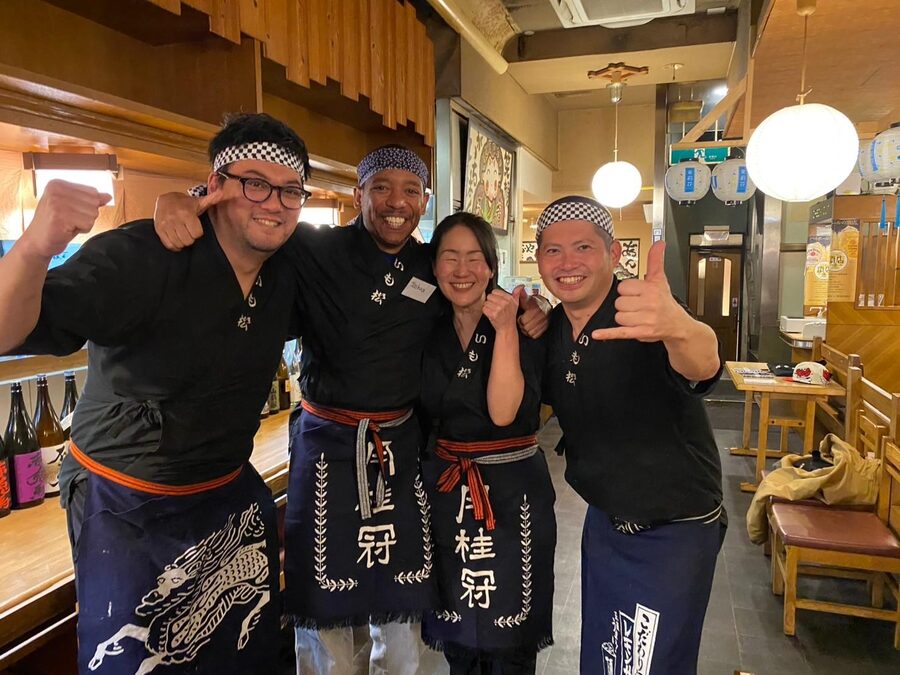
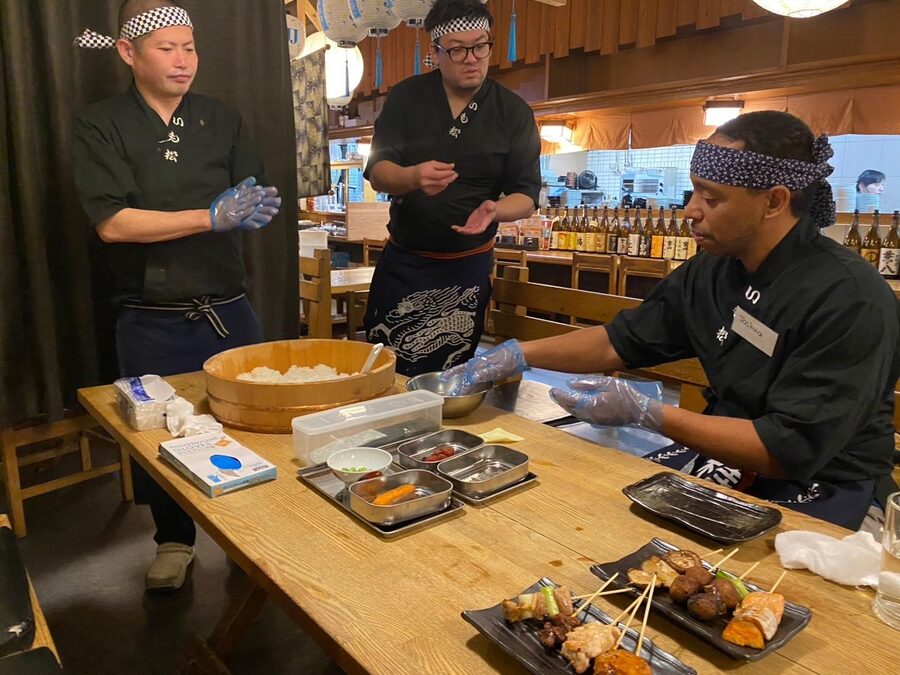
Onigiri is one of Japan’s most useful everyday foods. These rice balls can be packed for a meal, carried as a snack, or served as part of a larger spread. Their shape looks simple, but getting the rice to hold together without crushing it takes a little practice.
You will form the rice by hand and add fillings. The filling choices are described as varied, though the exact options can depend on the course you select. This is a good point to consider your dietary needs when booking.
The onigiri section should appeal to families and first-time cooks because the result is immediate. You make something recognizable, edible, and easy to understand. It also gives you a technique you can repeat at home without special equipment.
One useful detail from the available feedback is that the fillings were considered especially good, and the finished onigiri was a favorite part of the meal. That makes sense: the rice provides a mild base, while the filling gives each piece its character.
Do not expect perfectly uniform shapes on your first try. That is part of the fun. The class is designed for all skill levels, not for producing restaurant-perfect food. I would treat the shaping as a relaxed exercise rather than a test.
Same kitchen, a different dish:
- Kyoto: Japanese Washoku Bento Small Group Cooking Class
★ 5.0 · 380 reviews - Kyoto: Afternoon Japanese Izakaya Cooking Class
★ 4.9 · 241 reviews - Kyoto: Morning Japanese Bento Cooking Class
★ 5.0 · 149 reviews - Kyoto: Authentic Sushi Making Cooking Lesson
★ 5.0 · 103 reviews
Rolling a fluffy dashi-maki tamago
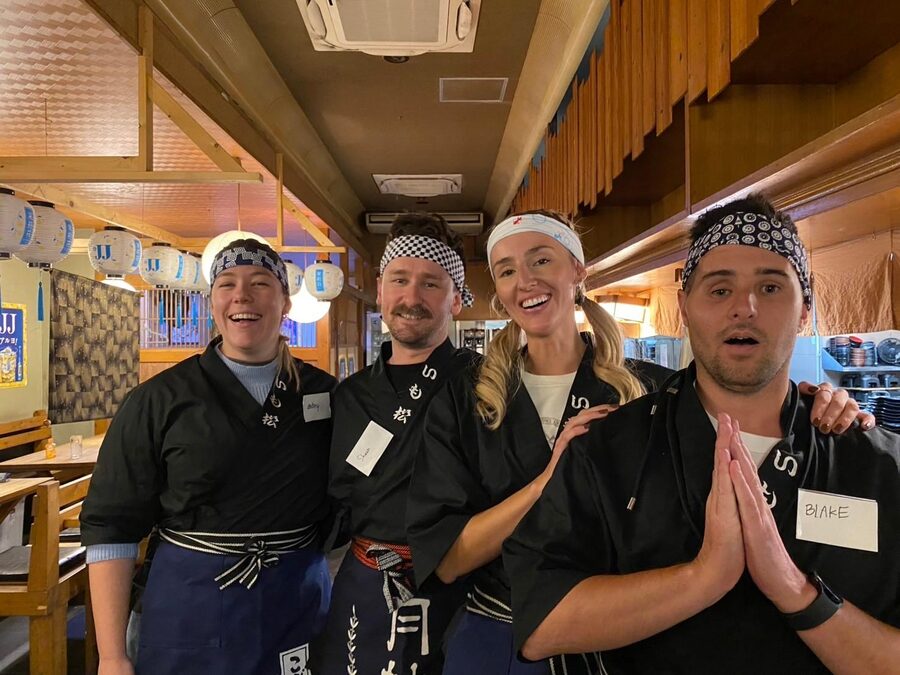
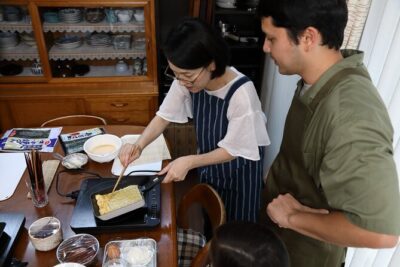
Dashi-maki tamago is a Japanese rolled omelet made with dashi, a savory stock. It is softer and more delicate than a plain Western omelet, and the rolled layers are what make it look special.
This is likely the most technical dish in the class. The omelet must be cooked in stages and rolled as it sets. The available feedback specifically praised how easy the instructor made the technique look, while also raising a practical question about the special frying pan used in the lesson.
That detail is worth keeping in mind. Watching an experienced instructor handle the omelet may make the process appear effortless, but your first attempt may need patience. Ask questions as you go, especially if you want to repeat the recipe at home.
The reward is a dish that feels more refined than its basic ingredients suggest. Eggs, stock, and careful cooking create a soft, savory result. Learning this technique gives the class a stronger cooking focus than an activity based only on assembling prepared ingredients.
The exact recipe and equipment provided for home use are not specified. You receive a bandana souvenir, but there is no stated promise that a special frying pan or other cooking tool is included. If that matters to you, ask the provider before booking.
Sitting down to eat what you made
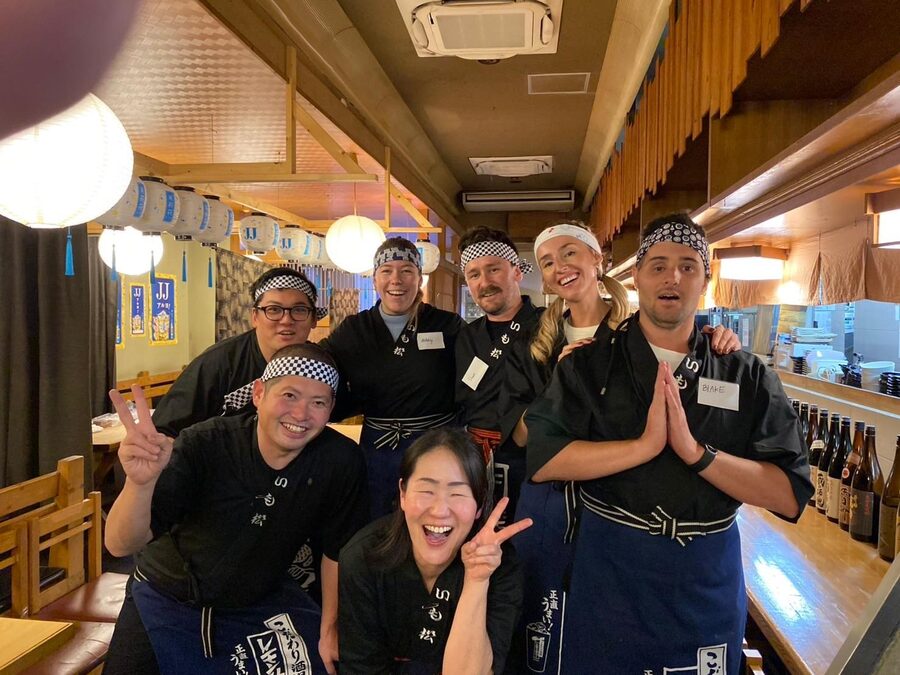
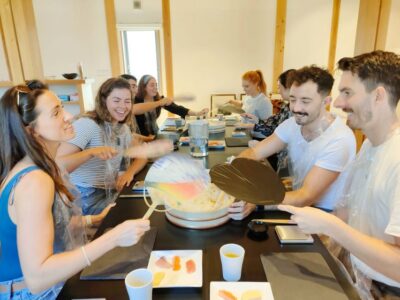
After the cooking, you sit down and eat the dishes together. This meal is the natural payoff of the class. You see how yakitori, onigiri, and rolled omelet work as a small izakaya-style spread rather than as three unrelated recipes.
I like this format because the food has a story. You remember the omelet because you rolled it, the yakitori because you grilled it, and the onigiri because you shaped it. The meal becomes part of the lesson instead of a separate restaurant stop.
One soft drink is included. Alcohol is not listed as part of the package, and the Muslim-friendly course specifically avoids alcohol, pork, and non-Halal meat. If you want additional drinks or anything beyond the included meal, plan to pay separately, though the available details do not give prices for extras.
The meal is not described as a large feast. With three small dishes and one drink, I would view it as a satisfying food activity rather than a replacement for a full dinner. You may still want another meal later, especially if you have a large appetite.
Small groups make the cooking easier
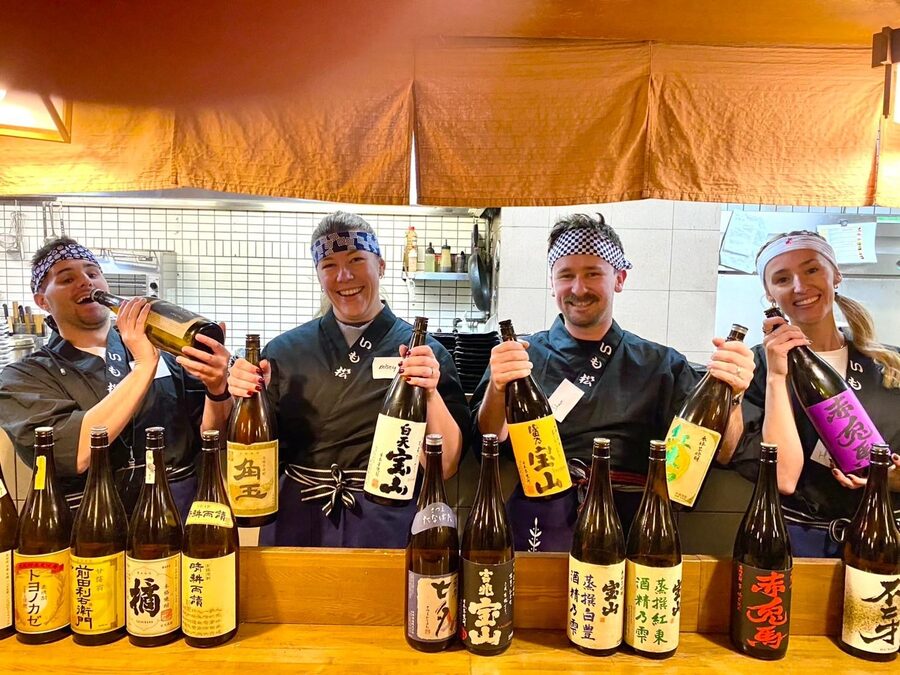
The class accepts no more than eight participants. That is a useful limit for a practical lesson. You should have a better chance to see the instructor’s technique and ask for help than in a large demonstration group.
Group size may vary. One couple had the class to themselves, which allowed more individual attention. You cannot count on a private session, but the small maximum leaves open the possibility of a quieter class, particularly outside the busiest booking periods.
A small group also changes the mood. Cooking rice, handling skewers, and rolling omelet become easier when the room is not crowded. You can concentrate on your own food while still sharing the meal with the other participants.
The class is suitable for all skill levels. That does not mean every part will be effortless. The omelet may require more coordination than the other dishes, while the yakitori involves working around heat. The instructor’s role is to guide you through those steps.
Vegetarian, vegan, and Muslim-friendly choices
Dietary flexibility is one of the strongest practical features of this activity. Vegetarian, vegan, and Muslim-friendly courses are available, so you can take part without accepting a menu that does not suit you.
The Muslim-friendly option uses no pork, alcohol, or non-Halal meat. That is a clear and useful provision, but you should select the correct course when booking and confirm any personal requirements in advance.
The information does not spell out every ingredient in each version. If you have allergies or strict restrictions beyond vegetarian, vegan, or Muslim-friendly needs, ask the provider before arriving. Do not assume that a dish is suitable simply because its name sounds familiar.
For vegetarians and vegans, the biggest question will likely be the fillings and the ingredients used in the stock or seasonings. The provider states that these options are available, but the exact menu is not supplied. Confirming ahead gives you a more comfortable meal.
What the $139 price includes
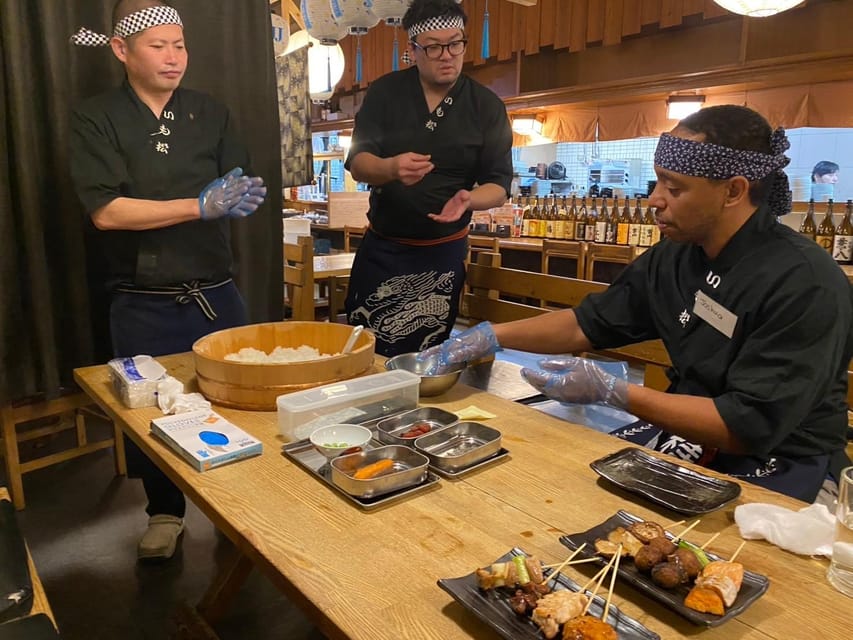
At $139 per person, this is not a budget food stop. The price includes all ingredients, cooking equipment, an English-speaking instructor, one soft drink, the meal you prepare, and a bandana souvenir.
The value depends on what you want from a Kyoto food activity. If you only want to eat yakitori and onigiri, a restaurant meal will cost less. If you want instruction, hands-on practice, and a meal connected to the cooking, the price becomes easier to justify.
The 1.5-hour length is both a strength and a limitation. It fits neatly between sightseeing plans and does not require you to surrender an entire morning or afternoon. At the same time, $139 is a high cost for a short class, especially since transportation and any additional food or drinks are not included.
I would book it for the teaching and participation, not for the amount of food. The best value comes when you care about learning three Japanese preparations and want an English-supported activity in a small group.
Who will enjoy this class most
This class suits you if you want a short, social introduction to Japanese cooking. It works well for couples, solo visitors, families, and small groups of friends who would rather make something than sit through a demonstration.
It is also a sensible choice for beginners. The recipes are familiar enough to follow, and the instructor guides you through the work. You do not need to arrive with knife skills or previous knowledge of Japanese cuisine.
The class may be especially useful for people who want to recreate Japanese food at home. Onigiri requires little equipment, and the omelet technique gives you a specific skill to practice. The bandana is a modest souvenir, but it is more useful than a generic paper keepsake.
I would be more cautious if you are looking for a long cultural lesson, a large meal, or a full market-to-table tour. None of those is promised. This is a compact cooking session centered on three dishes in a central Kyoto venue.
Timing, cancellation, and planning advice
The start time depends on availability, so check the booking calendar before building the rest of your day. The activity lasts 1.5 hours and finishes back at the meeting point.
You can cancel up to 24 hours before the activity for a full refund. The reserve-now, pay-later option also helps if your Kyoto schedule is still changing. Even so, you should check the final booking conditions and arrive at the stated meeting point with enough time to find the basement venue.
Bring your appetite, but do not assume the included food covers a full dinner. Wear something comfortable for a hands-on cooking session, though the supplied information does not specify a dress code or required equipment.
Should you book the Izakaya Factory class?
Book this class if you value active participation over simple dining. The menu gives you three different Japanese cooking tasks, the group is limited to eight, and dietary versions make the activity accessible to more people.
The main question is price. At $139 for 90 minutes, it is best for visitors who place a high value on instruction, small-group attention, and a meal they helped prepare. If your priority is inexpensive food, choose a restaurant instead.
For a first Japanese cooking class in Kyoto, this is a focused and approachable option. Go in expecting a short lesson, three dishes, one soft drink, and a modest souvenir, not a full-day culinary program. With those expectations, the class has a clear purpose and a good chance of becoming one of your more hands-on food memories in Kyoto.
FAQ
Where does the cooking class take place?
The class takes place at Imomatsu, in the basement of the Sixth Kanko Building in Kyoto’s Nakagyo Ward.
How far is the venue from public transportation?
It is about a 5-minute walk from Keihan Sanjo Station and a 7-minute walk from Hankyu Kawaramachi Station. It is also listed as 234 meters from Sanjo Station.
How long does the activity last?
The cooking class lasts 1.5 hours.
What dishes will I prepare?
You will prepare yakitori, filled onigiri, and dashi-maki tamago, a traditional Japanese rolled omelet.
Is the class suitable for beginners?
Yes. The activity is suitable for all skill levels.
Is the class taught in English?
The instructor speaks English and Japanese.
How many people can join the class?
The group is limited to a maximum of eight participants.
Are vegetarian options available?
Yes. Vegetarian and vegan courses are available.
Is there a Muslim-friendly course?
Yes. The Muslim-friendly course uses no pork, alcohol, or non-Halal meat.
What is included in the price?
The price includes all ingredients, cooking tools, one soft drink, an English-speaking instructor, the prepared meal, and a bandana souvenir. Transportation to and from the venue is not included.
New cooking classes around Kyoto
- Nishiki Market Food Tour with Cooking Class★ 4.9 · 42 reviews
- Kyoto Udon & Tempura Cooking Class with Professional Chefs★ 3.8 · 3 reviews
- Kyoto: Wagashi (Japanese sweets) Cooking near Fushimiinari★ 5.0 · 40 reviews
- Kyoto: Morning Japanese Bento Cooking Class★ 5.0 · 149 reviews
- Kyoto Home Cooking Class &Supermarket tour near Fushimiinari★ 5.0 · 31 reviews
- Kyoto: Cooking class, learning how to make authentic sushi★ 4.2 · 9 reviews
- Kyoto: Authentic Sushi Making Cooking Lesson★ 5.0 · 103 reviews
- Kyoto: Afternoon Japanese Izakaya Cooking Class★ 4.9 · 241 reviews
Kyoto Cooking Classes, side by side.
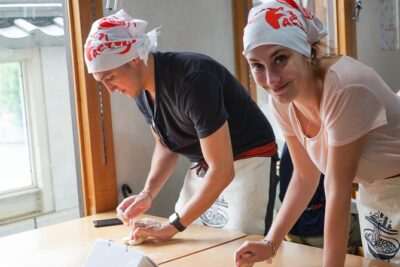
Ramen Cooking Class at Ramen Factory in Kyoto
Read our review →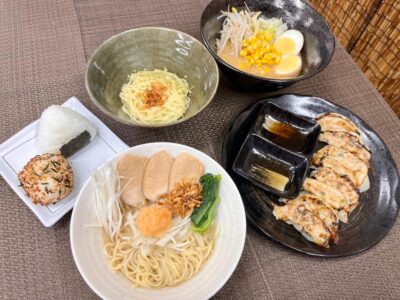
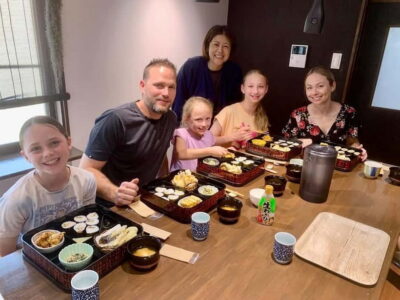
Kyoto: Japanese Washoku Bento Small Group Cooking Class
Read our review →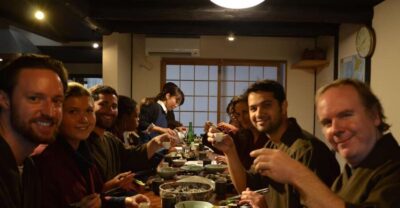
Kyoto: Afternoon Japanese Izakaya Cooking Class
Read our review →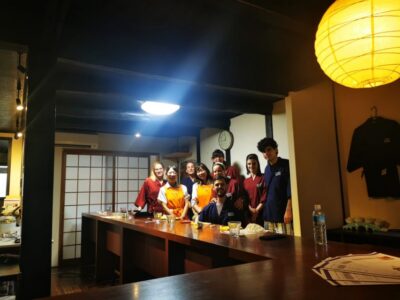
Near Fushimiinari: Kyoto Home Cooking Class & Supermarket tour
Read our review →
This kitchen also appears in