
Review · SEOUL
Master Korean traditional cooking with a Kimchi chef
Seoul’s Gyeongdong Market is the real opening act here. You walk through one of the city’s largest food and traditional medicine markets, learn what Korean cooks do with unfamiliar greens, spices, and sauces, then use some of those ingredients in a hands-on class. It feels more useful than a standard cooking demonstration because you actually prepare the food.
I like the intimate class size and the way Chef Minseon turns a market visit into a practical lesson. I also like the rotating menus: you can make kimchi on Thursday, samgyetang on Monday, or bulgogi, japchae, and doenjang jjigae on Tuesday or Saturday. The main consideration is that your menu depends on your date, so check the schedule before booking if you have your heart set on a certain dish.
Key points at a glance
- Gyeongdong Market first: Shop for ingredients in a large Seoul food and traditional medicine market before cooking.
- Hands-on instruction: You prepare small portions of each dish, rather than simply watching a chef work.
- Menus change by day: Kimchi, samgyetang, bibimbap, Korean desserts, or a three-dish meal may be on the schedule.
- Small-group setting: The class is designed to feel personal, with the advertised group limited to seven people.
- Chef Minseon leads the class: She is praised for patient explanations, clear English, and friendly help.
- Dietary choices are possible: Vegan and halal options are available when arranged through the booking.
A Korean cooking class that begins in the market
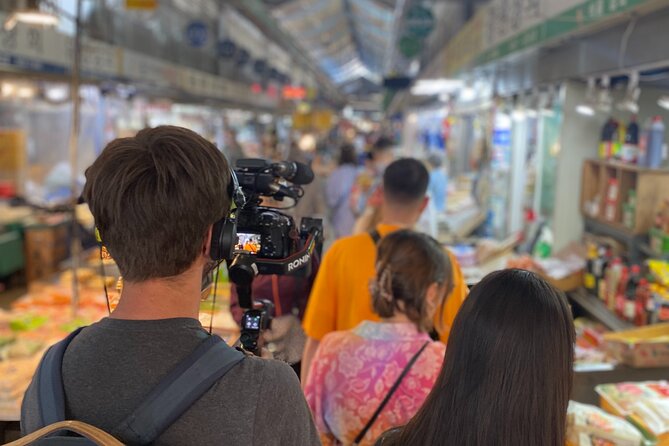
The experience starts a little before 10 a.m. at Jegi-dong Station Exit 2, on Seoul’s Line 1. That location matters. You are not dropped at a cooking school and handed a bowl of prepared ingredients. Instead, the class begins with a short walk through the surrounding neighborhood and into Gyeongdong Market.
This market is known for food, herbs, vegetables, spices, and traditional Korean medicine. It gives you a quick lesson in the raw materials behind Korean food. You may see ingredients that rarely appear in a Western supermarket, and your guide explains what they are used for before the group selects what is needed for the day’s recipes.
I like this part because it gives the cooking lesson a clear setting. Kimchi, bibimbap, and doenjang jjigae are not just abstract dishes on a recipe card. You see the vegetables, sauces, and seasonings in their everyday market setting, then handle them again in the kitchen.
The market is also a useful contrast to Seoul’s polished central shopping districts. The class takes you into a working local area where food and herbal medicine are sold as part of daily life. Some people may find the market a little overwhelming, especially if they prefer a quiet, polished food tour. For others, the scale and unfamiliar ingredients will be the highlight.
Allow enough time to find Exit 2. One couple became lost while trying to reach the meeting place, though Chef Minseon helped them connect with the group. The meeting point is near public transportation, but you should still arrive early rather than trying to locate it at exactly 10 a.m.
More Korean Cooking Classes around Seoul:
- Local Home Korean Cooking Class & Market Adventure in Seoul
★ 5.0 · 1,024 reviews - Seoul: Korean Cooking Class at a Local Home and Market Tour
★ 5.0 · 348 reviews - Seoul: Korean Cooking at Seoul Cooking Club!
★ 5.0 · 311 reviews
Why the market stop adds real value
A market visit can sometimes feel like filler before the main activity. Here, it has a practical job. Your group picks up the ingredients needed for the cooking session, and the guide explains Korean food culture along the way.
You may also sample a traditional Korean donut during the walk, depending on the day’s flow. The exact market route can vary, but the experience centers on Gyeongdong Market and the food and medicine stalls around it.
The market portion is especially helpful if you are new to Korean cooking. You get a basic sense of the flavors before you start: fermented pastes, kimchi, vegetables, rice, noodles, and the seasonings that give Korean food its familiar depth. You do not need to arrive with cooking experience.
The market can also be a good choice for repeat visitors to Seoul who have already seen palaces and major shopping streets. This is a more ordinary part of the city, and the guide adds context that you would miss by wandering through the stalls alone.
Entering the Korean-style kitchen
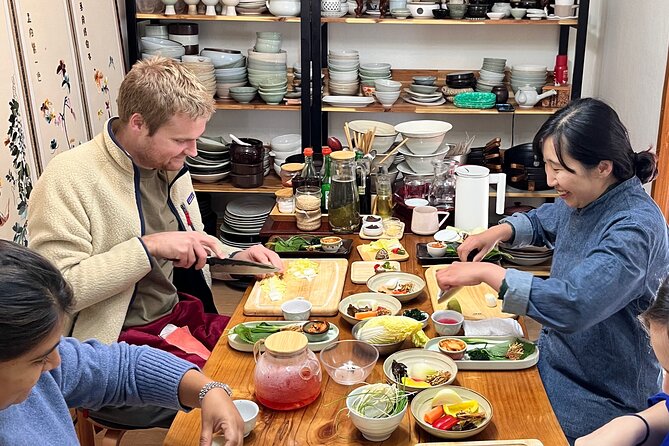
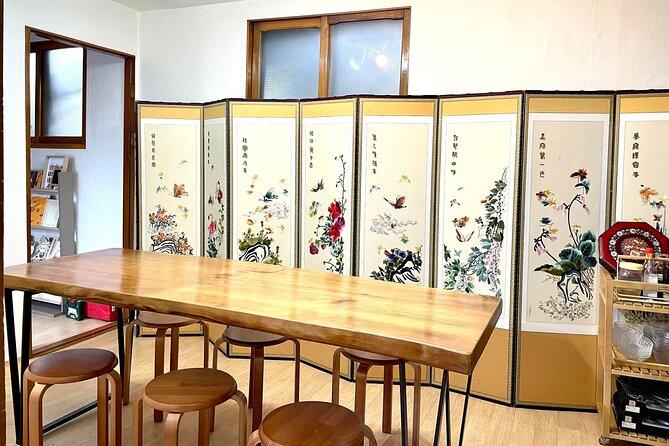
After shopping, the group walks to a Korean-style house or nearby cooking studio in the local neighborhood. The information for this experience describes a traditional Korean house, while several descriptions also refer to a clean, well-equipped studio. The exact setting may depend on the current operation, but the format is the same: you move from the market into a kitchen and prepare a meal with the group.
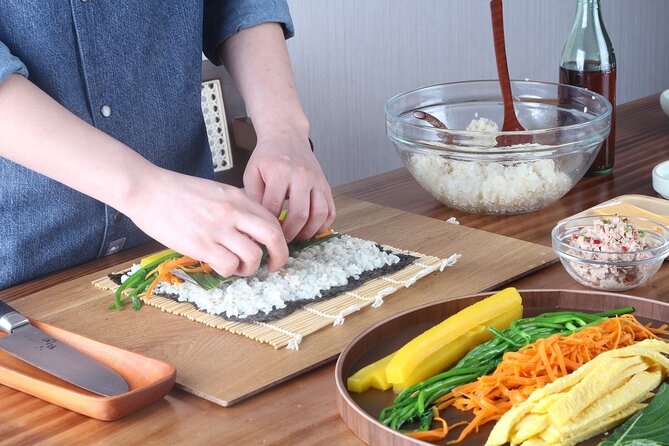
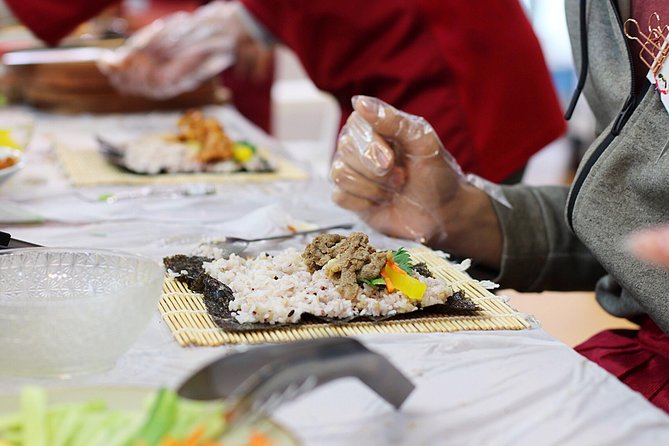
The class is hands-on. You do not simply watch Chef Minseon chop vegetables while you stand at the back of the room. Each person prepares small portions of the menu, with the instructor guiding the group through the process. That arrangement gives you something useful to take home: a sense of the order of work, not just a finished plate.
This matters with Korean food. Several dishes involve multiple components, sauces, or preparation steps. A demonstration can make everything look easy because the chef has already measured and prepared the ingredients. Here, you get a chance to handle the ingredients yourself and ask questions as you go.
The pace is designed for beginners. Chef Minseon is described as patient and supportive, and the class is organized so the instructor can help each person. You should still expect to participate. This is not a three-hour meal with a few token tasks added for entertainment.
Your menu depends on the day
Check the calendar before you reserve. The menu changes by weekday, and that is one of the most important details of the experience.
- Monday: Samgyetang, a traditional Korean chicken and ginseng soup.
- Tuesday and Saturday: Bulgogi, japchae, and doenjang jjigae.
- Thursday: Kimchi.
- Friday: Bibimbap.
- Sunday: A selection of Korean desserts.
The Tuesday and Saturday class offers the broadest meal format, with three familiar Korean dishes. Bulgogi gives you a savory meat dish, japchae adds noodles and vegetables, and doenjang jjigae introduces one of Korea’s best-known fermented soybean stews.
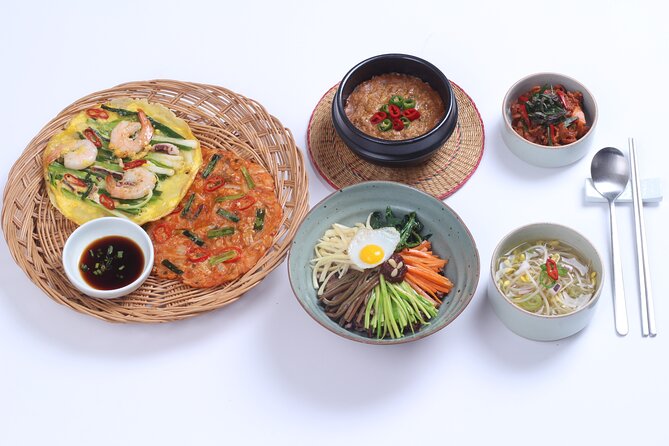
Friday’s bibimbap class is a good pick if you want to understand how separate ingredients come together in one bowl. The class uses more traditional ingredients than the simplified versions often served outside Korea.
Thursday is the obvious choice if kimchi is your main reason for booking. Keep in mind that a kimchi class is different from a full lunch class. The menu information says the activity is composed of three different menu items, but the listed dishes vary by date, and Sunday is reserved for desserts. Confirm the exact schedule before paying if the menu is central to your plans.
Morning tea is included on all dates. Depending on the selected day and time, the included food may be lunch, dinner, or dessert.
More cooking classes around Seoul:
- Seoul: Taste of Korea, Authentic Home Style Cooking Class
★ 4.9 · 166 reviews - Seoul: Royal Seoul Cooking Class in a 100-Year-Old Hanok
★ 5.0 · 96 reviews - Seoul: Kimchi Dishes Cooking Class with Wine Pairing
★ 4.7 · 38 reviews - Seoul: Temple Vegan Cooking Class & Oriental Medicine Tour
★ 4.6 · 32 reviews
Learning from Chef Minseon
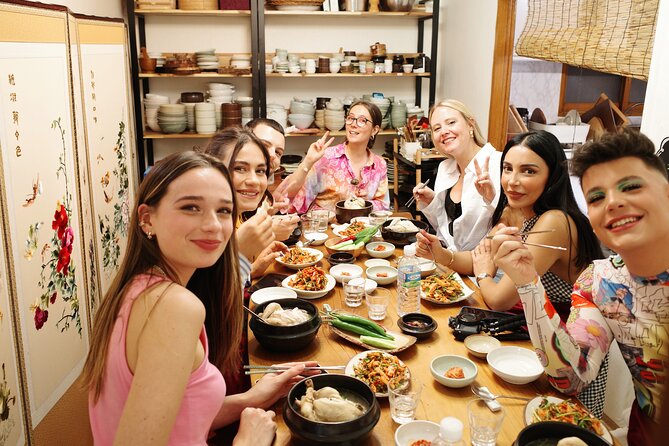
Chef Minseon is the named instructor associated with many of the class descriptions, and her role goes beyond giving directions. She introduces the participants to one another, explains the market ingredients, demonstrates techniques, and keeps the group moving at a comfortable pace.
That personal contact is a major reason to choose this class over a large cooking school. The advertised group limit is seven people, although the booking information also gives a maximum of 10 people per booking. Ask for the current group size if having a very small class is important to you.
The class also works for non-cooks. You do not need to know how to make Korean food, and the recipes are described as easy to follow and practical to recreate at home. The instructor can help if your chopping is slow or your technique is uncertain.
English-language instruction is available, and Chef Minseon has been described as speaking very good English. The tone is friendly rather than formal, with time to talk during the meal and get acquainted with the other participants.
Some classes include a recipe book or recipes to take home. That is a useful bonus, especially if you want to repeat the dishes after returning home. Confirm whether printed recipes are included on your specific booking, since the supplied details do not state that this is guaranteed for every date.
Eating what you prepared
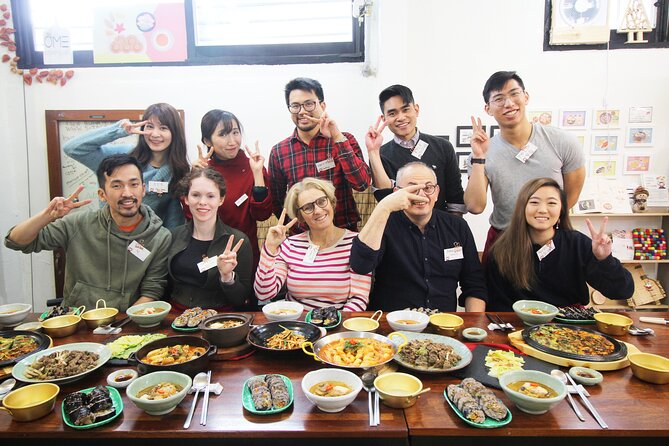
Once the cooking is finished, everyone sits down to eat. This is not a restaurant meal prepared entirely by someone else. The food on the table reflects the work you have just done, which makes the final meal feel like part of the lesson.
The portions can be generous. Some participants have had enough food to take leftovers away, though you should not count on this for every menu. The important point is that you get a complete eating session, not just a taste of one dish.
The shared meal also gives the class a social finish. You can ask final questions, compare techniques, and talk with Chef Minseon and the other cooks. If you are traveling alone, the small class makes it easier to meet people without the forced feeling of a large group activity.
The setting is another part of the appeal. Cooking in a Korean-style home or local studio feels more connected to Korean food culture than sitting in a hotel conference room. The setting is practical rather than theatrical, so do not expect a staged historical performance or a formal restaurant service.
Cost and what the $85 covers
At $85 per person, this is not the cheapest way to eat in Seoul. You can buy an excellent Korean lunch for much less. The value comes from the combination of a market walk, ingredient introduction, instruction, hands-on preparation, and the meal you eat afterward.
You are also paying for a small class rather than a crowded group. The guide serves as both market host and cooking instructor, which gives the three-and-a-half-hour experience a clear thread from shopping to cooking to eating.
For someone who already plans to take a Korean cooking class, the price is reasonable because the market visit is included rather than added as a separate tour. It is less compelling if you only want a quick meal or a short food tasting.
The class is booked about 48 days ahead on average, so popular dates can fill early. That is especially important for Thursday kimchi sessions, Friday bibimbap, or weekend dates.
Who will get the most from this experience
I would choose this class if you want to understand how Korean food is made, not just eat it. It suits first-time cooks because the instructor provides close help, and it also works for experienced home cooks who want to learn Korean ingredients and methods.
It is a good match for:
- Solo visitors who want a social activity with a manageable group size
- Couples and families with children over six
- Students and longer-stay visitors who want recipes they can repeat
- Food-focused visitors who enjoy markets as much as restaurants
- People seeking vegan or halal options
- Anyone who wants a break from Seoul’s major sightseeing districts
Children under six cannot participate for safety reasons, and only one child per class is allowed. Anyone over 14 is charged the adult price.
This may not be ideal if you dislike walking, crowded markets, or active participation. The class begins at a station, includes a market visit, and requires you to cook. It is also not the right choice if you need a fixed menu but cannot select the appropriate day.
Practical details before you book
The meeting point is Jegi-dong Station Exit 2 at 10 a.m. The activity ends back at the meeting point after the meal. Subway pickup and drop-off are not included, so you need to reach the station yourself.
Wear comfortable clothing and shoes for the market walk and kitchen work. The provided information does not specify a dress code or special equipment, so ask the operator if you have a particular concern.
Vegan and halal options are available, but arrange them when booking rather than assuming they can be added at the last minute. The experience requires at least one person to operate, and if the minimum is not reached, you may be offered another date or a full refund.
You can cancel without charge up to 24 hours before the start time. Cancellations or changes made inside that window are not refunded or accepted. The cut-off follows Seoul local time.
Should you book this Seoul cooking class?
Book it if you want a practical introduction to Korean food with a market visit attached. The strongest part is the connection between the ingredients you see at Gyeongdong Market and the dishes you prepare later. Chef Minseon’s patient teaching, the small class format, and the chance to eat a complete meal make the $85 price easier to justify.
Choose your date carefully. Thursday is for kimchi, Friday is for bibimbap, Monday is for samgyetang, and Tuesday or Saturday offers the broadest three-dish meal. If you want a quiet, passive food tour, this is not your best fit. If you want to chop, stir, season, ask questions, and leave with recipes you can use at home, it is a strong choice.
FAQ
Where does the Korean cooking class meet?
The class meets at Jegi-dong Station Exit 2 in Seoul at 10 a.m. The activity ends back at the same meeting point.
How long does the experience last?
The experience lasts approximately three hours and 30 minutes, including the market walk, cooking class, and meal or dessert.
What market does the class visit?
The class visits Gyeongdong Market, a large Seoul market known for food, vegetables, herbs, spices, and traditional Korean medicine.
What food will I cook?
The menu depends on the day. Monday features samgyetang, Thursday features kimchi, Tuesday and Saturday feature bulgogi, japchae, and doenjang jjigae, Friday features bibimbap, and Sunday features Korean desserts.
Is the class suitable for beginners?
Yes. The class provides hands-on instruction, and Chef Minseon guides participants through the recipes and techniques. No previous Korean cooking experience is required.
Are vegan or halal options available?
Yes. Vegan and halal options are available. Request the appropriate option when booking.
Can children take part?
Children under six cannot participate for safety reasons. Up to one child can participate in each class, and anyone over 14 is charged the adult price.
What is the cancellation policy?
You can cancel up to 24 hours before the experience starts for a full refund. Cancellations or changes made less than 24 hours before the start time are not accepted or refunded.
New cooking classes around Seoul
- Seoul: Korean Kimchi Cooking Class in the Heart of the City★ 5.0 · 3 reviews
- Seoul: Premium Korean Feast Cooking Class★ 5.0 · 3 reviews
- Seoul: Taste of Korea, Authentic Home Style Cooking Class★ 4.9 · 166 reviews
- Seoul: Korean Home Visit, Cooking & Cultural Experience★ 5.0 · 2 reviews
- Seoul: Korean Cooking Class with Local Grocery Shopping★ 5.0 · 13 reviews
- (Seoul) Korean Cooking Class with a Professional Chef★ 5.0 · 14 reviews
- Seoul: Cooking Class and Tour with Michelin-Trained Chef★ 5.0 · 11 reviews
- Seoul: Authentic Korean Cooking Class and Market Tour★ 5.0 · 6 reviews
Seoul Cooking Classes, side by side.
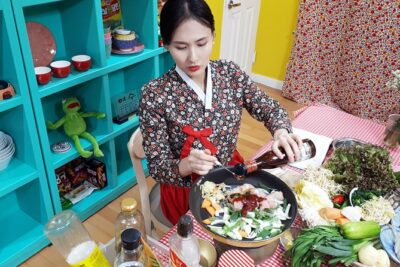
Local Home Korean Cooking Class & Market Adventure in Seoul
Read our review →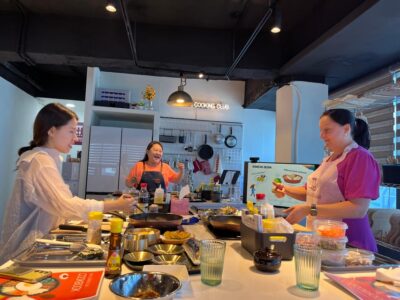
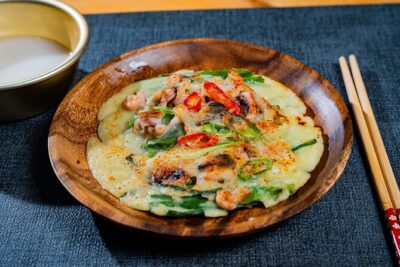
Seoul: Taste of Korea, Authentic Home Style Cooking Class
Read our review →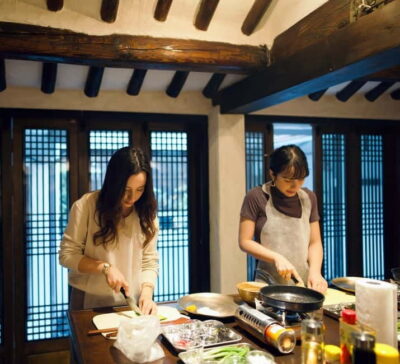
Seoul: Royal Seoul Cooking Class in a 100-Year-Old Hanok
Read our review →
Seoul: Kimchi Dishes Cooking Class with Wine Pairing
Read our review →
Seoul: Temple Vegan Cooking Class & Oriental Medicine Tour
Read our review →
Seoul: Experience Korean Cooking in Modern Hanok Kitchen
Read our review →
From Forest to Table: A Hansik Cooking Journey in Seoul
Read our review →This kitchen also appears in