
Review · SEOUL
Seoul: Korean Cooking Class at a Local Home and Market Tour
The best part of this experience is the move from Mangwon Market to a local home kitchen. You see ingredients in their everyday setting, taste market snacks, then use those same food traditions to prepare bibimbap, dakgalbi, haemul-pajeon, and doenjang-jjigae. I especially like the market stop and the relaxed meal that follows, complete with more than 10 side dishes, seasonal fruit, and rice wine.
I also like that the class is built for beginners. Hosts such as Sarah, Sara, and Junghee are described as warm, funny, clear, and generous with cultural explanations. The main drawback is practical: you must reach Mangwon Station on your own, and the home has no elevator, so the stairs may matter if mobility is a concern.
Key details at a glance
- A real market first: Walk through Mangwon and World Cup market areas, learn about ingredients, and sample local street food before cooking.
- Four dishes in one class: Make bibimbap, dakgalbi, haemul-pajeon, and doenjang-jjigae with help from an English-speaking chef.
- A full Korean table: Your meal includes a Hanjeongsik spread with more than 10 side dishes, rice, seasonal fruit, and rice wine.
- Small-group setting: The class accepts no more than 10 participants, which allows room for questions and hands-on cooking.
- More than recipes: Learn a few Korean phrases, try a Tal mask, and hear about food customs and daily life.
- Useful take-home value: Recipes are provided, and photo and video service is included.
Why this Seoul cooking class works so well
Many cooking classes begin and end in a teaching kitchen. This one gives you a useful first chapter: shopping. That change matters because Korean cooking depends on ingredients that can look unfamiliar when separated from their usual setting.
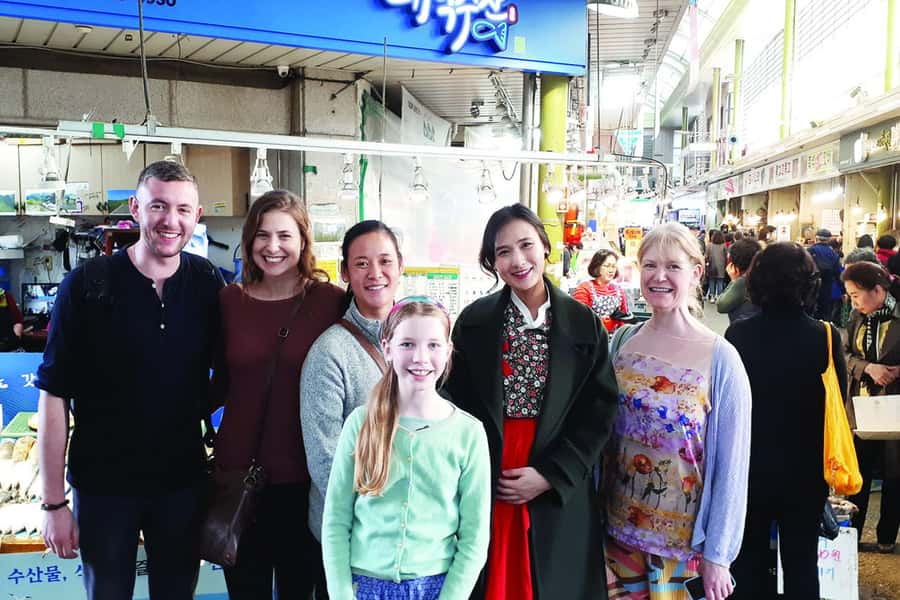
At the market, your host points out the foods needed for the class and explains what you are seeing. You also get time to sample street food. The market is described as popular but less touristy, and the walk through the Mangwon and World Cup market area gives you a look at ordinary food shopping rather than a staged food display.
I like this format because it connects the finished meal to the place where Korean food begins. You are not simply handed vegetables, seafood, meat, and fermented ingredients. You see how they are sold, hear what they are used for, and then put them to work.
The meeting point is outside Mangwon Station, exit 2. There is no hotel pickup or drop-off, so plan your route before the class. The activity lasts about three and a half hours and ends back at the same meeting point.
More Korean Cooking Classes around Seoul:
- Local Home Korean Cooking Class & Market Adventure in Seoul
★ 5.0 · 1,024 reviews - Master Korean traditional cooking with a Kimchi chef
★ 5.0 · 385 reviews - Seoul: Korean Cooking at Seoul Cooking Club!
★ 5.0 · 311 reviews
Mangwon Market: a useful start to the meal
The market walk is not just filler before the cooking. It is one of the strongest parts of the experience for anyone who wants more than a restaurant meal.
Your guide helps you locate the ingredients required for the class and explains Korean food culture along the way. You might see items that are difficult to identify on your own, and the guide gives them context before you encounter them in the kitchen. Street food samples add a tasting element without turning the market stop into a long food crawl.
The market also helps you understand the balance of Korean meals. Fresh produce, seafood, meat, sauces, and fermented foods all play different roles. Later, when you sit down to a Hanjeongsik meal, the many small side dishes make more sense because you have already seen the kind of ingredients that support the table.
Keep in mind that this is a walking market visit, followed by a walk to the class venue. Wear shoes that are comfortable for several hours on your feet. The exact amount of market tasting can vary, so do not arrive expecting a full meal before the cooking begins.
Inside the local home kitchen
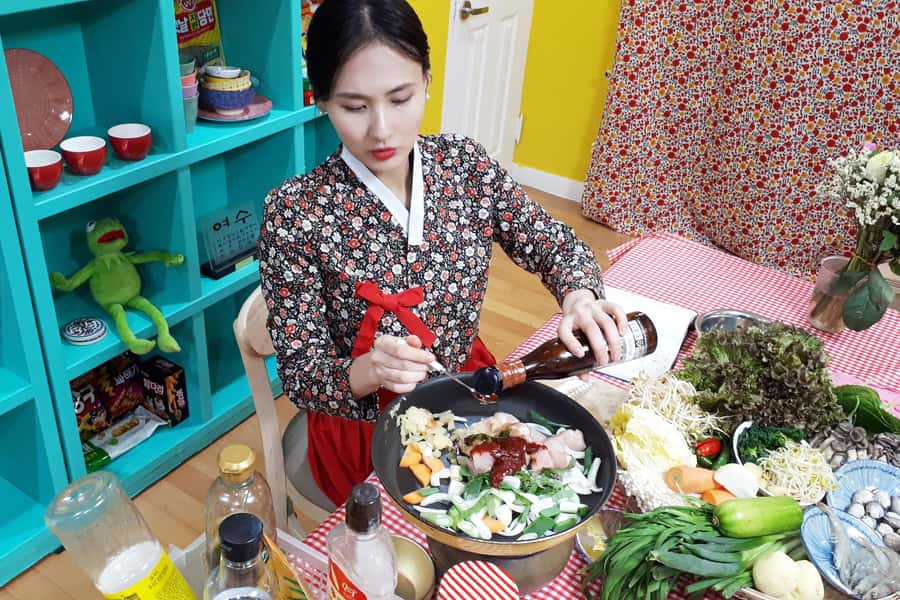
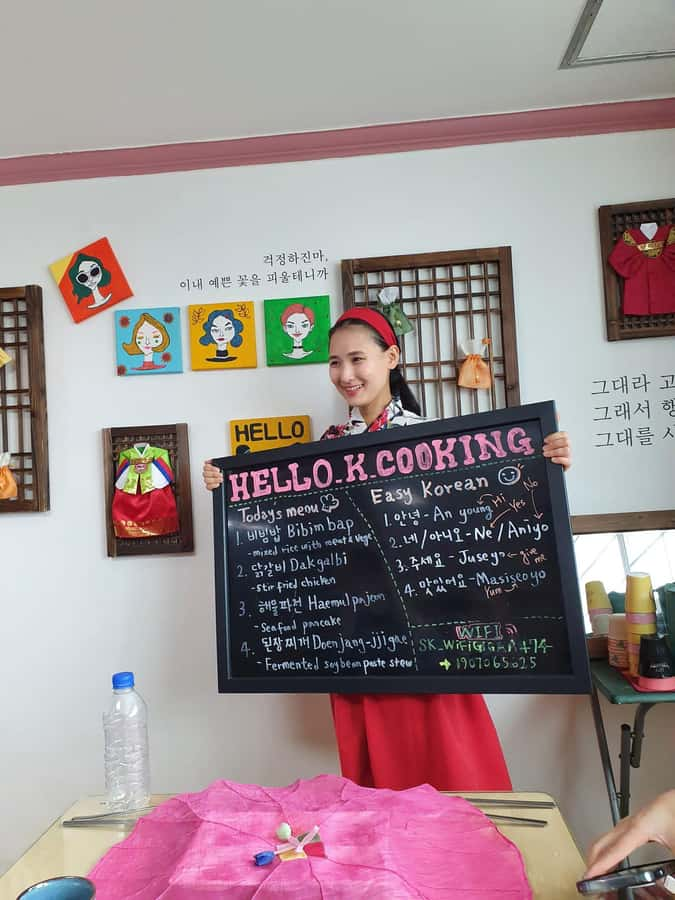
After the market, you head to a local home for the class. A welcome tea or drink gives the group time to settle in, and the host teaches a few basic Korean phrases. This is a small touch, but it helps turn the class into a cultural exchange rather than a recipe demonstration.
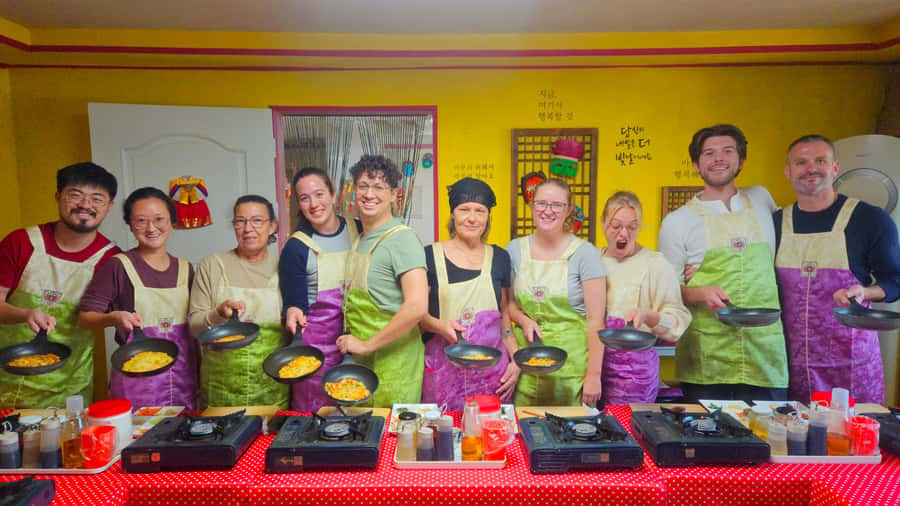
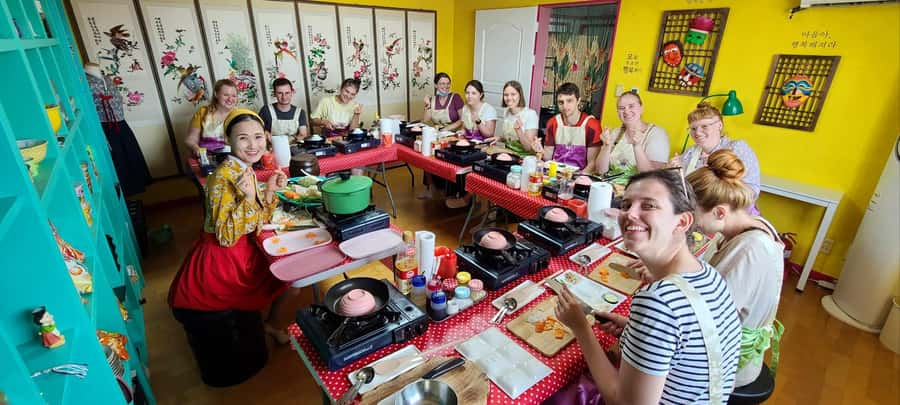
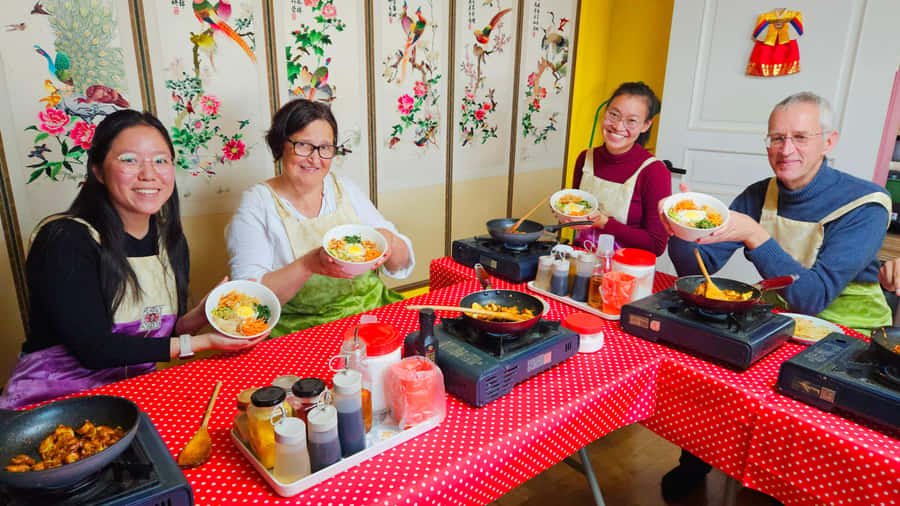
The kitchen format is hands-on. You do not merely watch a chef chop and stir while standing at the back of a room. Several people who took the class described having their own cooking space and preparing the dishes themselves. That makes the session useful even if you are a complete beginner.
The hosts are praised for explaining each step clearly and keeping everyone involved. Sarah is described as energetic and well organized, while Sara and Junghee are also associated with warm, humorous hosting. Since the instructor can be Sarah, Sara, Junghee, or another host, your exact personality match may vary, but the format remains the same: an English and Korean guided lesson for a group of up to 10.
That group size is a good compromise. You get the social fun of cooking with other people, but the class is not so large that you disappear behind a crowd. If you have a question about seasoning, timing, or technique, you should have a reasonable chance to ask it.
Four Korean dishes, four different lessons
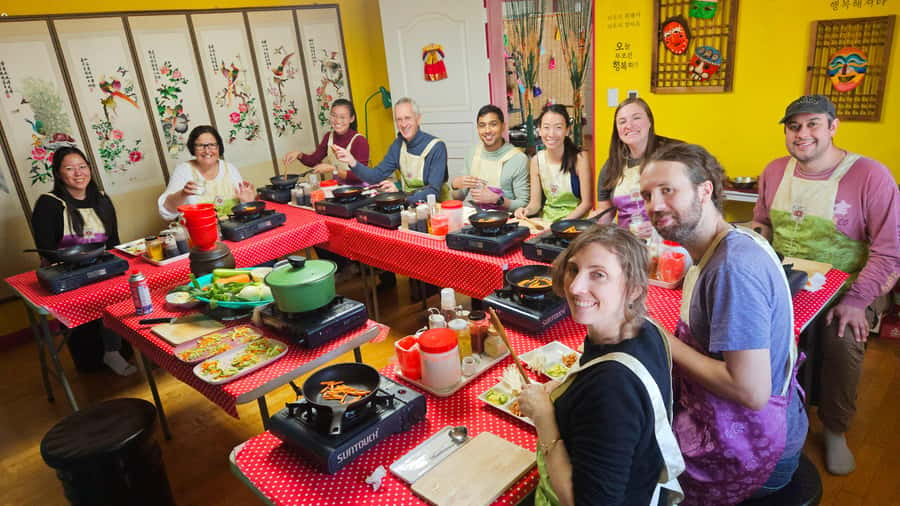
The menu gives you a broad introduction to Korean home cooking.
Bibimbap combines rice, meat, and vegetables. It is a good teaching dish because you can see how separate ingredients come together in one bowl. The lesson also shows the appeal of Korean meals: varied textures, strong seasoning, and a careful mix of hot, savory, and fresh elements.
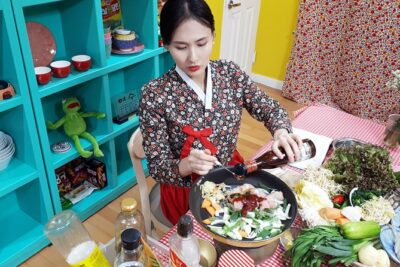
Dakgalbi is stir-fried chicken. This gives you a chance to work with heat, sauce, and the timing needed to cook several ingredients together. The dish is familiar enough for many beginners to understand, but it still introduces Korean flavor combinations.
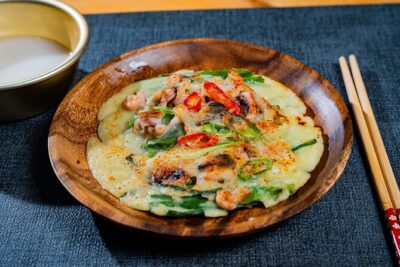
Haemul-pajeon is a seafood and green onion pancake. This is likely to be the most playful part of the class, since shaping and flipping a pancake adds a little drama to the cooking. The dish also highlights the Korean fondness for crisp edges and shared savory foods.
Doenjang-jjigae is a stew made with fermented soybean paste. It provides a useful introduction to one of Korea’s defining flavors. Doenjang has a strong, savory character, so learning how it is used in a broth gives you a better feel for Korean food than simply tasting it in a restaurant.
Together, these four dishes make the class feel substantial. You are not spending three and a half hours learning one recipe and waiting around. You work with rice, meat, seafood, vegetables, pancakes, and stew, then sit down to eat the results.
More Cooking Classes with a Market Tour in Seoul:
- Seoul: Authentic Korean Cooking Class and Market Tour
★ 5.0 · 6 reviews - Hanoi Cooking Class: Culture, Local Market & Meaning CSR Impact
★ 5.0 · 5,147 reviews - 5 Traditional Dishes Hanoi Cooking Class with Market Trip
★ 5.0 · 4,890 reviews - Cooking Class and Lunch at a Tuscan Farmhouse with Local Market Tour from Florence
★ 5.0 · 4,831 reviews
Hanjeongsik turns cooking into a shared meal
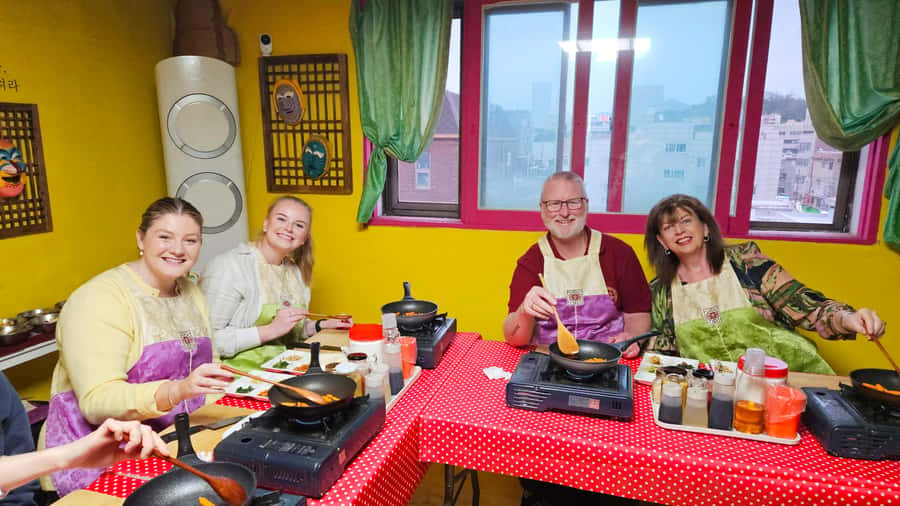
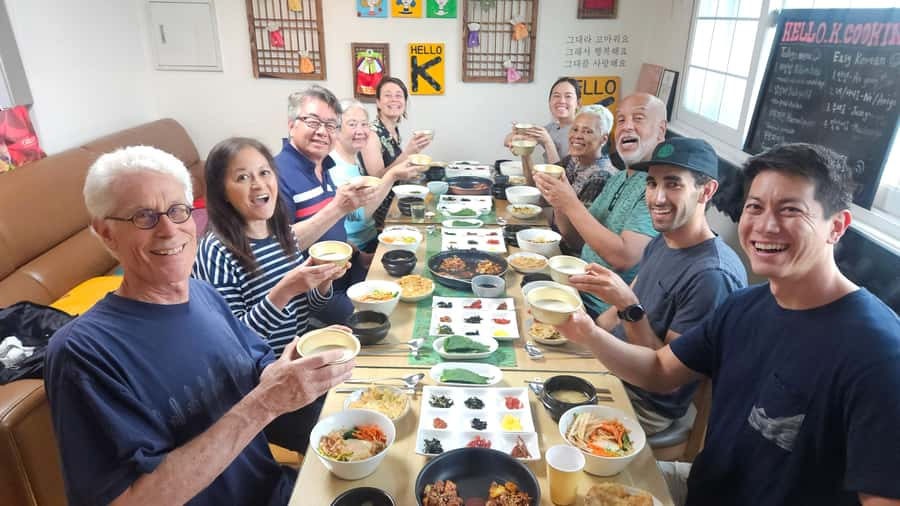
The final meal is more than the four dishes you prepare. Your host provides a Hanjeongsik-style table with more than 10 side dishes, rice, seasonal fruit, and rice wine.
Hanjeongsik is a traditional Korean course meal built around many small dishes. The arrangement lets you taste a range of flavors in one sitting, from fermented and savory foods to lighter vegetable sides. It also explains why Korean meals are often social and shared rather than served as one large plate per person.
This is where the class earns much of its value. You get the satisfaction of eating food you helped prepare, but you also receive a wider picture of Korean dining customs. The side dishes are not an afterthought. They show how a meal can offer several tastes and textures at once.
Rice wine is included, along with water. If you do not drink alcohol, the class still includes plenty of food and tea, but you may want to tell the host about any preference in advance.
Tal masks and the cultural touches
The Tal mask activity adds a visual link to Korean heritage festivals. You get to try on an artful Tal mask, which gives the session a playful break from chopping, mixing, and cooking.
The mask is not the main event, and it should not be the reason you book the class. Still, it adds variety and gives you a cultural detail that would be easy to miss during a standard restaurant visit. Along with the Korean phrases, market explanations, and Hanjeongsik meal, it helps the class cover more than food technique.
The strongest cultural moments come through conversation. The hosts explain ingredients and daily food customs while guiding the cooking. Several participants found the hosts especially good at including the whole group, keeping the mood light without letting the class lose its focus.
What the three and a half hours feel like
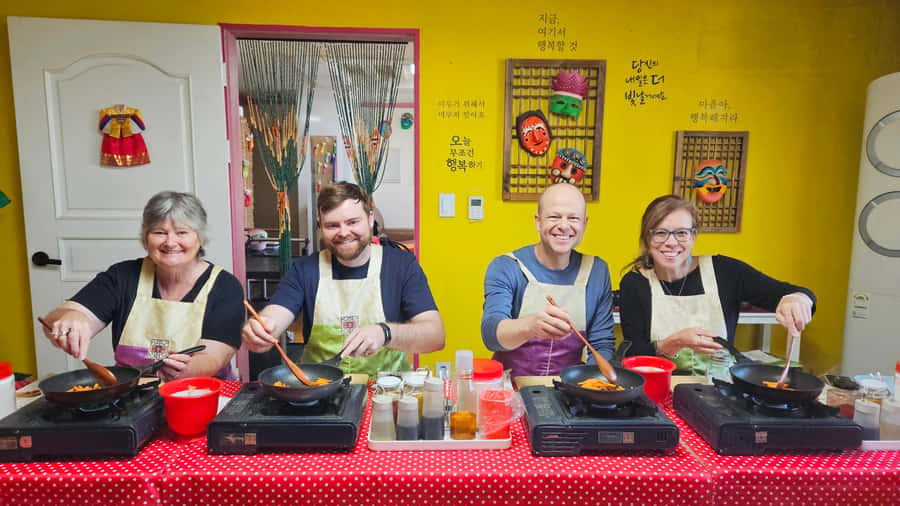
The schedule has a natural rhythm:
- Meet outside Mangwon Station, exit 2.
- Walk through the local market and taste street food.
- Travel to the home cooking venue.
- Enjoy a welcome drink and learn a few Korean phrases.
- Prepare the four dishes with the chef.
- Sit down for the Hanjeongsik meal, side dishes, fruit, and rice wine.
- Return to the meeting point.
The timing is long enough for real participation but short enough to fit into a day of sightseeing. I would avoid booking another tightly timed activity immediately afterward. Market walks, cooking, eating, and group conversation can take the full three and a half hours.
The experience is offered at different starting times, so check the available session before planning the rest of your day. Since the activity begins and ends at Mangwon Station, it is easy to treat it as one part of a Seoul day rather than a full-day excursion.
Price, group size, and practical value
At $98 per person, this is not a cheap meal. It is also not simply a meal. The price includes the market tour, street food samples, ingredients, equipment, a professional chef-led class, a full meal with side dishes, rice wine, water, recipes, and photo and video service.
I see the value in the combination. A restaurant meal would cost less, but it would not give you market context, hands-on instruction, four recipes, or a host-led explanation of Korean food customs. A cooking class with only one or two dishes might also cost less, but this menu gives you more variety.
The small group matters. With a maximum of 10 people, you are paying for access to the host as well as the food. If the group fills, the class will still be social, but the experience should remain more personal than a large demonstration.
The recipes are an especially useful part of the price for home cooks. You can try to recreate the dishes after returning home, though the availability of Korean ingredients will vary by country. One practical improvement would be a small printed recipe booklet. Recipes are provided, including digitally through WhatsApp according to one participant, but a paper handout would make the memory easier to keep in a suitcase.
Who should book this experience
This class fits you best if you like food, conversation, and practical cultural activities. It is a good pick for couples, friends, solo visitors who enjoy small groups, and families with older children who can manage several hours of walking and cooking.
You do not need serious kitchen experience. The host guides beginners through the recipes, and the cooking stations make it possible for participants to work directly rather than only watch.
It may not suit you if you want a quiet, private meal, a fast market stop, or a class focused on advanced culinary technique. It is also less convenient if you are staying far from Mangwon and do not want to arrange your own transport.
Tell the local host about allergies or dietary restrictions before the class. The information provided does not promise that every restriction can be accommodated, so this is worth checking before you reserve.
Should you book it?
I would book this class if you want to understand Korean food from market stall to dinner table. The market walk gives the cooking a sense of place, the four dishes provide plenty of hands-on work, and the Hanjeongsik meal lets you experience the wider Korean table.
The main cautions are the $98 price, the required trip to Mangwon Station, and the stairs to the local home. If those are manageable, this is a strong choice for an active food experience, especially if you want recipes and stories to take home rather than just another restaurant meal.
FAQ
Where does the cooking class begin?
Meet your guide outside Mangwon Station at exit 2. The activity ends back at the same meeting point.
How long does the experience last?
The experience lasts about three and a half hours. Starting times vary, so check availability when booking.
What dishes will I cook?
You will prepare bibimbap, dakgalbi, haemul-pajeon, and doenjang-jjigae.
Is the market visit included?
Yes. The experience includes a local market tour, ingredient shopping for the class, and samples of street food.
What is included with the meal?
The meal includes the dishes you prepare, more than 10 side dishes in a Hanjeongsik-style spread, rice, seasonal fruit, rice wine, and water.
Is hotel pickup available?
No. You are responsible for getting to and from Mangwon Station because hotel pickup and drop-off are not included.
What languages are spoken?
The instructors speak English and Korean.
Are dietary restrictions and allergies accepted?
You should contact the local host about dietary restrictions and allergies before booking. The available information does not guarantee that every request can be accommodated.
More Home Cooking Classes in Seoul
- Khmer Cooking Class at a Local’s Home in Krong Siem Reap
★ 5.0 · 2,731 reviews - Porto: Pastel de Nata Cooking Class with Grandma’s Recipe
★ 5.0 · 1,565 reviews - Siem Reap: Khmer Cooking Class at a Local’s Home
★ 5.0 · 1,108 reviews - Marrakech: Moroccan Cooking Class with a Local Family
★ 4.9 · 668 reviews
New cooking classes around Seoul
- Seoul: Korean Kimchi Cooking Class in the Heart of the City★ 5.0 · 3 reviews
- Seoul: Premium Korean Feast Cooking Class★ 5.0 · 3 reviews
- Seoul: Taste of Korea, Authentic Home Style Cooking Class★ 4.9 · 166 reviews
- Seoul: Korean Cooking Class with Local Grocery Shopping★ 5.0 · 13 reviews
- (Seoul) Korean Cooking Class with a Professional Chef★ 5.0 · 14 reviews
- Seoul: Korean Home Visit, Cooking & Cultural Experience★ 5.0 · 2 reviews
- Seoul: Cooking Class and Tour with Michelin-Trained Chef★ 5.0 · 11 reviews
- Seoul: Authentic Korean Cooking Class and Market Tour★ 5.0 · 6 reviews
Seoul Cooking Classes, side by side.
Local Home Korean Cooking Class & Market Adventure in Seoul
Read our review →
Master Korean traditional cooking with a Kimchi chef
Read our review →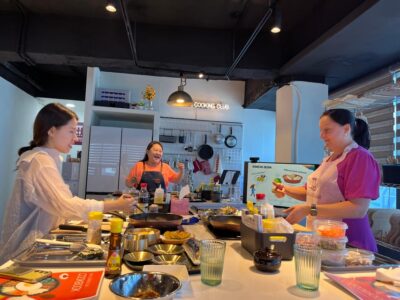
Seoul: Taste of Korea, Authentic Home Style Cooking Class
Read our review →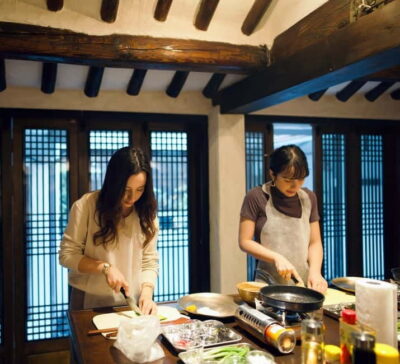
Seoul: Royal Seoul Cooking Class in a 100-Year-Old Hanok
Read our review →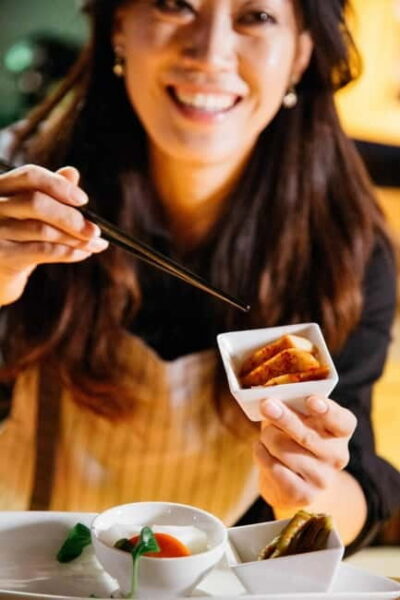
Seoul: Kimchi Dishes Cooking Class with Wine Pairing
Read our review →
Seoul: Temple Vegan Cooking Class & Oriental Medicine Tour
Read our review →
Seoul: Experience Korean Cooking in Modern Hanok Kitchen
Read our review →This kitchen also appears in