
Review · JAPAN
Narita Offering 3hour Japanese cooking experience.
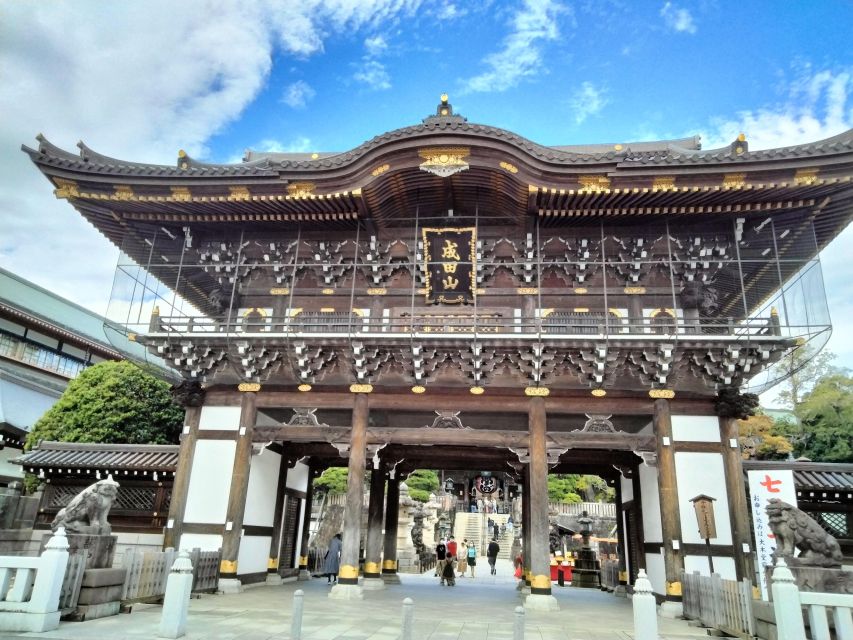
Narita’s best food experience may be the one that lets you work with your hands. In this 2.5-hour Japanese cooking class, Satoko Hirano guides you through pressed sushi, miso soup, salad, nerikiri confectionery, and local sake. The setting is unusual: a rented corner inside a Japanese sweets shop, just five minutes from Narita Sando and Shinshoji Temple.
I like the small cultural footprint here. You learn home cooking from Satoko, who has taught for more than ten years and draws on family traditions from Fukushima. I also like the easy setting, where Reiko and Satoko help you along without making cooking feel like a test. The one consideration is the price: at $98 per person, this is not a cheap meal, so it makes the most sense if you value instruction, conversation, and cultural context as much as the food.
Key points to know before booking
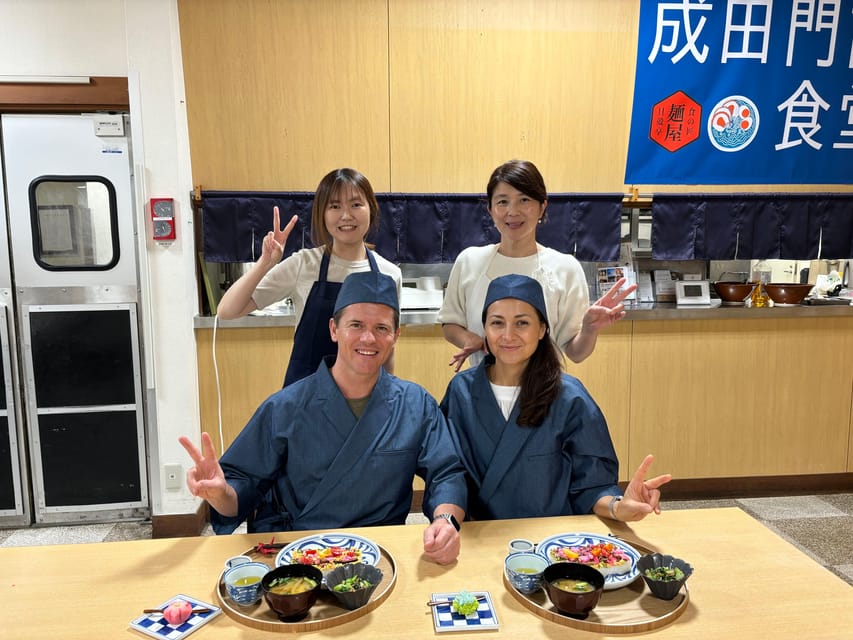
- A hands-on Japanese home-cooking menu: Prepare pressed sushi, miso soup, Japanese salad, nerikiri, and possibly a Japanese omelet.
- Satoko Hirano teaches from family tradition: Her approach centers on seasonal ingredients, soup stock, and everyday Japanese cooking.
- A convenient Narita location: The class is five minutes from Narita Sando and Narita Shinshoji Temple.
- The unusual venue adds local character: You meet inside Nagomi no Yoneya Monzenten, in a rented back corner of a Japanese sweets shop.
- Sake and dessert are part of the meal: You finish with Narita’s local sake and handmade nerikiri confectionery.
- A friendly option for beginners: English and Japanese support is available, and the class is wheelchair accessible.
Cooking Japanese food beside Narita’s old street
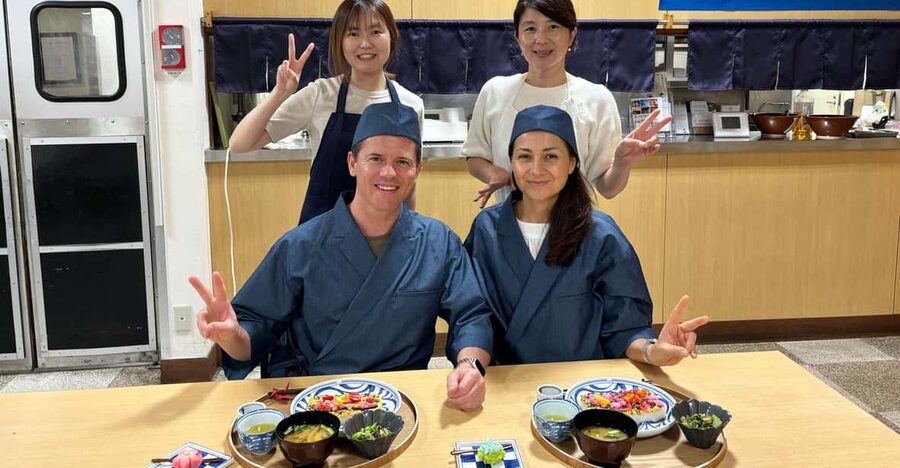
This experience works well because it pairs a practical activity with one of Narita’s easiest sightseeing areas. You do not need to travel across Tokyo or commit a full day to a cooking school. Instead, you walk five minutes from the traditional Narita Sando area and Shinshoji Temple, then enter Nagomi no Yoneya Monzenten.
The class takes place in a rented corner at the back of the Japanese sweets shop. That is a different feel from a polished culinary studio. You are close to a working local business, and the setting connects the lesson to the food culture around you. The venue may be compact, but that can help the class feel personal.
Your meeting instructions are simple. Go inside the shop and continue toward the back, where your host will be waiting. The activity ends at the same place, so you will not need to arrange a separate return transfer.
The location also makes this a useful choice on a Narita stopover or a day built around the temple district. You can schedule the class near a visit to Shinshoji Temple and a walk along Narita Sando. Check the available start times before booking, since the class does not list one fixed daily departure time.
More cooking classes around Japan:
- Ramen Cooking Class at Ramen Factory in Kyoto
★ 5.0 · 1,937 reviews - Ramen & Gyoza Cooking Class in Tokyo with Local Supermarket Visit
★ 5.0 · 823 reviews - Kyoto: Ramen Cooking Class at a Ramen Factory with Souvenir
★ 4.9 · 532 reviews
Satoko Hirano’s approach to Japanese home cooking
Satoko Hirano is a cooking teacher based in Chiba who has taught for more than ten years. She was born in Fukushima and grew up around her grandfather’s kimono store, where she saw her grandmother cook daily meals with seasonal ingredients while wearing a kimono.
That family detail helps explain the tone of the class. This is not presented as a chef-training session or a lesson in restaurant technique. It focuses on the kind of food served at a Japanese dinner table, with attention to soup stock, local vegetables, and the small choices that make simple dishes taste right.
Satoko’s cooking tradition is tied to the four seasons. In Japan, ingredients are often selected according to what is available at a particular time of year, and recipes reflect practical family habits rather than strict restaurant formulas. She continued learning about seasonal produce by visiting farmers near her home after leaving Fukushima.
You should expect that background to shape the lesson. Satoko can explain not only what to do, but why ingredients are used in a particular way. The class offers a look at food as part of daily life, not just a plate prepared for a photo.
Reiko is also involved in hosting the experience. The available feedback describes both Reiko and Satoko as exceptionally kind and quick to put participants at ease. That matters if you are unsure about your cooking skills or worried about following instructions in another language.
Making pressed sushi from the rice up
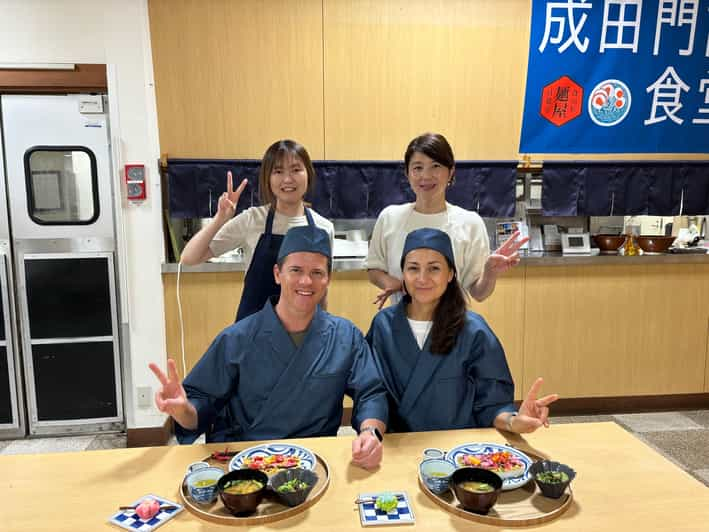
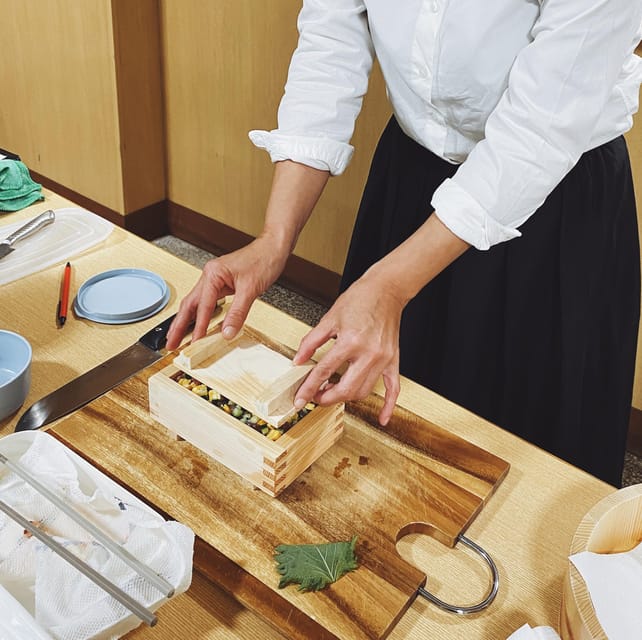
Pressed sushi is the main attraction. Unlike the hand-shaped sushi many people first associate with Japan, pressed sushi is formed by packing ingredients and sushi rice into a mold, then cutting it into neat pieces.
The class takes you through the process from the sushi rice onward. That gives you a better sense of how much care goes into a dish that can look simple when it arrives at a restaurant. You will work with the rice, prepare the components, and assemble the sushi rather than simply watching someone else do it.
This is a good dish for a beginner because the method is structured. You do not need advanced knife skills or years of kitchen experience to take part. Direct feedback from the class indicates that even people who do not cook often found the process easy to learn, with help available when needed.
The result is also useful beyond the class. Pressed sushi is a dish you can remember visually and recreate more easily than a complicated restaurant recipe. The lesson gives you a basic understanding of rice seasoning, texture, and presentation.
The supplied overview also includes a Japanese egg omelet among the dishes. The detailed menu describes pressed sushi, miso soup, and Japanese salad, so the exact role of the omelet may depend on the session. If the omelet is important to you, confirm the current menu when you book.
Miso soup, salad, and the everyday Japanese table
The class does not stop at sushi. You also prepare miso soup and a Japanese salad, the kinds of side dishes that commonly accompany a home-cooked meal.
Miso soup is especially useful as a lesson because its flavor depends on more than mixing miso into hot water. Satoko discusses soup stock, an essential part of Japanese cooking, and can show how the base supports the final flavor. For a visitor who mostly knows miso soup from restaurants, this is a chance to understand the foundation of the dish.
The salad adds another side to the meal and helps round out the menu. The purpose is not to create a huge feast with endless courses. Instead, you learn how several modest dishes work together: rice and fish or other sushi ingredients, a warm soup, a vegetable side, and a sweet finish.
That balance is part of the class’s value. You are not only learning a single popular food. You are seeing how a Japanese meal is assembled at home, where the appeal comes from variety, seasonality, and careful preparation.
Same kitchen, a different dish:
- Sushi Making Osaka! Popular Sushi Class in Japan!
★ 5.0 · 500 reviews - Kyoto: Ramen, Gyoza, and Onigiri Cooking Class
★ 5.0 · 445 reviews - Tokyo Tsukiji Fish Market Tour and Sushi Making Lesson
★ 5.0 · 390 reviews - Kyoto: Japanese Washoku Bento Small Group Cooking Class
★ 5.0 · 380 reviews
Nerikiri dessert and Narita sake
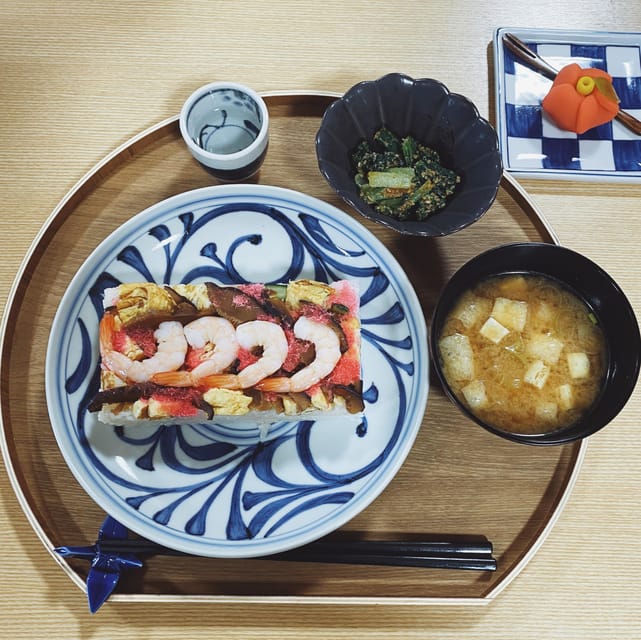
Dessert is a traditional Japanese sweet called nerikiri. These confectioneries are shaped and decorated with care, often reflecting seasonal themes. The class lets you prepare one yourself rather than simply buying a finished sweet from a shop.
Nerikiri gives the lesson a different rhythm after the savory dishes. The sushi and soup involve seasoning and cooking, while the confectionery asks for patience and attention to shape. It is a fitting finish in a sweets shop setting.
You also taste Narita’s local sake after making the food. This adds a regional note to the meal and gives you a chance to connect the cooking class with Chiba’s local produce and drink traditions.
Sake is included, but the information does not specify the quantity or provide a nonalcoholic alternative. If you do not drink alcohol, ask ahead about available substitutes. The same practical point applies to dietary restrictions, since no vegetarian, vegan, allergy, or ingredient-specific adaptations are listed.
A welcoming class for nervous beginners
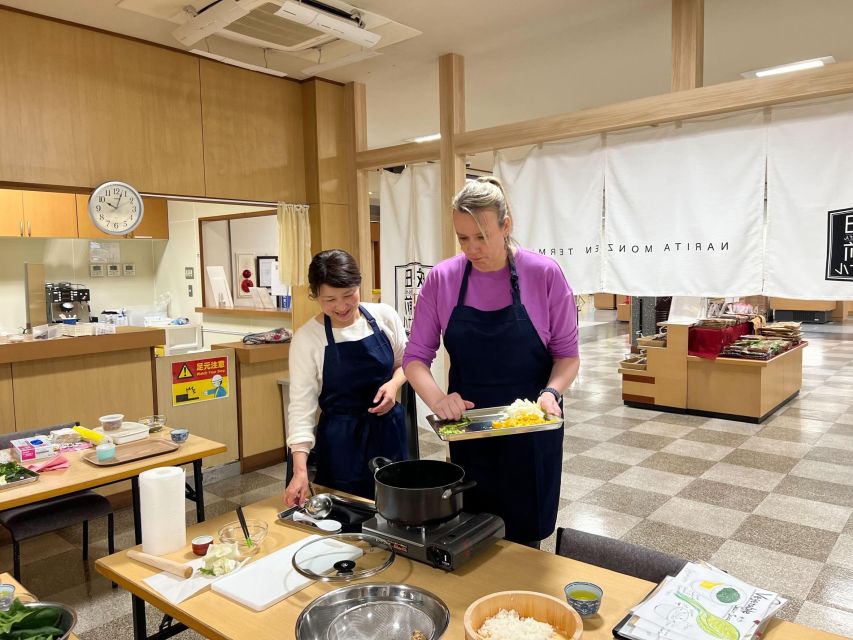
You do not need to arrive as a cook. The class is designed around basic Japanese cooking, and the instruction is intended to guide you through each step. The strongest practical benefit is the support from Satoko and Reiko, who can help if you lose track of a process or feel unsure about your technique.
The tone also appears relaxed. One detailed account describes plenty of laughter, easy conversation, and a quick sense of comfort with the hosts. That suggests this is not a silent demonstration where you simply watch a teacher work.
Language should be manageable for many international visitors. The host or greeter can communicate in English and Japanese. Still, cooking involves physical demonstration, so you may be able to follow along even when a culinary term is unfamiliar.
The class is wheelchair accessible, which makes it more usable than many hands-on food activities. The available information does not describe the exact layout, table height, or restroom arrangements, so you should contact the provider if you need specific accessibility details.
What $98 includes, and where the value lies
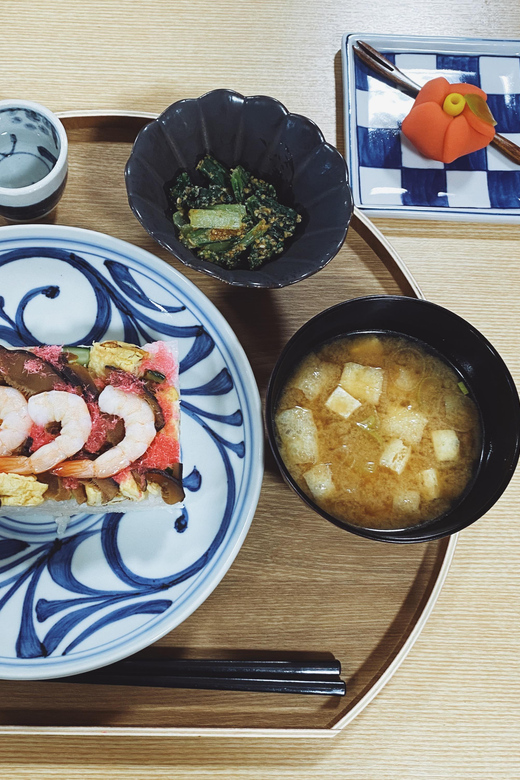
The listed price is $98 per person. Included are the cooking instruction and ingredients for pressed sushi, miso soup, Japanese salad, nerikiri confectionery, and sake.
That is a fairly serious price for a 2.5-hour activity. If your goal is simply to eat lunch, you can find cheaper options in Narita. You are paying for the class, the host’s time, the chance to prepare several dishes, and the conversation around Japanese home cooking.
I see the value most clearly for someone who wants an experience to remember after leaving Japan. You learn techniques rather than just consuming a meal, and the menu covers several parts of a traditional table. The location also saves time if you already plan to visit Narita Sando and Shinshoji Temple.
The value is weaker if you dislike group instruction, want a long professional kitchen session, or care only about eating. The experience lasts 2.5 hours, not a full culinary workshop, and the available details do not specify an advanced skill level or a large number of dishes beyond the listed menu.
You can reserve now and pay later, which helps if your Narita plans may change. Free cancellation is available up to 24 hours before the activity for a full refund. Check the current booking conditions and start times before you commit.
How to fit the class into a Narita day
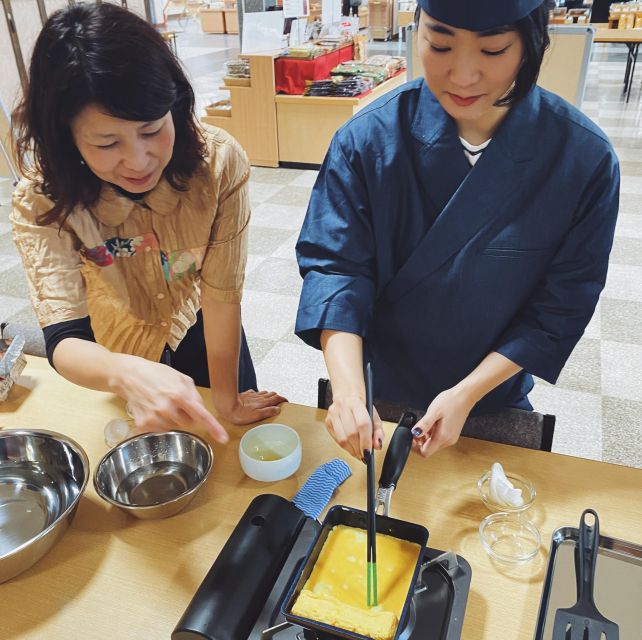
This class is easiest to plan as part of a Narita sightseeing day. Since the meeting point is near Narita Sando and Shinshoji Temple, you can place the cooking session before or after exploring those sights.
Allow enough time to locate Nagomi no Yoneya Monzenten and walk inside to the back corner. The meeting instructions do not describe an outdoor guide or a large sign for the class, so entering the shop and continuing to the rear is important.
A cooking class can also provide a useful pause during a temple-area visit. You move from walking and looking to sitting, preparing food, and sharing a meal. Since the activity returns you to the meeting point, you can continue exploring nearby afterward without a complicated transfer.
The start time matters more than transportation. Narita is easy to reach from the airport area, but your best schedule depends on your arrival, luggage, and onward plans. Do not book a tight connection after the class. The stated duration is 2.5 hours, and cooking sessions are more enjoyable when you are not watching the clock.
Who will enjoy this experience most
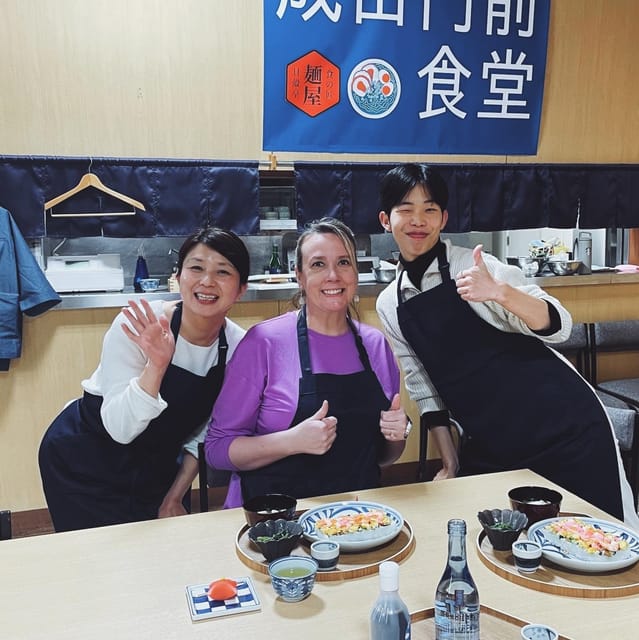
I would choose this for you if you want a personal introduction to Japanese food that goes beyond sushi at a restaurant. It suits curious first-time visitors, couples, families, and solo participants who enjoy making things and talking with local hosts.
It is also a good match for anyone interested in seasonal Japanese cooking. Satoko’s family background and focus on local ingredients give the class a stronger cultural angle than a basic recipe lesson.
Beginners should feel comfortable booking. The available feedback describes the food as delicious and the instruction as easy to follow, even for someone with little cooking experience. That is a better fit for most visitors than a demanding class aimed at trained cooks.
You may want to skip it if you need a strictly defined menu, have significant dietary restrictions, or want a lesson devoted only to sushi. The menu includes several parts of a Japanese meal, and the exact inclusion of the omelet is not fully clear from the available details.
Should you book the Narita cooking class?
Book it if you have at least half a day in Narita and want a friendly, hands-on way to understand Japanese home cooking. The combination of Satoko’s family traditions, pressed sushi, soup stock, nerikiri, sake, and the convenient temple-area location gives the experience more substance than a quick food demonstration.
At $98, it is a treat rather than a bargain meal. I would spend the money if you value local conversation and practical instruction, especially if this is your first visit to Japan and you want something you can take home as a skill.
Skip it if your schedule is rushed, your main aim is low-cost dining, or you need confirmed dietary changes that are not listed. For everyone else, this is a warm, manageable introduction to everyday Japanese food in a convenient corner of Narita.
FAQ
Where does the Japanese cooking class meet?
Meet at Nagomi no Yoneya Monzenten. Go inside the shop and continue to the back, where your host will be waiting.
How long does the experience last?
The cooking experience lasts 2.5 hours. Starting times vary, so check availability when booking.
How much does the class cost?
The listed price is $98 per person.
What food will I prepare?
You will prepare Japanese pressed sushi, miso soup, and Japanese salad. The overview also mentions a Japanese egg omelet.
Is dessert included?
Yes. You will prepare a traditional Japanese sweet called nerikiri.
Is sake included?
Yes. Narita’s local sake is included after the cooking portion.
Who teaches the class?
Satoko Hirano is the Japanese cooking teacher. Reiko also helps host the experience.
What languages are available?
The host or greeter can communicate in English and Japanese.
Is the activity wheelchair accessible?
Yes, the activity is listed as wheelchair accessible.
Can I cancel for a full refund?
You can cancel up to 24 hours in advance for a full refund. You can also reserve now and pay later.
New cooking classes around Japan
- Shinjuku Tokyo: Authentic Japanese Home-Style Culinary Class★ 4.9 · 125 reviews
- Shibuya Tokyo: Onigiri & Tamagoyaki Cooking Class★ 5.0 · 4 reviews
- Ramen Making from Scratch +Akihabara Tour –Cooking Class★ 5.0 · 25 reviews
- Okonomiyaki&Takoyaki for Families:Osaka Street Food Festival★ 5.0 · 4 reviews
- Osaka Sake Tasting with Takoyaki Cooking★ 5.0 · 156 reviews
- Osaka: Sashiko Japanese Craftsmanship Workshop★ 5.0 · 31 reviews
- Osaka: Japanese Cooking Class with Matcha Experience★ 5.0 · 4 reviews
- Osaka Okonomiyaki Cooking Experience for Families & Groups★ 4.9 · 8 reviews
Japan Cooking Classes, side by side.
Ramen Cooking Class at Ramen Factory in Kyoto
Read our review →
Ramen & Gyoza Cooking Class in Tokyo with Local Supermarket Visit
Read our review →
Sushi Making Osaka! Popular Sushi Class in Japan!
Read our review →
Tokyo Tsukiji Fish Market Tour and Sushi Making Lesson
Read our review →
Kyoto: Japanese Washoku Bento Small Group Cooking Class
Read our review →
Osaka: Ramen and Gyoza Cooking Class in Dotonbori
Read our review →
Tokyo: Easy Ramen Cooking Experience in Kabukicho, Shinjuku
Read our review →This kitchen also appears in