Review · TBILISI
Small-Group Khinkali and Khachapuri Cooking Class in Tbilisi
Khinkali and khachapuri are the two Georgian foods you should understand before leaving Tbilisi, and this class lets you make both in one sitting. You shape the pleated dumplings, prepare the cheese filling, and sit down to eat what you made with wine, salad, and farm cheese.
I like the central downtown location and the chance to meet people around a shared table. I also like the relaxed teaching style reported from chefs such as Vladimir, Artem, and Seva, who explain the food with humor and stories about Georgian feasts. The main catch is that the class takes place in the restaurant dining area, not the kitchen, and the promised six-person limit has not always held.
Key points to know before booking
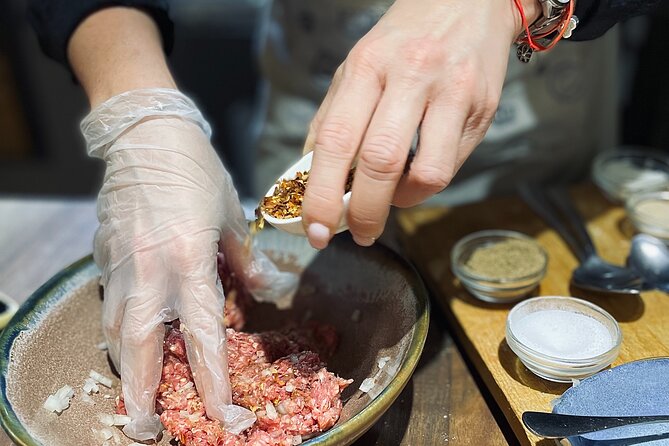
- You make two Georgian classics: Khinkali, with veal, cheese, or mushroom filling, and Imeretian khachapuri.
- The class is held at a restaurant table: You do not work inside the kitchen or handle the final boiling and baking.
- Wine and a full meal are included: Expect Georgian wine, tomato salad, farm cheese, khinkali, and khachapuri.
- The advertised group size is six: Actual groups have sometimes been larger, with reports ranging from nine to about 14 people.
- The price is modest: At $27.50 per person, this combines a cooking lesson, dinner, and drinks at a useful price.
- Plan for some waiting: Timing and organization can suffer when one chef handles more than one group.
Why khinkali and khachapuri make a smart Tbilisi food class
You can eat khinkali and khachapuri all over Georgia without taking a class. The value here is learning what goes into them, then tasting the result while the method is still fresh in your mind.
Khinkali are Georgian dumplings, usually filled with meat, though cheese and mushroom versions are also listed. The filling sits inside a round piece of dough, and the dough is pinched into the familiar pleated top. The finished dumpling holds savory juices, so the proper way to eat it requires a little care.
Khachapuri is Georgia’s famous cheese bread. This class focuses on the Imeretian style, a round cheese-filled version rather than the boat-shaped Adjarian khachapuri topped with an egg. That distinction matters if you have come expecting the long boat shape often shown in photographs.
You learn that these dishes depend on a few basic things: dough, filling, shaping, and heat. The workshop is useful because Georgian food can look harder to make than it is. The pleating takes practice, but the class gives you a simple method to try at home.
More cooking classes around the world:
- Half-Day Thai Cooking Class at Organic Farm in Chiang Mai
★ 5.0 · 19,087 reviews - Florence: Pasta Cooking Class with Unlimited Wine
★ 4.9 · 10,285 reviews - 3 in 1 Cooking Class near Navona: Fettuccine, Ravioli & Tiramisu
★ 5.0 · 7,376 reviews
Arriving at Griboedov Street in central Tbilisi
The meeting point is St.Bunny31 on Griboedov Street, in the heart of downtown Tbilisi. The location is near public transportation, which makes it practical to fit the class between sightseeing stops.
The activity begins and ends at the same place. That is helpful if you are building a day around central Tbilisi and do not want to spend extra time finding a second location after dinner.
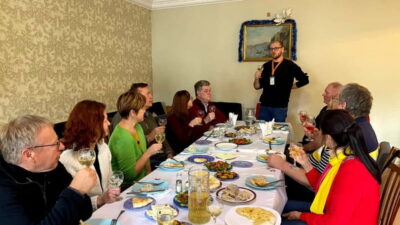
The class is held inside the restaurant hall. You sit at a table with the instructor and other participants while the food is prepared in stages. This gives the event a social, lunch-or-dinner feel rather than the setup of a professional cooking school.
That setting has a clear benefit: you eat in a comfortable dining space and can talk easily with the people around you. The tradeoff is just as clear. You will not move into the kitchen to watch every hot cooking step, and you will not personally boil the khinkali or bake the khachapuri.
The opening table: wine, cheese, and Georgian tomatoes
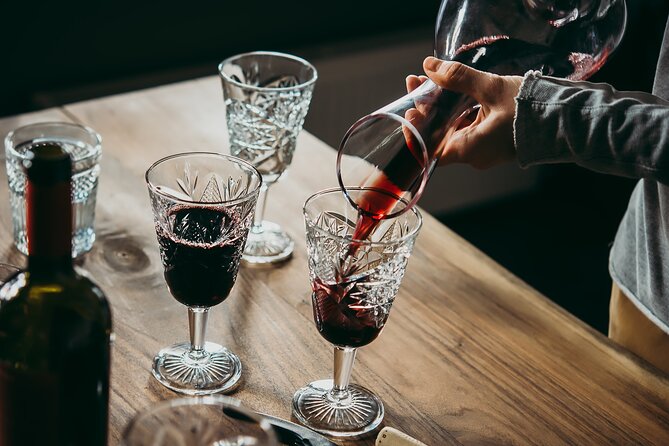
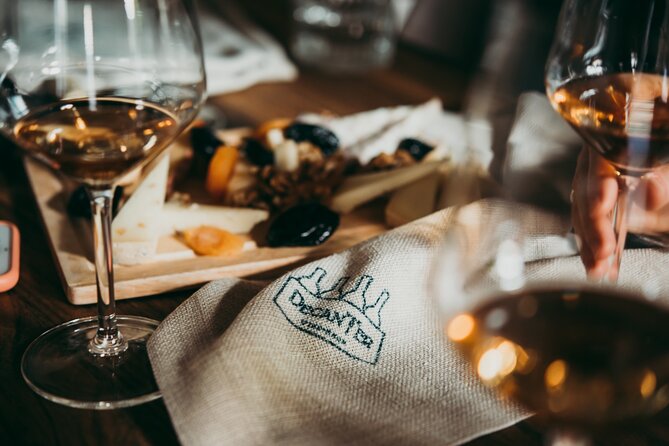
The class begins with simple food and drink while the cooking gets underway. Georgian wine is included, along with a vegetable salad made with Georgian tomatoes and a plate of farm cheeses.
This opening spread is not just decoration. It gives you something to eat during the pauses between steps, and it turns the class into a proper meal rather than a short demonstration followed by a small sample.
The portions can depend on the size of the group. With a smaller group, the meal may feel generous. When more people are placed at the table, shared salad and cheese can feel less substantial. If you are hungry, arrive ready to eat the dishes you make, since the finished khinkali and khachapuri form the main part of the meal.
Wine is part of the experience, but the available choice may not always suit everyone. One account describes red wine being served without a white option. If you cannot drink red wine, keep that limitation in mind before booking.
Making khachapuri from dough to cheese
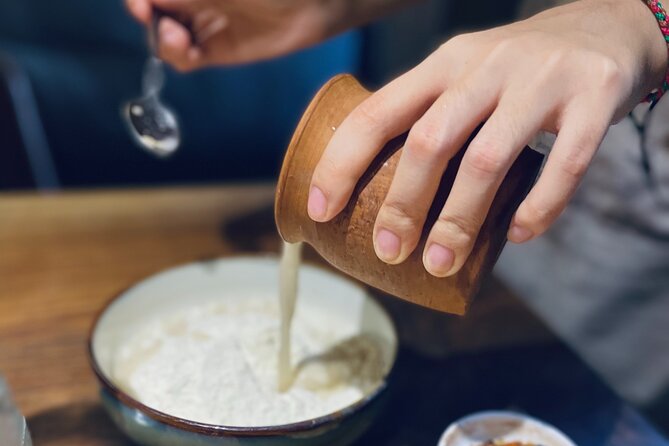
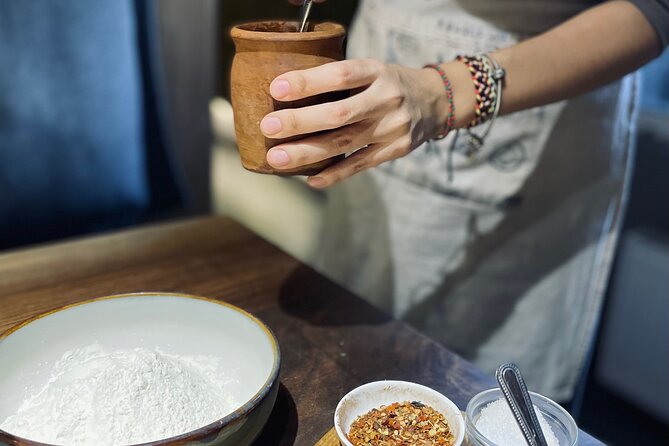
The khachapuri portion gives you one of the more hands-on parts of the class. You prepare the dough, make the filling, spread the cheese, and bring the bread to readiness.
The focus on Imeretian khachapuri is useful because it shows a Georgian dish that is practical to recreate at home. You are not just watching someone assemble a finished bread. You handle the dough and cheese yourself, then see how the pieces come together.
The wording about preparing the dough needs a little care. Most accounts describe participants making the khachapuri dough and filling, while one account says the khinkali dough was already prepared. That fits the general shape of the class: the khachapuri work is more hands-on, while some dough work and hot cooking are handled by the staff.
You also need to know that this is not an Adjarian khachapuri lesson. If your main goal is to make the boat-shaped bread with an egg in the middle, this class may not match your expectation. You will work with the Imeretian version, a round cheese bread.
Same kitchen, a different dish:
- Florence: Pasta & Tiramisu Cooking Class with Unlimited Wine
★ 4.9 · 6,708 reviews - Florence: Pasta Cooking Class with Unlimited Wine
★ 5.0 · 6,413 reviews - Hanoi Cooking Class: Culture, Local Market & Meaning CSR Impact
★ 5.0 · 5,147 reviews - 5 Traditional Dishes Hanoi Cooking Class with Market Trip
★ 5.0 · 4,890 reviews
Folding khinkali and learning the small tricks
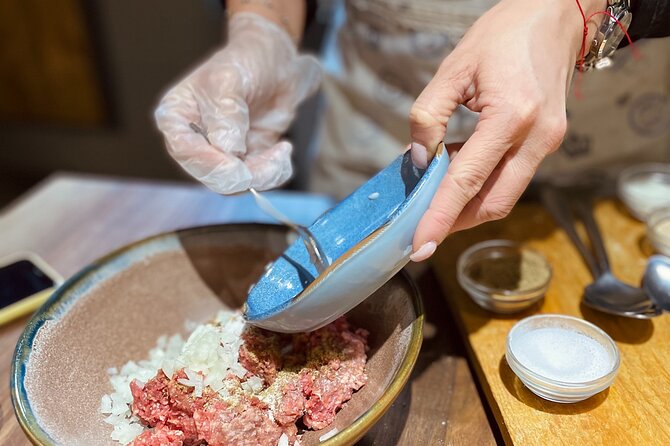
The khinkali session is likely the most memorable part for many people. The chef explains how to make the dough and filling, then shows you how to fold the dumpling into its traditional cinched shape.
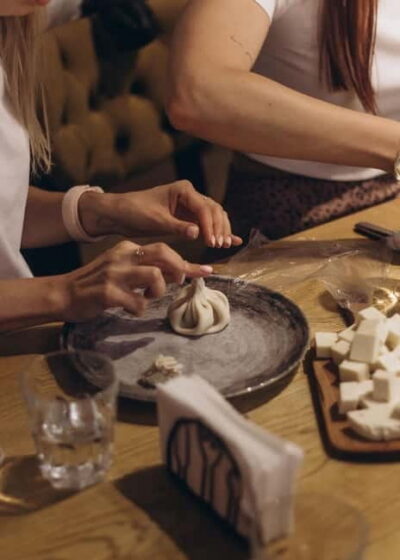
You take turns working with the filling and dough, then practice the pleats yourself. This is the point where the class becomes less about watching and more about using your hands. Your first dumplings may look uneven. That is part of the fun, and the instructor’s role is to show you a repeatable technique rather than demand perfect restaurant shapes.
The filling may be veal, cheese, or mushrooms. The exact filling served can depend on the class, but the listed menu covers those three options. The chef also explains cooking details and shares stories about Tbilisi and Georgian food traditions while you work.
Several instructors are named in the feedback, including Vladimir, Artem, and Seva, sometimes written as Sewa. The strongest praise centers on patience, humor, and clear step-by-step teaching. Seva is especially associated with explaining Georgian feasts and toasting traditions, while Artem is described as adding historical background and a friendly tone.
The class works best when you enjoy learning in a group. There are pauses while the dough, filling, or cooked food is handled by the staff, so conversation becomes part of the activity. If you want constant hands-on work, you may find the pace uneven.
What you actually cook yourself
This is a partial cooking class, not a full kitchen workshop. You help make the khachapuri dough and filling, spread the cheese, and fold the khinkali. The restaurant staff handles the hot cooking behind the scenes.
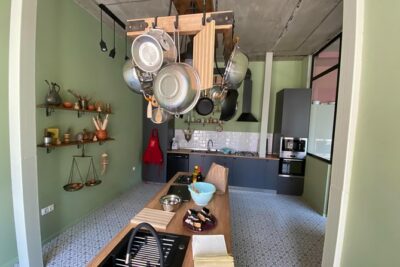
That division is understandable. The event takes place in the dining hall, and the provider notes that sanitary standards do not allow participants into the restaurant kitchen. Still, it changes the experience. You do not personally boil the dumplings or bake the bread, and some people may feel they have watched the final stage rather than completed it.
The amount of individual work can also change with the group size. In a small class, you may have more room and more time with the dough. In a larger group, people may take turns making one part of the recipe, while others watch.
If you want a relaxed introduction to Georgian dishes, this arrangement works well. If you want every person to prepare a complete portion from start to finish, ask about the expected group size before booking and set your expectations accordingly.
Eating the finished khinkali and khachapuri
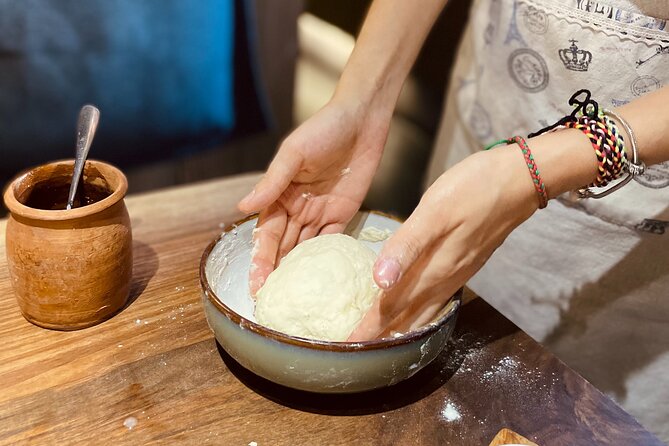
After the hot cooking is done, the food comes back to the table for the meal. You eat the khinkali and khachapuri you helped prepare, along with the salad, cheese, and wine.
This is where the class earns much of its value. You are not leaving with a small tasting plate. The food is intended to make up a full meal, and several accounts describe having plenty to eat. The dishes also taste more personal because you have just folded the dumplings and handled the cheese bread yourself.
The meal is social by design. You may be seated with other people from different places, and the table format gives you time to talk between cooking steps. Solo visitors can find this especially useful, since the meal creates an easy setting for meeting people without needing to arrange a separate dinner.
Families can also make it work. The experience has been used by two adults with children aged two and eight, with a full meal and a glass of wine for the adults. Very young children may not take part in every step, but the class can suit families who are comfortable with a shared restaurant table and a roughly two-hour activity.
The group-size issue matters
The advertised maximum is six participants. That is an excellent size for a practical class because everyone should have a fair chance to shape dough, fill dumplings, and ask questions.
In practice, the group size has not always matched that promise. Some sessions have had nine or ten people, another had 13, and one account describes around 14 people beginning the next session. The provider has explained that tourist-season demand can lead to larger groups.
This is the biggest point I would clarify before booking. A group of two to six can feel personal and hands-on. A group near 13 changes the experience into a restaurant demonstration with shared participation. You may still have a good time, but you should not assume that the listed maximum is guaranteed.
Larger groups also create service problems. One chef may need to move between sessions, food may arrive in stages, and waiting periods can grow. If a small group is important to you, contact the provider before paying and ask for the expected number at your chosen time.
Timing, delays, and the two-hour promise
The planned duration is about two hours. That is a good length for a cooking activity followed by a meal, but actual timing has varied.
Some sessions have finished close to the expected schedule. Others started about 25 minutes late or ran to roughly three hours including dining. A delayed start is especially inconvenient if you have museum tickets, a dinner reservation, or an evening transfer planned.
The cause appears to be organization rather than the food itself. When the same chef handles parallel groups, instruction can slow down. There may also be gaps while staff bring ingredients or remove cooked dishes.
I would leave extra space around this activity. Treat the two-hour figure as an estimate, not a hard end time. That small adjustment can keep a pleasant cooking lesson from turning into a schedule problem.
Is $27.50 good value in Tbilisi?
At $27.50 per person, this is a fairly priced way to combine food, a lesson, wine, and a central location. You receive more than a restaurant dinner, but less than a full professional kitchen course.
The price is strongest when the group stays small and the meal is generous. You get instruction, a chance to practice two famous Georgian dishes, drinks, side dishes, and the food you make. A casual Georgian dinner with wine can already take a meaningful part of that amount, so the added activity makes the package useful.
The value drops if you expect a private lesson, complete control of every cooking stage, or a guaranteed six-person group. You are paying for a social workshop, not a one-on-one chef session.
Free cancellation is available if you cancel at least 24 hours before the start time. Changes or cancellations inside that window are not refunded, so keep the cutoff in mind when arranging a busy Tbilisi schedule.
Who should book this Georgian cooking class?
I would recommend it to first-time visitors who want a friendly introduction to Georgian food without committing to a long course. It also suits solo visitors, couples, families with older children, and people who enjoy eating with new people.
It is a good pick if you want to learn the basic shapes and fillings, hear stories about Georgian meals, and leave with a full dinner. The central location and mobile ticket make it easy to add to a city day.
I would be more cautious if you are a serious home cook seeking detailed technique. You will not handle the final boiling and baking, and the food history may be lighter than you want during waiting periods. The class is also less suitable if you need a strictly small group, a choice of wine color, or a fixed finish time.
FAQ
How long does the khinkali and khachapuri class last?
The planned duration is about two hours. Some sessions have run longer, including one that lasted about three hours with dining, so leave extra time afterward.
Where does the class begin and end?
It begins at St.Bunny31 on Griboedov Street in Tbilisi and ends back at the same meeting point.
What food and drink are included?
The class includes khinkali, Imeretian khachapuri, Georgian wine, a vegetable salad, and farm cheeses. Khinkali fillings may include veal, cheese, or mushrooms.
Is the class held in the restaurant kitchen?
No. The workshop takes place in the restaurant hall at a table. Participants prepare parts of the dishes, while the restaurant staff handles the hot cooking in the kitchen.
How many people can join the class?
The advertised maximum is six participants. Actual sessions have sometimes been larger, with reported groups ranging from nine to about 14 people.
Can I cancel for a full refund?
Yes, if you cancel at least 24 hours before the experience start time. Cancellations or changes made less than 24 hours ahead are not refunded.
Should you book it?
Book this class if you want an affordable, social meal with a real chance to fold khinkali and prepare Imeretian khachapuri. The best version of the experience is a small group with a patient chef such as Vladimir, Artem, or Seva, plenty of food, and enough time for stories and questions.
Before booking, confirm the expected group size and remember that the cooking happens at a restaurant table, not inside the kitchen. If you accept those limits, this is a tasty and useful way to spend two hours in central Tbilisi. If you need a fully hands-on class with a firm schedule, look for a smaller private workshop instead.
New cooking classes around the world
- Shinjuku Tokyo: Authentic Japanese Home-Style Culinary Class★ 4.9 · 125 reviews
- Shibuya Tokyo: Onigiri & Tamagoyaki Cooking Class★ 5.0 · 4 reviews
- M.O.M COOKING CLASS★ 4.8 · 6 reviews
- Seville: Paella-Cooking Experience with Sangria & Full Meal★ 4.9 · 42 reviews
- Shanghai: Authentic Chinese Cooking Class with Master Chef★ 5.0 · 2 reviews
- Sestri Levante: Pesto & Cooking Classes, Wine Tasting★ 4.9 · 56 reviews
- Seville: Paella Cooking Class & 30-Min Local Expert Q&A★ 4.8 · 37 reviews
- Seoul: Korean Kimchi Cooking Class in the Heart of the City★ 5.0 · 3 reviews
Tbilisi Cooking Classes, side by side.
Tbilisi: Georgian Cooking Class with Khinkali and Khachapuri
Read our review →