
Review · TBILISI
Tbilisi: Cooking Class with a Local Family
Georgian food is built for sharing, and this three-hour home cooking class puts you at the table where that idea makes sense. You meet a local family, shape khinkali, prepare cheese-filled khachapuri, and finish with a full Georgian meal in a private home rather than a restaurant.
I like the hands-on work and the easy cultural exchange. Guides such as Maria, Ana, Beka, Nicolas, and Salome translate instructions, explain local customs, and keep the group moving. I also like that the food you make becomes dinner, with Sulguni cheese, homemade wine, and chacha included.
The main thing to understand is that this is a hosted home experience, not a polished culinary school. Some preparation may already be done, and the host may speak little English, so the guide often translates. Return transportation is not included, and wine or chacha quality can vary.
Key points at a glance
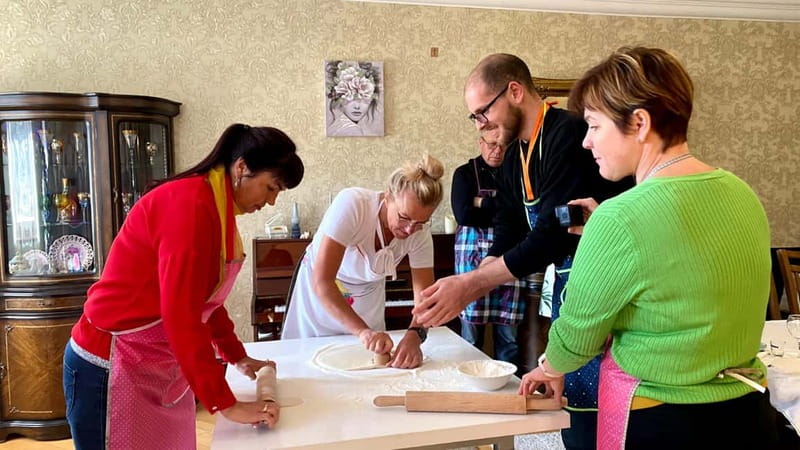
- Cook in a Georgian family home: Meet a local host such as Shorena and see how food is prepared in an everyday setting.
- Make the country’s essential dishes: Prepare khinkali dumplings, khachapuri, eggplant with walnuts, Georgian salad, and mchadi cornbread.
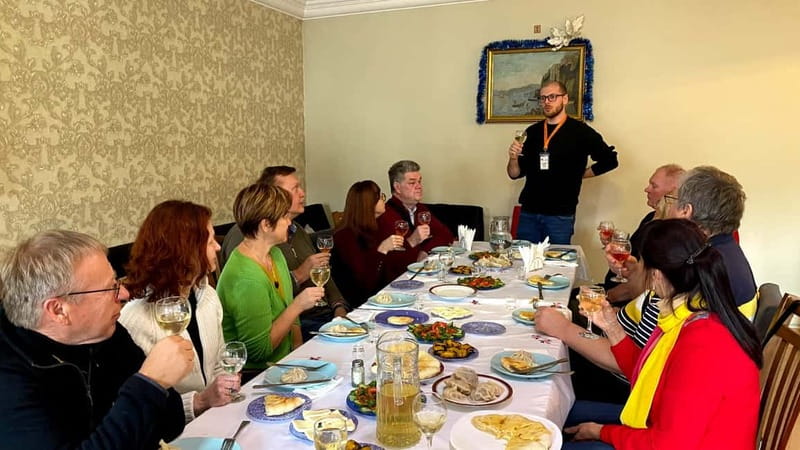
- Eat what you make: The class ends with a generous shared meal, Georgian cheese, homemade wine, and chacha.
- English translation is built in: Your guide explains the cooking steps and adds context about Georgian food, culture, and history.
- Good for solo visitors: You can join a group on your own and still have a social evening around the table.
- Meet at Avlabari at 17:30: Look for the partner representative holding a branded orange flag.
Why this cooking class fits Tbilisi so well
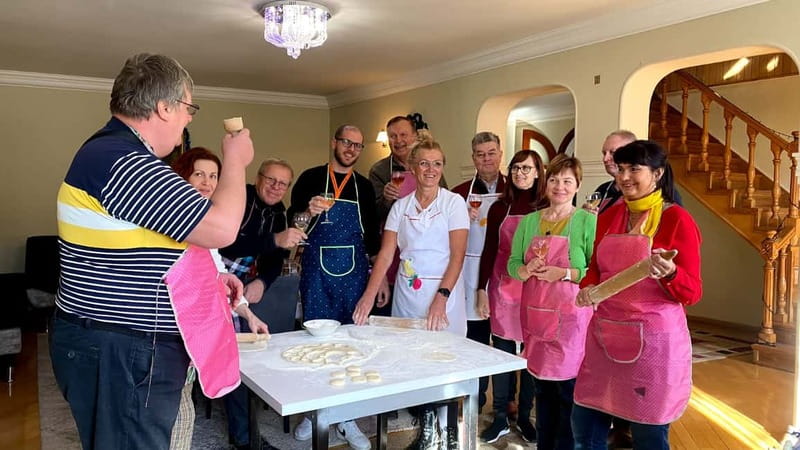
A cooking class makes a fine break from Tbilisi’s churches, balconies, and hilltop views. Food explains Georgia in a more personal way. Meals are social, dishes often arrive in the middle of the table, and a toast can turn dinner into a long conversation.
This experience gives you that setting without asking you to find a family home on your own. You meet at Avlabari Metro Station at 17:30, then travel from the meeting point to the host’s home. The class lasts about three hours, so it works well as an evening activity.
The home setting matters. You are not simply shown a finished plate and told its name. You handle the ingredients, learn the basic method, and then sit down to eat the results. The setting may include a garden, grapevines, or fruit trees, as one group experienced with plum trees and fresh grapes nearby.
The mood is warm and informal. Children and other family members may be around, and the host’s way of cooking is part of the lesson. That also means the evening can feel less controlled than a professional kitchen class. If you want exact measurements, individual workstations, and a tightly timed lesson, this may feel loose. If you want food and conversation in a real home, that looseness is a plus.
More Home Cooking Classes in the world:
- Khmer Cooking Class at a Local’s Home in Krong Siem Reap
★ 5.0 · 2,731 reviews - Porto: Pastel de Nata Cooking Class with Grandma’s Recipe
★ 5.0 · 1,565 reviews - Siem Reap: Khmer Cooking Class at a Local’s Home
★ 5.0 · 1,108 reviews
From Avlabari Metro Station to the family home
The meeting point is clear: Avlabari Metro Station at 17:30. A local partner representative waits outside with a branded orange flag. This is useful in a busy part of the city, especially if you are unfamiliar with Tbilisi or do not have local phone service.
Transportation from the meeting point to the family home is included. The return trip is not included, so ask the guide about the practical plan before the meal ends. This is a small detail, but it matters after wine and chacha, or if you are staying far from Avlabari.
The route and home location can vary, so do not expect a sightseeing transfer. The point is to reach the family kitchen, not to tour another part of Tbilisi. Wear clothes suited to the weather because the activity operates in rain or sunshine, and bring a passport or identity card.
The group size can vary. One class became a private experience because no other people had booked that date, while other sessions brought together solo participants, couples, and families. That makes this a flexible choice if you are traveling alone. You can join a social group without booking a private class.
Cooking khinkali, Georgia’s famous dumplings
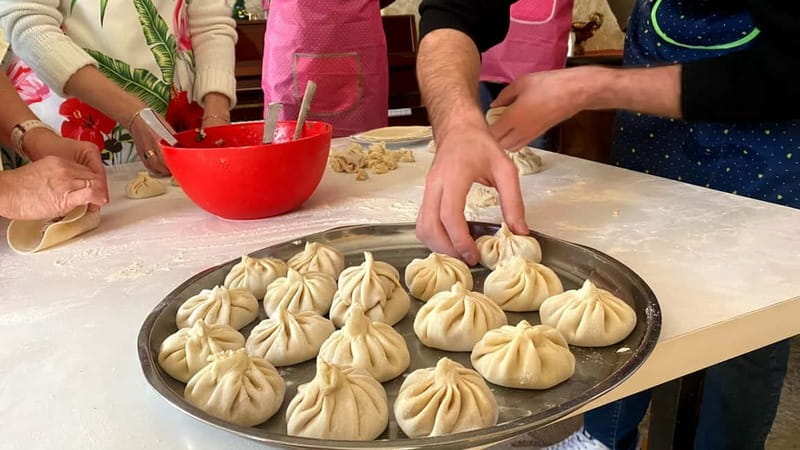
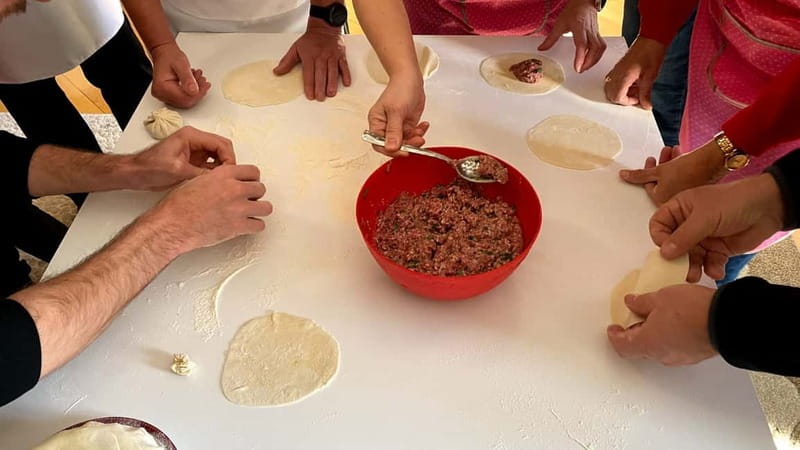
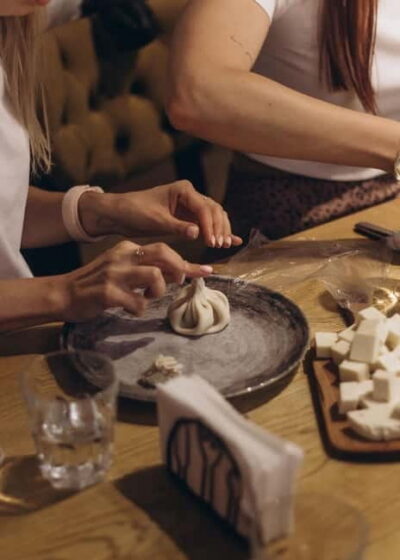
Khinkali is usually the star of the class. These pleated dumplings are filled, folded, and cooked, then eaten by hand. The technique looks simple until you try to create a tidy top knot and keep the filling inside.
You get to work with the dough and filling, though the exact amount of preparation varies. One participant found that the dough had already been prepared, while the group still made most of the other items themselves. That is worth knowing if your main goal is to learn dough from the first step.
The guide helps bridge the language gap. Shorena, the host named in the activity details, has more than 30 years of cooking experience and comes from western Georgia. In some sessions, the host speaks Georgian with only a few English words, so guides such as Nicolas or Maria translate the method and explain what you are doing.
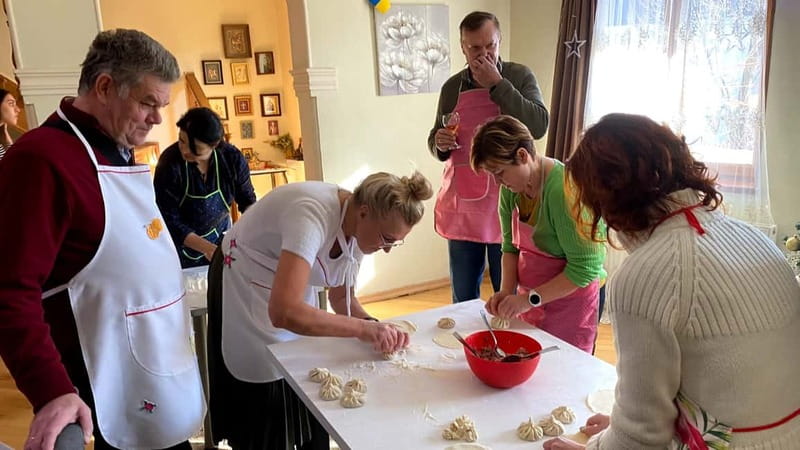
The result is not just a demonstration. You shape the dumplings yourself, cook them, and eat them later. Even imperfect folds taste good, which takes pressure off anyone who does not consider themselves a cook.
Khachapuri and the rest of the Georgian table
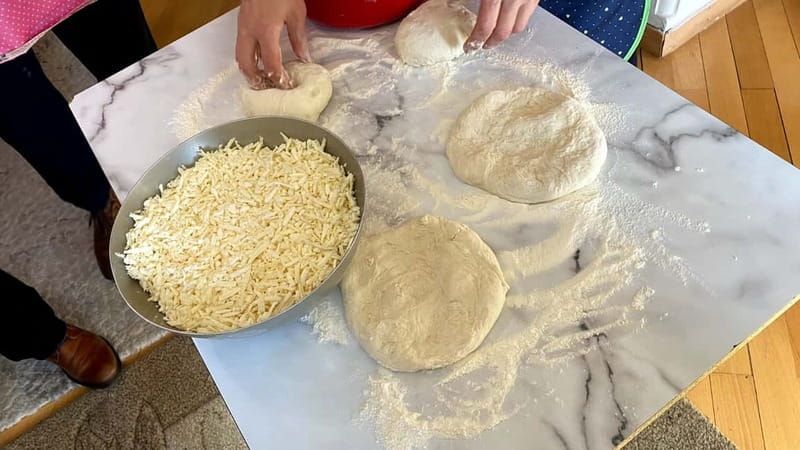
Khachapuri is Georgia’s beloved cheese bread, and it gives the class a second hands-on project. You work with bread and Sulguni cheese, then eat it warm as part of the meal. Some sessions included two kinds of khachapuri, showing how much variety can fit under one familiar name.
The class also covers eggplant with walnuts, often prepared as rolled slices with a walnut filling. This dish introduces the nutty, garlicky flavors that appear across Georgian cooking. Georgian salad, usually a simple combination of fresh vegetables, gives the meal a crisp counterpoint to the bread and dumplings.
Mchadi is a cornmeal bread, sometimes fried, and adds a different texture to the spread. The activity also refers to six foods, while the named dishes vary slightly by session. You may find additional items such as ajapsandali, a vegetable stew, or pkhali-style preparations.
Do not expect to prepare every component from raw ingredients. A home host must serve a group within a limited time, so some chopping, dough work, or cooking may be done ahead. The benefit is a reliable meal and a relaxed class. The tradeoff is that you may not learn every stage in full detail.
More cooking classes around the world:
- Half-Day Thai Cooking Class at Organic Farm in Chiang Mai
★ 5.0 · 19,087 reviews - Florence: Pasta Cooking Class with Unlimited Wine
★ 4.9 · 10,285 reviews - 3 in 1 Cooking Class near Navona: Fettuccine, Ravioli & Tiramisu
★ 5.0 · 7,376 reviews - Florence: Pasta & Tiramisu Cooking Class with Unlimited Wine
★ 4.9 · 6,708 reviews
The meal, wine, cheese, and chacha
After the cooking, the kitchen work turns into dinner. This is where the class feels most Georgian. Plates are shared, everyone tries the food, and the guide explains how dishes fit together.
Sulguni cheese is included, along with homemade dry white wine and Georgian chacha, a local grape spirit. Water is also provided. The meal is generous, with one account describing enough food for a much larger group than the six people present.
The drinks are part of the cultural lesson, but keep your expectations sensible. Homemade wine and chacha can vary from batch to batch. One visitor found the wine and vodka less impressive than the food, while most of the praise focuses on the meal, hospitality, and conversation. You do not need to drink alcohol to enjoy the class, and you should pace yourself if you try both.
The evening may include Georgian music and traditional toasts. Beka, one of the guides and hosts mentioned by participants, is described as a toast master who shared stories and led several toasts during dinner. The exact guide changes, so that style may not appear every time.
The guides make the language difference work
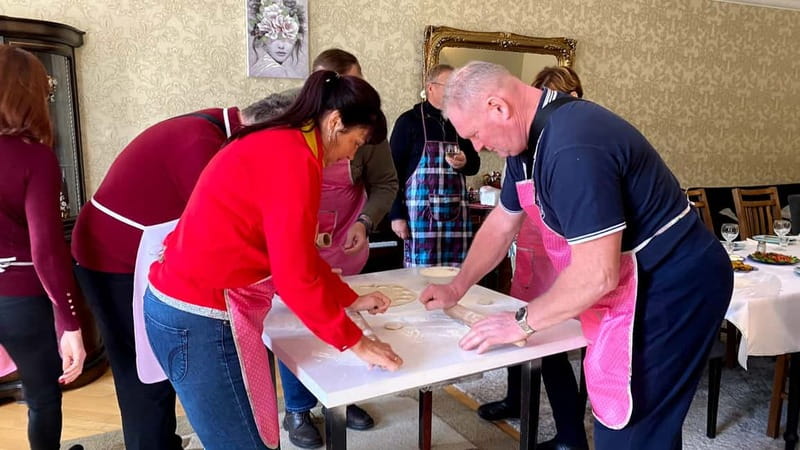
The host is the cooking expert, but the English-speaking guide is central to the experience. Guides have included Maria, Ana, Nicolas, Nini, Oki, Salome, Beka, Patti, and others. Their roles go beyond translating ingredients.
A strong guide explains why the dishes matter, discusses regional differences, and answers questions about Georgian culture and daily life. Nicolas, for example, added information about food, history, current events, and traditional dance. Maria was praised for making the class educational without letting it feel stiff.
The quality of the evening depends partly on this partnership. The host may show the technique through gestures and demonstration, while the guide turns it into clear instructions. If you need detailed English explanations, stay close to the guide during each cooking stage.
You may also get a guide who is especially social. Salome and Ana are noted for making the group feel at ease, while Beka added stories and toasts during the meal. This helps solo participants, who can arrive alone and still find an easy place in the group.
What the $55 price gets you
At $55 per person, the price covers a three-hour activity, a guide, transportation from the meeting point, the cooking class, six foods, wine, chacha, and water. The value is strongest if you treat it as both dinner and a cultural visit.
A meal alone in Tbilisi can cost far less, so this is not the cheapest way to eat Georgian food. You are paying for access to a family home, instruction, translation, transportation to the home, and the chance to prepare the dishes yourself.
The value also depends on your appetite for participation. If you only want to watch someone cook, the price may feel high. If you want to learn khinkali folding, try khachapuri, ask questions about family cooking, and sit down to a large meal with new companions, the cost is easier to justify.
You also receive recipes for traditional Georgian food. That gives the experience a life beyond the evening, especially if you want to recreate the dishes at home. One useful practical tip is to buy Georgian spices and cheese at Dezerter Bazaar if you want to continue cooking after the class.
Who should book this evening
I would recommend this for anyone who wants food to be the main way of meeting Georgia. It suits couples, families, solo visitors, and people traveling with friends. Children can participate, though the long meal and alcohol service may suit older children best.
It is also a good choice for a first night or last night in Tbilisi. Early in a trip, it gives you a friendly introduction to local dishes. At the end, it lets you cook the foods you have been eating around the country and finish with a shared Georgian meal.
Vegetarians can request an option in advance. The listed dishes include several meat-free foods, but khinkali fillings and other recipes can vary, so make your dietary needs clear when booking.
You may want a different activity if you need a professional kitchen, a fixed menu, exact recipe measurements, or a lesson conducted entirely by the chef in English. You should also think twice if you dislike shared meals, homemade alcohol, or an informal family setting.
Practical details before you go
The activity is conducted in English through the guide. Bring a passport or identity card. The meeting time is 17:30 at Avlabari Metro Station, and the orange flag makes the representative easier to find.
Wear weather-appropriate clothes. The tour runs rain or shine, and parts of the home experience may include outdoor areas such as a garden. Comfortable clothing also makes it easier to work with dough, fillings, and flour.
You can cancel up to 24 hours before the start for a full refund, and the reserve now, pay later option lets you hold a place without paying immediately. Starting times should be checked for your chosen date.
Ask about the return journey before leaving the family home. Transportation to the home is included from the meeting point, but transportation back is not. That is the one logistical point most likely to catch you off guard.
Should you book Shorena’s Magic Kitchen?
Book it if you want to cook, eat, and talk rather than simply take a food tour. The strongest parts are the family setting, the hands-on khinkali and khachapuri work, the generous meal, and the guides who explain more than the recipes.
Go with realistic expectations. Some food may be prepared ahead, the host may rely on translation, and homemade drinks will not suit every taste. Still, for $55, you get a substantial evening, a local welcome, a meal, recipes, and a practical introduction to the dishes you will see all over Georgia.
FAQ
Where does the activity meet?
Meet at Avlabari Metro Station at 17:30. A local partner representative waits in front of the station with a branded orange flag.
How long does the cooking class last?
The activity lasts three hours.
What food will I make?
The class includes khinkali dumplings, khachapuri cheese bread, eggplant with walnuts, Georgian salad, and mchadi cornbread. The exact selection can vary, and the activity covers six foods.
Is the class held in a restaurant?
No. The cooking class takes place in a local family home, described as Shorena’s Magic Kitchen.
Is the class taught in English?
The tour has a live English-speaking guide. The host may speak Georgian and only limited English, so the guide translates the cooking instructions.
Are food and drinks included?
Yes. The package includes the prepared foods, Sulguni cheese, homemade dry white wine, homemade chacha, and water.
Is a vegetarian option available?
Yes. A vegetarian option is available upon request.
Is transportation included?
Transportation from the Avlabari meeting point to the local family home is included. Transportation from the family home back to the starting point is not included.
What should I bring?
Bring your passport or identity card and dress for the weather. The activity operates in rain or sunshine.
New cooking classes around the world
- Shinjuku Tokyo: Authentic Japanese Home-Style Culinary Class★ 4.9 · 125 reviews
- Shibuya Tokyo: Onigiri & Tamagoyaki Cooking Class★ 5.0 · 4 reviews
- M.O.M COOKING CLASS★ 4.8 · 6 reviews
- Seville: Paella-Cooking Experience with Sangria & Full Meal★ 4.9 · 42 reviews
- Shanghai: Authentic Chinese Cooking Class with Master Chef★ 5.0 · 2 reviews
- Sestri Levante: Pesto & Cooking Classes, Wine Tasting★ 4.9 · 56 reviews
- Seville: Paella Cooking Class & 30-Min Local Expert Q&A★ 4.8 · 37 reviews
- Seoul: Korean Kimchi Cooking Class in the Heart of the City★ 5.0 · 3 reviews
Tbilisi Cooking Classes, side by side.
Tbilisi: Georgian Cooking Class with Khinkali and Khachapuri
Read our review →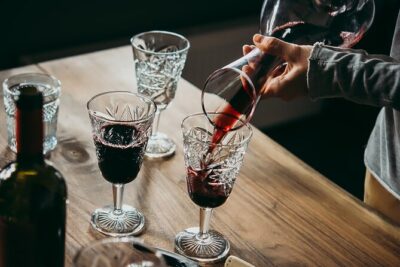
Small-Group Khinkali and Khachapuri Cooking Class in Tbilisi
Read our review →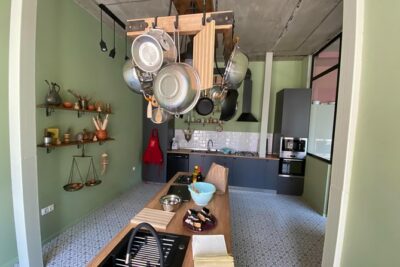
Nana’s Kitchen – traditional Georgian cooking class at real Georgian family home
Read our review →This kitchen also appears in