
Review · TBILISI
Nana’s Kitchen – traditional Georgian cooking class at real Georgian family home
Georgian food makes the most sense when you learn it around a family table. At Nana’s Kitchen, Nana and her daughter Nina guide you through five dishes, then turn the meal into a Supra, Georgia’s generous feast built around food, wine, conversation, and hospitality.
I like the hands-on format and the warm, home-based setting. I also like that you leave with recipes, and in some cases spices or leftovers, rather than only a full stomach. The main consideration is the fixed evening schedule and strict cancellation policy: this is not a flexible booking.
Key points to know
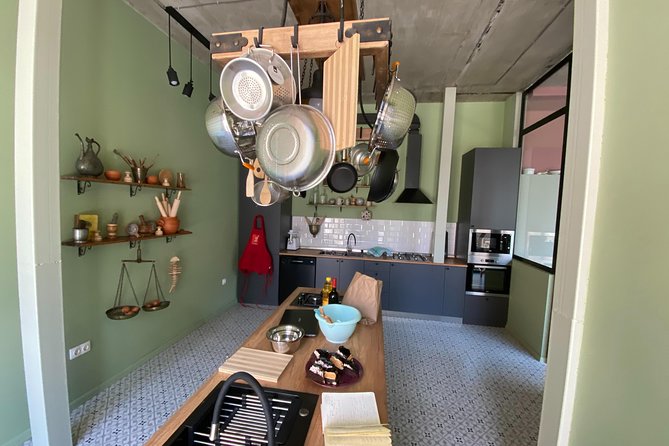
- A real family setting: Cook in Nana’s kitchen studio and garden area, then eat in the family living space.
- Five Georgian dishes: Expect recipes such as spinach paste, walnut-stuffed vegetables, eggplant with walnuts, and chakapuli or chakhokhbili.
- Supra is part of the lesson: You learn how Georgian families host a feast, not just how to follow recipes.
- Homemade wine begins the evening: The class starts with wine from the family vineyards.
- Private and small-scale: Only your own group takes part, making this a good choice for couples and families.
- Useful takeaway: You receive a recipe booklet, and some sessions may include spices and packed leftovers.
Why Nana’s Kitchen feels different from a restaurant meal
Tbilisi has plenty of places to eat Georgian food, but a restaurant usually gives you the finished dish. Nana’s Kitchen lets you see how the dish comes together, why the ingredients matter, and how the meal fits into Georgian social life.
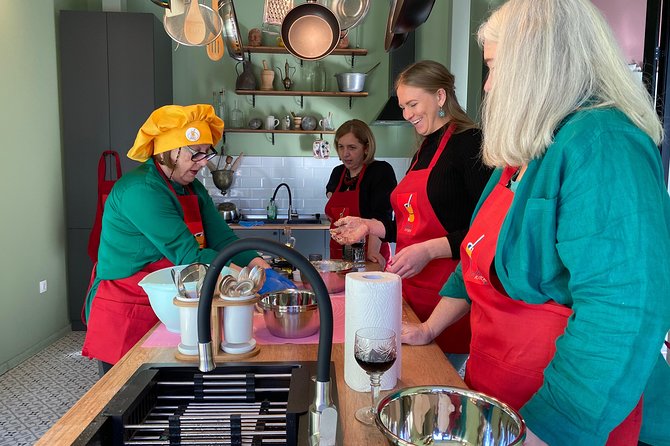
The setting is a real family home rather than a large cooking school. You begin with a glass of homemade wine from the family vineyards and a short talk about Georgian cuisine, its influences, and the meaning of Supra. That opening matters because Supra is not simply a long dinner. It is a way of welcoming people, sharing food, raising toasts, and giving a meal a sense of occasion.
I like this approach because the food and culture stay connected. You are not only chopping vegetables and waiting for a pot to cook. You are learning why Georgian meals often feel generous and communal, and why a table can become the main event of an evening.
The experience is offered in English. Nana and Nina are the names most closely connected with the cooking instruction, and the family takes an active role in the meal. If you want a polished cooking demonstration with a professional chef in a purpose-built school, this may feel more informal. If you want the atmosphere of being welcomed into a Georgian household, the informality is the point.
More Home Cooking Classes in the world:
- Khmer Cooking Class at a Local’s Home in Krong Siem Reap
★ 5.0 · 2,731 reviews - Porto: Pastel de Nata Cooking Class with Grandma’s Recipe
★ 5.0 · 1,565 reviews - Siem Reap: Khmer Cooking Class at a Local’s Home
★ 5.0 · 1,108 reviews
Starting at 7 PM on Guram Rcheulishvili Street
The meeting point is 26 Guram Rcheulishvili Street, Tbilisi 0179. The listed schedule is Monday through Friday from 7 PM to 11 PM, while the activity itself lasts about three hours. The session ends back at the meeting point, so you do not need to arrange a separate return location.
An evening start works well in Tbilisi. You can spend the day sightseeing, then make the cooking class your main dinner plan. Allow time to reach the address, since the activity does not include a separate hotel pickup in the information provided. The location is near public transportation, which helps, but you should still check your route before setting off.
The private format is a real advantage. Only your group participates, so you can ask questions, work at a comfortable pace, and talk with Nana’s family without a large class competing for attention. A private class is also easier for couples, families, and friends who want a shared activity rather than a standard scheduled tour.
At $110 per person, this is not the cheapest meal in Tbilisi. The price covers roughly three hours, instruction, five dishes, wine, the Supra-style dinner, and the recipe booklet. It makes better financial sense if you treat it as both a meal and a cultural activity. If you only want to taste Georgian food, a restaurant will cost less. If you want instruction, a family setting, and a sit-down feast in the same evening, the price is easier to justify.
The opening glass of Georgian wine
The class begins with homemade Georgian wine from the family’s vineyards. This is a small detail, but it sets the tone. You are not starting with a formal lecture or a list of rules. You are being welcomed with a drink before moving into the kitchen.
The opening introduction covers the meaning of Supra, the origins of Georgian cuisine, and the main influences that shaped it. That context helps explain the dishes you will prepare. Georgian food often combines vegetables, herbs, nuts, meat, and warm spices in ways that may be new to you, and the introduction gives those flavors a place within the wider culture.
The wine is part of the evening, so this is not the right activity if you avoid alcohol completely. The available information does not specify a nonalcoholic substitute or the amount served. You can ask the host about this before booking if it matters to you.
The class is also scheduled in the evening and includes wine with dinner. I would plan it as a relaxed night rather than an activity to squeeze between several other bookings.
Rolling up your sleeves for five dishes
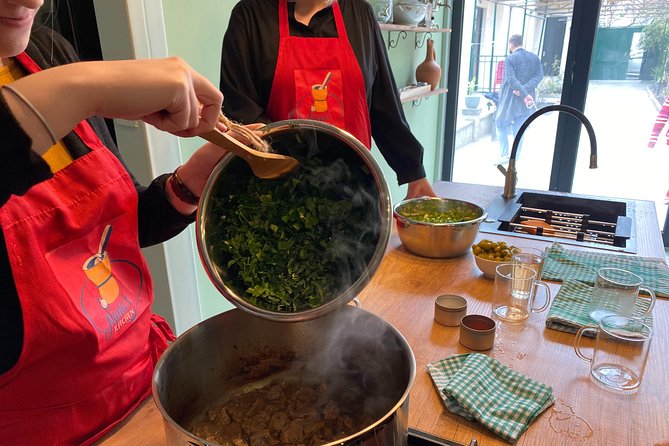
After the introduction, you move into the kitchen and start cooking. The format combines demonstrations with your own hands-on work. Nana and her family show each step, then you prepare the dishes under their guidance.
The sample menu gives a good sense of the flavors:
- Traditional spinach paste
- Red peppers with Georgian walnut and spice mix
- Fried eggplant with walnuts
- Chakapuli, a seasonal veal dish with tarragon
- Chakhokhbili as an alternative to chakapuli
The menu information names four examples while describing the class as five dishes. It also says chakapuli is seasonal, with chakhokhbili offered in its place. If a particular dish matters to you, ask what will be prepared on your date.
Several of these recipes show why Georgian cuisine is so distinctive. Walnuts are not merely sprinkled on top. They help create a thick, savory mixture for vegetables and form a major part of the flavor. Eggplant, peppers, spinach, herbs, and spices give the meal variety without making every course feel heavy.
Chakapuli brings meat, tarragon, and seasonality into the picture. Chakhokhbili offers another Georgian preparation, with the exact menu depending on availability. The cooking lesson therefore has some flexibility, but you should not assume that every dish listed will appear at every session.
The class is suitable for people who want to participate, not just watch. You will be making the dishes yourself based on demonstrations and guidance. That makes the recipe booklet more useful later because you have handled the ingredients and seen the sequence of steps.
More cooking classes around the world:
- Half-Day Thai Cooking Class at Organic Farm in Chiang Mai
★ 5.0 · 19,087 reviews - Florence: Pasta Cooking Class with Unlimited Wine
★ 4.9 · 10,285 reviews - 3 in 1 Cooking Class near Navona: Fettuccine, Ravioli & Tiramisu
★ 5.0 · 7,376 reviews - Florence: Pasta & Tiramisu Cooking Class with Unlimited Wine
★ 4.9 · 6,708 reviews
A family kitchen rather than a staged cooking show
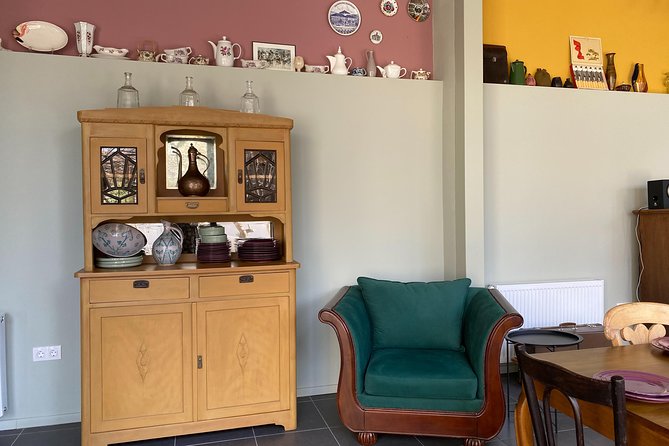
The strongest part of this experience is the human scale. The setting has been described as a beautiful kitchen studio in a garden, with inviting kitchen and living-room spaces. That gives you room to cook, sit, and eat without the feel of a crowded restaurant demonstration.
Nana is described as patient and careful in her explanations, while Nina also helps guide the cooking. The family atmosphere is especially appealing if you enjoy conversation as much as the recipes. The hosts also share background about ingredients and where certain dishes come from, so you get more than a list of measurements.
I would choose this class for a first visit to Georgia because food offers an easy way to understand local customs. You do not need prior cooking skill. The emphasis is on learning by doing, with help available as you go.
The tradeoff is that home-based activities can vary in pace. A professional school might use identical workstations and a tightly timed lesson. Here, the evening is built around hospitality, conversation, and a shared meal. That is valuable, but anyone who wants a fast, technical masterclass should set expectations accordingly.
The Supra dinner is the real second half
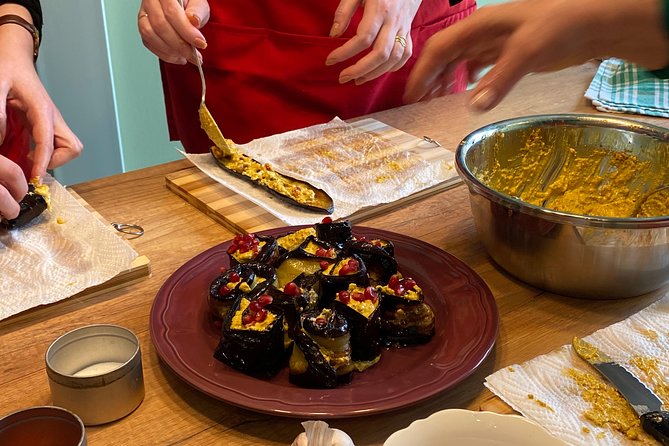
Once the cooking is done, the evening moves to the table. The meal is conducted in the traditional manner of Supra, so dinner is not simply the final step before you leave. It is the cultural heart of the activity.
You taste the dishes you helped prepare and learn how Georgian hosting turns food into a social event. The point is not only to judge your cooking. It is to understand how a Georgian feast creates space for welcome, celebration, conversation, and wine.
This part may be especially memorable for couples or families. You cook together, then sit down together, which gives the experience a natural rhythm. It also means the class feels more like an evening with a Georgian household than a lesson followed by a quick tasting.
The food is described as generous, and packed leftovers may be available. That detail is practical: after cooking five dishes and sitting through a full feast, you may not finish everything. Takeout containers are not guaranteed in the formal description, so treat leftovers as a possible extra, not a promised feature.
The class also works well as a birthday gift or a special evening during a holiday. The private arrangement allows your group to mark the occasion without sharing the table with strangers.
What you take home beyond dinner
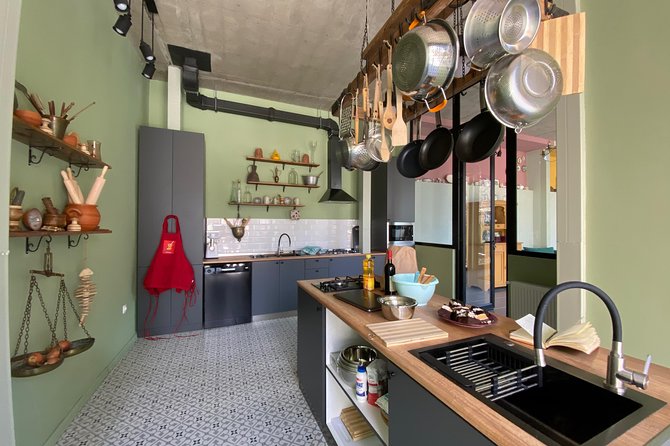
At the end, you receive a booklet containing the recipes for the dishes you made. This is one of the best features for anyone who wants the class to continue after Georgia.
The recipes are meant to be recreated at home, and the dishes are described as practical enough to make again. You may also receive starter spices, depending on the session. Those small additions can help, since Georgian cooking often depends on the right balance of walnuts, herbs, and spice.
I would keep the booklet somewhere easy to find, then try one dish soon after returning home. The experience is fresh in your mind, and you are more likely to remember the techniques. The recipes also give you a way to share the Georgian meal with friends, which fits the social spirit of Supra.
Do not expect the class to turn you into an expert Georgian cook in three hours. You will learn useful dishes and the basic logic behind them, but home results will depend on finding suitable ingredients and following the recipe carefully.
Who should book this evening
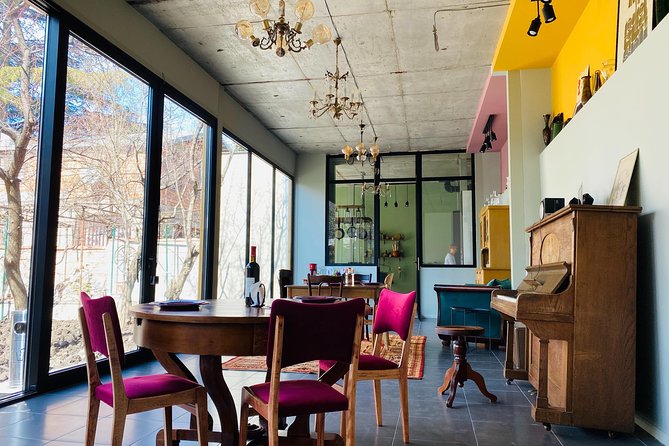
I would recommend Nana’s Kitchen to you if you want:
- A private activity for your own group
- Direct contact with a Georgian family
- Hands-on cooking rather than a simple food tasting
- An introduction to Supra and Georgian hosting
- A full dinner included in the activity
- Recipes to use after your trip
- A relaxed evening in English
It is also a strong pick for couples, families, birthday gifts, and anyone who prefers local homes to formal attractions. The class suits curious eaters, but you do not need to be an accomplished cook.
I would think twice if you need a flexible cancellation policy, cannot attend an evening session, or want a strictly timed professional workshop. The booking is non-refundable and cannot be changed for any reason. Service animals are allowed, and the meeting point is near public transportation, but the provided details do not describe broader accessibility features or specific dietary accommodations.
Is $110 a fair price?
For a basic cooking lesson, $110 can feel high. For this particular evening, you are paying for several parts at once: private instruction, a home setting, homemade wine, five dishes, a Supra-style dinner, cultural explanation, and take-home recipes.
The value depends on how you use the experience. If you plan to eat at a restaurant anyway, compare the cost of dinner plus a separate cultural activity. Nana’s Kitchen combines both, and it gives you a personal connection that a menu cannot provide.
The private format strengthens the value for a small group. A solo visitor may find the price harder to justify, while a couple or family looking for a shared evening may see it as a convenient centerpiece of a Tbilisi stay. Because the activity is often booked about 15 days ahead, planning early is sensible, especially if your dates are fixed.
Should you book Nana’s Kitchen?
Book it if you want Georgian food explained through family life, not just served on a plate. The best reasons are the small private setting, Nana and Nina’s patient guidance, the homemade wine, and the Supra dinner that gives the recipes cultural meaning.
Skip it if you want a short, cheap tasting or need to change plans easily. For everyone else, this is a thoughtful way to spend an evening in Tbilisi: cook five dishes, eat what you made, learn how Georgia hosts a feast, and take home enough knowledge to try it again.
FAQ
Where does Nana’s Kitchen take place?
The meeting point is 26 Guram Rcheulishvili Street, Tbilisi 0179, Georgia. The activity ends back at the same meeting point.
How long does the cooking class last?
The experience lasts approximately three hours.
What time does the experience operate?
It is listed from Monday through Friday, with operating hours from 7 PM to 11 PM.
How much does Nana’s Kitchen cost?
The listed price is $110 per person.
Is the class offered in English?
Yes. The experience is offered in English.
Is this a private activity?
Yes. Only your own group participates.
How many Georgian dishes will I make?
The class teaches you how to make five Georgian dishes.
What food might be included?
Examples include traditional spinach paste, red peppers with walnut and spice mix, fried eggplant with walnuts, and chakapuli or chakhokhbili. Chakapuli is seasonal.
Is wine included?
The class begins with a glass of homemade Georgian wine from the family vineyards.
Do I receive recipes after the class?
Yes. You receive a booklet with the recipes for the dishes prepared during the course.
Can I cancel or change my booking?
No. The experience is non-refundable and cannot be changed for any reason.
New cooking classes around the world
- Shinjuku Tokyo: Authentic Japanese Home-Style Culinary Class★ 4.9 · 125 reviews
- Shibuya Tokyo: Onigiri & Tamagoyaki Cooking Class★ 5.0 · 4 reviews
- M.O.M COOKING CLASS★ 4.8 · 6 reviews
- Seville: Paella-Cooking Experience with Sangria & Full Meal★ 4.9 · 42 reviews
- Shanghai: Authentic Chinese Cooking Class with Master Chef★ 5.0 · 2 reviews
- Sestri Levante: Pesto & Cooking Classes, Wine Tasting★ 4.9 · 56 reviews
- Seville: Paella Cooking Class & 30-Min Local Expert Q&A★ 4.8 · 37 reviews
- Seoul: Taste of Korea, Authentic Home Style Cooking Class★ 4.9 · 166 reviews
Tbilisi Cooking Classes, side by side.
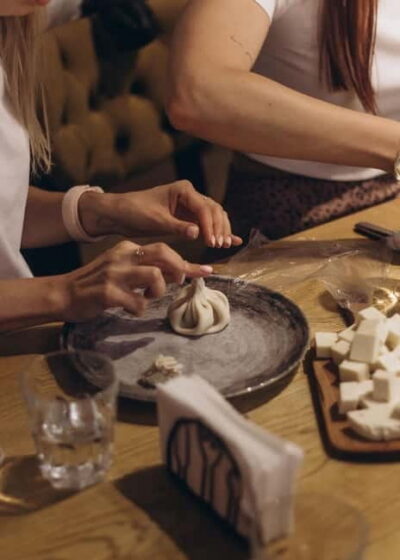
Tbilisi: Georgian Cooking Class with Khinkali and Khachapuri
Read our review →
Small-Group Khinkali and Khachapuri Cooking Class in Tbilisi
Read our review →
This kitchen also appears in