
Review · KYOTO
Kyoto Udon & Tempura Cooking Class with Professional Chefs
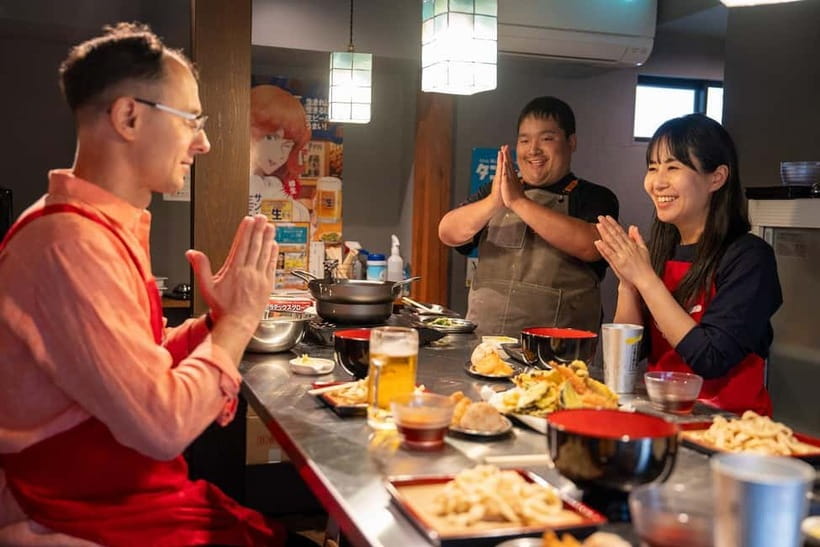
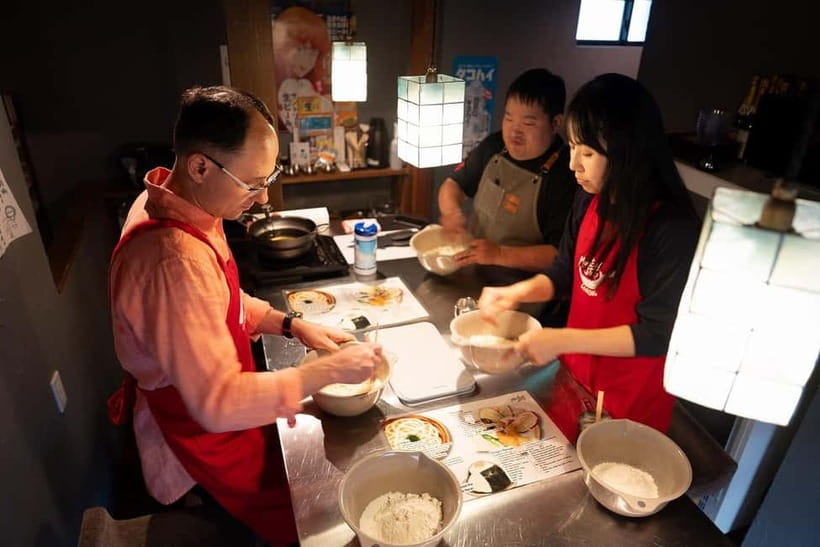
Making udon from plain flour and water is the heart of this Kyoto cooking class. You knead and roll the dough by hand, then prepare inari sushi, onigiri, and tempura before sitting down to eat. It is a friendly, practical way to learn Japanese food in a real restaurant setting rather than simply watching a chef work.
I like the small group of up to eight, which gives the local udon master and English guide room to help with sticky dough and unfamiliar steps. I also like the recipe set and tour photos, useful keepsakes if you want to repeat the meal at home.
The main caution is that the advertised program may not always match the meal on the day. One verified booking reported no sushi, no from-scratch tempura batter, and no cooking of the udon or broth. That same booking lasted about 1 hour 20 minutes, shorter than the stated two hours, so keep your expectations flexible.
Key points to know before booking
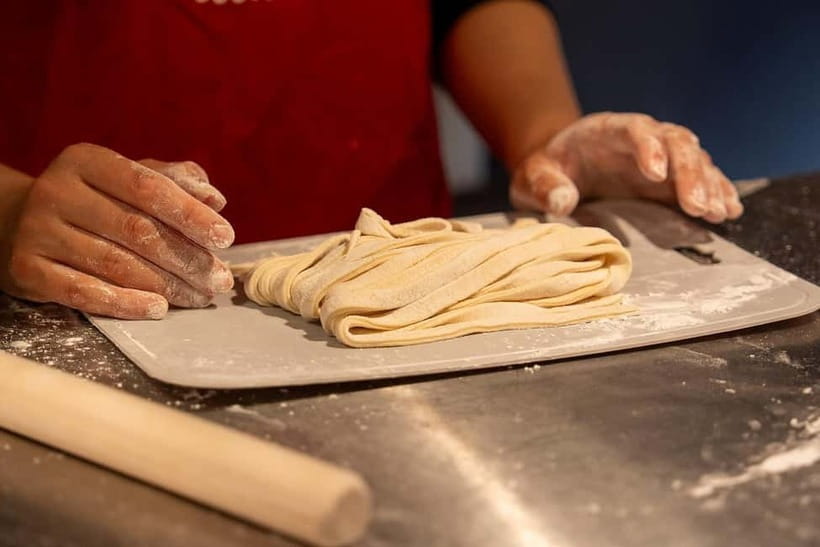
- Knead udon by hand: The class begins with flour and water, then guides you through mixing, kneading, and rolling.
- Three Japanese foods are planned: Udon, inari sushi, and tempura form the main meal, with onigiri also included in the rice preparation.
- A local udon master leads the cooking: An English-speaking guide helps explain the steps and keeps the class moving.
- You eat what you make: The cooking ends with a shared meal and two drinks, including a small sake tasting.
- The meeting point is central: Meet at the 7-Eleven near Kyoto-Kawaramachi-Takoyakushi, a short walk from Kyoto-Kawaramachi Station.
- The format suits beginners: Ingredients, recipes, photos, and guidance are included, with no previous cooking skill required.
Turning flour and water into Kyoto-style udon
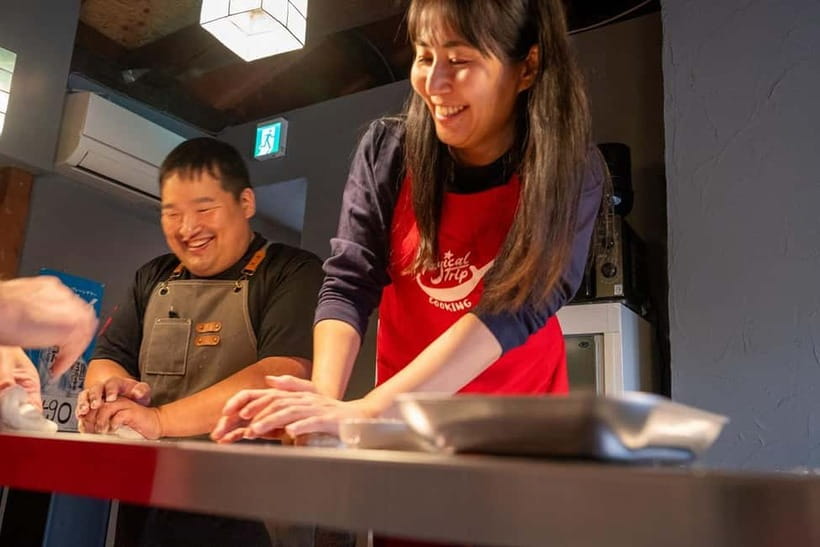
The first part gives you the clearest sense of craft. You start with basic ingredients, then mix and knead the dough by hand. Udon dough is not delicate pastry. It needs firm handling, and the satisfying part is feeling it become smoother and more elastic under your fingers.
You then roll the dough into the shape needed for noodles. This is a simple task in theory, but the texture makes it more interesting than stirring a pot. You can see and feel the difference between a rough lump and a workable sheet.
The value here is not only the recipe. You learn what the dough should feel like, how much pressure to use, and why handmade udon has its own character. If you enjoy cooking, this is likely the strongest part of the class.
There is one important distinction to understand. The experience focuses heavily on making and kneading the udon dough. A verified booking reported that the participants did not cook the noodles or prepare the broth themselves. If your main goal is to learn a complete udon soup from dough through stock, ask for clarification before booking.
That does not make the noodle work pointless. It simply means you should see this as an introduction to handmade udon rather than a full restaurant kitchen lesson. You get the most direct, hands-on contact with the dough itself.
More cooking classes around Kyoto:
- Ramen Cooking Class at Ramen Factory in Kyoto
★ 5.0 · 1,937 reviews - Kyoto: Ramen Cooking Class at a Ramen Factory with Souvenir
★ 4.9 · 532 reviews - Kyoto: Ramen, Gyoza, and Onigiri Cooking Class
★ 5.0 · 445 reviews
Preparing inari sushi, onigiri, and rice
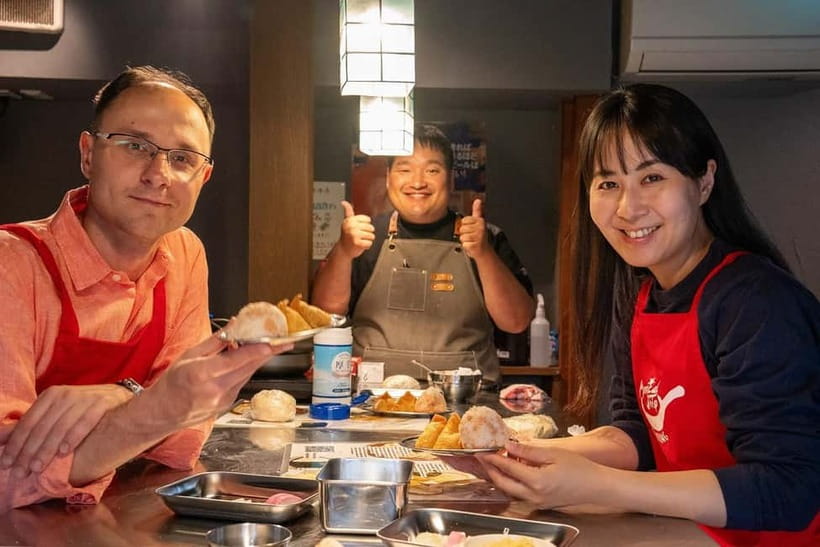
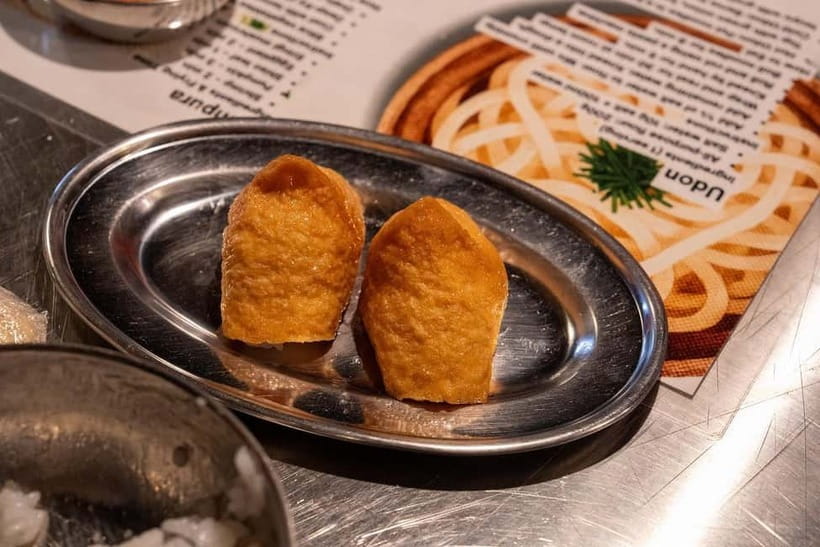
The rice portion brings a different skill. Freshly steamed rice is seasoned, then shaped for inari sushi and onigiri. Inari sushi usually uses sweet, seasoned tofu pockets filled with rice, while onigiri is shaped rice that can be made in several forms. The class description promises both styles as part of the preparation.
This is useful for you because rice shaping looks easy until you try to make neat, compact pieces. The lesson gives you a chance to work with texture, moisture, and pressure. Too much handling can make rice dense, while too little leaves it loose.
The rice dishes also add variety to the class. Udon is about dough and stretch. Onigiri and inari sushi are about seasoning and careful shaping. Together, they show different everyday sides of Japanese cooking.
Still, the exact menu deserves a check on the day. One verified booking reported that sushi was not prepared during that session. Since the supplied program specifically includes inari sushi, this appears to be a variation rather than the stated plan, but it matters if sushi is the dish you most want to learn.
Frying tempura in a working restaurant
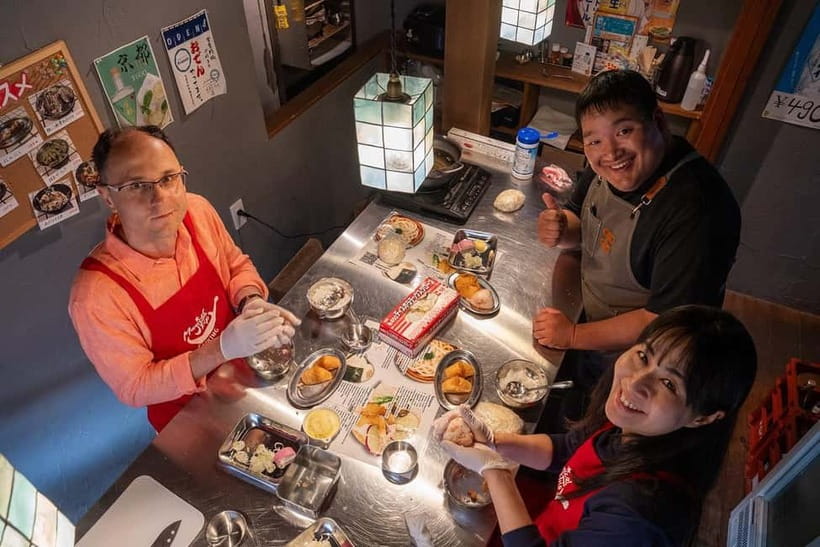
Tempura gives the class its most immediate cooking drama. Ingredients are dipped and fried until golden, then eaten while fresh. The method is easy to follow, which makes it a good first step for someone who has never prepared Japanese fried food.
The listed program says you learn how to prepare authentic tempura, with the master chef demonstrating the process before you fry your own pieces. You get to handle the ingredients and take part in the cooking instead of simply receiving a finished plate.
There is another qualification here. A verified booking reported that the batter was not made from scratch. The participants dipped prepared ingredients before frying them. If you want to study batter consistency, oil temperature, or the full tempura setup, this class may offer less detail than you expect.
For many people, that lighter approach may be fine. Frying can be the part where beginners need the most supervision, and a streamlined method leaves more time for the fun part: making crisp food and eating it. But serious home cooks should ask how much of the batter and frying process they will handle.
Eating the meal you prepared
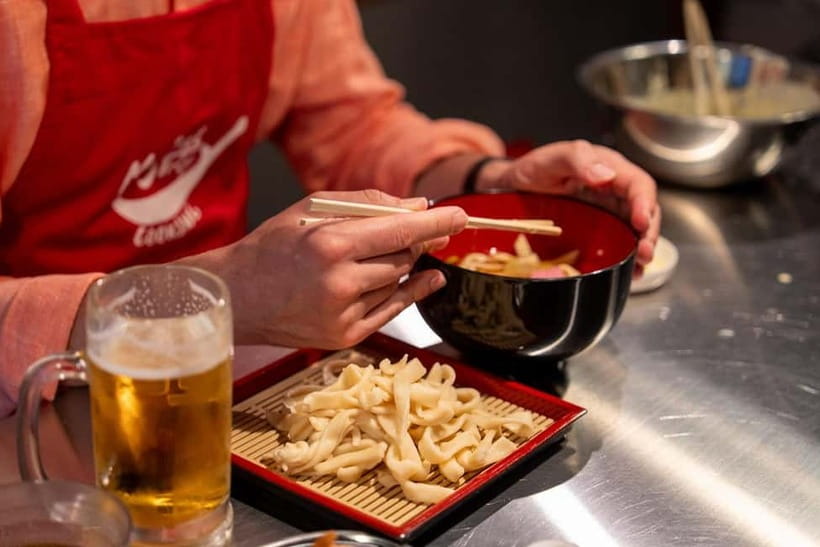
The class finishes with udon, tempura, and inari sushi, along with two drinks. The meal gives the cooking a clear purpose. You are not making small samples that disappear into a bin. You sit down and taste the results of your work.
I like this format because food classes can become overly technical if there is no time to enjoy the meal. Here, the eating portion is part of the experience, not an afterthought. You can compare the textures of chewy noodles, crisp tempura, and seasoned rice in one sitting.
A mini sake tasting adds a small cultural touch. It is not presented as a full sake seminar, so you should not book this expecting a detailed lesson on breweries or regional styles. Think of it as a chance to pair your food with Japanese drinks and try something beyond tea or soft drinks.
Two drinks are included in the price. The provided information does not specify the exact drink choices, so ask the guide if you need to know what will be served. The activity is suitable for all ages, but anyone who does not drink alcohol should confirm the available alternatives.
Same kitchen, a different dish:
- Kyoto: Japanese Washoku Bento Small Group Cooking Class
★ 5.0 · 380 reviews - Kyoto: Afternoon Japanese Izakaya Cooking Class
★ 4.9 · 241 reviews - Kyoto: Morning Japanese Bento Cooking Class
★ 5.0 · 149 reviews - Kyoto: Authentic Sushi Making Cooking Lesson
★ 5.0 · 103 reviews
How the small group affects the experience
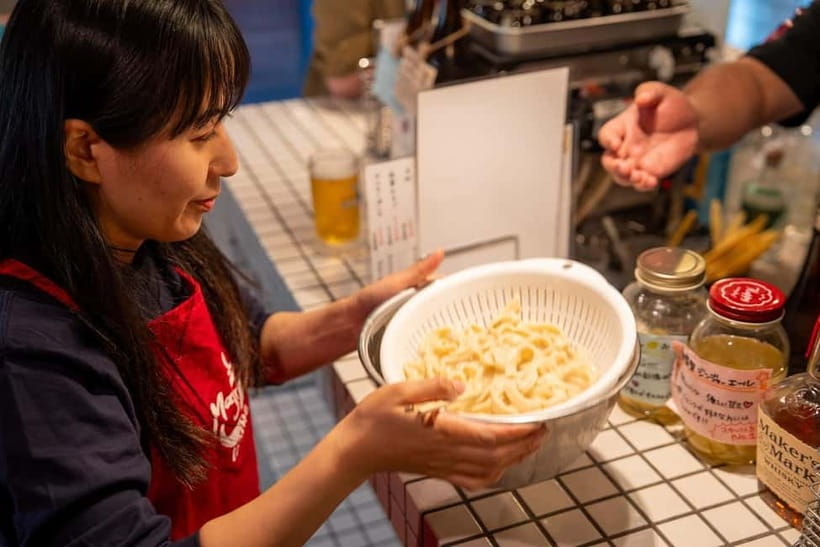
The class is limited to eight participants. That is a sensible size for hands-on cooking. With fewer people around the work area, you have a better chance of seeing the demonstration and getting help when your dough behaves badly, which it may.
The English-speaking guide handles communication while the local udon master leads the cooking. The guide is described as attentive, and that kind of support matters in a class where timing and texture can be hard to explain with gestures alone.
The teaching style appears friendly and beginner-friendly. You do not need previous cooking experience, and ingredients are provided. You can arrive ready to participate rather than worrying about shopping for unusual items or bringing equipment.
The small group does not guarantee a private lesson. You still share the instruction and cooking space with other participants. If the class fills to its limit, individual attention may come in short bursts rather than continuously.
What $83 buys you in Kyoto
At $83 per person, this is not a cheap meal. The value depends on how much you want the hands-on lesson. You are paying for an English guide, a local udon master, ingredients, the meal, two drinks, recipes, photos, and a small-group format.
If you simply want to eat udon, you can spend far less in Kyoto. The price makes more sense if you value the activity, especially the chance to knead and roll noodles yourself. The recipe set adds practical value because it is designed around ingredients you can find at home.
The tour photos are another small benefit. They give you a record of the cooking, though they should not be the reason you book. The food and instruction are the real product.
The biggest value question is how closely the session follows the advertised menu and timing. One verified booking paid for a session that lasted about 1 hour 20 minutes, rather than the stated duration, and included fewer preparation steps than expected. I would treat the $83 price as fair for a compact cooking activity, but less attractive if you expect a full two-and-a-half-hour kitchen lesson.
Finding the meeting point in central Kyoto
You meet at the 7-Eleven at Kyoto Kawaramachi-Takoyakushi. From Exit B3 of Kyoto-Kawaramachi Station on the Keihan Kyoto Line, it is about a three-minute walk. From Exit 3 of Gion-Shijo Station on the Keihan Main Line, allow about nine minutes.
This is a useful location if your day already includes central Kyoto, Kawaramachi, or Gion. The meeting point is near major rail access, so you do not need to make a separate trip to an outlying cooking studio.
Give yourself enough time to find the correct convenience store and arrive before the start. The information provided names the meeting point, but does not give a separate restaurant address in advance. Staying near the station area until the group gathers is the safest plan.
The class lasts two hours according to the current activity information. Since one booking finished in about 1 hour 20 minutes, do not build a tight reservation immediately afterward. A little spare time protects you from both a late finish and the possibility that the class moves faster than planned.
Who will enjoy this class most
This is a good fit if you want a short, social cooking activity in central Kyoto. Beginners can take part without special skills, and the menu offers several kinds of work: kneading, shaping, dipping, frying, and tasting.
Families may find the variety helpful because children can take part in simple hands-on tasks. The activity is listed as suitable for all ages, though cooking with hot oil means younger children will need close guidance from the adults and class staff.
It also suits people who enjoy food but do not want a long formal workshop. Two hours is manageable during a busy Kyoto itinerary, and the meal means you do not need to arrange lunch or dinner at the same time.
I would be more cautious if you are a serious cook seeking technical depth. The reported session did not include broth preparation, noodle cooking, or batter made from scratch. You might learn the basics while missing the detailed kitchen instruction you hoped to find.
Booking flexibility and what to confirm
Free cancellation is available up to 24 hours before the activity for a full refund. You can also reserve now and pay later, which helps if your Kyoto schedule is still changing.
Before booking, I would confirm three points: the actual class length, whether inari sushi will be prepared, and how much of the tempura batter and udon cooking you will do. These details matter more here than they would for a standard sightseeing stop because the hands-on work is the reason to pay the class fee.
The overall rating is 3.8 from three reviews, so the sample is small. The strongest praise centers on the attentive guidance, the enjoyable cooking, and the pleasure of eating the finished food. The clearest concerns involve changes to the menu and a shorter session.
Should you book the Kyoto udon class?
Book it if you want a friendly introduction to Japanese cooking, especially handmade udon, and you value a central location, English instruction, a small group, and a meal at the end. The kneading and rolling are the most distinctive parts, while the recipe set gives you a way to continue at home.
Think twice if you require every advertised dish and technique, or if you want a long, detailed lesson on broth, noodle cooking, and tempura batter. At $83, the class needs to deliver enough hands-on time to feel worthwhile.
My practical advice is simple: book this as a compact food experience, not as a complete professional cooking course. Confirm the menu and timing first, then enjoy the chance to turn flour into noodles and eat the results in Kyoto.
FAQ
Where does the Kyoto cooking class meet?
The meeting point is the 7-Eleven at Kyoto Kawaramachi-Takoyakushi. It is about a three-minute walk from Exit B3 of Kyoto-Kawaramachi Station on the Keihan Kyoto Line, or a nine-minute walk from Exit 3 of Gion-Shijo Station on the Keihan Main Line.
How long does the cooking class last?
The stated duration is two hours. One verified booking reported that the full experience, including the meal, lasted about 1 hour 20 minutes, so you should allow some flexibility in your schedule.
Do I need cooking experience?
No. The activity is suitable for beginners, and no prior cooking experience is required. Ingredients are provided during the class.
What foods will I prepare?
The planned menu includes handmade udon, inari sushi, onigiri, and tempura. You also eat the dishes you prepare. The exact steps can vary, so confirm the menu if a particular dish is essential to you.
Is the class taught in English?
Yes. An English-speaking local guide assists with the class, and a local udon master leads the cooking.
What is included in the $83 price?
The price includes the udon, tempura, and inari sushi meal, two drinks, the udon master and local guide, recipes, and tour photos.
New cooking classes around Kyoto
- Nishiki Market Food Tour with Cooking Class★ 4.9 · 42 reviews
- Kyoto: Morning Japanese Bento Cooking Class★ 5.0 · 149 reviews
- Kyoto: Wagashi (Japanese sweets) Cooking near Fushimiinari★ 5.0 · 40 reviews
- Kyoto Home Cooking Class &Supermarket tour near Fushimiinari★ 5.0 · 31 reviews
- Kyoto: Cooking class, learning how to make authentic sushi★ 4.2 · 9 reviews
- Kyoto: Authentic Sushi Making Cooking Lesson★ 5.0 · 103 reviews
- Kyoto: Afternoon Japanese Izakaya Cooking Class★ 4.9 · 241 reviews
- Authentic Japanese Cooking Experience at Izakaya restaurant★ 4.2 · 5 reviews
Kyoto Cooking Classes, side by side.
Ramen Cooking Class at Ramen Factory in Kyoto
Read our review →
Kyoto: Japanese Washoku Bento Small Group Cooking Class
Read our review →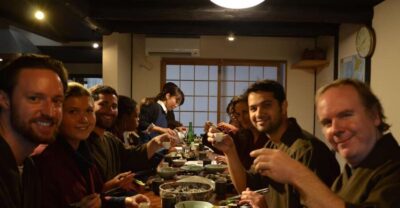
Kyoto: Afternoon Japanese Izakaya Cooking Class
Read our review →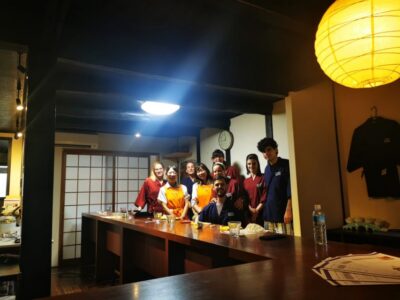
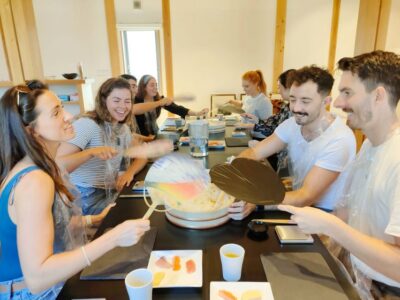
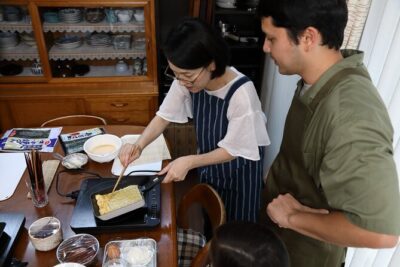
Near Fushimiinari: Kyoto Home Cooking Class & Supermarket tour
Read our review →
This kitchen also appears in