
Review · SEOUL
Seoul: Temple Vegan Cooking Class & Oriental Medicine Tour
The most unusual part of this Seoul outing is the temple food lesson with a Buddhist monk. You cook seasonal vegan dishes, eat what you make at the temple, then shift from quiet Buddhist foodways to the lively stalls of Cheongnyangni Fruit & Vegetable Market and its famous herbal medicine district.
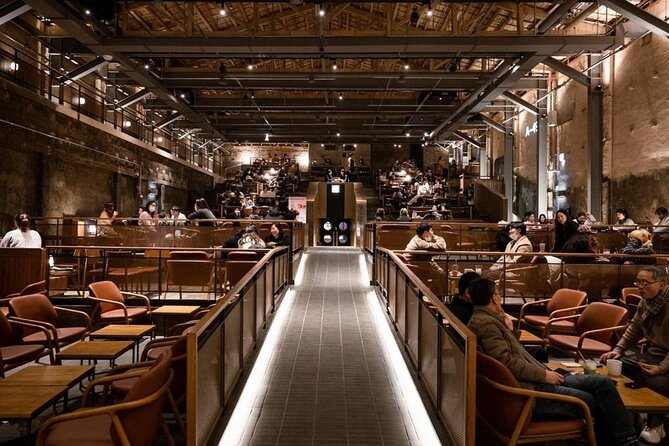
I like the useful contrast between old and new Seoul: centuries-old food and medicine beside Starbucks Gyeongdong 1960, a former theater, and vintage LG electronics. I also like the practical focus on tasting, not just looking, with tea, simple market foods, street snacks, and a drink at an Oriental Medicine Cafe. The main consideration is timing. This is a group tour with a firm schedule, and the cooking class can be canceled if fewer than three people join.
Key points at a glance
- Cook with a Buddhist monk: Learn the ideas behind Korean temple cuisine and prepare plant-based dishes with seasonal ingredients.
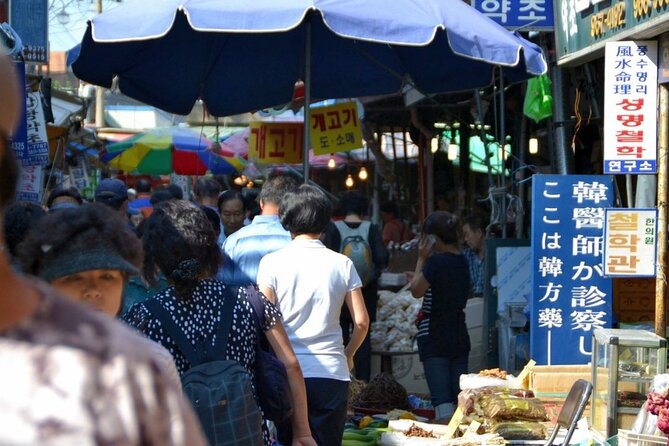
- Explore Cheongnyangni Market: Walk through Seoul’s leading medicinal herb, ginseng, fruit, and vegetable market.
- Try traditional wellness customs: Visit the Oriental Medicine Museum, sample tea, and learn how Korean body types and food recommendations are connected.
- Taste Seoul as you go: Simple market foods and nostalgic or modern street snacks are included for sampling.
- See old Seoul in new forms: Visit Starbucks Gyeongdong 1960, set inside an old theater, and Gold Star Radio LG with its vintage electronics.
- Plan for a four-hour group outing: Meet at Anguk Station Exit 1, follow the schedule closely, and return to the same meeting point.
Why this tour is different from a standard food walk
Many Seoul food tours focus on restaurant dishes or market snacks. This one begins with the values behind food. Korean Buddhist temple cuisine avoids meat and is built around restraint, seasonal produce, and respect for ingredients. You do not simply watch a demonstration. You prepare the food, sit down to eat it, and hear why the dishes fit Buddhist practice.
That gives the first part of the tour a calm, thoughtful pace. An English interpreter helps explain the lesson, which matters when the monk is discussing food rules, cooking methods, or the place of meals in temple life. The exact menu changes with the season, so you should expect a different class from one date to another.
I especially like that this is not limited to people who already follow a vegan diet. Temple food contains no meat, and the experience is suitable for vegetarians and vegans. It also works for anyone who wants to understand Korean food beyond barbecue, fried chicken, and noodles.
There is one practical point to check before paying. The cooking class is described as an option, and transportation is also listed as optional. Confirm exactly what your selected package includes, since the base price and the add-ons may not be the same.
More Vegetarian and Vegan Cooking Classes in Seoul:
- Oaxacan Vegetarian Cooking Class
★ 5.0 · 235 reviews - Marrakech: Moroccan Cooking Class for vegetarians and vegan
★ 4.9 · 156 reviews - Hoi An: Vegetarian Cooking Class w Local Family and transfer
★ 4.9 · 145 reviews
Meeting a monk for seasonal temple food
The cooking class is the heart of the experience. At a temple in Seoul, you work alongside a Buddhist monk and learn to prepare plant-based dishes using ingredients chosen for the season. The appeal is not only the food. You get a look at a style of cooking shaped by Buddhist discipline and a wish to avoid waste.
The class is hands-on, but you should not expect a restaurant-style cooking school with a fixed menu and individual workstations described in detail. The information provided promises a cooking experience, interpretation in English, and a meal afterward. The focus is on understanding temple cuisine and enjoying the dishes together.
Once cooking is finished, you eat at the temple. You are asked to finish the meal there because temples try to avoid food waste. If you want to carry leftovers, bring your own reusable container. That small rule is worth noting, especially if you are used to taking home every dish from a cooking class.
The food is seasonal, so the menu changes. This is a plus if you enjoy local cooking as it is actually practiced, rather than a frozen demonstration designed for tourists. It also means you should not book this expecting one particular dish.
The cooking class may be canceled if the minimum of three participants is not reached. If this part matters most to you, check that the class is confirmed and ask about the language of the session. Saturday has been identified as a day when classes are conducted in English, but you should still verify the details before booking.
From quiet temple to Cheongnyangni Market
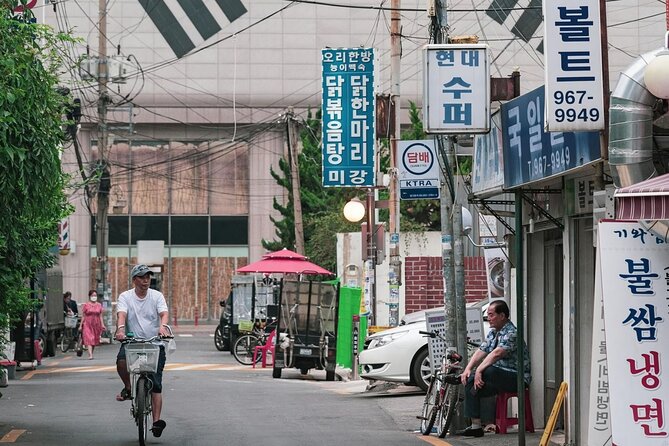
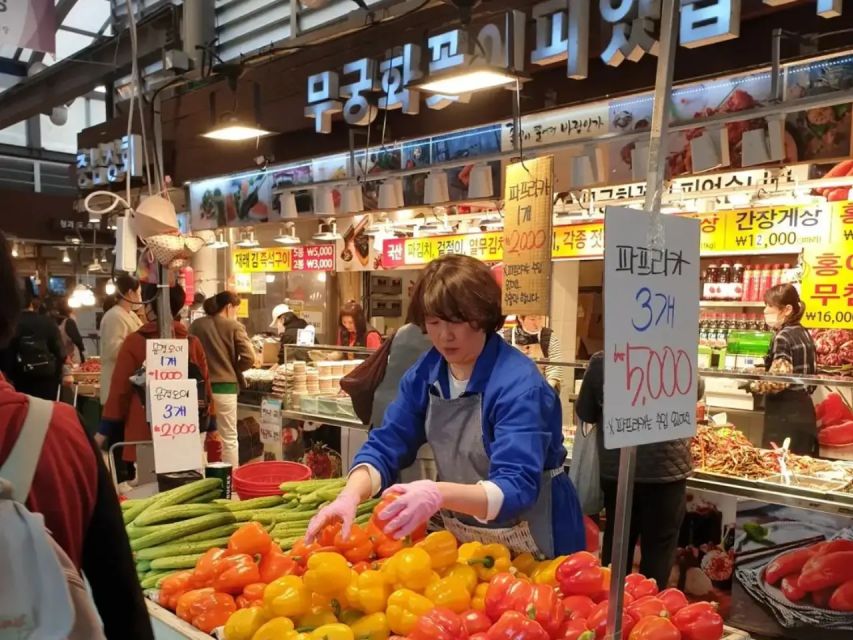
After the temple, the tour changes character. You head into one of Seoul’s major traditional market areas, where fruit, vegetables, herbs, and ginseng create a very different kind of food lesson. The Cheongnyangni Fruit & Vegetable Market is known for medicinal ingredients as well as everyday produce.
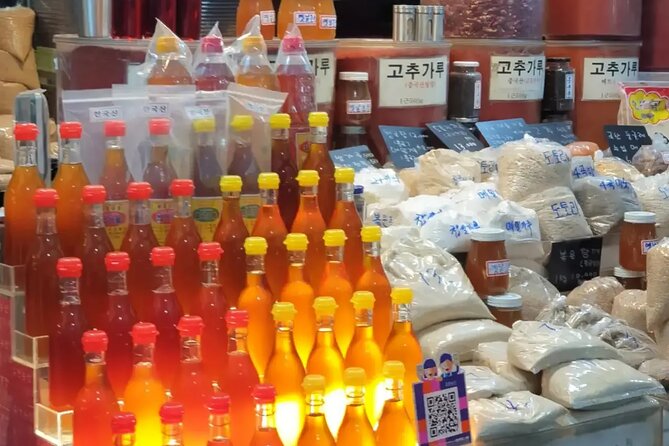
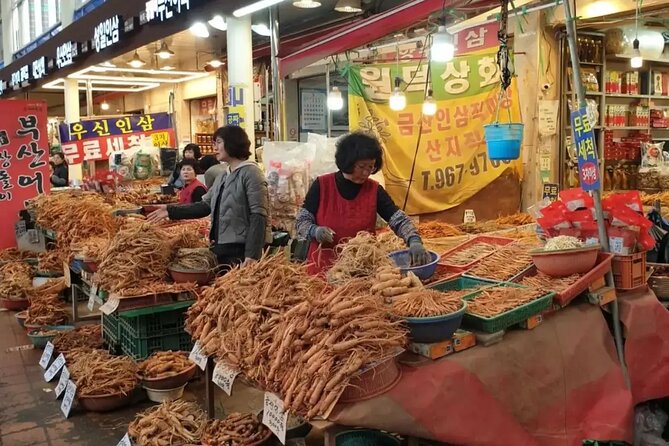
This is the place to use your senses. You may smell dried roots, look over unfamiliar herbs, and see the raw materials used in Korean cooking and traditional remedies. The guide helps put the stalls into context, so you are not left guessing whether an ingredient is a spice, a tea, or a medicinal product.
Market food is included for tasting, but these are small samples rather than a full lunch. Bring Korean won if you want to buy extra snacks, fruit, herbs, or ginseng. Vendors may not accept foreign cards, and the tour does not cover personal purchases.
I like this section because it links food with health in a way that feels distinctly Korean. The market is not presented as a polished exhibit. It is a working commercial area, and the sights, smells, and pace may be more useful to you than a carefully staged food hall.
At the same time, people who dislike crowded or highly sensory markets should know what they are signing up for. You will be walking through a busy traditional market district rather than a quiet museum. Since the group follows a set route and schedule, there may not be much time for long independent shopping.
Korean medicine, tea, and the body type lesson
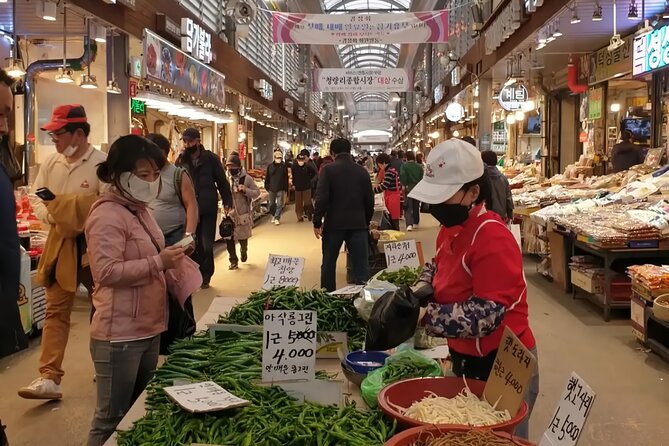
The Oriental Medicine Museum adds context to the market visit. Admission is included, and the guide explains Korean traditional medicine and its long development. The tour also touches on the idea that people have different body types and may be advised to eat different foods as part of a wellness plan.
That explanation gives you a useful way to understand why the market sells more than ordinary cooking ingredients. Herbs, roots, teas, and ginseng are tied to ideas about balance and health. You do not need to accept every traditional claim to find the cultural system interesting.
You also receive one drink at an Oriental Medicine Cafe. The tea is a simple but welcome pause after walking through the market. Fruits, healthy beverages, snacks, and other small market foods are part of the tasting program as well.
A wellness stop is included in the experience, with massage elements such as hand, foot, and back massage described by participants. There are also massage devices at the medicine venue. Treat this as a brief cultural and sensory addition, not as a full spa appointment. The tour does not promise a private treatment or a long consultation.
If you are curious about how traditional remedies connect with modern Korean life, this section may be the most rewarding part. If you want a strictly evidence-based medical tour, the emphasis may feel less satisfying. The guide can explain the cultural framework, but this is not a medical diagnosis or treatment session.
More cooking classes around Seoul:
- Local Home Korean Cooking Class & Market Adventure in Seoul
★ 5.0 · 1,024 reviews - Master Korean traditional cooking with a Kimchi chef
★ 5.0 · 385 reviews - Seoul: Korean Cooking Class at a Local Home and Market Tour
★ 5.0 · 348 reviews - Seoul: Korean Cooking at Seoul Cooking Club!
★ 5.0 · 311 reviews
Starbucks Gyeongdong 1960 and Gold Star Radio LG
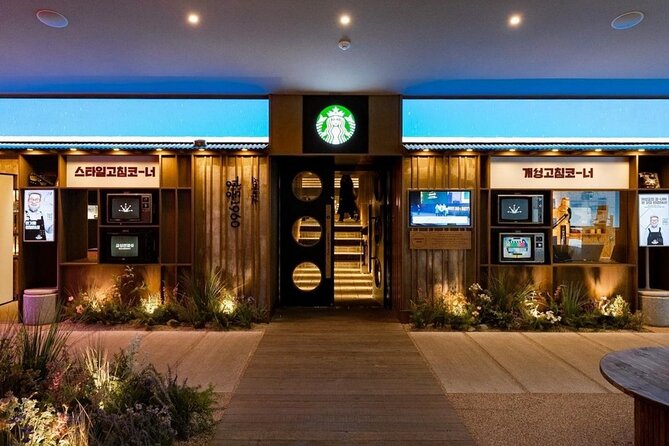
The modern stops keep the tour from becoming a single note. Starbucks Gyeongdong 1960 occupies a former theater, giving you a clear example of an older Seoul building being given a new life. The setting connects coffee culture with the city’s changing neighborhoods.
You are not visiting only for the drink. The point is the building and what it says about Seoul’s habit of mixing old structures with new uses. It also gives you a familiar modern brand after the temple and traditional market.
Gold Star Radio LG offers another look at recent Korean history through vintage electronics. The displays show how household technology and consumer culture changed over time. Together, these stops help you see Korea as both tradition-minded and quick to adopt new ideas.
The details of how long you spend at each site are not specified, so do not assume you will have a long café break or a full museum visit. The tour has only four hours, and the temple, market, museum, tastings, and modern landmarks all share that time.
Street food in small, useful portions
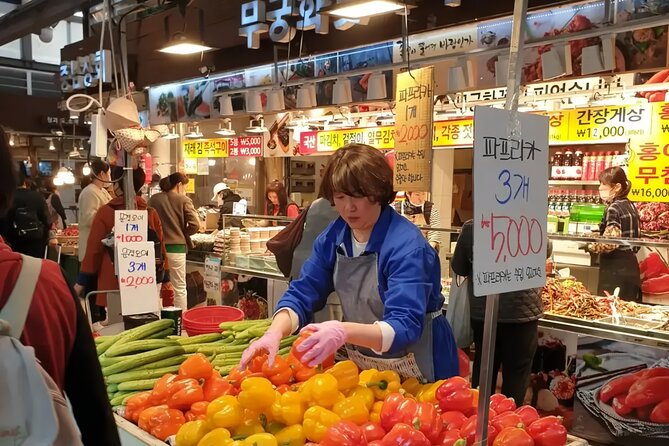
The tour includes nostalgic and modern Korean street foods, along with simple market tastings. This is a good arrangement for a half-day outing because you can try several flavors without committing to a large meal at one stall.
The portions are for tasting. If you are hungry, you may want to eat before or after the tour, since the included food is spread across the cooking class and market stops rather than presented as one substantial restaurant meal.
I like the way street food appears after the temple cooking lesson. You first learn about careful preparation and seasonal ingredients, then see how those ideas fit into everyday eating. The contrast between temple dishes, herbal market goods, and casual snacks gives you a broader view of Korean food than a single restaurant meal could provide.
Dietary needs also deserve attention. The temple food is meat-free, and vegans can take the tour. The information does not give a complete ingredient list for the street-food tastings, so vegans and anyone with allergies should ask the guide what each sample contains before eating it.
What the $76 price buys you
At $76 per person, the value depends on which options you select. The price covers access to a four-hour guided program with an English-speaking licensed guide, market tastings, the Oriental Medicine Museum admission, and a drink at the medicine café. The temple cooking experience and transportation are listed as optional, so check whether they are included in your chosen booking.
The cost makes sense for someone who wants several connected experiences without arranging them independently. A private or small booking may also feel especially good value. One participant booked a single place and received what felt like private, VIP-style attention, though you should not assume every departure will be private.
The guide is an important part of the value. Names praised in the feedback include BJ, Gina, and Jade. BJ was described as professional, Gina led a fun cooking and food experience, and Jade brought lively energy while explaining Korean medicine. Guides can vary by date, but the strongest feedback centers on clear explanations, warmth, and help for people unfamiliar with Korean food and wellness customs.
The price is less attractive if you want a long cooking workshop, extensive free time, or a full meal. It is better suited to someone who values range: temple food, a market, medicine, tea, modern culture, and street snacks in one compact outing.
Timing, transport, and group-tour realities
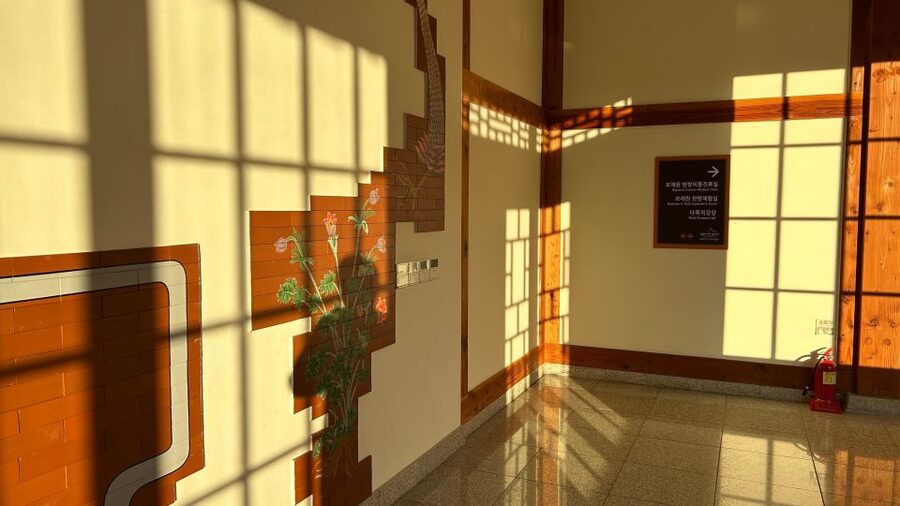
The tour lasts four hours and starts at Anguk Station Exit 1. Look for the guide holding a Tripper sign. The activity ends back at the same meeting point, and hotel pickup and drop-off are not included.
Transportation is listed as optional, so confirm the exact arrangement for your booking. Wear shoes suitable for walking and leave room in your schedule around the four-hour block. The market and temple portions involve moving between stops, and the group is expected to keep to the timetable.
This is not a flexible hop-on, hop-off day. You cannot linger at every herb stall, take a long coffee break, and still expect the rest of the group to wait. The fixed pace is useful if you want a clear introduction to several parts of Seoul, but less useful if you prefer to explore one market slowly.
Cancellation is free up to 24 hours before the activity, and you can reserve now and pay later. Those terms help if your Seoul plans are still shifting, but the minimum-participant rule for the cooking class remains worth checking.
Who should book this Seoul experience
I would choose this tour if you are interested in Korean food as culture, not just as a meal. It is particularly suitable for vegans, vegetarians, wellness-minded visitors, and anyone who wants an English-guided introduction to traditional medicine.
It also suits first-time visitors who like structure. In four hours, you get a monk-led food lesson, a traditional market, a medicine museum, tea, street snacks, and two modern cultural stops. That is a lot of ground, but the guide keeps the pieces connected.
Families with older children may enjoy the hands-on cooking and unusual market ingredients, though the schedule may feel busy for very young children. It is also a good choice for solo visitors who want company and interpretation rather than having to decode every market stall alone.
I would skip it if your main aim is a long, serious cooking course or an unhurried shopping trip. I would also be cautious if you need a guaranteed private tour, a fully specified menu, or a treatment-focused wellness appointment.
Should you book it?
Book this experience if you want to connect Korean food, Buddhist practice, traditional medicine, and modern Seoul in one well-packed half-day. The temple cooking class is the strongest reason to go, while the Cheongnyangni market and medicine museum add context that a standard food tour usually misses.
Before booking, confirm whether the cooking class and transportation are included, check the class language and minimum enrollment, and bring cash plus a reusable food container. If you are comfortable with a firm group schedule and tasting-sized food portions, the $76 price offers a useful mix of hands-on culture and everyday Seoul.
FAQ
Where does the tour start?
Meet your guide at Anguk Station Exit 1. The guide will be holding a Tripper sign.
Where does the tour end?
The activity returns to the original meeting point at Anguk Station Exit 1.
How long does the tour last?
The tour lasts four hours. Starting times depend on availability.
Is the tour conducted in English?
Yes. The activity includes a live English-speaking guide, and an English interpreter is provided for the temple cooking class. Saturday has been identified as an English-class day, so confirm the language for your chosen date.
Can vegans and vegetarians join?
Yes. The temple food contains no meat, and vegans can take the tour. Ask about the ingredients in the separate market and street-food tastings if you have specific dietary needs.
Is the cooking class always included?
The Temple Food Cooking Experience is listed as an optional part of the activity. The class may also be canceled if the minimum of three participants is not reached.
What food and drinks are included?
The experience includes the dishes you prepare during the temple cooking class when that option is selected, plus fruits, healthy beverages, snacks, simple market foods, street-food tastings, and one drink at an Oriental Medicine Cafe. Market food is provided for tasting, not as unlimited meals.
New cooking classes around Seoul
- Seoul: Korean Kimchi Cooking Class in the Heart of the City★ 5.0 · 3 reviews
- Seoul: Premium Korean Feast Cooking Class★ 5.0 · 3 reviews
- Seoul: Taste of Korea, Authentic Home Style Cooking Class★ 4.9 · 166 reviews
- (Seoul) Korean Cooking Class with a Professional Chef★ 5.0 · 14 reviews
- Seoul: Korean Home Visit, Cooking & Cultural Experience★ 5.0 · 2 reviews
- Seoul: Korean Cooking Class with Local Grocery Shopping★ 5.0 · 13 reviews
- Seoul: Cooking Class and Tour with Michelin-Trained Chef★ 5.0 · 11 reviews
- Seoul: Authentic Korean Cooking Class and Market Tour★ 5.0 · 6 reviews
Seoul Cooking Classes, side by side.
Local Home Korean Cooking Class & Market Adventure in Seoul
Read our review →
Master Korean traditional cooking with a Kimchi chef
Read our review →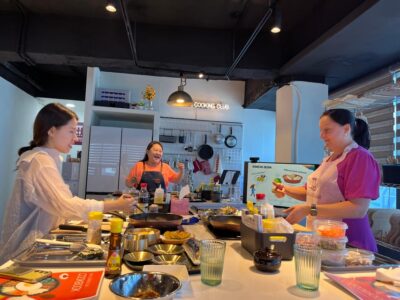
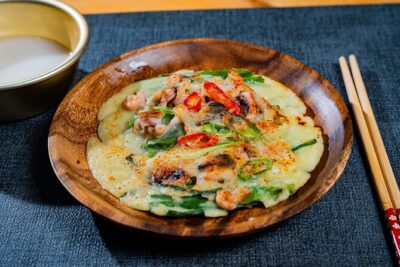
Seoul: Taste of Korea, Authentic Home Style Cooking Class
Read our review →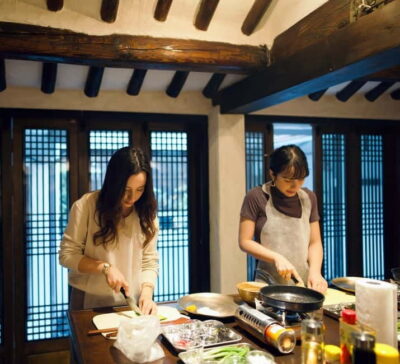
Seoul: Royal Seoul Cooking Class in a 100-Year-Old Hanok
Read our review →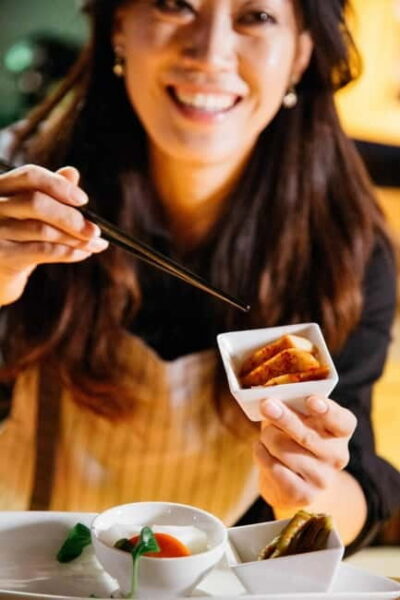
Seoul: Kimchi Dishes Cooking Class with Wine Pairing
Read our review →
Seoul: Experience Korean Cooking in Modern Hanok Kitchen
Read our review →
From Forest to Table: A Hansik Cooking Journey in Seoul
Read our review →This kitchen also appears in