
Review · KYOTO
Kyoto: Wagashi (Japanese sweets) Cooking near Fushimiinari
The best part of this Kyoto class is that you do not just watch someone shape wagashi. You work with the ingredients yourself, then sit in a traditional Japanese room with matcha and a garden view. Instructor Miho guides the class in clear English, and her licensed guide-interpreter background adds useful cultural context.
I like the small group of no more than six, which gives you real time at the worktable. I also like the warm, home-style setting: tea before or after the cooking, relaxed conversation, and practical tips for finding ingredients at home. The main consideration is that the menu changes with the season, and the class is not suitable for children under six or wheelchair users.
Key points at a glance
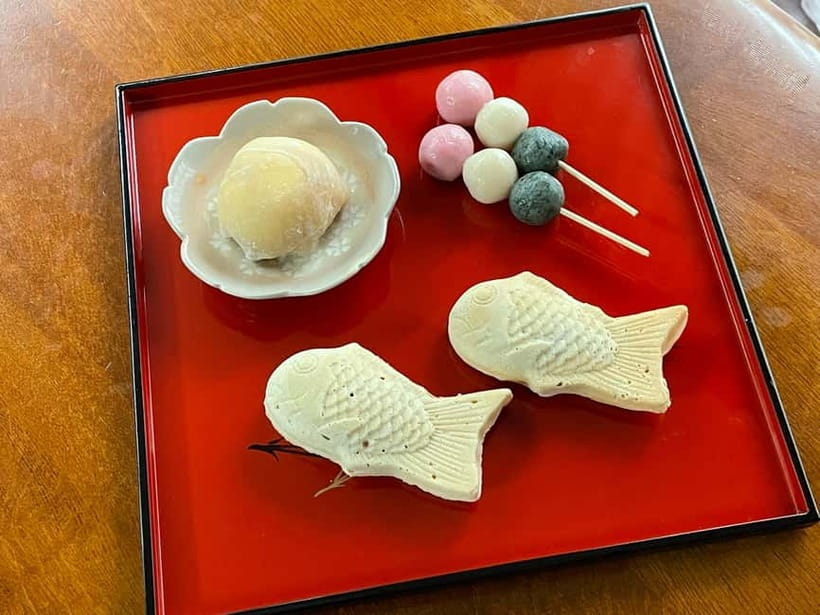
- Three hands-on sweets: Prepare about three wagashi yourself, with examples including mochi, dango, and dorayaki.
- A real Japanese home: Cook and eat in a traditional room facing a garden rather than in a standard commercial kitchen.
- Miho’s personal teaching: Expect clear English instruction, cultural explanations, and a short lesson on whisking matcha.
- Small-group pace: The class accepts up to six people, and a quiet date may become a private lesson.
- Useful take-home skill: The recipes and methods can be repeated at home with ingredients from an Asian supermarket.
- Good for families with older children: Children aged 12 and below need a guardian, and children under six cannot join.
Why wagashi makes a good Kyoto activity
Kyoto offers plenty of famous sights, but a cooking class gives you a different kind of contact with the city. Wagashi are not simply sweet snacks. Their shapes, colors, ingredients, and seasonal presentation connect food with Japanese manners and celebrations.
You may have seen mochi, dango, or dorayaki in manga and anime. Here, you get to handle the ingredients and see how much care goes into making something that can look simple on a plate. The class is especially appealing if you have already visited temples and want a quieter activity that still feels distinctly Japanese.
This is not a professional pastry course. You are not signing up for advanced restaurant training or a long series of technical lessons. Instead, you learn a few traditional sweets in a friendly setting, with enough explanation to understand what you are doing and enough hands-on time to make the class feel worthwhile.
The English instruction matters. Miho is a licensed guide interpreter, and the class is designed to be understandable for English speakers. That means you can ask about ingredients, techniques, or Japanese customs without guessing what the instructor means.
More Tiramisu and Dessert Classes in Kyoto:
- 3 in 1 Cooking Class near Navona: Fettuccine, Ravioli & Tiramisu
★ 5.0 · 7,376 reviews - Florence: Pasta & Tiramisu Cooking Class with Unlimited Wine
★ 4.9 · 6,708 reviews - Rome: Pasta Making Class with Wine, Limoncello, and Dessert
★ 4.9 · 3,177 reviews
Arriving near Fushimi Inari
The experience takes place near Fushimi Inari, one of Kyoto’s best-known areas. The exact meeting details should be checked when you book, since hotel pickup and drop-off are not included. Plan to make your own way there and allow enough time to find the house.
The setting is part of the appeal. Rather than cooking in a large public studio, you enter an authentic Japanese home with a traditional room and garden views. You will likely remove yourself from the hurry of sightseeing as soon as you sit down with tea.
That change of pace is valuable near Fushimi Inari. The shrine area can be busy, especially around the main approach and lower torii gates. A small home-based class gives you a chance to sit, talk, and use your hands for a while.
Do not expect a large sign or a polished tourist attraction. This is presented as an intimate visit to a Japanese home. Check the meeting instructions carefully, arrive on time, and remember that transport is your responsibility.
Tea first, then a look at the ingredients
The class begins in a traditional Japanese room, where you can settle in before the cooking starts. Tea is included, and the host may serve a small seasonal treat as part of the welcome. One participant described being offered tea and sweet potato before moving to the cooking table.
That small opening helps explain the tone of the experience. You are being introduced to a home and a style of hospitality, not rushed straight into a worksheet of recipes. Miho uses the early part of the class to explain what you will make and how the ingredients fit into Japanese sweets.
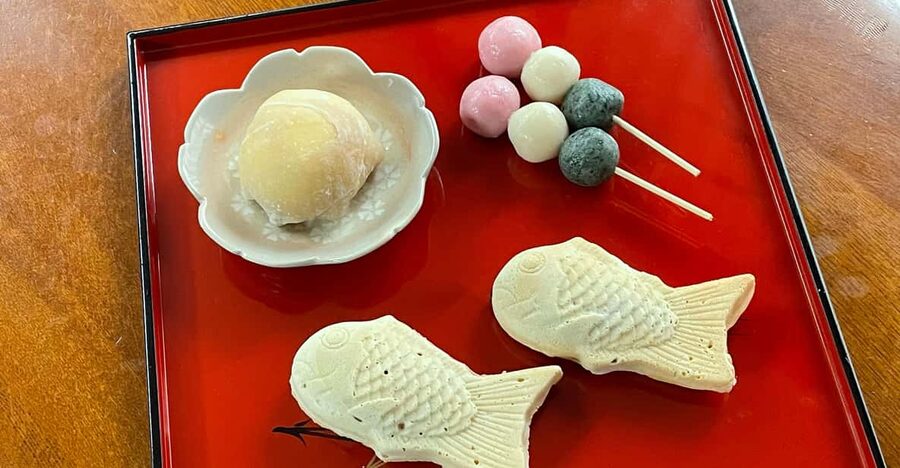
The exact menu depends on the season. That is useful to know before booking, especially if you have your heart set on one particular sweet. Examples from the class include dango, mochi, and dorayaki, while one session included mochi ice cream.
You should think of the menu as a seasonal surprise within a familiar format. The class promises about three types of wagashi, but not the same three at every time of year.
Making about three sweets yourself
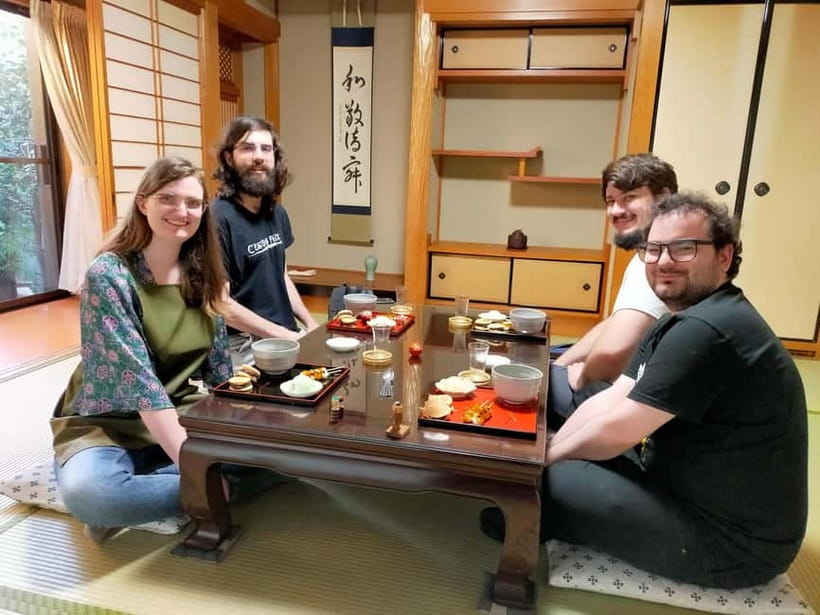
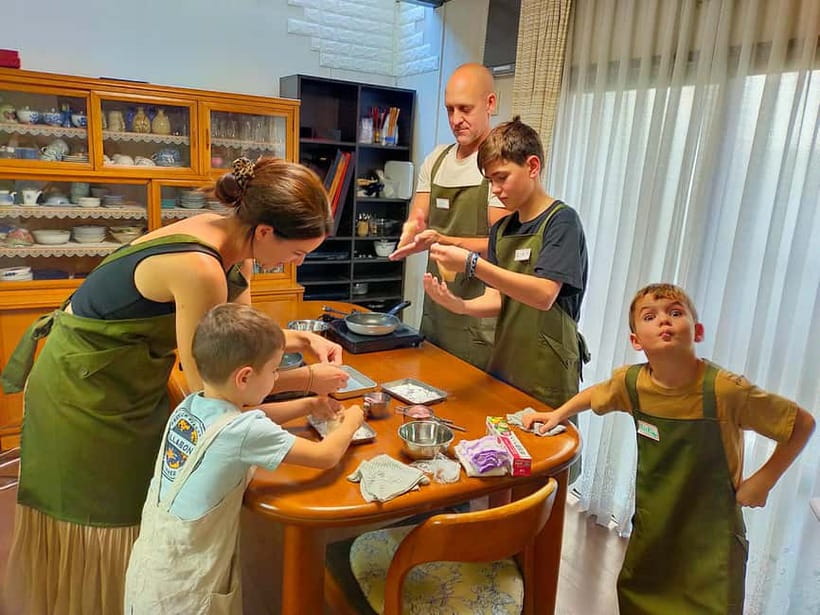
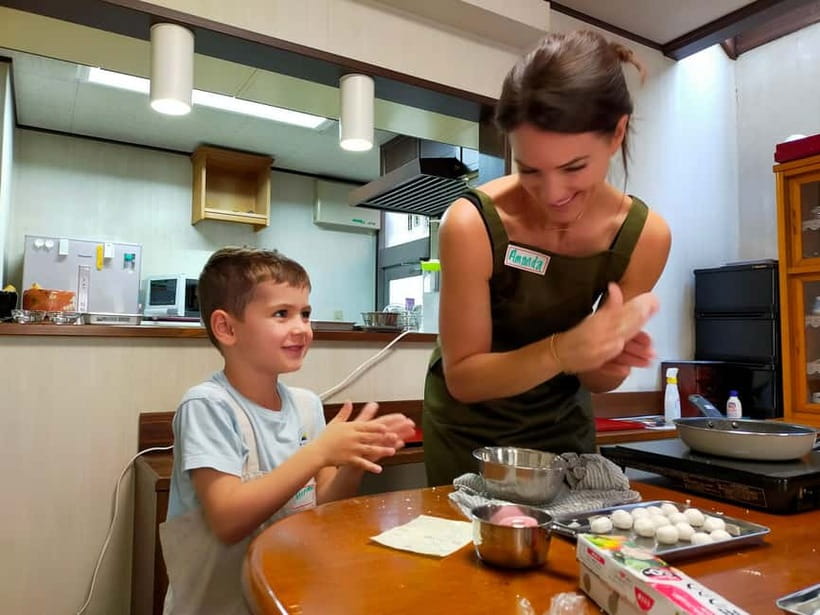
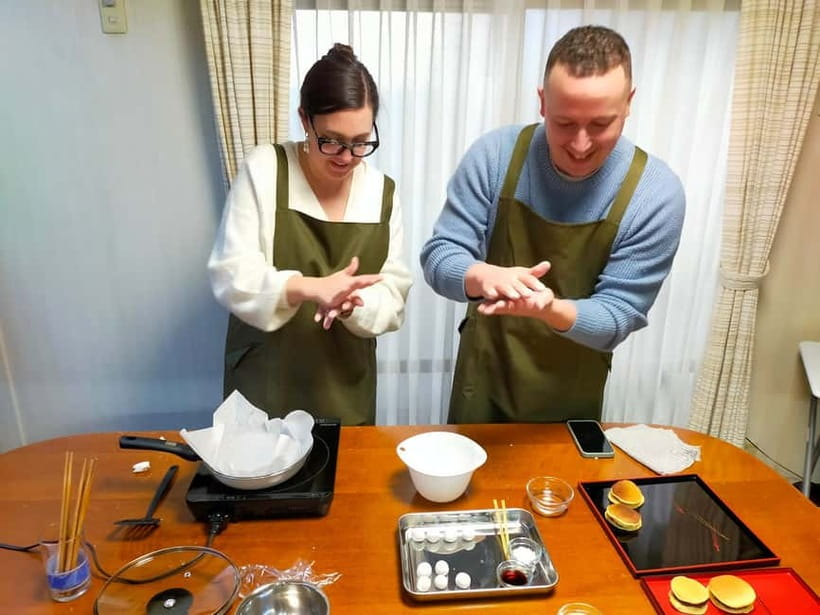
After the introduction, Miho demonstrates the process before you begin. This is not simply a show-and-tell session. You prepare the sweets yourself, either alone or with a partner, and the small group size allows you to take part in the important steps.
Dango gives you a chance to work with a dough that looks humble but depends on the right texture. Mochi shows how a soft, stretchy sweet can be made from basic ingredients. Dorayaki introduces a different method, with small pancakes and filling. These examples make a pleasant mix of shaping, mixing, and cooking.
The class is suitable for beginners. Miho explains each stage, then lets you try it. Her teaching style, as described by participants, is patient and clear, with plenty of hands-on tips. You are not expected to arrive with special cooking skills.
I particularly like that you get to make the sweets rather than simply decorate prepared pieces. That difference gives you a better idea of the work involved and makes the final tea time more satisfying.
The class can also work well for two people traveling together. An adult and child, two friends, or a parent and older child can share the tasks. If you prefer to work independently, you can also prepare your own portion when the class format allows.
More cooking classes around Kyoto:
- Ramen Cooking Class at Ramen Factory in Kyoto
★ 5.0 · 1,937 reviews - Kyoto: Ramen Cooking Class at a Ramen Factory with Souvenir
★ 4.9 · 532 reviews - Kyoto: Ramen, Gyoza, and Onigiri Cooking Class
★ 5.0 · 445 reviews - Kyoto: Japanese Washoku Bento Small Group Cooking Class
★ 5.0 · 380 reviews
Miho’s cultural explanations add value
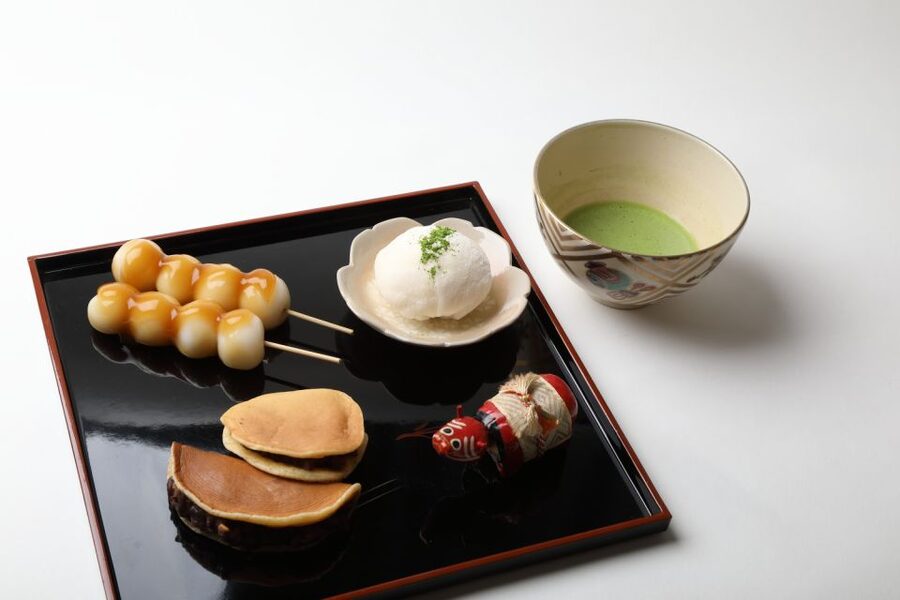
A recipe alone would not justify the price of this activity. The extra value comes from the conversation around the food. Miho explains Japanese ingredients and methods, answers questions about wagashi, and offers cultural context in English.
Participants have also received tips about where to buy ingredients. That is useful if you want to repeat the recipes at home rather than leave the experience behind in Kyoto. The methods are described as practical enough to try again after a visit to an Asian supermarket.
Miho also shares advice about Kyoto and Japan based on your interests. One participant received recommendations for places to visit, while others appreciated being able to ask wider questions during the cooking.
The class feels personal because the group is capped at six. On quieter dates, a single booking may become a private lesson. That can let you work at your own pace and spend more time talking with Miho, though you should not book expecting a private class unless the group size happens to be small.
Matcha and the traditional tea room
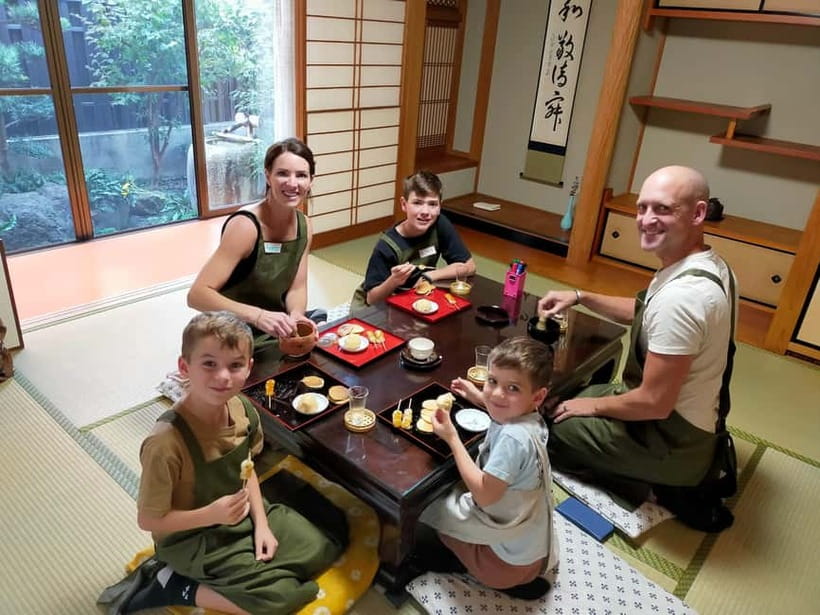
Once the sweets are ready, you move back to the traditional Japanese room. You arrange your sweets on a tray and enjoy them with tea while looking toward the garden.
Miho also demonstrates how to whisk matcha. This is a welcome addition because matcha is not treated as a decorative extra. You get to see how the tea is prepared and then drink it with the sweets you have made.
The room and garden create a calmer finish than you would get by eating your creations while standing at a kitchen counter. Presentation matters in wagashi, and the traditional setting helps you notice the shapes and colors before taking the first bite.
Some sweets may be available to take away, depending on what you prepare and the class arrangement. Do not assume every item will travel well, especially soft or chilled sweets. Still, having a few pieces for later can be a nice bonus after the tea session.
How the 150 minutes are spent
Two and a half hours is a good length for this activity. It gives you time to settle in, watch the demonstrations, cook at a reasonable pace, ask questions, and enjoy the tea without making the class feel like an all-day commitment.
A typical flow looks like this:
- Welcome and tea in the Japanese room
- Introduction to the seasonal menu and ingredients
- Demonstrations by Miho
- Hands-on preparation of about three sweets
- Matcha preparation and tea service
- Eating your creations in the traditional room
- Possible takeaway portions and final questions
The timing may shift depending on the menu and group. A family group may need more time for younger cooks, while a private booking could move at a slower pace.
At 150 minutes, you can fit this activity into a Kyoto sightseeing day. It works well before or after visiting Fushimi Inari, but leave room for the class itself rather than trying to squeeze it between two fixed appointments.
The $84 price: fair for the right kind of visitor
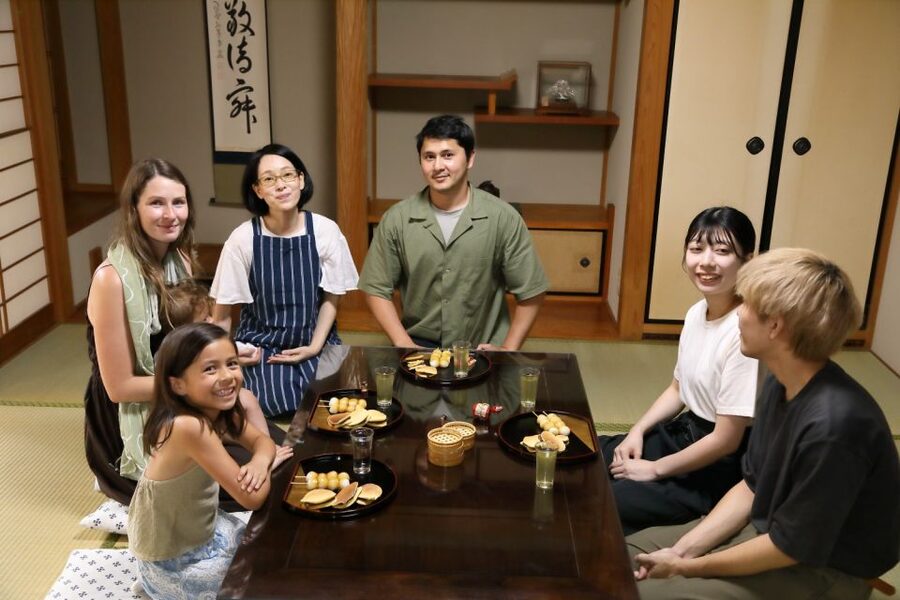
At $84 per person, this is not the cheapest way to taste Japanese sweets. You can buy mochi, dango, or dorayaki from shops for far less. The price makes more sense if you value instruction, a small group, a traditional home setting, and the chance to prepare the food yourself.
All ingredients, seasonings, tea, instruction, fees, and taxes are included. You do not need to pay extra for the cooking materials or matcha session. Hotel pickup and drop-off are not included, so add your local transport costs when planning your budget.
I see the strongest value for people who enjoy food activities and want something more personal than a standard sightseeing stop. You are paying for time with an English-speaking instructor, not just for a plate of sweets.
It is also a good choice for a return visit to Kyoto. If you have already seen the major temples, a small cooking session gives you a new way to spend part of the day. First-time visitors can enjoy it too, particularly if they want an activity that combines food, home life, and cultural explanation.
Families, dietary needs, and access
Families with children can join, but there are clear limits. Children aged 12 and below must participate with a guardian, and children under six cannot take part. The class has worked well for families with children aged eight, ten, and twelve, provided an adult is involved.
Vegetarians are welcome, and the activity is described as vegan friendly. You must tell the provider about food restrictions in advance. That is especially important because the seasonal menu may change and some ingredients may not be obvious.
The activity is not suitable for wheelchair users. If anyone in your group has mobility needs, check the arrangements before booking rather than assuming a traditional Japanese home will be accessible.
The class is conducted in English. It is intended for English and non-English speakers, but the teaching language is English, so make sure that suits your group.
What makes this experience memorable
The recipes are useful, but the setting does much of the work. Sitting on the floor or in a traditional Japanese room, drinking tea, and looking into a garden gives the lesson a sense of place that a generic cooking studio cannot match.
The other memorable feature is the personal attention. Miho is repeatedly described as warm, patient, organized, and easy to understand. Those qualities matter in a hands-on class, where a small correction at the right moment can make the difference between a neat sweet and a lopsided one.
That said, the experience depends on what you want from a cooking class. If you prefer a busy professional kitchen, advanced techniques, or a broad menu, this may feel modest. If you want a relaxed introduction to Japanese sweets with room for conversation, it fits much better.
Should you book the wagashi class?
Book it if you like Japanese sweets, enjoy making food with your hands, or want a quiet cultural activity near Fushimi Inari. It is also a strong pick for couples, families with older children, and solo visitors who appreciate a small group and the chance of a more personal lesson.
Skip it if you only want a quick tasting, need wheelchair access, or dislike floor-style traditional settings. The seasonal menu also means you should come with an open mind rather than expecting one fixed recipe.
For most food-loving visitors, the combination of three handmade sweets, matcha, Miho’s English instruction, and tea in a garden-facing Japanese room makes the $84 worthwhile. You leave with more than a sugar fix: you have a few techniques, some cultural context, and perhaps enough confidence to try wagashi again at home.
FAQ
Where does the wagashi cooking class take place?
The class takes place near Fushimi Inari in Kyoto, in an authentic Japanese home with traditional rooms and garden views.
How long does the experience last?
The activity lasts 150 minutes, or two and a half hours.
How many people can join?
The class is limited to six participants, making it a small-group experience. On some dates, a small booking may become a private class.
What sweets will I make?
You will prepare about three types of Japanese sweets. Examples include mochi, dango, and dorayaki, but the menu can change with the season. Mochi ice cream has also been included in a class.
Is the class taught in English?
Yes. The class is conducted in English, and the instructors are licensed guide interpreters.
Is tea included?
Yes. Tea is included, and the experience includes a matcha preparation lesson and time to enjoy tea with your sweets.
Can vegetarians and vegans join?
Vegetarians are welcome, and the class is described as vegan friendly. Tell the provider about any food restrictions in advance.
Can children participate?
Children aged 12 and below must participate with a guardian. Children under six are not permitted to join.
Is hotel pickup included?
No. Hotel pickup and drop-off are not included, so you must arrange your own transportation to and from the class.
New cooking classes around Kyoto
- Nishiki Market Food Tour with Cooking Class★ 4.9 · 42 reviews
- Kyoto Udon & Tempura Cooking Class with Professional Chefs★ 3.8 · 3 reviews
- Kyoto: Morning Japanese Bento Cooking Class★ 5.0 · 149 reviews
- Kyoto Home Cooking Class &Supermarket tour near Fushimiinari★ 5.0 · 31 reviews
- Kyoto: Cooking class, learning how to make authentic sushi★ 4.2 · 9 reviews
- Kyoto: Authentic Sushi Making Cooking Lesson★ 5.0 · 103 reviews
- Kyoto: Afternoon Japanese Izakaya Cooking Class★ 4.9 · 241 reviews
- Authentic Japanese Cooking Experience at Izakaya restaurant★ 4.2 · 5 reviews
Kyoto Cooking Classes, side by side.
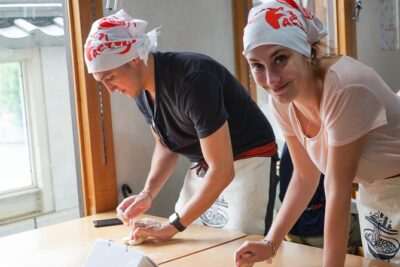
Ramen Cooking Class at Ramen Factory in Kyoto
Read our review →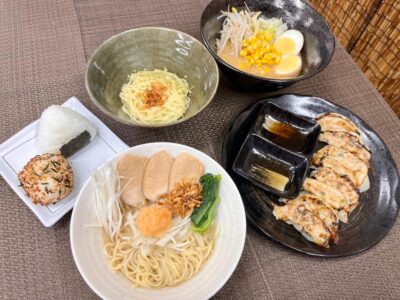
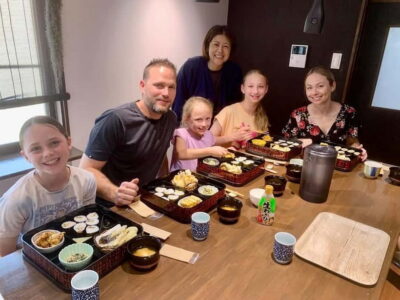
Kyoto: Japanese Washoku Bento Small Group Cooking Class
Read our review →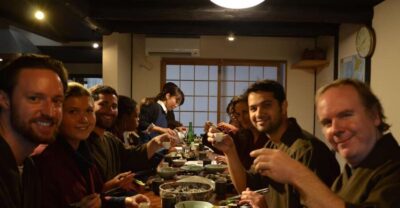
Kyoto: Afternoon Japanese Izakaya Cooking Class
Read our review →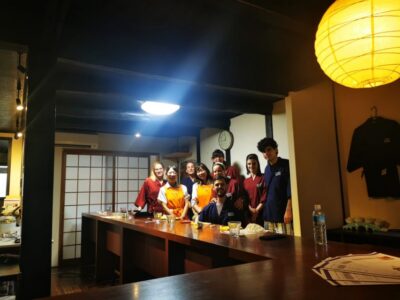
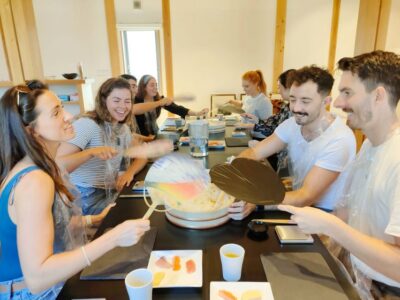
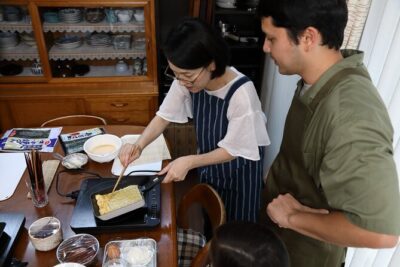
Near Fushimiinari: Kyoto Home Cooking Class & Supermarket tour
Read our review →
This kitchen also appears in